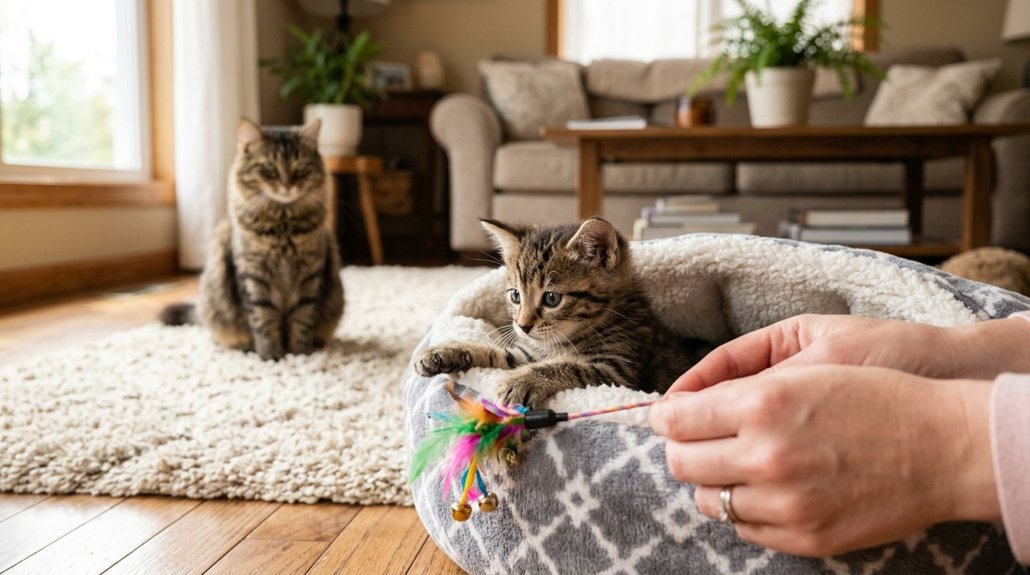
Start socializing your kitten as early as two weeks to capitalize on their critical socialization window, which extends to nine weeks. Early exposure to diverse environments and positive interactions with people can prevent future fear-related behaviors. Establish a nurturing routine and use positive reinforcement to build a foundation for a well-adjusted adult cat. Monitoring their cues and engaging in regular playtime are essential. By exploring expert strategies, you’ll guarantee a sociable and confident feline companion.
Key Takeaways
- Begin kitten socialization during the critical period from 2 to 9 weeks old.
- Early socialization, ideally before 7 weeks, shapes future behavior and adaptability.
- Create a safe environment with consistent routines before intensive socialization.
- Introduce calm interactions with at least 100 different people to reduce fear.
- Involve veterinary professionals early to build trust and confidence during handling.
Exploring the Critical Socialization Window (2 to 9 Weeks)
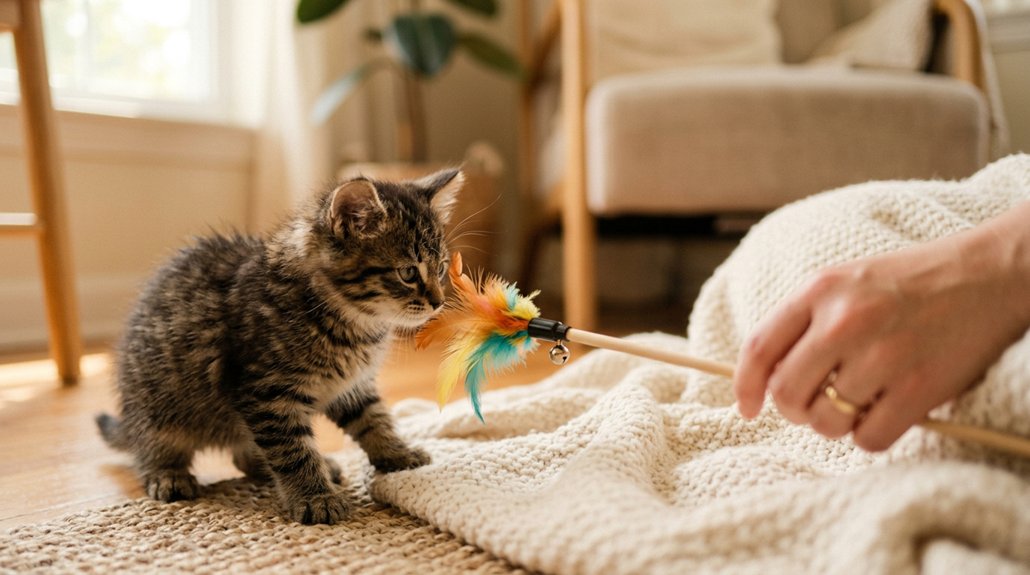
The critical socialization window for kittens, spanning from 2 to 9 weeks of age, plays a pivotal role in shaping their future behavior. This period is marked by significant socialization milestones that greatly affect developmental impacts on a kitten’s demeanor. Early positive exposure to diverse environments and gentle human interaction is essential. By introducing various stimuli—sounds, textures, and experiences—you aid in developing a confident, sociable feline. While prime socialization is most effective before 7 weeks, patience and careful exposure can still benefit older kittens. Engaging with at least 100 different people during this phase enriches their adaptability, minimizing future fear-related behaviors. Effectively maneuvering through this window sets the foundation for a well-adjusted adult cat, prepared to embrace life’s challenges.
Creating a Stress-Free and Explorative Home Environment
Creating a nurturing environment is paramount when introducing a kitten to your home. Establish a safe nesting space where your kitten can relax, perhaps a crate or a designated room, offering a two-day adjustment period before intensive socialization begins. Maintain a calm atmosphere, essential for security. Minimize loud noises and movements, augmented by soothing sounds like a ticking clock wrapped in a towel. This mimics a maternal heartbeat, curbing anxiety. Familiarize them with human voices by leaving a TV or radio on. Safeguard their explorative instincts by securing windows, vents, and removing toxic items.
Establish a calm, secure nesting area with soothing sounds to help your kitten adjust and feel safe.
- Set up a cozy, safe nesting area
- Minimize sudden noises and movements
- Employ soothing sounds to reduce anxiety
- Introduce household sounds for comfort
Keep these elements in place, ensuring ideal adaptation.
Effective Techniques for Positive Reinforcement With Kittens
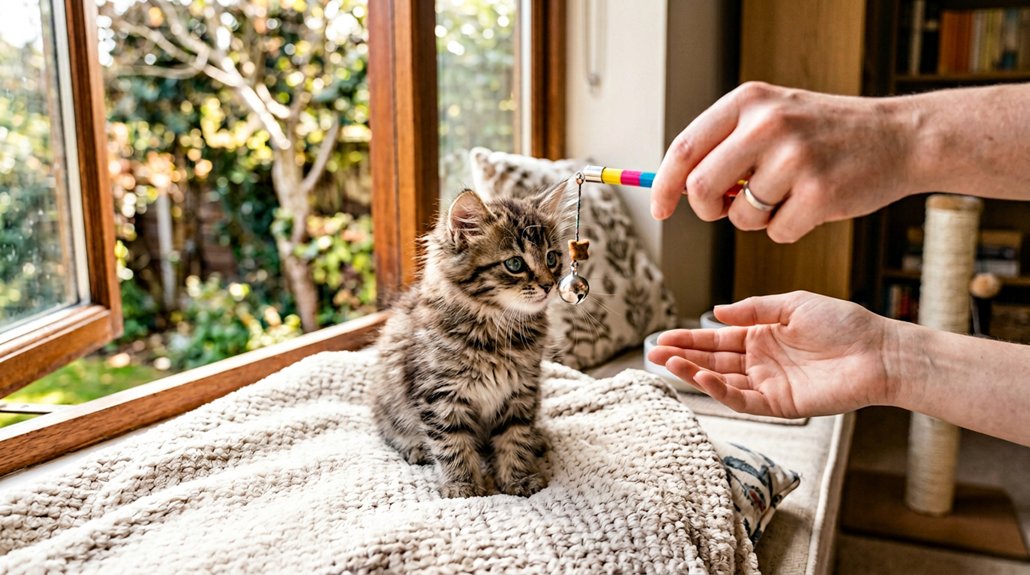
Implementing effective positive reinforcement techniques with kittens involves immediate, consistent rewards that encourage desired behaviors. By incorporating parts of their daily meals as treats and using playtime as a reinforcement, you can maintain their engagement and build trust without the risk of overfeeding. Regularly rewarding calm behavior in new situations will not only foster confidence but also teach your kitten to handle diverse environments with ease.
Reward-Based Training Benefits
Reward-based training for kittens, although simple in concept, offers profound benefits by utilizing treats and praise to instill positive associations with new experiences. This approach tackles training challenges through motivational strategies, encouraging kittens to engage calmly with unfamiliar stimuli. Immediate rewards—given within three seconds—effectively reinforce positive exploration, making desired behaviors more frequent. Using a portion of the kitten’s meals as rewards keeps them enthusiastic without risking overfeeding. Additionally, respecting their choice to opt out of interactions helps avoid overwhelming situations, fostering positive learning environments. It’s essential to provide frequent breaks to sustain their attention and maintain trust.
- Immediate reinforcement encourages good behavior.
- Meal portions used as rewards prevent overfeeding.
- Respecting opt-out choices avoids stress.
- Frequent breaks enhance engagement and learning.
Building Trust and Confidence
Building on the benefits of reward-based training, effective techniques in positive reinforcement are key to nurturing a kitten’s trust and confidence. Trust building activities such as using favorite treats and verbal praise immediately following a desired behavior create robust connections with new experiences. Offer these rewards within three seconds to reinforce exploration and positive interactions. Confidence enhancing exercises like gentle handling, paired with treats, help reduce stress during socialization and promote a trusting bond. It’s important to respect your kitten’s boundaries by allowing them to disengage if they seem overwhelmed, preserving the trust you’ve fostered. By incorporating diverse play sessions with varied toys, linked with positive experiences, you establish a secure environment that supports their confidence and assures enjoyable interactions.
Gradual Introduction of New People and Experiences
While it may seem overwhelming at first, gradually introducing a kitten to new people and experiences is essential for their social development. Start by providing gentle introductions and ensuring varied environments for your kitten. At around 5 weeks of age, encourage interactions with diverse individuals to foster familiarity and confidence. Aim for your kitten to meet at least 100 different people, prioritizing calm, gentle interactions. Allow them to approach at their own pace, which builds trust and positive associations. Gradually expose your kitten to different environments, sounds, and experiences while focusing on positive handling and reinforcement to ease anxiety. Remember:
- Prioritize calm, gentle introductions
- Introduce varied environments progressively
- Monitor interactions closely for a positive experience
- Use treats and praise to reinforce learning
How to Read Your Kitten’s Cues
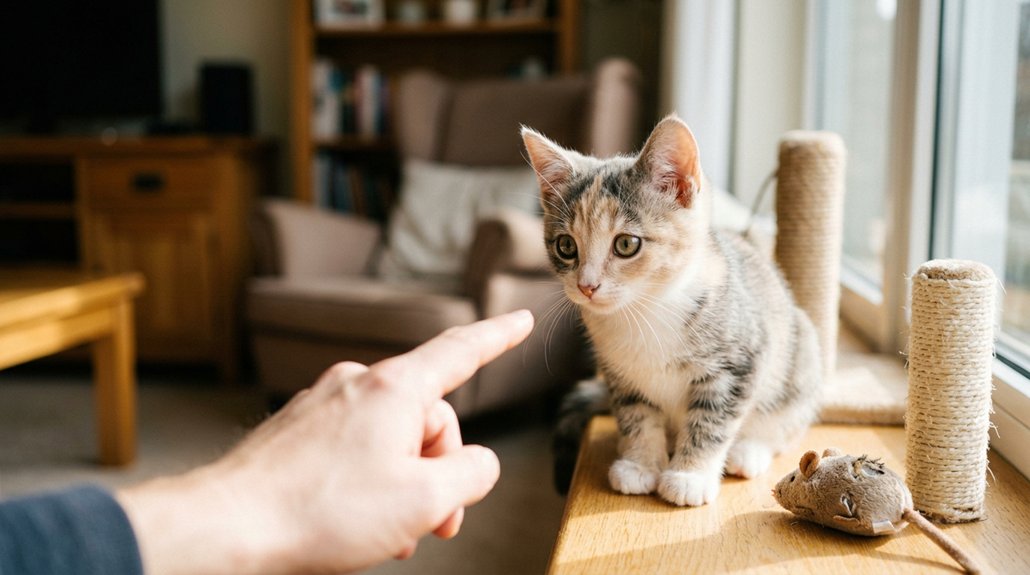
Understanding your kitten’s cues is pivotal in promoting their comfort and confidence during socialization. Recognize kitten body language to assess their emotional state. When your kitten exhibits relaxed postures and soft eye contact, they’re content. Conversely, stress signals like stiff bodies, wide eyes, or hissing indicate discomfort and a need for a break. Watch their reaction to handling; if they lean in and purr, they’re at ease. If they back away or swat, it’s time for space. Gradually introduce them to new experiences, observing their reactions closely. Treats and praise during positive interactions enhance their confidence. Always respect your kitten’s pace, offering opportunities to opt-out as needed, which fosters trust and promotes a positive socialization experience.
How Playtime Fosters Social Skills in Kittens
Introduce playtime strategically to foster vital social skills in kittens. By engaging in a minimum of two hours of playtime daily, you can enhance your kitten’s trust and social abilities as they learn to positively interact with their environment and you. The playtime benefits include using a variety of toys that simulate hunting behaviors, promoting pouncing and ambushing in a safe context. This not only nurtures instinctual skills but also provides essential mental and physical stimulation to bolster confidence and reduce fear-based misbehaviors.
- Interactive play aids in significant communication skills with both humans and other animals.
- A diverse toy variety encourages exploration and helps identify preferences.
- Engaging in play builds important trust and strengthens your bond.
- Regular sessions promote positive relationship development as kittens mature.
Integrating Socialization Into Everyday Care With Veterinary Support
Engaging with your kitten through playtime not only boosts their social skills but sets a strong foundation for integrating socialization into their everyday care. Early veterinary education is essential, offering insights into tailored socialization techniques and health assessments. Veterinarians can recommend activities that suit your kitten’s temperament, ensuring effective social development. Regular vet visits will also monitor their overall health, swiftly addressing any behavioral concerns like fear or anxiety. Incorporating veterinary professionals in socialization routines enhances your kitten’s comfort with being handled, linking positive emotions with grooming and medical visits. Establish a routine of veterinary care to reinforce ongoing socialization, ensuring your kitten receives both medical attention and exposure to new experiences in a safe environment.
Frequently Asked Questions
What Is the 3-3-3 Rule for Kittens?
The 3-3-3 rule outlines kittens’ first three days, weeks, and months in a new environment. Early experiences during these stages, like playtime benefits, help them adjust, fostering confidence and socialization as their acclimatization progresses.
At What Age Should You Socialize Kittens?
Statistically, kittens are most receptive between 2 to 7 weeks of age, making it the ideal age for socialization. Handle them gently, introducing various textures and household noises, while encouraging interaction with diverse individuals for best development.
What Is “I Love You” in Cat Language?
In cat language, “I love you” is expressed through slow blinking, gentle rubbing, purring sounds, and tail positions like an upright, softly curved tail. Each gesture indicates affection, trust, and comfort, reflecting their natural behavior toward loved ones.
What Annoys a Cat the Most?
Cats are most annoyed by disruptions to their routine, sudden noises, and unwanted handling. Understanding cat behavior and feline preferences, you’ll notice they value control and predictability. Respect this and avoid changes to keep them calm.
Conclusion
You’ve learned when to start socializing a kitten: between 2 to 9 weeks is the critical window. You’ve discovered how to craft a stress-free, exploratory environment. You’ve explored techniques for positive reinforcement. You’ve seen the importance of introducing new people and experiences gradually. You’ve learned to read your kitten’s cues. You’ve realized playtime’s role in fostering social skills. You’ve integrated socialization into everyday care with veterinary support. Now, you’re equipped to nurture a well-adjusted, social feline.