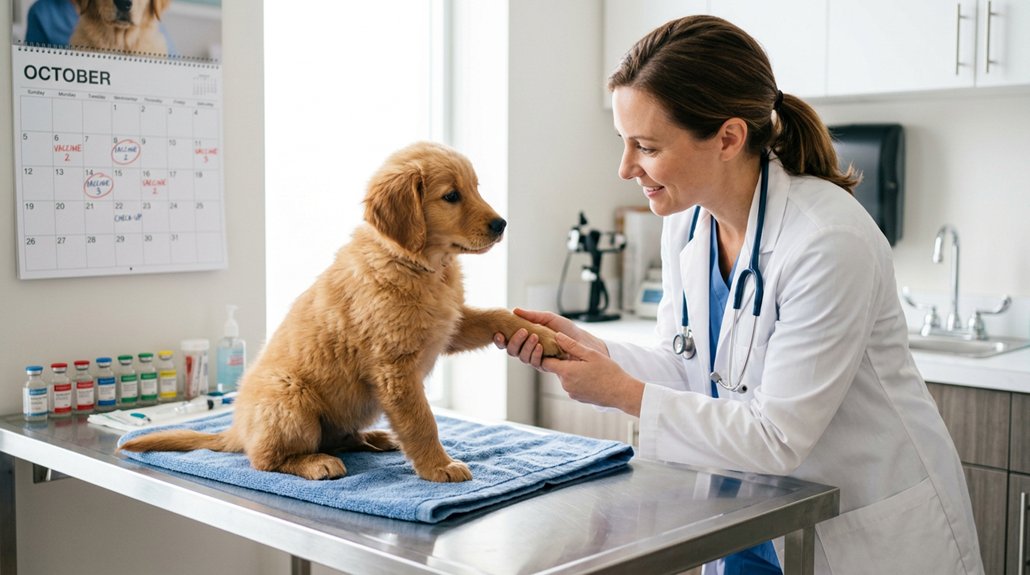
You should take your puppy to the vet every 3 to 4 weeks until they’re at least 16 weeks old. These visits guarantee they get essential vaccinations and health checks, and help protect against parasites and worms. Regular visits support growth monitoring and provide guidance on nutrition and socialization. Keeping a close watch on their development helps catch any issues early. If you’re curious about further tips on puppy care, there’s more to discover.
Key Takeaways
- Puppies should visit the vet every 3 to 4 weeks until they are at least 16 weeks old.
- The first vet visit should occur between 6 to 8 weeks of age for initial exams and vaccinations.
- Regular visits help with timely vaccinations and the prevention of diseases like distemper and parvovirus.
- Initial and follow-up vet visits include fecal testing for parasites and necessary deworming treatments.
- Vet visits allow for growth monitoring, nutritional assessments, and early socialization guidance.
Why Are Regular Vet Visits Crucial for Puppies?
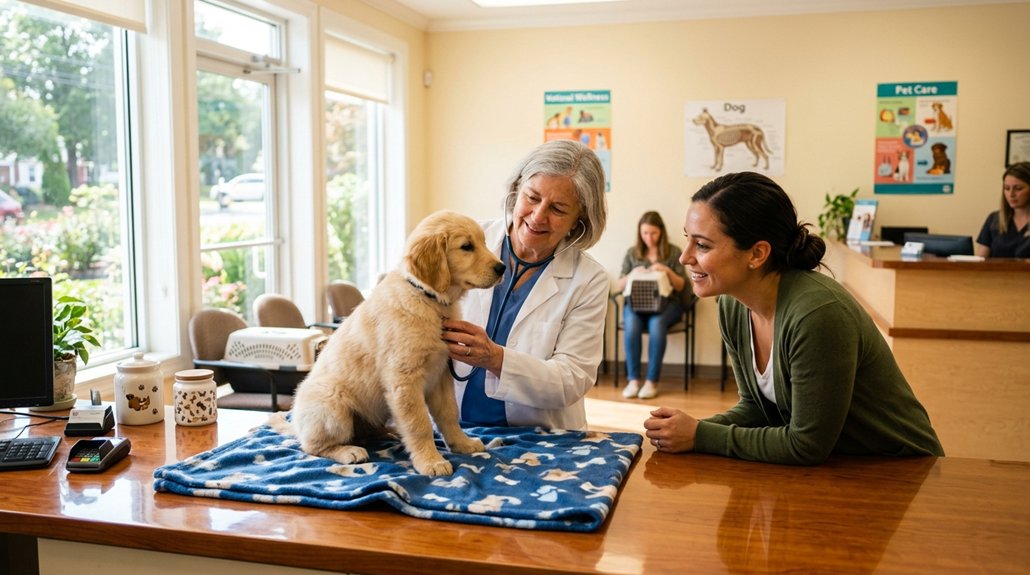
Regular vet visits are paramount during a puppy’s early months for several clinical reasons. Ensuring timely vaccinations is critical for puppy wellness, protecting them against dangerous diseases like distemper, parvovirus, and rabies. These vaccinations are not just a formality; they’re critical interventions that greatly impact your puppy’s health and safety. You’ll start this vaccination schedule when your puppy is about 6 to 8 weeks old, continuing with follow-ups every 3 to 4 weeks until they’re 4 to 5 months old. Additionally, regular appointments allow for the detection of internal parasites through stool sample analysis, helping keep your puppy infection-free. Establishing these early preventive care practices supports their overall health while fostering a positive relationship with their vet, reducing future stress.
What to Expect During the First Vet Visit
As you’ve scheduled those all-important vet appointments, the first visit to the vet is pivotal in setting the stage for your puppy’s health journey. Typically occurring between 6 to 8 weeks of age, this visit includes initial vaccinations, deworming, and a thorough examination of heart, lungs, eyes, teeth, and ears to detect any abnormalities. Fecal testing for internal parasites is conducted, providing essential insights into your puppy’s general health. This appointment is perfect for owner education — you’ll learn about vaccination schedules, diet advice, training, and socialization strategies, which are vital in shaping your puppy’s personality and development. It’s your chance to align with the vet on key aspects of care, ensuring you foster a robust foundation for lifelong wellness.
Understanding Your Puppy’s Initial Health Tests
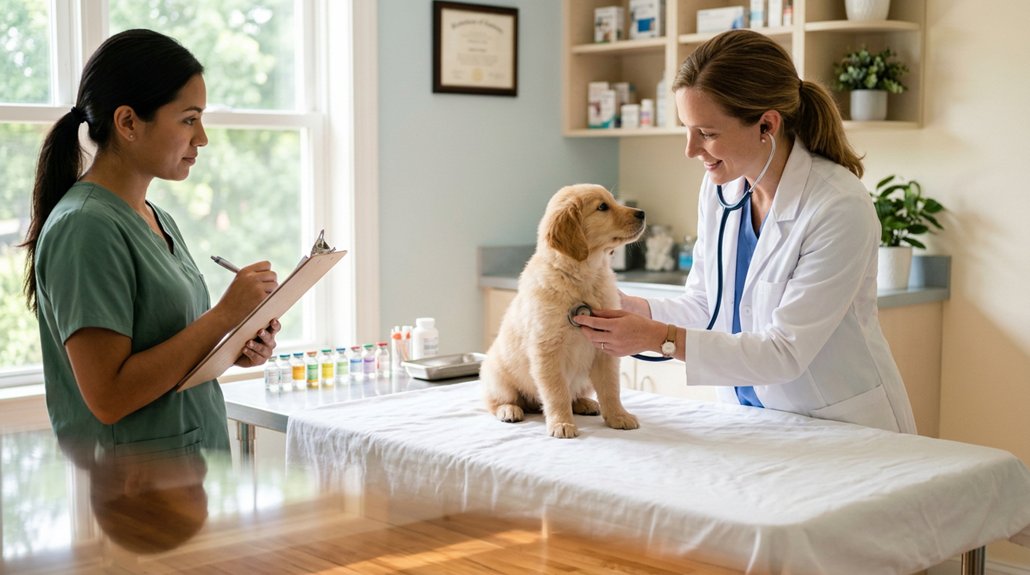
At your puppy’s initial vet visit, it’s vital to have a thorough examination that includes checking for parasites and beginning the core vaccination schedule. Routine checkups guarantee early detection of health issues, laying a foundation for a strong immune system. The vet will guide you on the timing of future vaccinations and the overall wellness plan tailored to your puppy’s needs.
Importance of Early Checkups
While commencing on the journey of puppy parenthood, early checkups are fundamental for setting the foundation of your puppy’s lifelong health. Initial veterinary visits, ideally scheduled for 6 to 8 weeks of age, lay the groundwork for puppy development through early intervention methods. During these checkups, your vet will conduct a thorough health evaluation, evaluating critical areas such as weight, heart, and lungs to detect any potential issues early. Establishing a vaccination schedule is important, as core vaccines begin within this age window and continue every 3 to 4 weeks until 16 weeks. Additionally, discussions about diet and preventive care, including flea medication, are essential. Consistent early visits not only guarantee health monitoring but also foster positive clinic associations in these formative months.
Examination for Parasites
In the domain of puppy parenthood, understanding the examination for parasites secures your young companion’s health is on the right trajectory. When your puppy is between 6 to 8 weeks old, it’s crucial to have a veterinarian evaluate them. Fecal testing is fundamental during these early visits to check for internal parasites that could jeopardize your puppy’s health. Puppies are particularly vulnerable to intestinal parasites, which can cause severe health issues and stunt growth. This testing involves providing regular stool samples during subsequent visits to guarantee early detection and treatment. Monitoring through fecal testing is a cornerstone in safeguarding puppy health, setting the foundation for their development and well-being. Always prioritize these fundamental health checks to promote a thriving puppyhood.
Core Vaccination Schedule
Ensuring your puppy receives their core vaccinations is essential for their health and protection against common, potentially fatal diseases. Start their puppy vaccination timeline during the initial vet visit at 6 to 8 weeks, where a physical exam and fecal test for parasites set the foundation. Begin core vaccinations for distemper, adenovirus, parvovirus, and parainfluenza between 8 and 12 weeks, with boosters every 3 to 4 weeks until at least 16 weeks. The legally required rabies vaccine follows around 4 months of age. Discuss potential vaccine side effects with your vet, such as mild lethargy or localized swelling. Regular check-ups also allow discussions on diet, adjusting to solid foods, and ensuring your pup’s overall well-being while minimizing risks.
Essential Puppy Vaccinations: Schedule and Purpose
As you begin the journey of puppy parenthood, understanding the vaccination schedule is crucial for safeguarding your furry friend’s health. The vaccination importance can’t be overstated. Core vaccines are essential for their protection against deadly diseases like distemper, parvovirus, and adenovirus. Start their vaccination regimen at 6 to 8 weeks and continue every 3 to 4 weeks until they reach 16 weeks of age. The rabies vaccine is legally required and typically given at 4 months. Following your vet’s recommended schedule guarantees full immunity during critical growth. Non-core vaccines, like Bordetella, may be advised based on lifestyle risks. Prioritizing vaccination is crucial, offering robust defense against prevalent canine threats and supporting your pup’s long-term health journey.
Why Regular Vet Visits Matter for Your Puppy
Though the excitement of welcoming a new puppy into your home is undeniable, consistently scheduling vet visits should remain a priority. Confirming puppy wellness through regular check-ups supports a foundation of long-term health and preventative care. Key reasons to schedule frequent vet visits include:
- Detection of potential health issues: Early check-ups help identify problems, such as internal parasites, via stool analysis.
- Vaccinations and disease prevention: Regular visits confirm your puppy is up-to-date on core vaccines like parvovirus and distemper.
- Diet, dental, and parasite management: Discussing these areas with your vet promotes overall health.
- Positive clinic relationships: Consistent visits help your puppy feel more comfortable, reducing anxiety for future appointments.
Prioritize your puppy’s health to enjoy countless happy moments together.
New Puppy Health Concerns You Should Know
As a new puppy owner, you’ll need to schedule an initial vet assessment between 6 to 8 weeks to understand your pet’s health status and initiate a core vaccination schedule. These vaccinations, administered every 3 to 4 weeks, are vital to protect your puppy from diseases like parvovirus and distemper. Don’t overlook parasite prevention; regular fecal tests and discussions on controlling fleas and ticks are essential to your puppy’s well-being.
Initial Vet Assessment
When welcoming a new puppy into your home, it’s essential to schedule an initial vet assessment between 6 to 8 weeks of age. This visit is important in establishing a foundation for your puppy’s health. The veterinarian will perform a thorough physical examination, collect stool samples to check for internal parasites, and discuss diet and preventive care measures. Effective vet communication plays a key role in addressing concerns you might have regarding your puppy’s eating, drinking, or activity levels. These early visits aim to identify any underlying issues and promote healthy growth.
- Physical examination: Necessary for detecting potential health problems early.
- Parasite screening: Prevents infestations that can impact health.
- Diet and care guidance: Guarantees ideal nutrition.
- Monitoring growth and behavior: Essential for overall well-being.
Core Vaccination Schedule
Making sure your puppy follows a core vaccination schedule is vital for protecting their health against several life-threatening diseases. Begin vaccinations between 6 to 8 weeks, with booster doses every 3 to 4 weeks until 16 weeks. The core vaccination types cover distemper, adenovirus, parvovirus, and parainfluenza, providing essential protection.
| Vaccine Type | Administration Age |
|---|---|
| Distemper | 6-8 weeks, 12 weeks |
| Adenovirus | 6-8 weeks, 16 weeks |
| Parvovirus | 6-8 weeks, 12 weeks, 16 weeks |
| Rabies | 4 months |
The rabies vaccine, mandatory by law in North America, guarantees further safety. Regular visits allow for a thorough physical exam, making sure vaccine safety and immune response. Consistent monitoring builds robust defenses against preventable diseases, key in the vulnerable first year.
Parasite Prevention Measures
To safeguard your puppy against health threats, it’s critical to implement thorough parasite prevention measures. Start with a vet’s evaluation around 3 weeks old for a physical exam and fecal testing. Regular deworming is essential due to their susceptibility to roundworms and hookworms. Initiate heartworm preventive care at 6 to 8 weeks, adjusting for local risk, and maintain monthly treatments lifelong.
Flea and tick prevention should align with your vet’s advice to avoid serious health issues. Consistent vet visits every 3 to 4 weeks until 16 weeks of age guarantee effective preventive care and up-to-date parasite treatments.
- Schedule initial vet visit for examination and fecal testing.
- Administer regular deworming for common worms.
- Start heartworm prevention early.
- Follow vet guidance for flea and tick control.
Nutrition and Growth Monitoring: Key Tips
Although regular vet visits are essential for keeping tabs on your puppy’s growth and nutrition, there are key aspects you should be aware of to guarantee healthy development. A primary concern is achieving proper growth milestones, which necessitates careful monitoring of dietary needs. Consult your vet to discuss any dietary adjustments your puppy might need based on weight gain and overall health.
It’s vital to provide the right type of puppy food and establish a feeding schedule that suits your pup’s unique requirements. Be vigilant for signs of malnutrition, such as unexpected weight loss or a failure to thrive, and promptly consult your vet. Regular evaluations and possibly routine fecal tests can confirm that your puppy’s nutrition supports their best growth and well-being.
Protecting Your Puppy From Parasites and Worms
Ensuring your puppy is on a regular deworming schedule is essential for preventing infestations of common parasites like roundworms and hookworms. Starting preventative measures for fleas and ticks early can also protect your puppy from external parasites that could carry diseases. Collaborate with your veterinarian to tailor an extensive parasite prevention plan that suits your local area and your puppy’s specific needs.
Regular Deworming Schedule
A crucial element in safeguarding your puppy’s health is establishing a regular deworming schedule. This practice focuses on puppy deworming frequency and effective intestinal parasite management. Begin deworming treatments at 3 weeks of age, followed by administration every 2 to 4 weeks until your puppy reaches 12 weeks. Consistent stool sample analysis allows vets to confirm intestinal parasites are properly managed and to adjust the deworming protocol if necessary. Maintain ongoing vet visits to monitor potential re-infestations. Adhering to these guidelines protects your puppy’s development and well-being:
- Early deworming initiation: Begin at 3 weeks.
- Regular administration: Every 2 to 4 weeks.
- Routine stool examination: Verify parasite clearance.
- Continual monitoring: Prevent re-infestation through vet checkups.
Flea and Tick Prevention
Protecting your puppy from fleas and ticks is an important aspect of its early care, guaranteeing it remains healthy and free from diseases transmitted by these pests. You should start flea treatment and tick control as early as 8 weeks of age, aligning with initial vaccinations. Monthly treatments with vet-recommended products are essential for preventing infestations. Discuss with your veterinarian the most suitable flea and tick preventatives based on your puppy’s lifestyle and local risk factors. It’s also critical to conduct fecal tests during early vet visits to rule out intestinal parasites like roundworms and hookworms. Regularly monitor your puppy for signs of infestations such as excessive scratching to facilitate timely intervention and maintain effective parasite control.
Early Socialization and Behavior: Vet’s Role
When it comes to early socialization, veterinarians play a crucial role in guiding pet owners to create safe and enriching environments that foster healthy puppy development. It’s important to start socializing your puppy as early as 6 to 8 weeks. Regular vet checkups provide opportunities to discuss ideal socialization environments and make essential behavioral observations that can prevent future behavioral issues.
Veterinarians guide pet owners to create enriching environments vital for early puppy socialization and development.
Veterinarians offer guidance on:
- Identifying signs of anxiety or fear.
- Recommending safe socialization activities.
- Advising on appropriate puppy classes.
- Sharing training techniques tailored to your puppy’s needs.
The vet’s expertise is priceless in ensuring your puppy’s early experiences are positive, helping you raise a well-adjusted adult dog. Through these interactions, your vet can greatly contribute to your puppy’s lifelong behavioral health.
Recognizing When Your Puppy Needs Additional Vet Visits
Making sure your puppy receives timely veterinary care is vital for their healthy development. Health monitoring is significant, especially outside the routine visits every 3 to 4 weeks until they’re 16 weeks old. Watch for puppy symptoms indicating the need for additional vet visits, such as abnormal weight changes, discomfort, or unusual behavior. Early detection of issues like decreased energy levels or appetite changes can prompt necessary interventions. Monitor for parasite infestations through fecal tests, initially done at the first visit and possibly again at 12 weeks. Remember, even after completing the initial vaccinations, continue observing for sudden health deterioration. If anything seems off, don’t hesitate to arrange an extra vet appointment to guarantee your puppy stays healthy.
Frequently Asked Questions
How Often Does a Puppy Need to Go to a Vet?
You’ll take your puppy to the vet initially at 6 to 8 weeks, then every 3 to 4 weeks for an extensive puppy wellness and vaccination schedule, ensuring their health and development are closely monitored.
What Is the 7 7 7 Rule for Puppies?
Imagine a puppy’s life like building blocks. The 7 7 7 rule guarantees strong foundations with key vet visits at 7 weeks, 7 months, and 7 years, focusing on puppy vaccinations and health monitoring throughout their life.
What Is the 3 3 3 Rule for Puppies?
The 3-3-3 rule helps you understand a puppy’s adjustment period in a new home: three days to settle, three weeks for initial socialization, and three months to acclimate, ensuring you maintain their vaccination schedule for ideal health.
What Is the 10 10 10 Rule for Puppies?
The 10-10-10 rule creates puppy marvels, like superheroes of socialization! Guarantee ten experiences, training, and socialization minutes daily. It’s essential alongside puppy vaccinations and health checks for confident, well-rounded bundles of energy and joy.
Conclusion
Your puppy’s health and happiness are like a blossoming garden—nurtured with each vet visit. Regular check-ups weave a tapestry of preventive care that keeps your young companion thriving. From vaccinations that form the sturdy roots of protection to guidance on nutrition that fuels their growth, the vet is your trusted gardener. Don’t wait for storm clouds; with vigilant health monitoring and prompt attention to concerns, you’re ensuring your furry friend’s journey is as joyful as it is enduring.