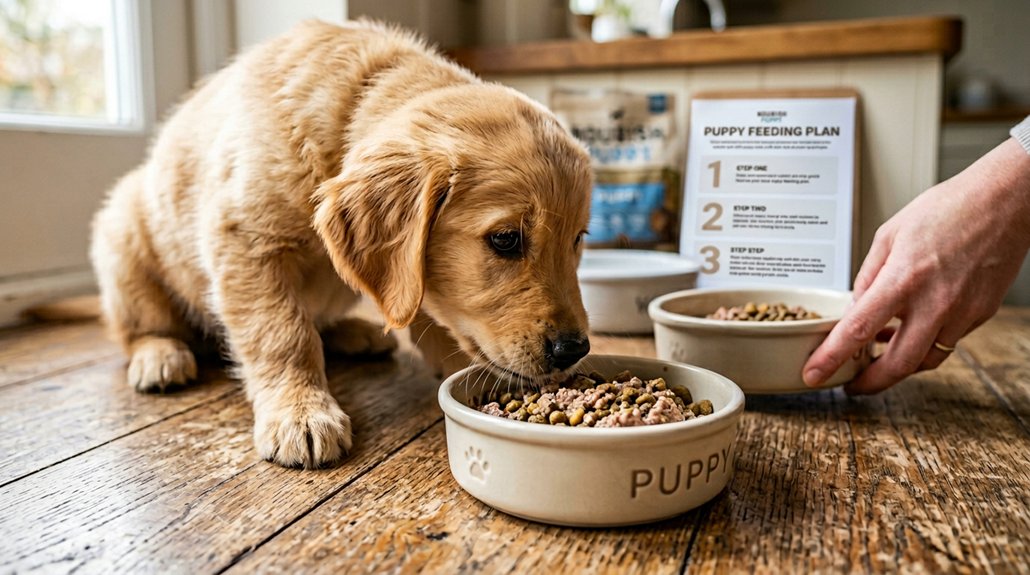
Shift your puppy to new food gradually over 7-10 days to guarantee stable digestive health. Begin by mixing 25% new food with 75% old food, and progressively alter the ratio every few days. Monitor stool consistency and energy levels closely to adjust the timeline if necessary. Maintain a stress-free feeding environment and guarantee freshwater access. Consulting a veterinarian is advisable if severe digestive issues arise. More detailed strategies and expert tips follow.
Key Takeaways
- Gradually transition food over 10 days, starting with a 75% old and 25% new food ratio.
- Shift to a 50:50 mix by days 4-6 to allow digestive adaptation.
- Complete the transition to 100% new food by day 10, monitoring for distress signs.
- Adjust the transition timeline if digestive issues arise, extending duration if necessary.
- Monitor stool consistency and energy levels to assess the new diet’s suitability.
When to Switch Your Puppy’s Food: Key Indicators
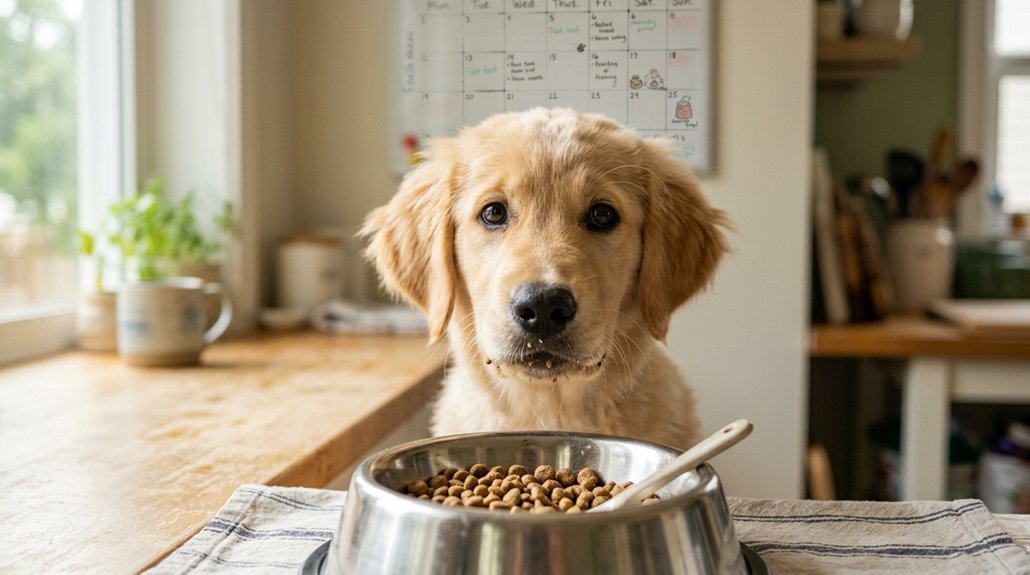
Determining when to switch your puppy’s food requires careful observation of several key indicators. Initially, as your puppy nears one year of age, evaluate changes in feeding frequency and food texture requirements reflective of adult nutritional demands. You should be vigilant about weight fluctuations—overweight or underweight tendencies—indicating the need for dietary reassessment, possibly aided by a veterinarian. Additionally, heightened activity levels necessitate adjustments in caloric and protein intake. Conversely, less active puppies may thrive on lower-calorie formulations. Monitor for signs of allergies or health anomalies, such as gastrointestinal disturbances or dermatological manifestations, which may necessitate an immediate food formula alteration. Recognition of these indicators facilitates ideal nutritional provision, ensuring your puppy’s developmental needs are adequately met. Always corroborate changes with professional veterinary advice.
Preparing for a Smooth Food Transition
To guarantee a smooth changeover, begin by selecting a high-quality puppy food that meets all essential nutritional requirements to support your puppy’s growth and development. Implement a gradual transition plan over a 5- to 7-day period, initially incorporating 25% of the new food with 75% of the current food to mitigate digestive upset. Closely monitor your puppy’s response, paying attention to stool consistency and gastrointestinal symptoms, and adjust the transition timeline if necessary.
Understanding Dietary Needs
When shaping a puppy’s diet, a keen focus on their unique nutritional requirements is crucial for healthy development. Puppies necessitate a balanced intake of puppy nutrients—protein, fats, and essential vitamins and minerals—to support their rapid growth. Your choice of new food should align with these nutritional needs, taking into account the puppy’s age, breed, and any specific dietary recommendations from a veterinarian. While selecting a diet, consider their food preferences; maintaining their interest in meals helps guarantee consistent intake of essential nutrients. Consistency in feeding is important, as dogs benefit from stable routines. Monitoring responses such as appetite and stool consistency during dietary changes enables timely adjustments to align the change with their overall health and energy requirements.
Gradual Transition Plan
Although adjusting your puppy’s diet requires careful planning, a methodical approach guarantees a smooth shift. Employing transition strategies over a 7 to 10-day period minimizes digestive disruption. Initiate the puppy feeding process with 75% old food mixed with 25% new food for the initial two days. Progress to a balanced 50:50 ratio by day three, maintaining this until day four. Subsequently, modify the diet to 75% new food and 25% old food from days five through seven, facilitating adaptation to novel flavor profiles and textures. On day ten, your puppy should consume solely the new food type. Vigilantly monitor signs of gastrointestinal distress like diarrhea or vomiting. Consistency in feeding schedules and environment underpins successful dietary shift.
Guidelines for Gradual Puppy Food Transition
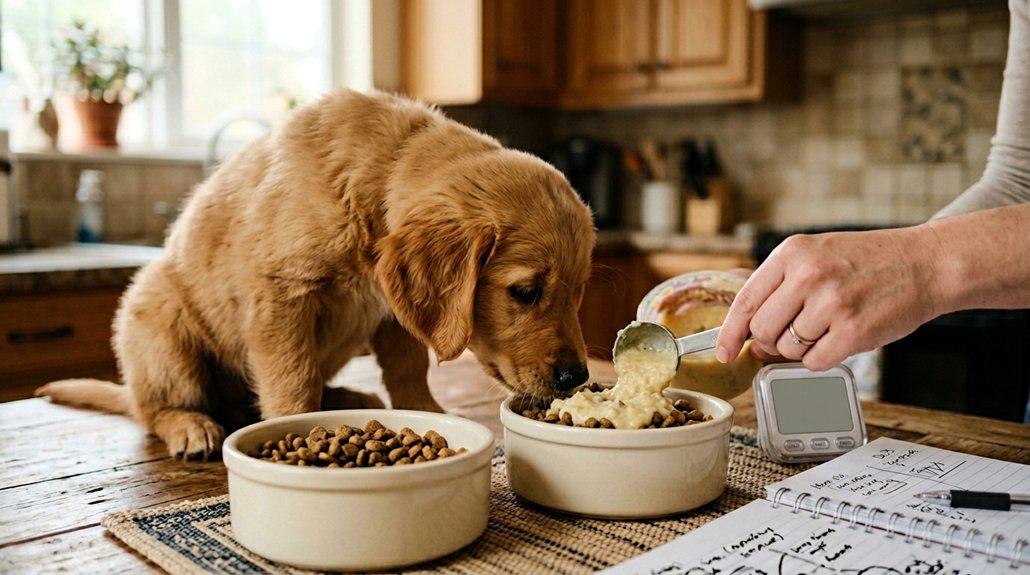
Initiating a gradual puppy food shift is essential to minimize digestive upset and assure successful dietary acclimation. Start with a 5-7 day regimen that guarantees shifting success by slowly incorporating new food according to your puppy’s food preferences. Begin with 75% old food, 25% new food for 2-3 days, allowing digestive systems to adapt incrementally.
| Days | Old Food to New Food Ratio |
|---|---|
| Days 1-3 | 75% old, 25% new |
| Days 4-6 | 50% old, 50% new |
| Days 7-9 | 25% old, 75% new |
Throughout this process, it’s pivotal to observe changes in digestive health and modify if necessary. On Day 10, full dietary change can be accomplished. This strategic approach fosters a smooth shift, mitigating risks of gastrointestinal disturbances.
Monitor Your Puppy’s Reaction to New Food
Effective monitoring is essential during the shift to new puppy food. Begin by evaluating the pup’s receptivity to the altered food texture and taste. Observe if there’s a decline in appetite or hesitancy to consume meals at the usual feeding schedule, as these are indicators of possible dietary intolerance. Examine stool consistency; diarrhea may signal gastrointestinal distress. Remain vigilant for signs like vomiting or excessive gas, which require prompt veterinary consultation.
Track alterations in energy levels and behavior, noting any lethargy as this may reflect an adverse dietary reaction. Verify the feeding environment remains stable to reduce stress, supporting proper acceptance of the new diet. Systematic documentation of these observations will help inform if further interventions are necessary.
How to Manage Digestive Problems During Transition
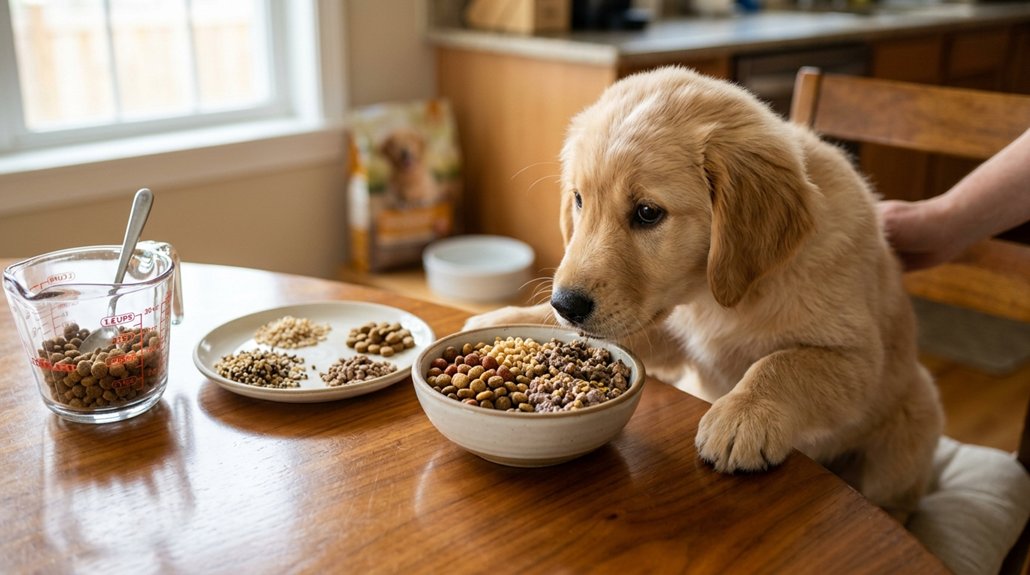
During the changeover, it’s essential you monitor your puppy’s digestion closely, particularly stool consistency and any signs of gastrointestinal disturbance such as diarrhea or vomiting. If issues arise, adjust the changeover speed by incorporating smaller amounts of the new food, potentially reverting to the old diet temporarily. Should persistent symptoms like vomiting or diarrhea occur, consult your veterinarian promptly to rule out any food intolerance or underlying health concerns.
Monitor Digestion Closely
When shifting a puppy to new food, it’s essential to closely monitor their digestive responses to mitigate potential issues effectively. Observe puppy reactions by tracking stool consistency, as diarrhea or firmness changes indicate adjustments in digestive health. Evaluate appetite levels; a decrease might suggest dietary intolerance, demanding a slower adjustment or reverting to previous food. Vomiting necessitates an immediate halt in dietary changes and veterinary consultation. Adjust adjustment length based on observed reactions, allowing 7 to 10 days for gradual adaptation if gastrointestinal issues emerge. Guarantee constant access to fresh water, as adequate hydration supports alleviating digestive discomfort. These practices enable prompt identification and management of adverse responses, safeguarding your puppy’s nutritional wellbeing during the dietary adjustment.
Adjust Transition Speed
Although shifting a puppy to new food requires patience and attentiveness, adjusting the shift speed can effectively manage potential digestive problems. If digestive issues such as diarrhea or vomiting occur, it’s advisable to decelerate the switching speed. Maintain the current diet longer, closely monitor stool consistency, and adjust the new food ratio gradually.
Consider extending the transition duration, especially if your puppy exhibits sensitivity or has a history of digestive complications.
| Transition Strategy | Initial New Food Ratio | Transition Duration |
|---|---|---|
| Standard Transition | 25% | 7-10 days |
| Slower Transition | 10% | 14-21 days |
| Extended Transition | <10% | >21 days (sensitive cases) |
Implementing these measures can optimize gastrointestinal function and guarantee effective adaptation to new nutrition.
Consult Veterinarian Promptly
Recognize signs of digestive distress and consult a veterinarian without delay, as early intervention is essential to your puppy’s health during dietary changes. Monitor stool consistency and general behavior to identify gastrointestinal issues, such as vomiting or diarrhea. If observed, obtain vet recommendations immediately, as these may signal underlying food allergies or intolerance. A veterinarian’s expertise can guide dietary adjustments, tailoring food choices to your puppy’s specific physiological needs. Gradual shifts spanning 7-10 days are generally advised, yet complications necessitate prompt consultation. Your vet may suggest strategic modifications or recommend hypoallergenic alternatives to alleviate discomfort. When symptoms include appetite loss or persistent discomfort, the inclusion of supplements might be advised to stabilize the gut. Make certain that you adhere strictly to professional guidance.
Encouraging Acceptance With Flavor Variety
Gradual introduction of new flavors is essential in encouraging a puppy to accept new foods with flavor variety. Facilitating flavor exploration involves mixing diverse protein sources or textures with existing food, enhancing palatability and acceptance. Incorporating small quantities of wet food or healthy toppers into standard dry kibble heightens aroma, thereby increasing meal appeal. Texture variety is critical; experimenting with varying kibble shapes or sizes stimulates curiosity. Employ slow-feeder bowls or interactive food dispensers to make mealtimes engaging, promoting interest in new flavors. Utilizing positive reinforcement through treats post-ingestion fosters a beneficial association, leading to a more adaptable dietary change. Each element aims to transform dietary alterations into a stimulating and successful experience for your pup.
Why Regular Feeding Times Matter
Establishing regular feeding times markedly contributes to a structured routine for your puppy, which plays an essential role in minimizing anxiety and stress. With feeding consistency, you guarantee meal timing aligns well with your puppy’s natural circadian rhythm, promoting ideal digestion and bathroom habits. Precise meal timing deters overeating, a pivotal factor in weight regulation, as your puppy learns to anticipate feeding intervals. A systematic feeding schedule also positively impacts training and obedience, reinforcing favorable habits through predictable events. Limiting feeding to a 20-minute window fosters enthusiasm, mitigating picky eating tendencies by encouraging prompt consumption. This structured approach supports the overall physiological and behavioral wellness of your puppy, providing a stable foundation as you introduce new dietary choices within their established routine.
Choose Between Wet and Dry Food Options
When deciding on a suitable dietary regimen for your puppy, it’s important to weigh the benefits of both wet and dry food options. Wet food, boasting 75-80% moisture, offers hydration benefits and ease in digestion, which can be vital for a growing puppy’s dietary needs. Meanwhile, dry food, with approximately 10% moisture, prioritizes nutrient density and often supports dental health. Consider the texture preferences and flavor appeal that wet food offers, potentially enticing picky eaters. Additionally, dry food provides feeding convenience, is more cost-effective, and doesn’t require refrigeration, contributing to a longer shelf life. However, mixing both can guarantee nutritional balance and enhance the adaptation experience. Evaluate your puppy’s needs regarding cost comparison, health benefits, and personal preferences.
Consult a Veterinarian if Problems Occur
If your puppy exhibits signs of digestive distress, such as diarrhea or vomiting, consulting a veterinarian is vital to assess the suitability of the new diet. These symptoms may indicate food allergies or an intolerance to certain ingredients, requiring professional intervention. Rapid identification of dietary issues is important, as neglect can worsen gastrointestinal disturbances.
Additionally, altered puppy behavior, such as lethargy or reduced appetite, may suggest underlying health concerns linked to the food change. A veterinarian can perform diagnostic evaluations to ascertain if the current diet aligns with your puppy’s specific physiological needs. With evidence-based insights, veterinarians provide tailored nutritional strategies, potentially offering alternative dietary regimens. Regular follow-ups are significant to monitor adaptation progression and secure optimal health outcomes for your puppy.
Ensuring Your Puppy Gets Nutrients After Transition
To guarantee your puppy receives adequate nutrients after moving to new food, it’s crucial to provide a balanced diet rich in proteins, fats, vitamins, and minerals tailored to their growth requirements. Vigilantly monitor their weight and growth indicators, adjusting caloric intake as needed to fit their age and breed specifications. Additionally, assess stool consistency and incorporate probiotics to promote ideal digestion and nutrient absorption, and consult a veterinarian to validate the appropriateness of the new diet.
Balanced Diet Essentials
Guaranteeing your puppy receives a balanced diet following a food change is essential for ideal development and health. Puppy nutrition must prioritize adequate protein, healthy fats, and essential vitamins. Tailor dietary preferences by including at least 22% protein and 8% fat to support robust growth. Varied nutritional demands by breed and age necessitate energy-rich diets during these formative months.
| Nutrient | Function |
|---|---|
| Protein (22% min) | Muscle development |
| Healthy Fats (8%) | Energy supply |
| Probiotics | Gut microbiome support |
| Vitamins/Minerals | Immune and bone health |
Integrating probiotics aids digestion and a resilient gut microbiome. Consult with a veterinarian to align diet to your puppy’s specific breed and health profile. These strategies guarantee your puppy’s shift to new food maintains essential growth and health metrics.
Monitor Puppy Health
Although shifting your puppy to a new food is essential, it’s equally important to guarantee that the change doesn’t undermine their nutritional intake. Regular monitoring is critical to affirm the shift supports your puppy’s ideal growth and development. Check your puppy’s weight routinely to maintain a healthy growth trajectory, avoiding excessive weight gain or loss. Assess their stool consistency daily; stools should ideally be firm, indicating digestive health.
- Watch for signs of allergies: itching, ear infections, or gastrointestinal distress.
- Confirm the new food complies with AAFCO’s nutritional guidelines, focusing on protein, essential fatty acids, and vitamins.
- Schedule regular veterinary check-ups to evaluate health metrics and make dietary adjustments as needed.
- Implement a gradual shift to prevent gastrointestinal disturbances during the switch.
Frequently Asked Questions
How Long Does It Take to Transition a Puppy to New Food?
It’ll typically take 7 to 10 days to switch a puppy to new food. This gradual process supports ideal puppy digestion and helps identify any food allergies. Monitor stool and behavior closely for any adverse reactions.
What Is the 7 7 7 Rule for Puppies?
The 7 7 7 Rule symbolizes a structured shift, guiding you through a 7-day timeline. It’s essential for optimizing a puppy’s digestive acclimation via a precise feeding schedule, enhancing nutrient absorption and minimizing gastrointestinal distress.
What Is the Best Dog Food for Pancreatitis?
For a dog with pancreatitis, you’d choose a diet that’s low-fat, whether commercial or homemade. Ideal options include those with lean proteins like chicken, easily digestible carbs, and vet-recommended formulations ensuring balanced nutrition and evidence-based health benefits.
How to Transition a Puppy to Another Food?
To shift a puppy to another food, gradually increase the new diet. Monitor for potential food allergies and puppy digestion issues. Start with a small proportion, adjusting slowly. Consult your vet if vomiting or diarrhea occurs.
Conclusion
In changing your puppy to new food, prioritize gradual change, monitor reactions, and address digestive issues. Regular feeding times regulate metabolism, guarantee nutrient intake, and promote well-being. Wet and dry options offer variety, but your dog’s needs should guide the choice. If problems persist, consulting a veterinarian guarantees professional intervention. By focusing on gradual shifts, consistent routine, and vigilant observation, you’re facilitating a seamless change while safeguarding your puppy’s nutritional health and overall welfare.