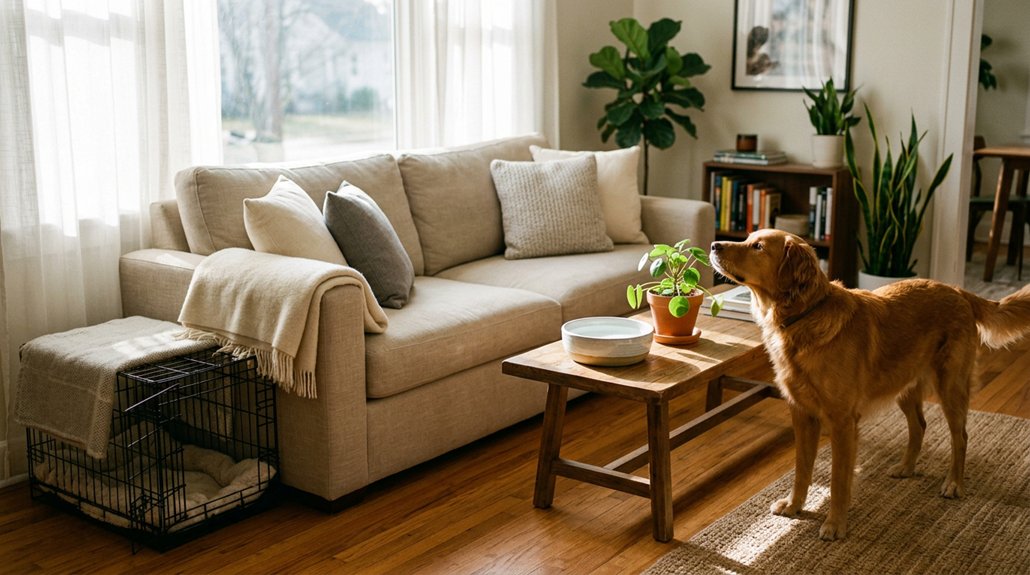
Before bringing your adopted dog home, prepare by gathering essentials like a collar, leash, and safe space. Shift diets gradually to avoid digestive issues and establish structured routines for feeding and walks. Introduce your dog to family members calmly, providing quiet time for adjustment. Use positive reinforcement to encourage good behaviors, and monitor for stress indicators. Space and patience facilitate adaptation. There’s a wealth of knowledge waiting to guide you through these essential first steps.
Key Takeaways
- Prepare essential items like a collar, leash, dog bed, and high-quality food for your dog’s arrival.
- Establish a safe and cozy space by removing hazards and providing comfort items like toys and a bed.
- Learn your dog’s previous schedule to maintain a consistent routine which aids smooth transition.
- Gradually introduce family members individually and allow the dog quiet time to settle before exploring the home.
- Mix shelter food with new food over several days to ensure a smooth dietary transition.
Prepare for Your Shelter Dog’s Arrival
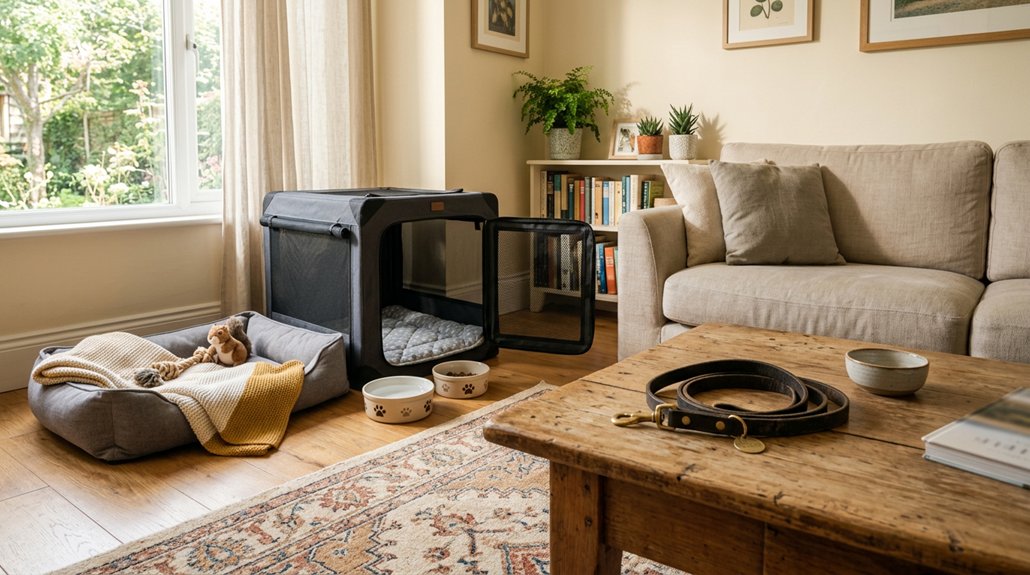
Bringing your adopted dog home requires careful preparation to guarantee a smooth change. Make sure you’ve gathered all essential items, like a collar, leash, dog bed, and food/water bowls, ready for your new companion. Select high-quality dog food to support their health and well-being. Establish a safe space to prevent any mishaps during early explorations; remove hazardous items and toxic plants, and block risky areas. Set up a cozy area with their bed and favorite toys to provide them with comfort and security. By preparing in this manner, you create a supportive environment that facilitates adjustment and eases your dog’s change into their new home. Remaining proactive and attentive will lay the groundwork for a harmonious start.
Getting Through Your Dog’s First Days
During your dog’s initial days at home, guarantee a smooth shift by prioritizing patience and structure. It’s essential to maintain a consistent routine that mirrors their previous schedule, fostering a sense of familiarity while gradually introducing exploration within controlled boundaries. Facilitating a calm and methodical introduction to family members will strengthen bonds and reassure your dog in its new environment.
Initial Home Exploration
The moment your newly adopted dog sets paw in their new home, give them some quiet time to calmly settle in. During the initial exploration, it’s essential to keep them on a leash to guarantee safety and prevent any potential bolting. Leash safety promotes control as your dog gets acquainted with their environment. Start by allowing them to explore a limited area, rather than the entire house, to prevent overwhelm and reduce accident risks.
As your dog investigates, closely monitor their body language to understand their comfort level. Adjust their space accordingly if signs of stress appear. Acknowledge and praise them for eliminating outside after their first walk, reinforcing good habits early. This cautious approach paves the way for a smoother adjustment period.
Routine and Bonding Steps
Understanding your new dog’s routine and bonding process is essential during their initial days at home. Establishing routine consistency helps them acclimate to their surroundings and sets the foundation for a positive relationship. Immediately provide quiet time for adjustment, then introduce structured bonding activities. Follow the 3-3-3 rule: during the first three days, expect some shyness and possible house-training accidents. After three weeks, their understanding of routine will improve. By three months, feel secure and ready to bond.
- Quiet adjustment time enhances confidence in new environments.
- Leash walks post-arrival can encourage elimination outdoors, praised as positive behavior.
- Consistent routine in feeding, walks, and play fosters trust.
- Patience through shyness or barking assures support during adaptation.
Your diligence promotes a healthy adjustment.
Set Up Your Dog’s Cozy Space
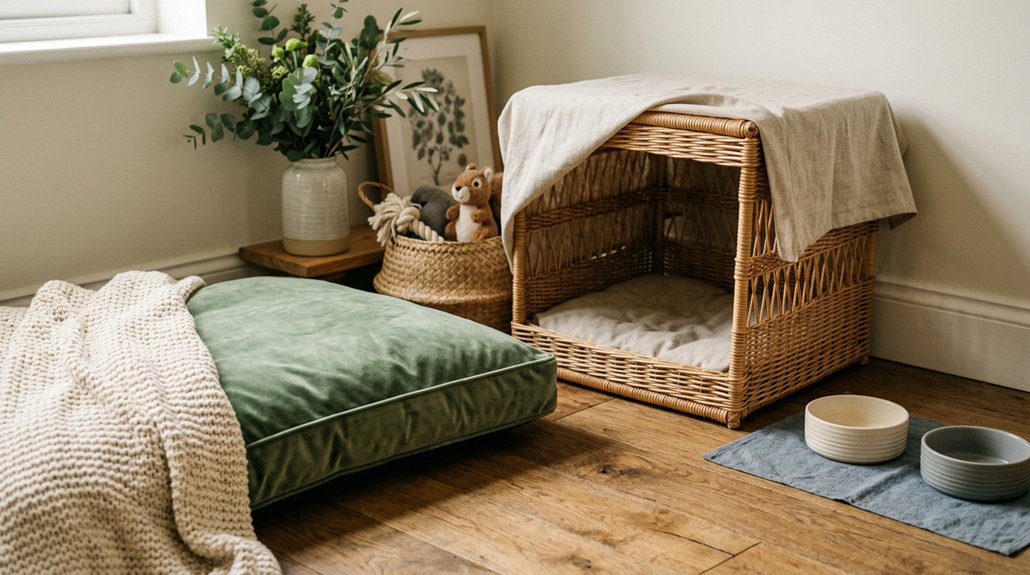
Creating a dedicated cozy space is essential for helping your adopted dog feel secure in its new environment. Equip this area with a comfortable dog bed or crate to establish a stable comfort zone. Position the space in a quiet area of your home to minimize anxiety and disturbances. This area should have fresh water and food bowls within easy reach, supporting a consistent feeding routine that enhances stability. Include familiar items like toys or blankets from the shelter, as they bring a sense of continuity and ease. Maintaining predictable feeding and potty break schedules around this space builds trust in your new home’s dynamics, aiding your dog in adjusting smoothly and developing a sense of belonging and security.
Help Your Shelter Dog Meet Your Family
To facilitate a smooth changeover for your adopted dog, introduce each family member individually, enabling the dog to gradually acclimate to new scents and sights. Pay attention to signs of stress, such as hiding, and adjust interactions to maintain a calm and trusting atmosphere. Using soft voices and gentle movements fosters security, helping the dog build trust and feel more at ease.
Managing First Encounters
When introducing your adopted dog to your family, it’s essential to manage first encounters carefully to guarantee a smooth changeover. Family introductions should be controlled and gradual. Start by meeting individual family members one at a time to prevent overwhelming your new pet. Make sure that each introduction is a low-stress, positive experience allowing the dog to become acclimated to each person’s sight and scent at their own pace.
- Use calm voices and slow movements to promote comfort and build trust.
- Watch for signs of stress or anxiety, adjusting the approach as needed.
- If the dog seems overwhelmed, give them space to decompress.
- Reinforce successful interactions with positive reinforcement, such as treats or praise, to create pleasant associations with each family member.
Building Trust Gradually
Although bringing a shelter dog into your home can be a rewarding experience, building trust gradually is essential to ensuring a successful change. Start with gradual introductions by introducing family members one at a time. This approach prevents overwhelming your new pet and facilitates comfortable acclimation. Allow the dog to explore each family member’s sight and scent gradually, establishing security and trust building. Observe your dog’s body language closely for any signs of stress or discomfort during introductions and keep interactions low-key and calm. Encourage family members to engage in quiet, gentle activities, helping to build rapport through positive experiences. Reinforce positive interactions with treats and praise, equating family members with positive reinforcement, underpinning a trusting relationship.
Creating a Calm Atmosphere
- Designate a quiet area: Offer a separate, noise-free room where your dog can relax without interruption.
- Gradual introductions: Introduce family members individually to prevent overwhelming your dog and allow them to acclimate at their own pace.
- Calm interactions: Use gentle, slow movements and maintain a quiet demeanor to build trust.
- Establish consistency: Maintain a regular schedule for feeding, walks, and play to provide structure and security.
Monitoring body language will help you make necessary adjustments, reducing stress.
Transition Your Dog’s Diet Safely
To guarantee a smooth dietary shift for your adopted dog, begin by mixing their current shelter food with the new food over a period of 3 to 4 days. Start with a ratio of 2/3 shelter diet to 1/3 new diet, gradually increasing the new food proportion. These dietary adjustments are vital for a successful food change. Monitor your dog’s appetite early on; decreased interest in food is common due to post-adoption stress. If reluctance persists, enhance the meal’s appeal by adding canned food to kibble. Make certain that there is constant access to fresh water to prevent dehydration during this shift. Regularly check your dog’s stools for any abnormalities, which may indicate gastrointestinal distress and warrant a veterinarian’s examination.
Address Stress and Behavior Issues
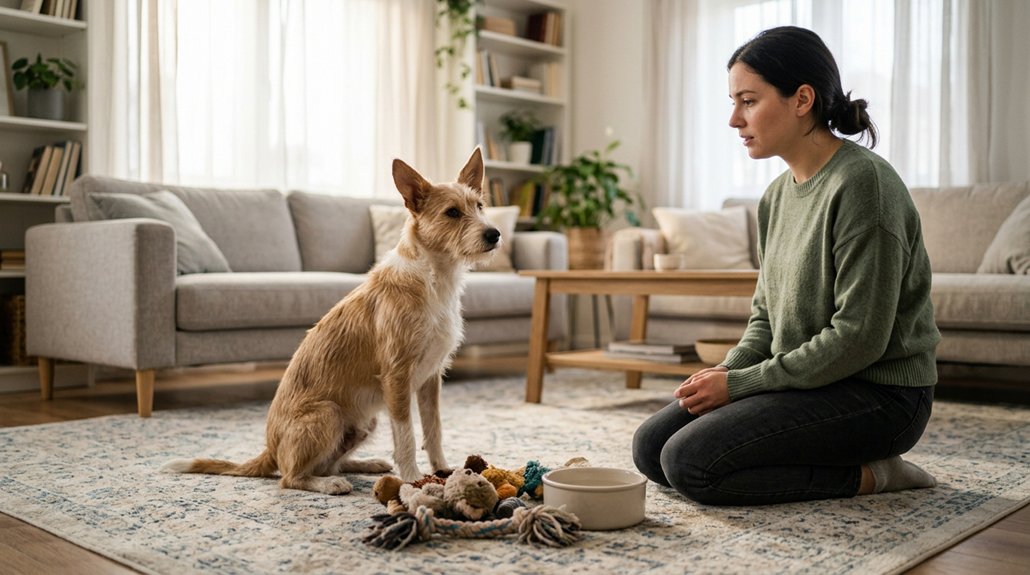
When welcoming a newly adopted dog into your home, expect behavioral challenges stemming from stress and unfamiliar surroundings. It’s essential to recognize fear responses as your dog adjusts. Understanding behavior management is key to a smooth shift. Here are some expert tips to address common issues:
- Create a calm space: Offer a quiet, secure area where your dog can retreat to manage stress.
- Establish routines: Regular feeding and bathroom schedules help minimize house-training accidents.
- Use positive reinforcement: Rewarding desired behaviors reduces anxiety-driven actions like excessive barking.
- Provide mental stimulation: Supply chew toys and activities to prevent destructive chewing from boredom.
Patience and consistent behavior management strategies will facilitate your dog’s adaptation, ensuring a harmonious home environment.
Frequently Asked Questions
Where Should an Adopted Dog Sleep First Night?
Your adopted dog should sleep in a designated safe space, like a crate or dog bed setup, in your bedroom. This sleeping area fosters security and closeness, helping them adjust better to new surroundings.
What Is the 3-3-3 Rule for Adopted Dogs?
The 3-3-3 rule is an emotional rollercoaster for dogs adjusting to a new home. During this adjustment period, expect them to transform from overwhelmed strangers in three days, to comfortable companions in three weeks, to bonded family members in three months.
What to Do the First Day You Bring Home a Rescue Dog?
On the first day, create a peaceful environment using calming techniques. Allow the dog to explore on a leash and introduce family members gradually. Provide a safe retreat space and reinforce elimination behavior outdoors with praise.
Is It Okay if I Leave My Dog Home Alone for 8 Hours and 5 Days a Week?
Leaving your dog alone for 8 hours daily is possible with ideal crate training and mitigation of dog separation anxiety. Provide interactive toys and consider pet daycare or dog walkers for exercise and socialization five days a week.
Conclusion
Bringing your adopted dog home is a rewarding journey that requires patience and preparation. Consider Jane, who adopted Max, a timid Labrador. She followed a structured approach, creating a comfortable space and slowly introducing Max to family members. Gradually, Max adapted, thanks to a consistent routine and gentle reassurance. Remember, it’s normal for your new pet to experience initial stress. With time and care, your shelter dog will thrive in their new home, becoming a beloved family member.