
If your dog suddenly refuses to eat or shows a spike in appetite, it might be a sign of underlying issues like diabetes or thyroid problems. Low energy or excessive sleep could indicate infections or heart issues. Vomiting, diarrhea, or changes in coat quality also warrant attention. Breathing changes or withdrawal behaviors suggest immediate vet care. Guarantee regular monitoring and vet consultations for early detection. Discover what other signs might indicate your dog needs attention by continuing further.
Key Takeaways
- Refusal to eat or drink for over 24 hours signals a need for veterinary attention.
- Sudden behavioral changes, such as irritability or withdrawal, may indicate physical or emotional distress.
- Persistent vomiting or diarrhea beyond 24 hours requires immediate vet consultation.
- Unusual breathing patterns, like wheezing or labored breathing, necessitate urgent veterinary care.
- Keep track of symptoms for diagnosis and follow vet-recommended dietary adjustments and care plans.
Signs Your Dog Might Be Sick: Appetite Changes

How often do you notice changes in your dog’s appetite that seem sudden or unusual? Appetite fluctuations in your furry friend can be a signal of underlying health issues. When your dog suddenly refuses to eat or drink for more than 24 hours, it’s a warning sign that shouldn’t be ignored. Conversely, an increased appetite might indicate diabetes or thyroid problems. Track your dog’s feeding habits closely; sudden cravings or shifts in hunger need attention. Occasionally, mild upset stomachs can be managed with bland food like boiled chicken and rice. However, if these changes persist, don’t delay a trip to the vet. Regularly monitor their appetite and weight—being proactive is key in catching potential health concerns early.
Spot Low Energy Signs in Your Dog
When your dog suddenly seems less lively, it might be more than just a case of the blues. Pay attention to changes in their energy levels. A sudden decline in playfulness, reluctance to participate in favorite activities, or excessive napping can all be red flags.
| Warning Signs | Possible Causes |
|---|---|
| Reluctance to play | Infections, heart problems |
| Excessive sleeping | Underlying health issues |
| Decreased enthusiasm | Discomfort, illness |
Regularly observe your dog’s behaviors and energy to spot any shifts. These signs may reveal serious conditions needing prompt veterinary attention. Identifying these issues early on will protect your dog’s well-being, so don’t overlook any playfulness decline or change in their usual zest for life.
Address Vomiting and Diarrhea Promptly
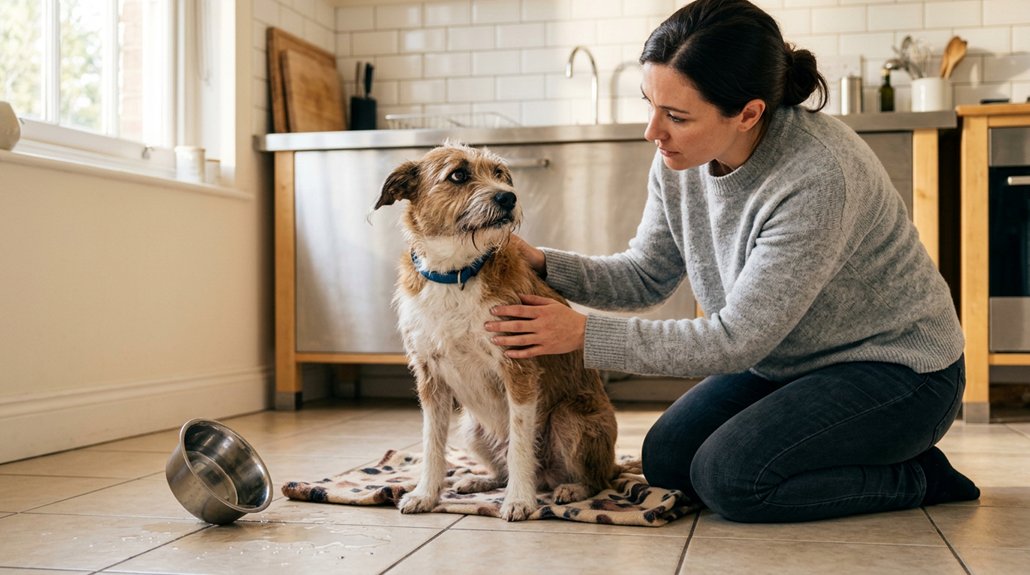
When your dog shows signs of persistent vomiting or diarrhea, it’s essential to monitor the frequency and severity of these symptoms closely. Make sure they stay hydrated by providing access to fresh water and consider starting a bland diet until the symptoms subside. If the issues last more than 24 hours or are accompanied by additional worrying signs, consult a veterinary professional to address potential underlying health concerns.
Monitor Frequency and Severity
If you notice changes in your dog’s bathroom habits, it’s important to monitor the frequency and severity, especially when involving vomiting or diarrhea. Pay close attention to vomiting patterns and diarrhea frequency. Persisting issues beyond 24 hours could signal underlying health problems requiring immediate veterinary care. Offering a bland diet like boiled chicken and rice might help ease your dog’s stomach as you track their symptoms. Watch closely for any escalation in frequency and observe for additional symptoms, such as lethargy, blood in vomit or stools, or abdominal pain. These signs require urgent veterinary evaluation. If your dog vomits or experiences diarrhea multiple times within a day, it’s vital to seek veterinary assistance promptly to address potential health concerns.
Prevent Dehydration
Even though it might seem minor, vomiting and diarrhea can lead to rapid dehydration in your dog, making it essential to address these symptoms promptly. Keep a close eye on your dog’s water intake, offering fresh water frequently to encourage drinking. Include hydration tips such as monitoring for symptoms like dry gums and lethargy, which indicate dehydration. To help restore balance, consider an electrolyte solution recommended by your veterinarian.
Observing these precautions, introduce a bland diet of boiled chicken and rice to calm their stomach while ensuring nutritional intake. Persistent vomiting or diarrhea lasting over 24 hours requires immediate action to prevent severe complications. Prioritize managing these issues to maintain their health and well-being while providing comfort and care.
Consult Veterinary Professional
Although it can be distressing to see your dog experiencing persistent vomiting or diarrhea, it’s vital to consult a veterinary professional promptly. If symptoms persist for more than 24 hours, your pet may need emergency care to prevent dehydration and complications. Severe or frequent vomiting, especially if accompanied by lethargy or blood, calls for immediate attention from your vet. They’ll assess the situation, provide necessary treatment, and offer dietary recommendations to support recovery. Maintaining hydration is important, so ensuring access to fresh water is significant; however, if your dog can’t keep water down, seek veterinary assistance. Documenting symptoms like frequency and severity aids in diagnosis. Post-consultation, a bland diet like boiled chicken and rice might be recommended to ease digestive issues.
Spotting Behavioral Red Flags in Dogs

It’s important to recognize that sudden irritability or withdrawal in your dog might signal underlying discomfort or emotional issues requiring your attention. Additionally, if excessive vocalization or noticeable restlessness starts to emerge, these could be signs of distress that need a closer look. Identifying these behavioral changes promptly is essential in understanding your dog’s health needs and should guide you to seek appropriate veterinary assistance.
Irritability and Withdrawal
When your dog’s demeanor shifts toward irritability or withdrawal, it’s crucial to pay attention, as these behavioral red flags often signal underlying issues. Identifying irritability triggers like pain or illness can prevent further complications. Similarly, withdrawal causes often stem from emotional distress or physical discomfort. Here’s how to approach these signs:
- Observe closely: Noting when irritability or withdrawal occurs helps determine patterns or specific irritability triggers.
- Seek veterinary advice: Consult a vet to explore health issues that might be behind these behavior changes.
- Provide comfort: Make sure your dog feels secure and supported, especially when attempting to engage withdrawn behavior.
- Monitor regularly: Consistent observation aids in early detection of new symptoms, facilitating timely intervention and care.
Restlessness and Pacing
Moving from irritability and withdrawal, another behavior worth noting is restlessness and pacing in your dog. These actions often reveal discomfort or anxiety triggers, signaling potential health issues like gastrointestinal problems or infections. When your dog can’t settle down or find a comfortable position, it’s essential to assess their health thoroughly. Don’t overlook other changes like appetite or energy levels, as these can provide further insights. Environmental stressors or disruptions in routine might also spark such anxious behavior. But if the restlessness persists or worsens alongside other troubling symptoms, it’s vital to consult a veterinarian. They can perform detailed health assessments, pinpointing any underlying conditions needing attention. Ultimately, proactive observation and timely evaluation aid in securing your dog’s well-being.
Excessive Vocalization Signs
Why does your dog suddenly bark, whine, or howl nonstop? Excessive vocalization can be a distress signal indicating underlying issues. Recognizing vocalization triggers and anxiety indicators is key to addressing their needs. Here’s what to look for:
- Health Concerns: A sudden increase in vocal volume or frequency could point to pain or discomfort. Monitor alongside changes in appetite or energy.
- Environmental Stress: Changes in routine or surroundings often result in anxious vocalization. Consider calming techniques or environmental adjustments.
- Boredom or Separation Anxiety: If vocalization coincides with your absence, provide engaging toys or activities to soothe them.
- Seek Professional Advice: If excessive vocalization persists, consult a veterinarian. They’ll help assess whether health or significant behavioral changes are affecting your dog.
Evaluate Skin and Coat Health
While observing your dog’s skin and coat, it’s important to recognize signs that might indicate health issues. A healthy coat should appear shiny and smooth. If you notice dullness, excessive shedding, or roughness, these coat condition changes might signal underlying problems like allergies or infections. Be attentive to sudden hair loss or bald patches, which could point to skin allergies or hormonal imbalances. Redness, flaky skin, or rashes might suggest nutritional deficiencies or a parasitic infestation, such as fleas or mites.
Regular grooming is key to maintaining both skin and coat health, as it allows you to detect abnormalities like lumps or skin irritations early. Verify your dog receives a balanced diet with essential fatty acids to improve their coat and skin health.
Act on Breathing Issues Swiftly
Detecting changes in your dog’s overall well-being starts with keen observation of their skin and coat, but it’s equally important to be vigilant when it comes to their respiratory health. Breathing issues can be alarming and may signal serious conditions requiring prompt action. Here’s how to identify and respond effectively:
Observing your dog’s skin and respiratory health is key to spotting potential issues early.
- Observe breathing patterns: Note any coughing, wheezing, or labored breathing. Track changes to spot potential issues early.
- Take emergency actions: Rapid or difficulty in breathing calls for urgent veterinary attention. Early interventions can prevent escalations.
- Practice breathing techniques: If advised by a vet, use appropriate techniques to help your dog relax and breathe easier.
- Consult a professional swiftly: Excessive panting or restlessness when at rest should prompt contacting your veterinarian for further guidance.
Frequently Asked Questions
What Is the 3-3-3 Rule for Dogs?
The 3-3-3 rule explains a dog’s adjustment after adoption. Initially, they’ll show adoption anxiety and behavioral cues indicating stress. Give them three days, weeks, and months to relax, adapt routines, and reveal their true personality.
What Is the 7 7 7 Rule for Dogs?
The 7 7 7 rule for dog health is a lighthouse guiding you through stormy seas of canine behavior. Spotting seven symptoms over seven days means it’s time to consult a vet to safeguard your furry companion’s wellbeing.
What Is a Silent Killer in Dogs?
A silent killer in dogs refers to conditions characterized by silent symptoms and hidden illnesses. Keep an eye on subtle changes and underlying conditions, as these might signal something serious. Always consult your vet for expert advice.
What Are the First Signs of Parvo?
You’ll notice early symptoms like a puddle of vomit and dull eyes, signaling canine lethargy. Vomiting signs and dehydration indicators, like excessive drooling and sunken skin, demand urgent action. Consult your vet immediately for critical intervention.
Conclusion
When it comes to your furry friend’s health, think of yourself as a detective, sniffing out clues. Changes in appetite or energy are whispers from their heart, and vomiting is their silent plea for help. Don’t brush off behavioral shifts or neglect their coat’s allure. Each breath they take should be a symphony, not a struggle. Trust your instincts, act swiftly, and partner with your vet to guarantee your pet’s tail continues wagging in joy and health.