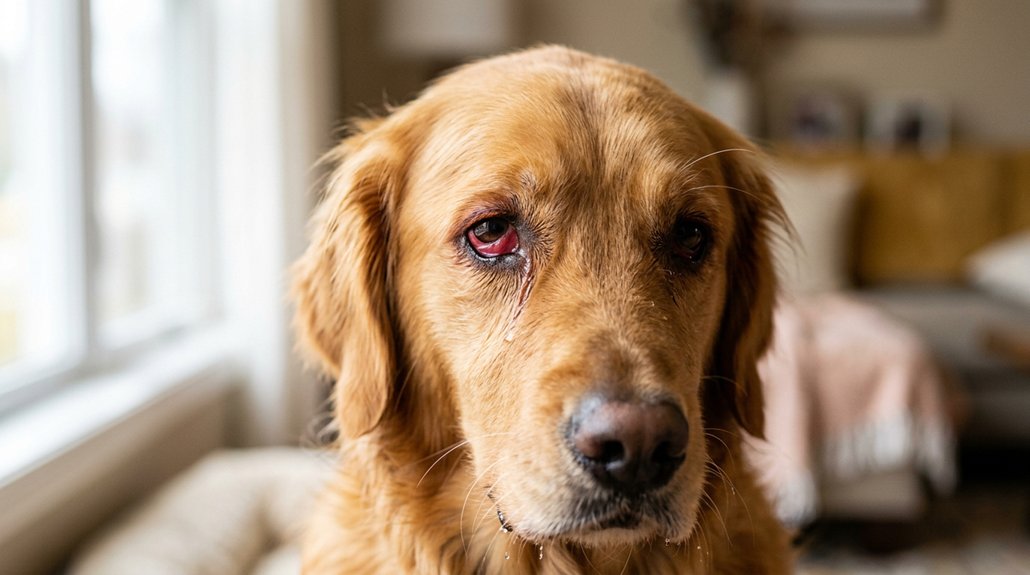
Your dog’s red or watery eyes may stem from allergies, infections, or environmental irritants. Allergies often produce a clear discharge, whereas infections create thick yellow or green discharge, indicating a need for specific medications. Watch for signs like excessive blinking and pawing, as they signal discomfort, and consult a vet if symptoms persist. Understanding the triggers and symptoms helps guarantee appropriate care. Discover more about identifying, treating, and preventing these eye issues to protect your dog’s health.
Key Takeaways
- Red or watery eyes can indicate underlying issues like allergies or infections.
- Excessive blinking or squinting suggests eye discomfort or irritation in dogs.
- Clear discharge usually points to allergies, while thick colored discharge suggests an infection.
- Allergies may respond to antihistamines, but infections require specific medical treatment.
- Seek urgent care for excessive redness with thick discharge or sudden changes in vision.
How to Spot Red Eye Symptoms in Dogs
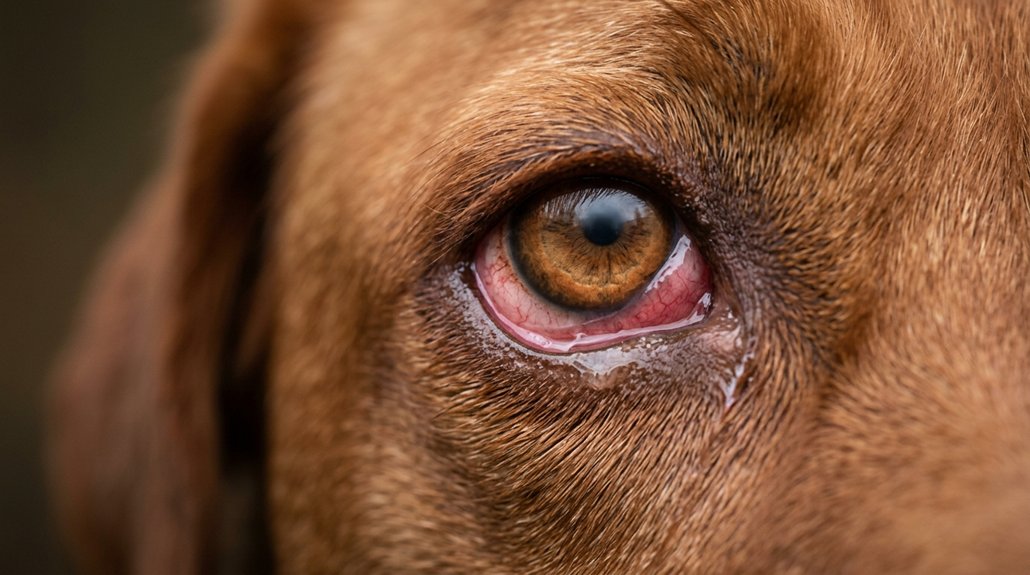
Have you ever noticed your dog’s eyes looking red or watery? These signs often signal underlying issues needing closer examination. Symptom identification starts with evaluating the redness, a hallmark of conjunctivitis, which might include noticeable discharge. Pay attention to excessive blinking or squinting, as these are indicators of discomfort. Redness evaluation also involves checking for swelling, which could be due to conjunctival hyperemia or allergies, leading to a puffy appearance. If your dog paws at their face frequently, it suggests itchiness or soreness in the eye area. Also, observe any discharge as it varies from clear to thick and colored; its presence is pivotal in symptom identification. Recognizing these symptoms early can enhance your dog’s comfort and health.
Could It Be Allergies or Infections? Know the Difference
How do you differentiate between allergies and infections when your dog’s eyes are affected? Observing the nature of eye discharge can be key: allergies typically cause clear, watery discharge, while infection signs include thick, yellow or green discharge. Allergy triggers, such as pollen or dust mites, often result in your dog showing mild irritation by scratching or pawing at their face. On the other hand, infections, caused by bacteria or viruses, might lead to more pronounced redness, significant swelling, and pain signs like squinting or closed eyes. Remember, proper diagnosis is essential. Allergies usually respond to antihistamines or anti-inflammatory drops, whereas infections often need specific antibacterial or antiviral medications. Consult a vet promptly for accurate evaluation and effective treatment.
What Triggers Red Eyes in Dogs?
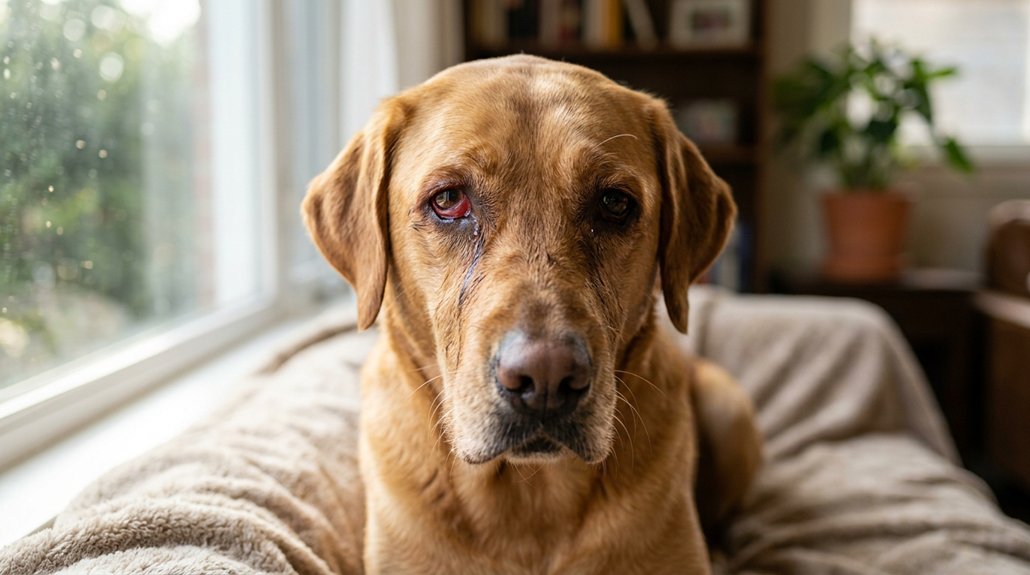
Red eyes in dogs can be caused by several underlying issues that every pet owner should be aware of to provide the best care. Common allergy triggers like pollen, dust, and mold may lead to allergic reactions, causing your dog’s eyes to become red or watery. Persistent eye irritants such as foreign objects can result in trauma or conjunctivitis. If your dog is experiencing Dry Eye Syndrome, you might notice redness due to inadequate tear production. Furthermore, anatomical conditions like cherry eye or entropion can lead to irritation when the eyelids aren’t protecting the eye effectively. Here’s a quick guide to potential triggers:
| Trigger Type | Description | Effect on Eyes |
|---|---|---|
| Allergy Triggers | Pollen, dust, mold | Redness, watering |
| Conjunctivitis Causes | Infections, irritants, allergies | Redness, discharge |
| Injury/Trauma | Foreign objects | Irritation, redness |
Recognizing Types of Red Eye Conditions
When your dog’s eyes appear red, it is vital to recognize the type of redness to understand the underlying condition. Episcleral injection involves enlarged blood vessels in the sclera, often linked to serious diseases like uveitis. Conjunctival hyperemia, however, typically signals external irritants or infections, such as conjunctivitis. Subconjunctival hemorrhage presents as a bright red patch, usually resulting from trauma. Another form, corneal neovascularization, develops when new vessels form due to inflammation, potentially impairing vision. Hyphema recognition is important, as this pooling of blood in the eye’s anterior chamber often indicates trauma or hypertension, requiring swift veterinary examination. Understanding these conditions will help you assess your dog’s eye health with precision and empathy, ensuring the best care for your furry friend.
Key Signs Your Dog Needs Immediate Veterinary Care
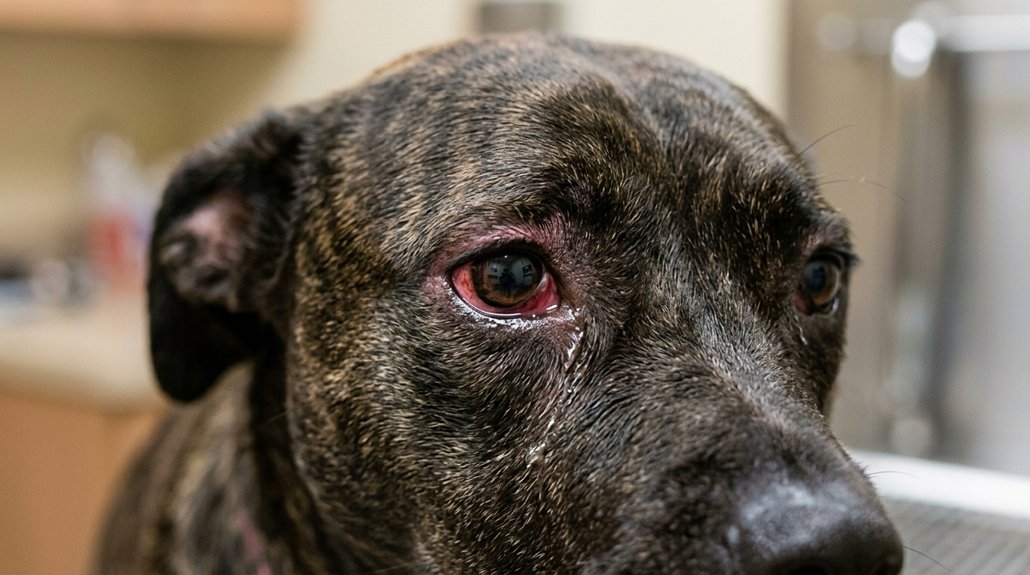
Why should you keep an eye on any changes in your dog’s eye condition? Recognizing emergency signs is vital for your dog’s comfort and well-being. If you notice excessive redness, coupled with thick yellow or green discharge, it could indicate a serious infection requiring immediate veterinary care. Squinting, pawing, or showing discomfort are red flags suggesting your dog might be in pain and needs to see a vet urgently. Sudden watery eyes, especially if localized to one eye, might signal infections or foreign objects. Additionally, swelling around the eyes or eyelids should prompt concern—conditions like glaucoma can masquerade as allergies. Finally, vision changes or behavioral shifts, such as disorientation, demand prompt attention as they could signify significant eye issues.
Veterinary Diagnostic Techniques for Red Eyes
Eye health is paramount for your dog’s comfort and longevity, making it important to identify issues as soon as they arise. A complete medical history and physical examination pave the way for understanding your dog’s red or watery eyes. Your vet will use ocular examination techniques and diagnostic testing methods. Tools examine the eye for abnormalities, while non-invasive tests like the Schirmer tear test and tonometry evaluate tear production and intraocular pressure.
Here’s a look at techniques used:
| Technique | Purpose |
|---|---|
| Ocular Examination | Visual inspection of eye health |
| Schirmer Tear Test | Measures tear production |
| Tonometry | Assesses intraocular pressure |
| Laboratory Testing | Checks systemic condition involvement |
| Ultrasound & Monitoring | Explores complex cases for deeper issues |
Ensuring timely diagnosis helps in planning appropriate next steps.
Treatment Options for Correcting Red Eyes
Although red eyes in dogs can come from various causes, effective treatment plans are vital in alleviating discomfort and promoting eye health. Medicated eye drops or ointments can target infections or soothe irritation. For allergy-induced red eyes, antihistamines along with medicated eye drops help manage symptoms. Home remedies like artificial tears provide relief for Dry Eye Syndrome, ensuring proper lubrication. Some holistic treatments involve dietary changes or natural supplements, offering an alternative approach to eye health management. Structural issues such as entropion or cherry eye might require surgical intervention to prevent irritation. Regular follow-up veterinary visits are essential in evaluating the effectiveness of treatments and making necessary adjustments. Prioritizing your dog’s eye health enhances their overall wellbeing and comfort.
Tips to Prevent Red Eyes in Your Dog
When it comes to preventing red eyes in your dog, it is crucial to prioritize regular grooming and keep their environment free of irritants. Use gentle cleaning techniques to remove allergens like dust and pollen, and consider implementing an allergy management plan, particularly during peak pollen seasons. Additionally, routine check-ups with your veterinarian can identify any underlying eye conditions early, ensuring your dog’s eyes remain healthy and comfortable.
Provide Regular Eye Care
Caring for your dog’s eyes is essential to preventing discomfort and more severe issues. Regular eye care should be part of your pet grooming routine, using proper eye wipe techniques. Gently wipe your dog’s eyes with pet-specific eye wipes or a damp cloth to clear debris and reduce irritation. This simple step can greatly lessen redness in your dog’s eyes. Additionally, it’s important to incorporate routine check-ups with your vet, especially for breeds prone to eye problems. Nutrition also plays a noteworthy role in maintaining eye health, so consider a diet rich in omega-3 fatty acids. Here’s a quick checklist to guide you:
- Use pet-specific eye wipes regularly
- Schedule routine veterinary check-ups
- Provide a balanced diet with omega-3s
Minimize Environmental Irritants
Maintaining your dog’s eye health involves more than regular care; it’s also about managing their surroundings to minimize potential irritants. Identifying and controlling environmental factors is essential. Start by keeping their living space clean—regularly dust, vacuum, and guarantee mold isn’t a problem. An air purifier with a HEPA filter can effectively remove airborne irritant sources, enhancing the air quality your dog breathes. Bathing your dog can wash away external allergens like pollen clinging to their fur. Additionally, during high pollen days, staying indoors can prevent seasonal allergies from worsening. Be mindful of smoke, strong perfumes, and harsh chemical cleaners, which can lead to eye irritation. These proactive measures can help reduce red or watery eyes in your beloved pet.
Implement Allergy Management Plan
Since allergies can greatly impact your dog’s eye health, an effective allergy management plan is vital for preventing red, irritated eyes. Start by considering allergy testing for a targeted approach to identifying specific allergens. Symptom tracking is important; note changes in your dog’s eye condition daily, as early detection of irritants can help mitigate reactions.
To guarantee your dog’s comfort, try these strategies:
- Regularly bathe your dog to remove allergens like pollen, dust, and mold adhering to their fur.
- Use air purifiers and maintain a clean indoor environment to keep indoor allergens in check.
- Limit outdoor activities during high pollen seasons to reduce exposure to environmental triggers.
Consult your vet for recommendations on antihistamines or anti-inflammatories to manage symptoms effectively.
Ensuring Your Dog’s Eyes Stay Healthy
When it comes to your dog’s eye health, a bit of diligence can go a long way. Prioritize eye nutrition; a diet rich in omega-3 fatty acids and antioxidants fortifies your dog against ocular diseases. Eye hygiene is equally vital. Regular grooming and maintaining a clean environment reduce the risk of irritations. Wash your pet’s eyes with vet-approved products to clear away irritants without risking adverse effects.
Don’t skip those regular veterinary check-ups—they’re fundamental for spotting issues like conjunctivitis or glaucoma early. Pay immediate attention to signs such as excessive squinting or discharge to prevent complications. By focusing on nutrition, hygiene, and prompt care, you guarantee a brighter, healthier future for your dog’s eyes. They’ll thank you for it!
Frequently Asked Questions
What to Do if a Dog’s Eye Is Red and Watery?
For a dog’s red, watery eyes, apply a cold compress and avoid human eye drops. Schedule a vet evaluation promptly. Until then, minimize allergens. These home remedies offer temporary relief until professional care is received.
Why Is My Dog’s Only One Eye Red?
Your dog’s single eye redness might stem from common causes like conjunctivitis, a corneal ulcer, or uveitis. These conditions need careful attention. It’s essential that you consult a vet to diagnose and treat the issue properly.
What Can I Give My Dog for His Red Eyes?
You can gently clean your dog’s eyes with cooled chamomile tea as a home remedy. Consult your vet about allergy treatments like vet-approved antihistamines, ensuring they’re safe. Avoid using human medications to prevent harmful side effects.
When Should I Worry About Dog Eye Redness?
You should worry about your dog’s eye redness if it’s persistent or accompanied by thick discharge, swelling, or behavioral changes. Possible causes include eye infections, allergic reactions, or environmental factors. Consult your vet for a diagnosis.
Conclusion
Just like a lighthouse guiding ships through the night, your vigilance in monitoring your dog’s eye health can prevent complications. Recognizing symptoms early, knowing the difference between allergies and infections, and understanding what triggers red eyes are your navigational tools. With the insights you’ve gained, you can steer your furry friend towards a healthier path. Remember, if warranted, seek immediate veterinary help to guarantee your dog’s eyes remain clear windows to their vibrant soul.