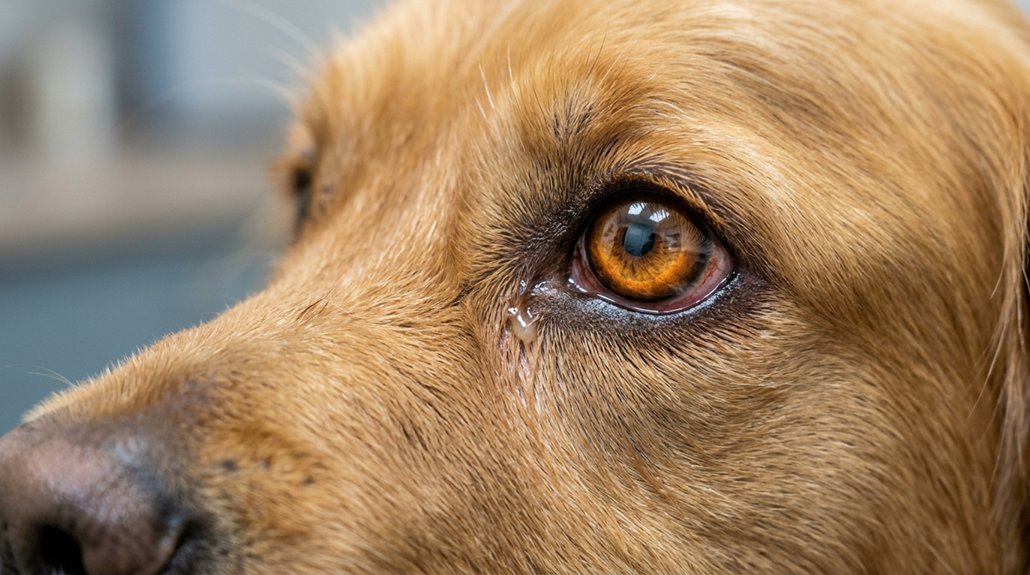
Watch for sudden squinting and pawing at your dog’s eyes, as these may indicate discomfort. Cloudiness, redness, or swelling often hints at underlying conditions like cataracts or infections. Pay attention to eye discharge, especially if it’s yellow, green, or thick, as this can signal an infection. Changes in your dog’s behavior, such as bumping into objects, can denote vision issues. Understanding these signs helps safeguard your dog’s eye health and there’s more to discover.
Key Takeaways
- Look for sudden squinting or pawing at the eyes, as these indicate discomfort or irritation.
- Check for eye discharge, especially yellow, green, or red, suggesting possible infection or health issues.
- Notice any redness or swelling around the eyelids, which might indicate allergies or infections.
- Observe cloudiness in the eyes, which is often associated with cataracts or glaucoma development.
- Watch out for changes in behavior, like bumping into objects, that may signal vision problems.
Get to Know Common Dog Eye Problems
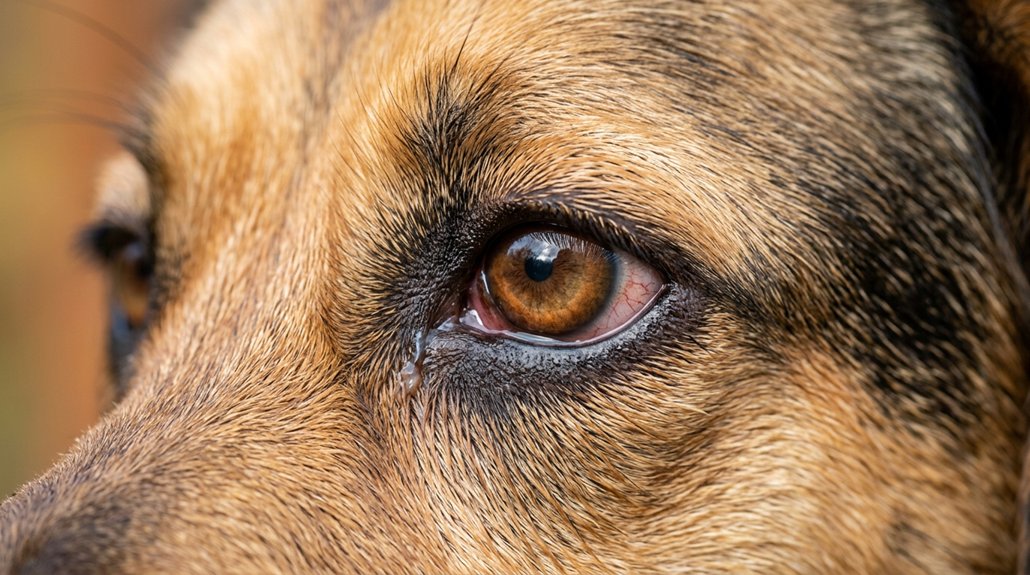
When considering your dog’s eye health, understanding common eye problems is essential for prompt recognition and treatment. In the area of dog anatomy, cataracts are a notable concern, causing cloudiness in the lens that might necessitate surgical intervention to restore your dog’s vision. Glaucoma, another serious issue, involves elevated intraocular pressure that can culminate in irreversible vision changes if left untreated. Entropion, where eyelids roll inward, can irritate and potentially damage the cornea. Cherry eye, the prolapse of the third eyelid gland, often requires surgery too. Conjunctivitis leads to redness, swelling, and discharge from allergies or infections. Corneal ulcers result from injuries, forming painful sores needing immediate care. Finally, dry eye involves insufficient tear production, requiring ongoing management with medications.
Spot Early Warning Signs in Your Dog’s Eyes
Understanding the spectrum of common eye problems in dogs sets the stage for recognizing early warning signs that might indicate something’s wrong. Changes in your dog’s eyes can be subtle yet significant. Sudden squinting signs, such as your dog squinting or pawing at an eye, suggest discomfort that shouldn’t be ignored. Eye discharge, particularly yellow, green, or red, could indicate an infection. Redness or eyelid swelling are also concerning, as they can point to allergies or infections that need prompt evaluation. Additionally, if you notice cloudiness in the eye, it might be linked to conditions like cataracts or glaucoma, necessitating swift veterinary attention to prevent vision loss. Early detection is essential in safeguarding your dog’s ocular health.
Identify Critical Symptoms Requiring Veterinary Care
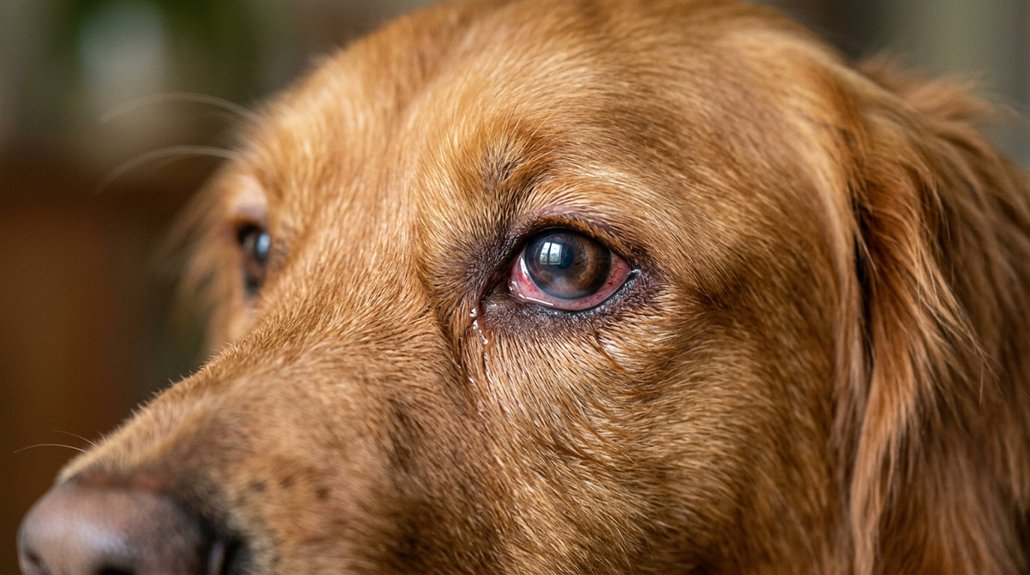
How do you know when your dog’s eye problems warrant a trip to the vet? Start with severe redness around the eyes, which could indicate infections or glaucoma that demand immediate veterinary attention. Persistent squinting or pawing at their eyes suggests significant discomfort, urging a vet visit for a thorough vision assessment. Look out for thick yellow or green ocular discharge; these signs may point to infections needing prompt evaluation and treatment. Sudden vision changes, such as bumping into objects or disorientation, need urgent care to prevent permanent damage. Additionally, visible swelling or bulging eyes can signal critical conditions like glaucoma or trauma, requiring emergency intervention. Early detection and prompt action are crucial for preserving your dog’s vision and health.
How Eye Conditions Affect Your Dog’s Health and Vision
Understanding the impact of eye infections on your dog’s health is vital, as conditions like conjunctivitis and uveitis can severely affect both vision and comfort. Early detection through regular veterinary check-ups can mitigate the risk of complications, providing better outcomes and helping preserve your dog’s quality of life. It’s important to monitor any signs of discomfort or vision changes, ensuring prompt attention and treatment.
Impact of Eye Infections
Even though your dog might seem robust, eye infections can greatly undermine their health and vision if not promptly addressed. Infections commonly stem from bacteria, viruses, or fungi, manifesting symptoms like redness, discharge, and swelling. These ailments deteriorate ocular health, necessitating immediate veterinary care. Without intervention, serious issues such as corneal ulcers or chronic inflammation might arise, risking permanent vision loss. Familiarity with symptoms like yellow or green discharge, squinting, and excessive tearing is key to infection prevention. Prioritize preventive measures, including regular check-ups with a vet. Treatment typically consists of antibiotic eye drops or ointments, and occasionally oral antibiotics to resolve infections fully. Understanding impact and swift action protect your dog’s vision and overall well-being.
Importance of Early Detection
When it comes to your dog’s eye health, early detection of conditions is paramount to safeguarding their vision and overall well-being. Many eye issues, like cataracts or glaucoma, can progress quickly. Recognizing symptoms early allows for early intervention benefits, potentially preventing irreversible vision loss and avoiding the need for surgical solutions. Regular screenings‘ importance can’t be overstated, as these check-ups help identify age-related changes and allow for proactive management of conditions that may deteriorate without notice. If you notice signs like pain, squinting, or changes in your dog’s vision, don’t wait to seek veterinary attention. A “watch and wait” approach can lead to severe consequences, including acute vision loss or enucleation. Prompt evaluation is critical.
Breed-Specific Eye Problems: Recognize and Prevent
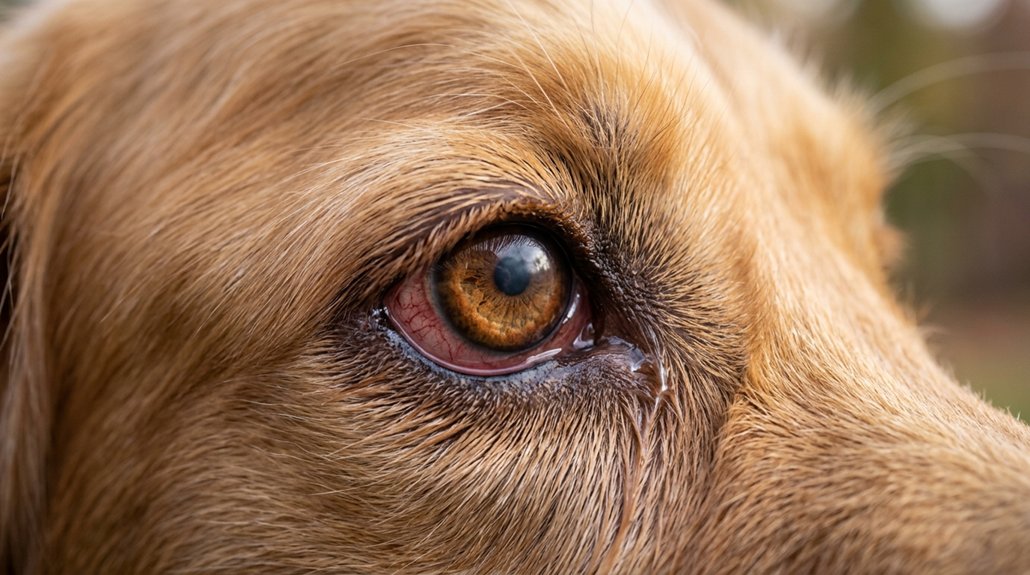
Since certain dog breeds have unique predispositions to eye issues, recognizing and preventing breed-specific problems is essential for maintaining their ocular health. Proper breed awareness is the first step in identifying and addressing these concerns effectively.
- Brachycephalic Breeds: Bulldogs and Pugs are prone to conditions like Cherry Eye and Entropion, both requiring surgical solutions to prevent chronic irritation.
- Giant Breeds: Great Danes and Mastiffs face increased chances of developing glaucoma due to higher intraocular pressure risks.
- Spaniels and Poodles: Commonly experience Epiphora, where watery eyes suggest allergies or tear production issues needing veterinary attention.
- German Shepherds: Prone to Pannus, necessitating sun protection strategies and monitoring for UV-induced corneal damage as preventive measures.
Always prioritize regular eye examinations to address potential concerns promptly.
Targeted Treatments for Dog Eye Problems
Identifying breed-specific eye problems lays the foundation for addressing canine ocular health, but understanding targeted treatments is equally important. Various treatment options hinge on precise diagnostic techniques. For bacterial infections, antibiotic eye drops can be highly effective. Conditions like entropion or cherry eye often necessitate surgical correction. Anti-inflammatory medications, including steroids, are frequently prescribed to alleviate symptoms in cases such as uveitis or conjunctivitis. Chronic issues like keratoconjunctivitis sicca (KCS) require lifelong management with lubricating drops and tear-stimulating medications. Managing glaucoma means reducing intraocular pressure with medications and potentially surgical methods to enhance fluid drainage. Routine veterinary check-ups are essential for monitoring conditions and refining treatment strategies, helping to maintain your dog’s vision and overall eye health effectively.
Proactive Tips for Maintaining Your Dog’s Eye Health
Effectively maintaining your dog’s eye health involves implementing a few proactive strategies. Regular veterinary check-ups are essential for early detection of issues, enabling preventive measures against vision loss. An unkempt environment can lead to allergens causing eye discomfort, so keep it clean. Develop a routine eye care regimen to spot problems early, checking daily for redness, discharge, or tearing. Grooming, especially for breeds prone to tear staining, prevents complications tied to eye health. Here’s a concise list:
Maintain your dog’s eye health with regular check-ups, a clean environment, daily inspections, and proper grooming.
- Veterinary Visits: Schedule regular check-ups to catch issues early.
- Clean Environment: Reduce allergen exposure like dust and pollen.
- Routine Checks: Daily eye inspections for signs of irritation.
- Breed Awareness: Educate yourself about specific breed conditions.
These preventive measures can appreciably enhance your dog’s well-being.
Frequently Asked Questions
What Are Serious Eye Problems in Dogs?
You need to watch for serious issues like cataract symptoms, retinal detachment signs, and sudden vision changes. Immediate symptoms include cloudiness, red swelling, or altered pupil size. Quick veterinary action is essential to prevent blindness or chronic pain.
What Are Signs Your Dog Is Going to Pass Away?
When the sunset closes in, watch for your dog’s end of life signs: appetite loss, weight drop, solitude seeking, posture changes, labored breaths. Embrace this bittersweet moment, commencing the grieving process to honor their cherished life.
When to Worry About a Dog’s Eye?
You should worry about your dog’s eyes if you notice eye discharge, red or squinting eyes, signs of eye injuries, cataract symptoms, vision loss, eyelid abnormalities, or corneal ulcers. These symptoms require immediate veterinary examination.
What Is the 150 Rule for Dogs?
The 150 rule for dogs, as the legend of exercise dictates, involves providing at least 150 minutes weekly to guarantee vigor. Prioritize both physical activity and vigilant eye care for a harmonious, healthy companion.
Conclusion
As a vigilant pet parent, you hold the power to avert devastating eye problems that could compromise your dog’s vision and happiness. Imagine transforming into a superhero, swooping in to save your dog from potential blindness or pain. By learning these vital signs and being proactive, you’re not just improving your dog’s well-being—you’re becoming their ultimate champion. Don’t wait for disaster to strike; your dog’s vision depends on your diligent, informed care.