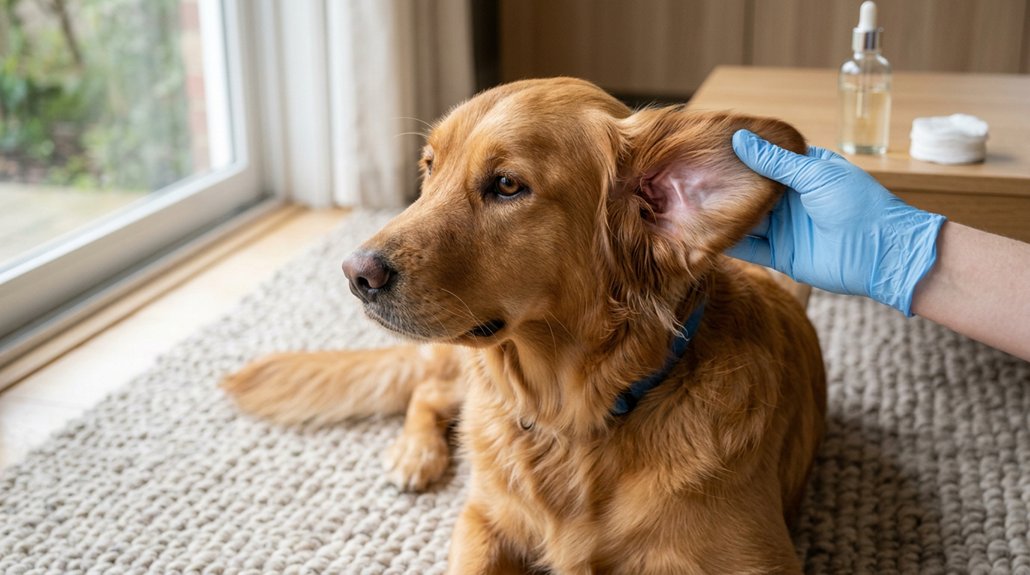
To clean your dog’s ears safely, use veterinarian-approved ear cleaner, soft cotton balls, and gloves to maintain hygiene and avoid allergens. Hold the ear upright, apply the cleaner, and gently massage the base to loosen debris. Use gauze to wipe the canal, avoiding deep insertion to prevent injury. Regular ear cleaning helps prevent infections, especially in breeds with pendulous ears or allergies. Follow expert tips to master the technique and address potential complications for ideal ear health.
Key Takeaways
- Use veterinarian-approved ear cleaner and soft cotton balls or gauze to prevent irritation or damage.
- Avoid inserting objects deeply into the ear canal to prevent harm.
- Gently massage the ear base for 20-30 seconds to loosen wax and debris.
- Watch for signs of discomfort during cleaning, and consult a vet if issues persist.
- Establish a calm environment to minimize dog anxiety during the ear cleaning process.
Why Regular Ear Cleaning Is Important
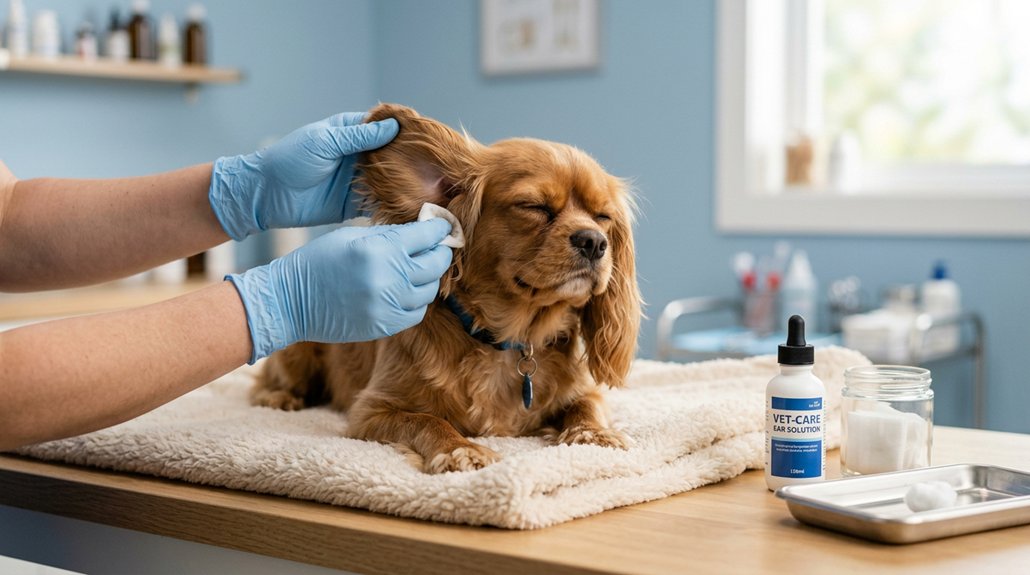
Ensuring your dog’s ears are regularly cleaned is essential for maintaining their auricular health. Effective ear hygiene is integral for infection prevention, targeting the accumulation of debris, bacteria, and yeast. These elements, if unchecked, can precipitate otitis externa, a common yet painful ear infection. Dogs with pendulous ears or allergy predispositions are particularly susceptible, warranting more frequent cleanings to forestall moisture-related complications. Establishing a systematic routine not only minimizes the risk of infections but also aids in early detection of symptoms such as erythema or edema, facilitating timely intervention and veterinary care. Additionally, conditioning dogs to tolerate auricular manipulation through regular maintenance reduces anxiety during future cleanings, promoting an overall positive experience while safeguarding their auditory welfare.
When to Clean Your Dog’s Ears
How frequently should you clean your dog’s ears? Understanding your dog’s ear cleaning needs is essential for their health. Regular inspection of your dog’s ear anatomy will guide you in utilizing appropriate ear cleaning techniques.
Regular ear inspections help maintain your dog’s health by guiding proper cleaning techniques.
- Symptoms of buildup: Mild odors or excessive head shaking often signal wax accumulation.
- Breed susceptibility: Long-eared dogs, such as Basset Hounds or Cocker Spaniels, have a predisposition for increased infections due to anatomical structure, necessitating more frequent cleanings.
- Post-aquatic activities: After swimming or bathing, moisture can provoke inflammation or infection in the ear canal. It’s vital to clean the ears thoroughly.
- Health monitoring: Routine grooming can reveal redness or a yeasty smell, indicating the need for cleaning. Follow your veterinarian’s advice based on historical ear infections and individual health conditions.
Essential Supplies for Dog Ear Cleaning
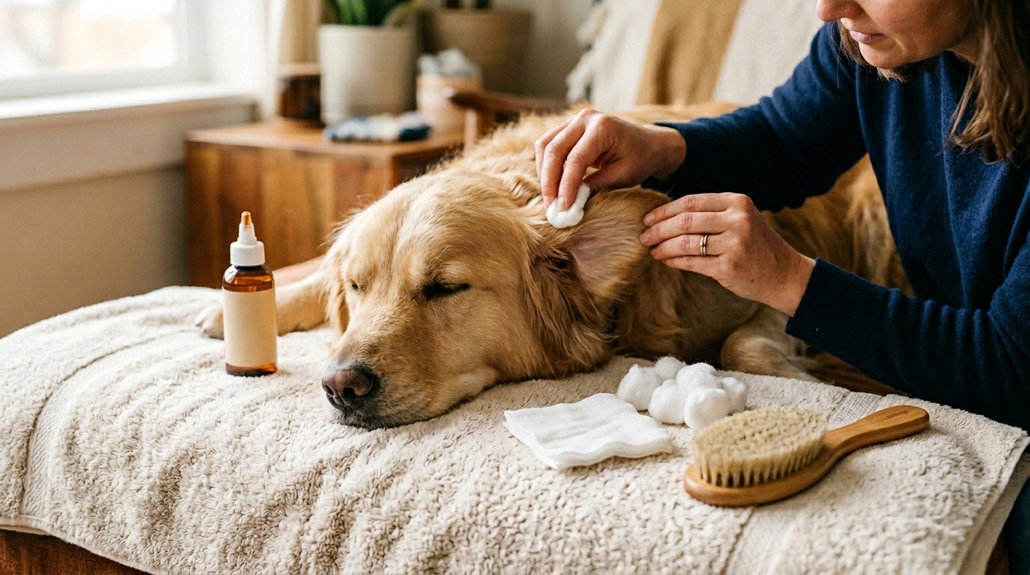
For effective dog ear cleaning, assemble a kit with key supplies to guarantee the process is thorough and safe. Essential ear cleaning tools include a veterinarian-approved dog-specific ear-cleaning solution, which guarantees gentle handling and peak efficacy for your canine companion’s delicate auditory structures. Utilize soft cotton balls or gauze sponges, as these implement safe cleaning techniques by preventing debris displacement deeper into the ear canal, thereby minimizing risk of infection. Employing gloves not only safeguards against potential contact allergens but also maintains hygiene standards when encountering discharge. Prepare a clean towel to meticulously capture excess solution and debris during the procedure, ensuring a tidy and dry environment. Before initiating the cleaning protocol, consulting a veterinarian about specific products tailored to your dog’s needs is imperative.
Step-by-Step Guide to Cleaning Your Dog’s Ears
To effectively clean your dog’s ears, begin by assembling the appropriate supplies to assure a successful process. Understanding dog ear anatomy is essential. Here’s how to apply ear cleaning techniques systematically:
- Prepare the Supplies: Obtain a veterinarian-recommended ear cleaner, soft gauze or cotton pads, and a towel to manage any inevitable mess.
- Create a Calm Setting: Guarantee a tranquil environment to reduce your dog’s anxiety. Gently hold their ear upright and apply the solution, filling the ear canal as instructed.
- Massage the Ear Base: Employ a gentle, circular massage for 20-30 seconds, loosening wax and debris. Listen for squishing sounds indicating efficacy.
- Clean the Ear: Carefully wipe the ear canal and flap using a gauze or pad, avoiding deep insertion to safeguard against damaging sensitive structures.
Avoiding Common Ear Cleaning Mistakes
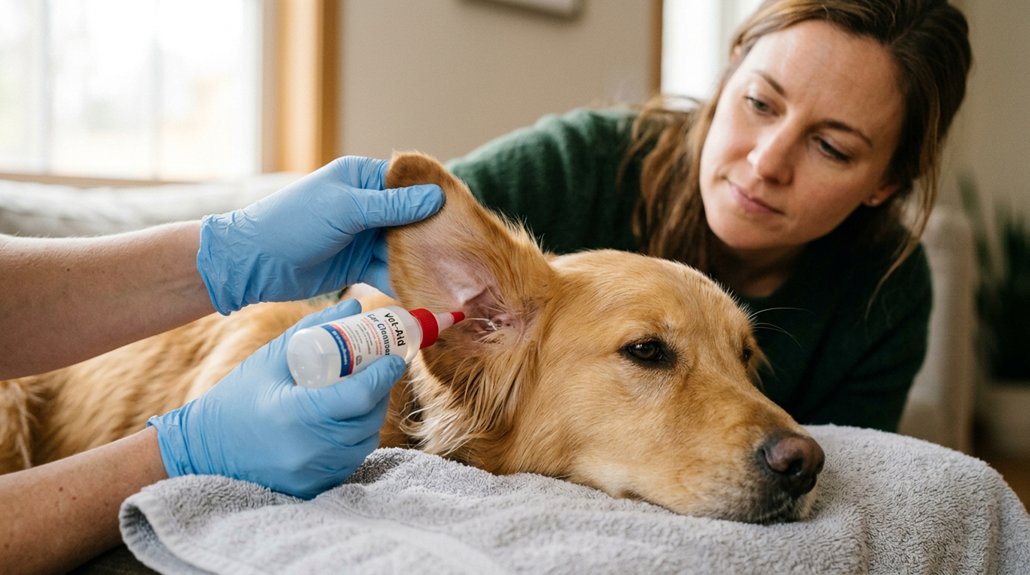
Ensuring you apply a sufficient amount of ear cleaner is critical, as inadequate application can lead to poor hygiene and increased infection risk. However, be cautious of over-cleaning, which can disrupt the natural microbial balance and cause irritation or further complications. Balance is key; use professional guidance to determine the appropriate cleaning frequency and techniques for your dog’s specific needs.
Use Sufficient Ear Cleaner
Properly cleaning your dog’s ears requires applying a sufficient amount of ear cleaning solution to achieve effective sanitation. The proper application is essential; insufficient solution leaves wax and debris, risking infection. Employ precise cleaning techniques to avoid such outcomes. Here’s what you should do:
- Fill the Ear Canal: Use enough cleaner to completely fill the ear canal, guaranteeing all surfaces are reached.
- Avoid Common Mistakes: Skimping on cleaner reduces its efficacy and might cause complications like infections.
- Check for Inflammation: Insufficient cleaner in inflamed or odorous ears can worsen the situation, lacking proper hygiene.
- Use Adequate Saturation: Saturate a cotton ball or gauze with enough cleaner to remove dirt, but avoid deep insertion to prevent pushing debris inward.
Regular practice of these techniques guarantees maximum cleanliness and ear health.
Prevent Over-Cleaning Issues
Many owners might not realize the risks associated with over-cleaning a dog’s ears, yet it is crucial to strike a balance in their ear care routine. Over cleaning risks include skin irritation and inflammation, potentially aggravating underlying conditions. When ears appear inflamed or malodorous, refrain from the impulse to cleanse until a veterinary evaluation is performed. This preventive action avoids exacerbating underlying pathologies. Employ sufficient ear cleaner—ensuring correct application enhances cleaning efficacy without excessive recurrence. Regular inspections are paramount, facilitating the early detection of issues like ear mites and enabling proactive intervention. Conditioning your pet for ear manipulations through gentle approaches minimizes resistance, streamlining the process. By adhering to these guidelines, you can maintain ideal canine auricular health safely and efficiently.
How Often Should You Clean Your Dog’s Ears?
Determining the appropriate ear cleaning frequency for your dog is pivotal to maintaining ideal ear health, considering factors like breed predispositions and lifestyle. Monitor for clinical indicators such as malodor or pronounced head shaking, which can signify the necessity for immediate intervention. Incorporating routine examinations into your dog’s grooming regimen guarantees early detection of potential problems, facilitating timely and effective management.
Identifying Cleaning Frequency
Typically, determining the appropriate ear cleaning frequency for your dog hinges on various factors, such as breed, lifestyle, and existing health conditions. Employing suitable cleaning techniques is essential in maintaining peak ear care for your canine. Different elements can influence how often you should clean:
- Breed Sensitivity: Dogs like Basset Hounds and Cocker Spaniels are predisposed to ear infections, requiring diligent ear care to prevent issues.
- Lifestyle Influence: Frequent swimmers may need more regular cleanings to manage excess moisture that contributes to inflammation.
- Infection Management: During ear infection treatments, daily cleaning helps remove debris and enhances medication efficacy.
- Visible Dirt and Debris: Healthy ears generally warrant cleaning only when noticeable dirt is present.
These strategies safeguard your dog’s ears, promoting comfort and overall health.
Signs Your Dog’s Ears Need Cleaning
Observing subtle indicators of your dog’s ear health can greatly assist in identifying when an ear cleaning is necessary. Key ear infection signs include a mild odor, increased head shaking, redness, or visible inflammation. Healthy canine ears should appear pink, odorless, and free of debris. Any deviation likely necessitates cleaning using appropriate cleaning techniques. Breeds predisposed to infections, such as Basset Hounds, require meticulous monitoring for these symptoms. Dogs frequently exposed to water are also at higher risk, necessitating more frequent cleans to prevent moisture-related issues. Deviations from normal behavior, like resistance to ear handling, signify potential discomfort. Infected ears may demand daily attention, while healthier ones generally need cleaning every 1-2 weeks or upon detectable impurity presence.
Maintaining Ear Health Regularly
Recognizing the signs that your dog’s ears need cleaning naturally leads to understanding how to maintain their ear health regularly. Establishing a consistent ear care routine minimizes the risk of infections and guarantees ideal auditory health. Here are several hygiene tips to take into account:
- Frequency Matters: Clean healthy ears every 1-2 months. Breeds like Cocker Spaniels require more frequent attention—every 1-2 weeks—due to their long ears.
- Monitor Activity: Increase checks and cleanings post-swimming or baths to prevent moisture buildup in the ear canal.
- Infection Protocol: For infected ears, daily cleaning might be necessary to aid medication efficacy and debris removal.
- Veterinarian Guidance: Follow a vet-prescribed cleaning schedule, particularly if your dog has a history of ear issues.
When to Consult a Veterinarian for Ear Issues
Why is it critical to consult a veterinarian for your dog’s ear issues at certain times? Symptom awareness is paramount, as early detection of persistent redness, swelling, or discharge that fails to improve with cleaning can indicate deeper issues. Veterinary signs such as excessive head shaking, ear scratching, or apparent pain necessitate professional evaluation to diagnose potential complications. A foul odor emanating from your dog’s ears could suggest a bacterial or yeast infection, demanding prompt veterinary intervention. Should your dog experience balance difficulties or coordination issues, these symptoms warrant an urgent veterinary assessment to exclude severe ear diseases. Regular veterinary checkups are indispensable, especially for dogs with a history of ear infections, ensuring your veterinarian provides tailored treatment and preventive care.
Frequently Asked Questions
What Can I Use at Home to Clean My Dog’s Ears?
Utilize veterinarian-approved ear cleaning techniques using safe cleaning solutions specifically designed for dogs. Avoid homemade mixtures. Employ cotton balls or gauze for wiping, ensuring you don’t push debris further into the canal, and consult your vet for personalized advice.
Should I Clean the Brown Stuff Out of My Dog’s Ears?
Absolutely, consider it your dog’s ticket to ideal ear health! Monitor the cleaning frequency; ensuring gentle removal of debris. Use an appropriate cleanser, minimizing risk of otic complications as you banish that brown plethora from their ears.
Can I Use Peroxide in My Dog’s Ears?
No, using peroxide in your dog’s ears isn’t advised for ear infection prevention. For safe cleaning techniques, consult your veterinarian. They’ll recommend veterinary-approved solutions with appropriate formulations that guarantee efficient ear health maintenance without skin irritation risks.
How to Clean a Shih Tzu’s Ears?
Did you know that 80% of Shih Tzus over the age of three develop ear issues? For Shih Tzu ear care, use vet-approved solutions and safe cleaning techniques, ensuring regular checks to preclude infections or wax buildup.
Conclusion
Regular ear cleaning prevents common canine ear issues like infections, which affect nearly 20% of dogs annually. Ensuring a routine helps maintain your dog’s ideal ear health, reducing discomfort and potential veterinarian visits. With the right techniques and supplies, you’ll safeguard your pet’s auditory well-being. Adhere to cleaning guidelines tailored to your dog’s breed and activity level, staying vigilant for signs of irritation. Remember, professional consultation is essential if you notice persistent issues. Prioritize your dog’s auditory care for their long-term health.