
To prevent fleas and ticks on your dog, use a mix of topical, oral, or collar preventative products, and consult your vet for the best choice. Maintain year-round protection, as these pests thrive indoors and outdoors. Groom your dog regularly to catch any invaders early. Keep your home clean and use strategic outdoor maintenance like trimming grass and clearing brush. A few more strategies can solidify your approach to keeping your pet safe.
Key Takeaways
- Use year-round preventative products like topical treatments, oral medications, or collars for continuous flea and tick protection.
- Regularly consult with a veterinarian to choose the most effective flea and tick prevention for your dog.
- Maintain a clean home by vacuuming frequently and washing your dog’s bedding weekly to eliminate hidden pests.
- Groom and inspect your dog regularly after outdoor exposure to promptly remove any ticks or fleas.
- Manage outdoor spaces by trimming grass, removing leaf litter, and creating barriers to deter ticks from entering the yard.
Recognizing Health Risks From Fleas and Ticks
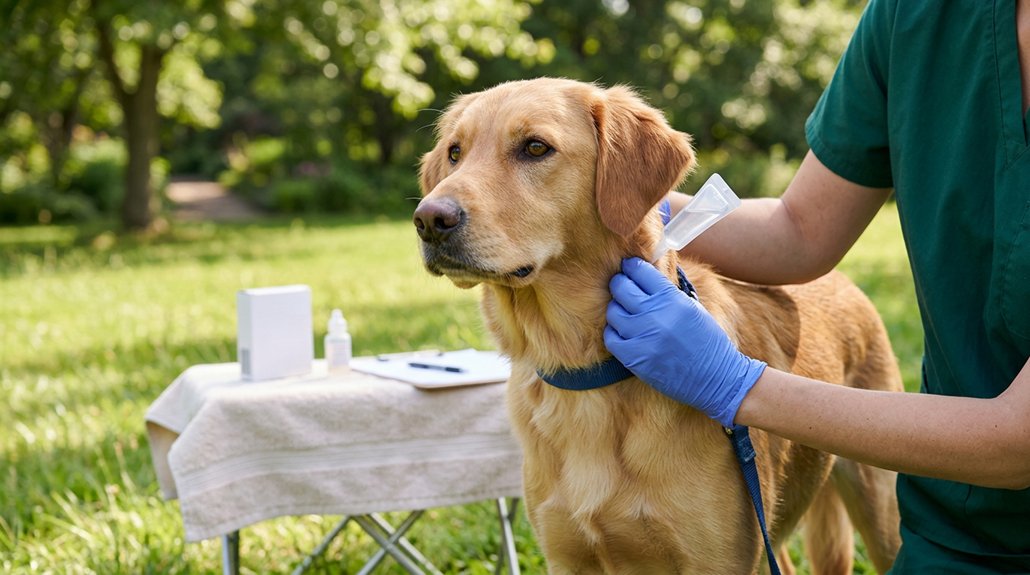
How do fleas and ticks put your dog’s health at risk? These pests pose significant threats. With flea anatomy designed for effective jumping and feeding, infestations occur rapidly. A female flea lays up to 50 eggs daily, leading to severe skin issues like flea allergy dermatitis and potential tapeworm infections during grooming. Watch for excessive scratching, hair loss, and pale gums, indicating anemia or infection.
Ticks exhibit stealthy behavior, attaching without notice. They transmit diseases like Lyme disease, Anaplasmosis, and Babesiosis. These illnesses can cause serious health complications and may be fatal if untreated. Prompt tick removal and careful monitoring are essential to mitigating these risks. Understanding the dangers associated with flea anatomy and tick behavior helps protect your furry friend effectively.
Selecting the Best Preventative Products for Dogs
When selecting flea and tick preventatives for your dog, consider the product type—topical, oral, or collar—and its specific benefits such as the speed of action and ease of use. Key factors in your decision should include the effectiveness of the product against pests, safety for your dog’s age and weight, and any breed-specific health concerns like MDR-1 gene sensitivity. Always consult your veterinarian, as they can recommend products tailored to your dog’s unique needs and monitor for any advancements in preventative options.
Product Types and Benefits
Choosing the most effective flea and tick preventative product for your dog involves understanding the variety of available options, each suited to specific needs and preferences. Topical treatments, like permethrin, are a proven choice, offering tick protection for up to eight months. These easy-to-apply solutions are excellent for immediate repellent action. Alternatively, oral medications such as isoxazolines deliver rapid results by killing fleas and ticks post-ingestion, though they don’t prevent attachment. These are ideal when quick intervention is needed, especially after exposure. For long-term prevention, a Seresto collar effectively repels pests for up to eight months. By consulting with your veterinarian, you can guarantee your furry friend receives tailored, continuous protection against infestations and related health threats.
Key Factors in Selection
While understanding the range of flea and tick prevention products is important, selecting the right one for your dog requires considering several key factors. Focus on product effectiveness and application methods that best suit your pet’s needs. Seresto collars and fipronil-based topicals offer unique benefits like extended duration or fast action. Choose an application method—collar, topical, or chewable—aligned with your dog’s lifestyle and comfort.
| Factor | Consideration |
|---|---|
| Product Effectiveness | Opt for proven, broad-spectrum options for reliable protection. |
| Application Methods | Select based on lifestyle; consider ease of administration. |
| Vet Consultation | Factor in dog’s age, weight, breed, and health issues. |
| Geography & Climate | Adapt products seasonally based on local flea/tick populations. |
| Cost & Frequency | Guarantee affordability and consistent protection. |
Always consult your veterinarian for personalized advice.
Why Year-Round Protection Is Crucial

You might think fleas and ticks are only a concern in warmer months, but these parasites pose a continuous threat by surviving indoors and are active in various outdoor conditions year-round. Implementing consistent preventive measures is critical, as it protects not only your dog from diseases like Lyme but also your family from zoonotic risks. Regular adjustments in your prevention strategy, tailored to your geographic location, guarantee your pet remains safe and healthy throughout the year.
Continuous Parasite Threats
Given the persistent threat of fleas and ticks, ensuring year-round protection for your canine companion is both an essential and strategic decision. Fleas thrive indoors, especially in carpet fibers and under furniture, due to their resilient parasite lifecycle. This emphasizes the need for continuous protection to effectively prevent infestations. A female flea reproduces prolifically, laying up to 50 eggs daily, leading to potential rapid population spikes without diligent preventive efforts. Ticks, active even in mild winter temperatures, pose a constant risk outdoors and can emerge in indoor environments. Year-round preventive measures guard against diseases like Lyme disease, ehrlichiosis, and flea allergy dermatitis, which are zoonotic and can affect both pets and humans. Consistent protection is vital for a hygienic and safe living environment.
Consistent Preventive Measures
Year-round protection against fleas and ticks is critical for maintaining your dog’s health due to their resilient nature and ability to thrive in various environments. Fleas can persist indoors during winter, and ticks remain a threat throughout the year, necessitating consistent preventive measures. Consider the following:
- Seasonal Adjustments: While ticks peak in late spring and summer, don’t overlook their presence during other months. Tailor preventive care to accommodate changes in your dog’s exposure.
- Lifestyle Considerations: For active dogs frequently swimming or bathing, utilize water-resistant preventives. These guarantee continued efficacy against parasites in varied conditions.
- Early and Regular Application: Begin preventive treatments at 8 weeks old. Regular use of flea and tick products is crucial to preempt infestations and safeguard your pet’s well-being.
Grooming Techniques to Catch Fleas and Ticks Early
When it comes to protecting your dog from fleas and ticks, incorporating specialized grooming techniques is essential. Regular grooming frequency is vital—bathing and brushing your dog cleanses its coat and helps remove pests early. Utilize fine-toothed flea combs to meticulously sweep through the fur. These combs are effective in collecting fleas, their eggs, and detecting “flea dirt,” which appears as small black specks. Concentrate on vulnerable areas like the belly, inner thighs, underlegs, and around the ears and collar to spot ticks and fleas. After each outdoor activity, perform a thorough inspection, paying attention to likely attachment sites such as between toes and under the belly. Regular grooming promotes your dog’s skin and coat health while catching pests early.
Effective Strategies to Keep Your Home Pest-Free

Even though the grooming process plays a vital role in flea and tick prevention, maintaining a pest-free home environment is equally important. Efficient home cleaning and organization deter pest habitats. Here are three key strategies:
- Vacuum Regularly: Use a vacuum with a HEPA filter on carpets, rugs, and upholstered furniture. This guarantees flea eggs and larvae are effectively trapped and removed, reducing their spread.
- Clean Pet Bedding: Wash pet bedding weekly with hot water and laundry soap. This eradicates hidden fleas and prevents them from re-infesting your home.
- Organize and Store Items: Keep food in sealed containers and organize outdoor equipment and pet supplies. Minimizing clutter and potential pest habitats prevents rodents carrying fleas from infiltrating your living space.
Outdoor Maintenance Tips to Minimize Tick Exposure
While maintaining a pest-free home is integral in controlling fleas, reducing your dog’s tick exposure necessitates specific outdoor maintenance. Effective lawn care begins with frequent mowing to shorten grass, preventing ticks from residing in tall, overgrown areas. Implement habitat management by removing leaf litter, brush piles, and tall grasses, which typically harbor ticks. Establish barriers using wood chips or gravel between wooded regions and your yard to deter ticks’ migration. Be cautious with garden irrigation; excessive moisture fosters a tick-friendly environment. For pet resting zones, opt for elevated dog beds to minimize ground contact, thereby reducing tick encounters. These strategies provide a thorough approach, effectively diminishing the likelihood of ticks attaching to your dog through optimized outdoor maintenance.
Frequently Asked Questions
What Can I Give My Dog to Prevent Ticks and Fleas?
For preventing ticks and fleas, you can use flea collars like Seresto for long-term protection or topical treatments such as Frontline. These are effective options, but always consult your vet for the best solution tailored to your dog.
Is There a Natural Way to Keep Fleas and Ticks off Dogs?
Absolutely, you can use essential oils like lavender and cedarwood as herbal remedies. However, always dilute them to guarantee your dog’s safety. Incorporate these oils into shampoos or use diatomaceous earth for effective natural flea and tick control.
What Is the Best Method of Flea and Tick Prevention for Dogs?
You’re best off using a combination of preventive products like Seresto collars and regular grooming techniques. Check with your vet to tailor methods to your dog’s specific needs to guarantee ideal protection against fleas and ticks.
What Is the Best Flea Treatment for Dogs With Seizures?
So, you’d think the “safe” flea treatments for dogs with seizures are obvious, right? Ironically, always consult your vet for seizure-safe options. Trust veterinary recommendations to find treatments minimizing risks while effectively protecting your pup.
Conclusion
Imagine your dog frolicking in a sun-dappled meadow, free from the nagging itch of fleas or the lurking dangers of ticks. By using expert-recommended preventative products, committing to year-round protection, and employing meticulous grooming techniques, you guarantee this playful freedom is a reality. Keep your home a pest-free sanctuary and maintain your outdoor spaces to further reduce risks. With vigilance and care, you’re crafting a safe and idyllic world where your dog can thrive, unburdened by pests.