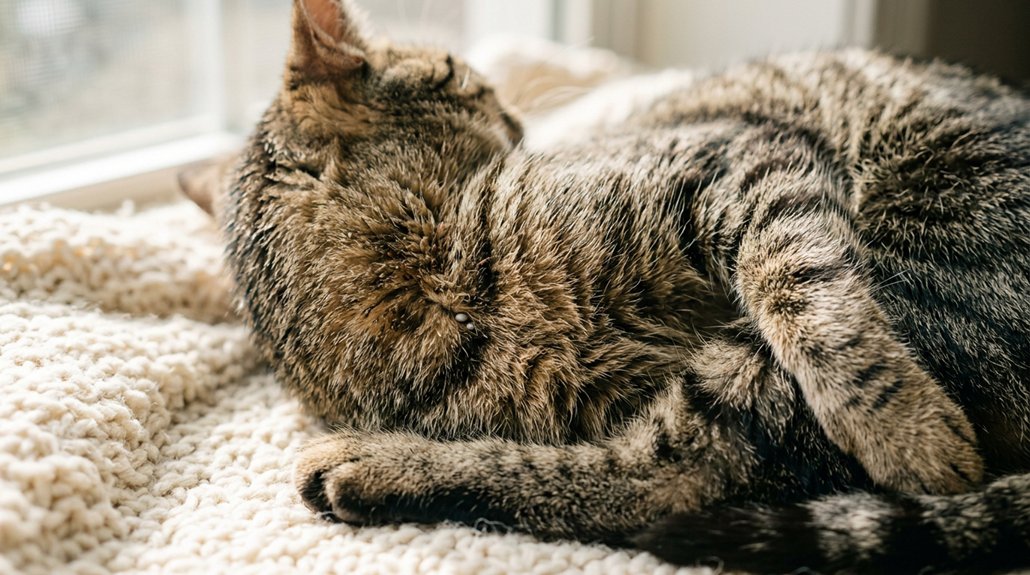
To identify fleas on cats, look for excessive scratching, flea dirt, or small black fleas during grooming. Effective treatment involves using veterinarian-recommended oral or topical medications containing adulticides and IGRs. Be vigilant with regular vacuuming and washing pet bedding in hot water to eradicate flea eggs and larvae. Always follow application instructions carefully to avoid errors. By exploring further, you’ll discover extensive strategies to maintain a flea-free environment year-round.
Key Takeaways
- Use a flea comb to detect adult fleas and flea dirt during cat grooming.
- Look for excessive scratching, hair loss, or skin irritation as signs of flea infestation.
- Treat infestations with vet-recommended oral and topical products containing adulticides and IGRs.
- Wash pet bedding in hot water and vacuum regularly to remove flea eggs, larvae, and pupae.
- Avoid using dog-specific flea treatments on cats due to toxicity risks.
Understanding the Cat Flea Life Cycle
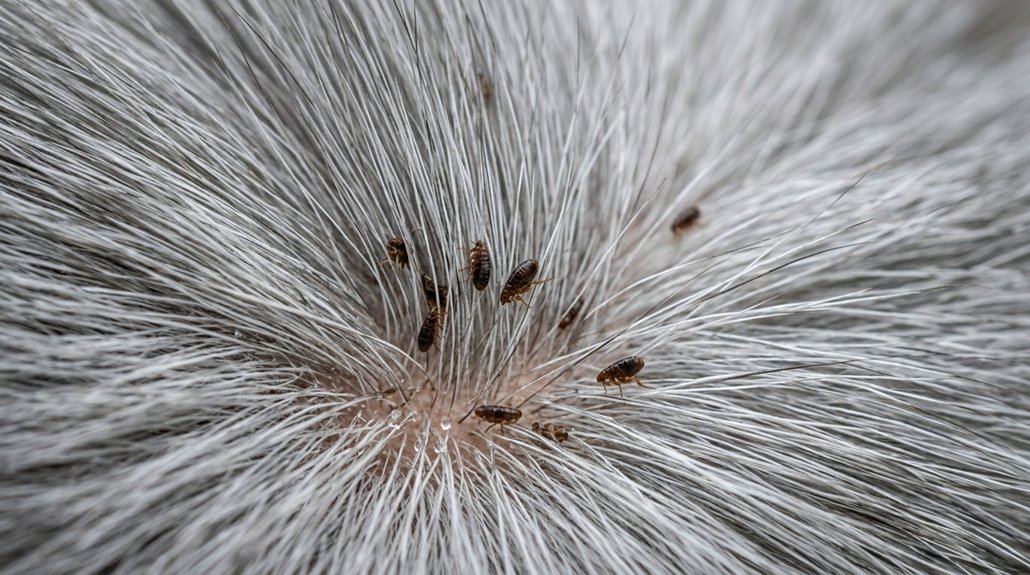
How does one effectively combat the pervasive presence of cat fleas? Understanding their flea lifecycle stages and reproductive behavior is essential. Cat fleas (Ctenocephalides felis felis) progress through four distinct stages: egg, larvae, pupa, and adult. Ideal conditions facilitate their completion in just a month. Female fleas demonstrate prolific reproductive behavior, laying hundreds to thousands of eggs soon after obtaining a blood meal. These eggs drop into the environment, develop into larvae, and ultimately pupate. Pupae can remain dormant, awaiting conducive conditions. Adult fleas emerge from cocoons when sensing carbon dioxide from nearby animals. Since roughly 95% of flea eggs, larvae, and pupae dwell off the host, effective management necessitates addressing these environmental stages to prevent reinfestation.
Recognizing and Confirming Flea Infestations
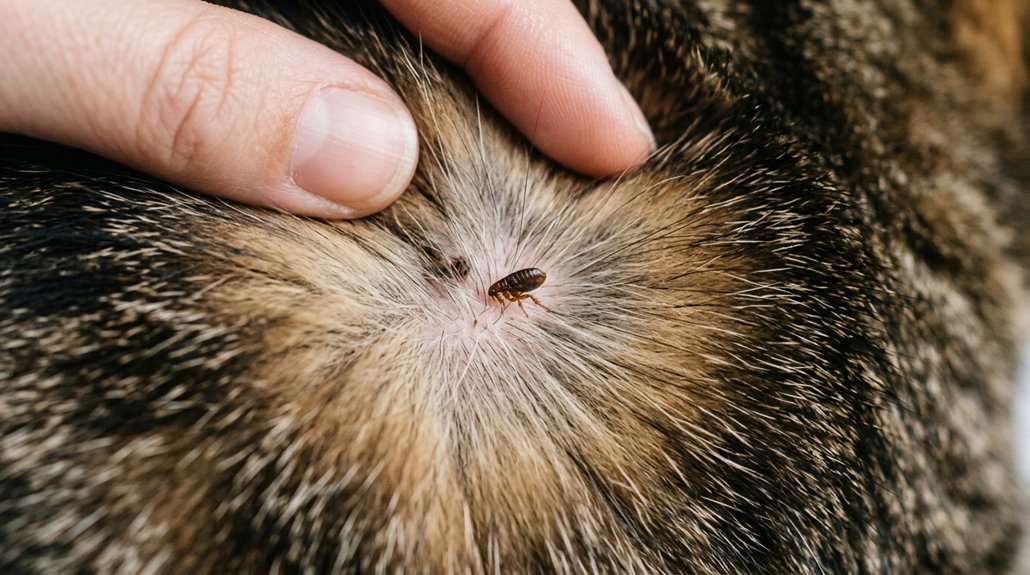
Identifying a flea infestation on your cat requires attention to specific signs. Scratching behavior analysis is essential; excessive scratching, biting at the skin, and shaking the head suggest flea irritation. Flea identification techniques involve spotting adult fleas—tiny black insects—during grooming sessions. These fleas are known for their speed and can cause your cat discomfort and resultant hair loss. Examine your cat’s fur for flea dirt: dark specks that appear reddish-brown when mixed with water. Such evidence signifies flea presence. Flea eggs, resembling salt grains, are harder to detect due to their microscopic size. Utilize a flea comb regularly to capture live fleas and dirt effectively. This aids in confirming infestations, indicating the necessity for further intervention.
Effective Treatment Options for Fleas
When addressing fleas on cats, it’s critical to integrate oral and topical treatment modalities that veterinarians commonly recommend for swift and efficient results. In conjunction with pharmaceutical interventions like Nitenpyram that rapidly eradicate adult fleas, environmental management strategies such as regular vacuuming and washing of pet bedding are imperative. Additionally, year-round use of vet-recommended preventives will curtail future infestations, ensuring sustained protection for your feline.
Oral and Topical Solutions
Effective flea control on cats necessitates the strategic use of oral and topical solutions to eradicate infestations and prevent future occurrences. Oral treatments like Nitenpyram (Capstar) provide rapid relief, killing adult fleas within 30 minutes. Topical treatments, incorporating insecticides and insect growth regulators, disrupt flea life cycles for thorough control. To optimize treatment efficacy and safety, always consult with a veterinarian.
Consider these steps for effective flea management:
- Oral Treatments: Use quick-acting solutions for immediate relief.
- Topical Treatments: Apply regularly to manage flea lifecycles.
- Veterinarian Consultation: Verify the chosen treatment is safe, as some can be toxic to cats.
- Combination Approach: Enhance efficacy by integrating oral and topical products to target both adult fleas and developing stages.
Environmental Management Strategies
In the battle against fleas, the environment is your battleground. Fleas thrive in warm, humid conditions, necessitating effective backyard maintenance and moisture control. Regular vacuuming is pivotal; it eradicates eggs, larvae, and pupae, minimizing reinfestation. Use adulticide sprays and IGRs indoors to disrupt flea development. Hot water washing or regularly replacing pet bedding is essential for removing embedded flea eggs. Discard vacuum bags post-use to prevent potential flea resurgence.
| Strategy | Action | Impact |
|---|---|---|
| Vacuuming | Carpets, rugs, furniture | Removes flea life stages |
| Bedding | Wash in hot water or replace | Kills flea eggs |
| Sprays and Regulators | Use adulticides and IGRs in pet areas | Disrupts flea lifecycle |
Focus on controlling the environment to combat flea infestations effectively.
Preventive Care Essentials
Environmental management sets the stage for tackling flea infestations, yet it’s only part of the equation. Thorough flea prevention tips focus on combining effective treatment options tailored for cats. Incorporating holistic treatments with evidence-based strategies guarantees a robust defense.
- Veterinarian-recommended medications: Choose those combining adulticides and insect growth regulators (IGRs) for all flea life stages.
- Regular bathing: Use warm water and a gentle soap to offer immediate relief and remove flea dirt.
- Home sanitation: Vacuum carpets, furniture, and bedding frequently to eliminate eggs and larvae.
- Laundry practices: Wash pet bedding in hot water and promptly dispose of vacuum bags to avert re-infestation.
Adhering to these guidelines will create a safe environment, diverting fleas from establishing residence on your cat.
Maintaining a Flea-Free Home Environment
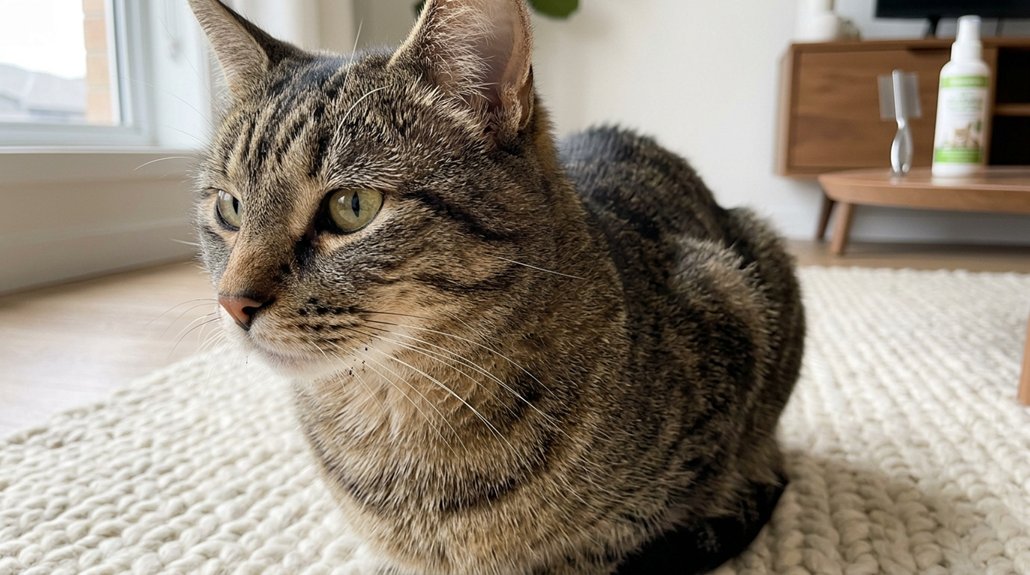
Achieving a flea-free home environment revolves around diligent cleaning and strategic interventions. Regular vacuum frequency is paramount, as vacuuming carpets, furniture, and living spaces eradicates flea eggs, larvae, and pupae. Implement this at least several times a week, and remember to discard vacuum bags immediately to prevent reinfestation. Deploy flea traps for an additional line of defense, capturing adult fleas and reducing their numbers considerably.
Moreover, sanitize your pet’s bedding and any fabric items in hot water weekly, a tactic supported by data to guarantee larvae and eggs are eliminated. For thorough control, apply adulticide sprays and insect growth regulators (IGRs) along with outdoor treatments in shaded areas. Such multifaceted approaches certainly contribute to robust flea management.
Avoiding Common Flea Treatment Mistakes
When addressing flea issues in cats, it’s essential to adhere to product safety guidelines by consulting your veterinarian to avoid potentially toxic dog-specific treatments. Simultaneously treat your pet and its environment, as this holistic approach minimizes the likelihood of recurrent infestations. Effective application techniques, such as following manufacturer instructions for dosage and timing, guarantee both safety and efficacy, while caution in combining products prevents adverse interactions.
Product Safety Guidelines
While protecting your feline companion from fleas is vital, it’s equally important to guarantee the chosen treatment doesn’t inadvertently harm them. Adhering to product selection criteria and safety precautions is essential:
- Consult a Veterinarian: Before purchasing, verify your chosen product is cat-specific and not harmful as some dog treatments can be toxic.
- Read Product Labels Thoroughly: Confirm the formulation is appropriate for your cat’s weight and age, preventing improper dosage.
- Avoid Multi-Product Use: Refrain from simultaneously applying different flea treatments without professional guidance, mitigating toxicity risks.
- Secure Storage: Store treatments safely out of reach, preventing accidental ingestion by pets and children.
These guidelines will help you select the safest, most effective flea treatment for your cat.
Effective Application Techniques
Ensuring your cat’s safety doesn’t end at product selection; it extends into the application process itself. Adhering meticulously to application techniques and dosage considerations is essential. Topical treatments must be applied directly to the skin, ideally at the base of the neck or along the spine. This practice helps avoid absorption barriers such as fur. Veterinarians emphasize using feline-specific products, as canine treatments can be hazardous. Careful observation of dosage matters to avoid suboptimal efficacy or potential toxicity. Allow sufficient time between different flea controls to avert adverse interactions. Finally, enhance your strategy by regularly vacuuming and laundering pet bedding after treatment, ensuring environmental flea eradication. Such measures are foundational to minimizing flea infestation recurrence and safeguarding your cat’s health.
Year-Round Flea Prevention Strategies
Understanding the importance of year-round flea prevention is fundamental, as fleas persistently pose risks by surviving without hosts for extended periods and easily reinfesting homes. Employ an integrated approach, which includes:
- Consistent Medication: Utilize veterinarian-recommended flea and tick medications consistently. Many are designed for monthly use to disrupt the flea life cycle effectively.
- Environmental Control: Conduct regular vacuuming and wash pet bedding in hot water to eradicate flea eggs, larvae, and pupae.
- Natural Remedies and Flea Collars: Consider additional methods such as natural remedies and flea collars, which can supplement primary treatments.
- Wildlife Management: Minimize wildlife around your home to reduce the introduction of fleas from outside sources.
This strategic approach guarantees thorough protection against flea infestation throughout the year.
Practical Flea Checks for Cats
Have you ever wondered how often you should check your cat for fleas, even if it stays indoors? Regular inspection is essential because fleas can hitch a ride indoors via other pets, plants, or clothing. By employing flea combing techniques with a fine-toothed comb, you can systematically check your cat’s fur, concentrating on the back and legs where fleas frequently inhabit. When combing, look for signs of infestation such as live fleas or flea dirt—tiny black specks resembling pepper. To identify flea dirt, place it on a damp paper towel; a reddish-brown color indicates flea feces. In addition, be alert for signs like persistent scratching, hair loss, or skin irritation, as these often signify an underlying flea issue.
Frequently Asked Questions
What Kills Fleas on Cats Immediately?
To kill fleas on cats immediately, use Nitenpyram tablets. For long-term prevention, apply veterinarian-recommended treatments. Natural remedies like Dawn baths aid in removal but aren’t all-encompassing. Consistent prevention guarantees controlling flea population effectively using evidence-based methods.
How Do You Spot Fleas on a Cat?
To spot fleas, observe your cat for flea symptoms like excessive scratching or grooming. Use a flea comb to check for fleas and flea dirt. Implement flea prevention strategies, targeting common areas where fleas thrive, for thorough inspection.
Can Humans Get Fleas From Cats?
Humans can indeed get fleas from cats. Don’t let a nightmare become reality—flea transmission occurs through close contact. Implement flea prevention measures by treating pets and maintaining a clean environment to reduce infestations and safeguard your health.
Do I Have to Clean My House if My Cat Has Fleas?
Absolutely, you must clean your house for effective flea prevention. Implement cleaning tips like vacuuming and washing fabrics in hot water. Employ insecticide sprays to eliminate various flea stages, ensuring the pest’s eradication.
Conclusion
Coincidentally, as you explore the vast world of fleas on cats, it aligns with your goal to provide ideal care for your feline companion. Understanding the flea life cycle, recognizing infestations, and selecting effective treatments are essential steps. Maintaining a flea-free home guarantees lasting results, preventing common pitfalls and implementing year-round strategies. By adopting thorough flea checks, you’re not just securing your pet’s comfort, but actively participating in an evidence-based approach to promoting a healthier, pest-free environment.