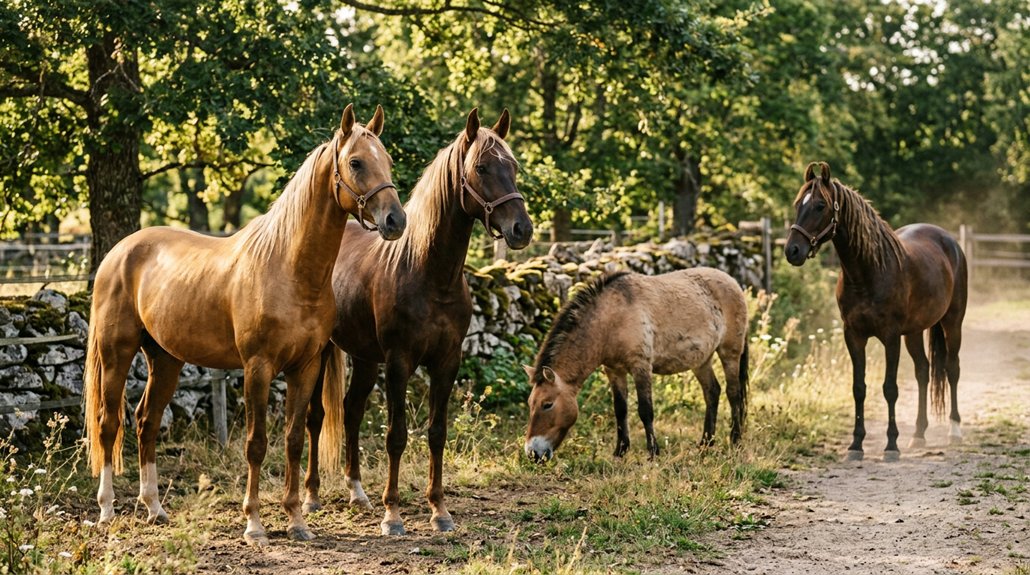
Discover a world of rare horse breeds you might not know about, each with unique histories and qualities. Meet the Canadian Horse, famed for its endurance and agility, and the Akhal-Teke, a striking breed with a golden sheen. The Dales Pony offers versatility and strength, while the American Cream Draft charms with its distinctive coat. Don’t overlook the Newfoundland Pony and Suffolk Punch, both essential to historical farming. There’s more to uncover about these extraordinary equines.
Key Takeaways
- The Canadian Horse boasts endurance and cold-climate adaptability, with a population of around 6,000, making it increasingly rare.
- The Akhal-Teke is renowned for its metallic sheen and endurance, facing threats from inbreeding and requiring conservation.
- The Dales Pony, critically endangered with less than 300 remaining, showcases strength and versatility in competitive events.
- The American Cream Draft, with fewer than 2,000 left, is endangered due to mechanization, valued for its gentle temperament.
- The Suffolk Punch, a British agricultural emblem with under 300 remaining, faces urgent conservation needs to preserve its farming heritage.
The Canadian Horse: Cold-Climate Champion and Heritage Icon
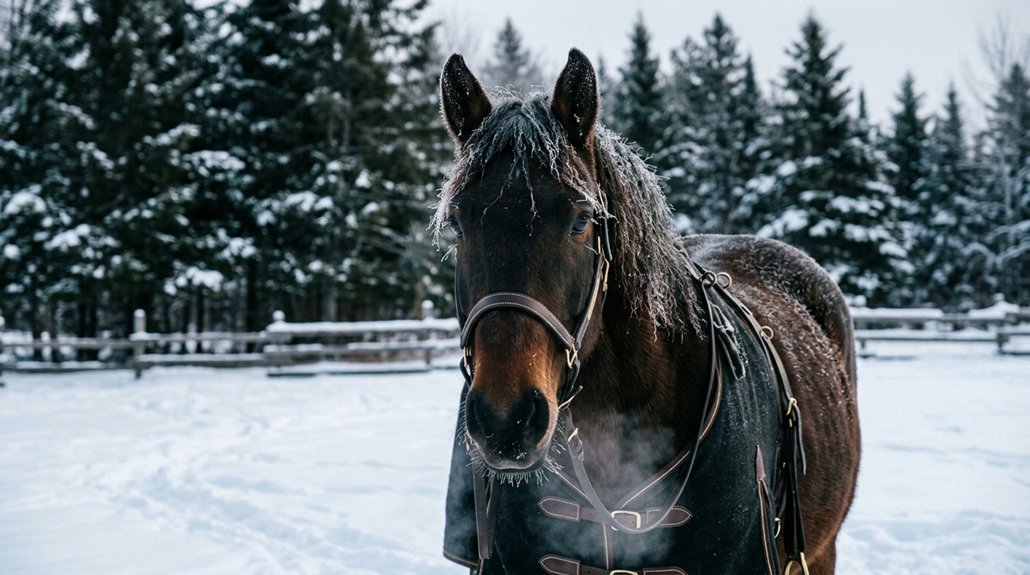
The Canadian Horse, a symbol of strength and heritage, is a remarkable breed with roots tracing back over 350 years to King Louis XIV’s gifts to New France. It’s not just their stunning resilience in the Canadian cold that captivates; the Canadian Horse’s endurance is renowned. Imagine a horse with unparalleled equine adaptability, thriving where others falter. They’re known for their nimbleness, speed, and remarkable jumping ability, making them stand out in racing and showjumping.
Though they played a significant role during the U.S. Civil War, their numbers dwindled alarmingly after, now holding a population of about 6,000. With only 150 to 500 new registrations annually, their vulnerability highlights the ongoing importance of preserving this cold-climate champion and heritage icon.
Akhal-Teke: The Gleaming Treasure of Turkmenistan
Gleaming like a mirage in Turkmenistan’s arid landscapes, the Akhal-Teke horse captivates with its almost otherworldly metallic sheen. Known as the “golden horse,” this rare breed boasts a rich history intertwined with Central Asia’s desertification, where it served as a essential companion to nomadic tribes. Revered for its stamina and speed, the Akhal-Teke excels in endurance competitions, making it a favorite among riders. Its distinct features—sleek body, long lines, and those mesmerizing almond-shaped eyes—encompass more than just beauty. However, due to threatened populations from inbreeding, conservation efforts are imperative to preserve this breed. As you explore Akhal Teke history, you’ll appreciate its genetic heritage and recognize it as a true treasure of athletic prowess and elegance.
Dales Pony: Britain’s Multi-Talented Workhorse
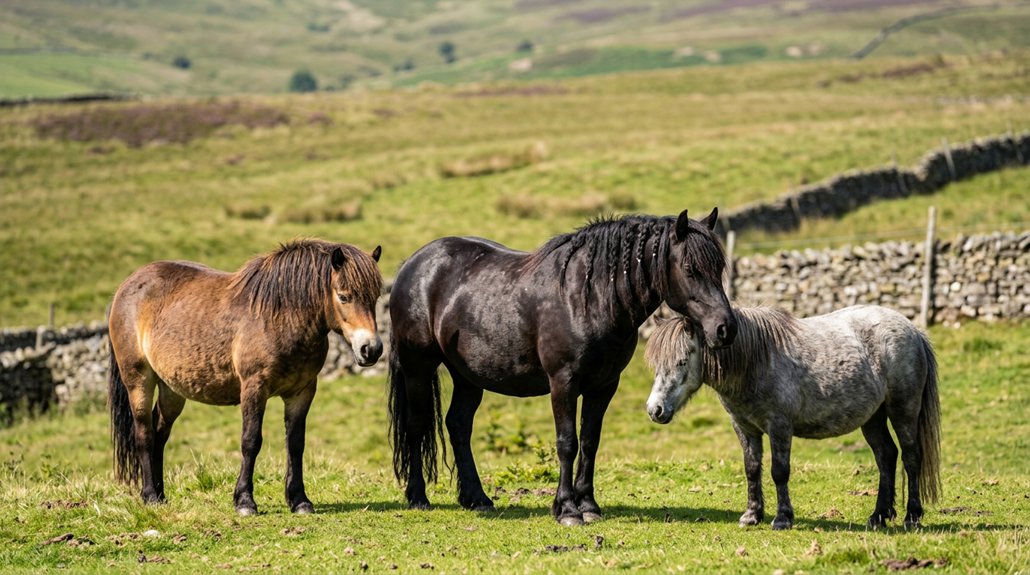
In the lush, rolling hills of Northern England, you’ll discover the Dales Pony, a versatile equine steeped in history and resilience. With roots deeply embedded in Dales history, these ponies once played pivotal roles in lead mining operations, showcasing remarkable strength and adaptability. Today, their fast trot and calm demeanor make them ideal for both recreational riding and family-friendly equestrian activities. However, fewer than 300 remain in the UK, making them critically endangered. Recognized for their stylish trotting abilities, Dales Ponies excel in competitive events, further proving their all-around talent. Despite a decline following the cessation of mining, conservation efforts are ongoing to preserve this majestic breed, ensuring their continued presence in the equestrian world.
American Cream Draft: A Vanilla-Colored Legacy
You might be enchanted by the American Cream Draft, a rare draft horse breed with its stunning champagne coat and gentle disposition. Originating in the United States for farm work and hauling, it’s now endangered, with fewer than 2,000 left, largely due to agricultural mechanization. As you explore its unique traits and versatility, you’ll understand why conservation efforts are essential to preserving this vanilla-colored legacy for future generations.
Endangered Heritage and Conservation
Although modern agriculture often relies on machinery and technology, there’s something undeniably fascinating about the American Cream Draft, a rare breed steeped in history and elegance. These horses represent a living slice of agricultural heritage with their creamy coats and amber eyes. Sadly, with less than 2,000 worldwide, they teeter on the brink of extinction. Mechanization and evolving farming practices have dwindled their numbers, yet their genetic conservation remains essential. Conservationists champion these magnificent animals by promoting awareness and supporting dedicated breeding programs. Such efforts not only safeguard the breed’s unique color, defined by a recessive gene, but also preserve an important piece of our farming past. By supporting these initiatives, you can help protect this vanilla-colored legacy for future generations.
Characteristics and Unique Traits
When gazing upon the American Cream Draft, its striking appearance with a champagne or cream-colored coat and amber eyes immediately captivates attention. This visually appealing breed stands out in any setting, drawing admirers with its elegant yet robust build. Developed in the early 20th century, the American Cream Draft is more than just a pretty face. It’s admired for its gentle temperament traits, making it an ideal companion for agricultural and leisure activities. Whether pulling, driving, or riding, this versatile horse adapts seamlessly to various tasks, showcasing its legacy beyond mere appearance. With fewer than 2,000 individuals registered globally, every sighting of this gentle giant reminds you of its importance in maintaining a distinct piece of American equine heritage.
Modern Uses and Challenges
With its alluring vanilla-toned coat, the American Cream Draft continues to carve out a niche in the modern world, where its legacy is cherished for both practical and historical reasons. However, this iconic breed faces significant breeding challenges and population decline, threatening its future. Here are four contemporary uses and concerns that evoke the necessity for preservation:
- Therapy and Companionship: Their gentle demeanor makes them perfect partners for therapeutic programs, offering comfort and connection.
- Educational Programs: Schools and historical sites showcase them, teaching others about American agricultural heritage.
- Conservation Efforts: Breeders work tirelessly to maintain genetic diversity, combating inbreeding risks.
- Raising Awareness: Dedicated groups highlight the breed’s plight, fostering global appreciation and support.
Such endeavors motivate you to join in their preservation mission.
Newfoundland Pony: A Fading Canadian Gem
Behind the rugged coastline and rolling hills of Newfoundland lies a treasure that many may not even know exists: the critically endangered Newfoundland Pony. With a population of only 200 to 250 worldwide, this charming breed blends English, Irish, and Scottish roots. Historically, they were the backbone of Newfoundland farms, beloved for their versatility and friendly nature. Today, their survival hinges on thoughtful breeding practices and passionate community involvement. Dedicated groups work tirelessly to protect this Canadian gem under Newfoundland and Labrador law, promoting conservation efforts and raising awareness about their plight. These ponies might now serve as cherished family companions and show horses, but without continued support, their numbers could dwindle further. Every new enthusiast makes a difference.
Suffolk Punch: Preserving an Agricultural Powerhouse
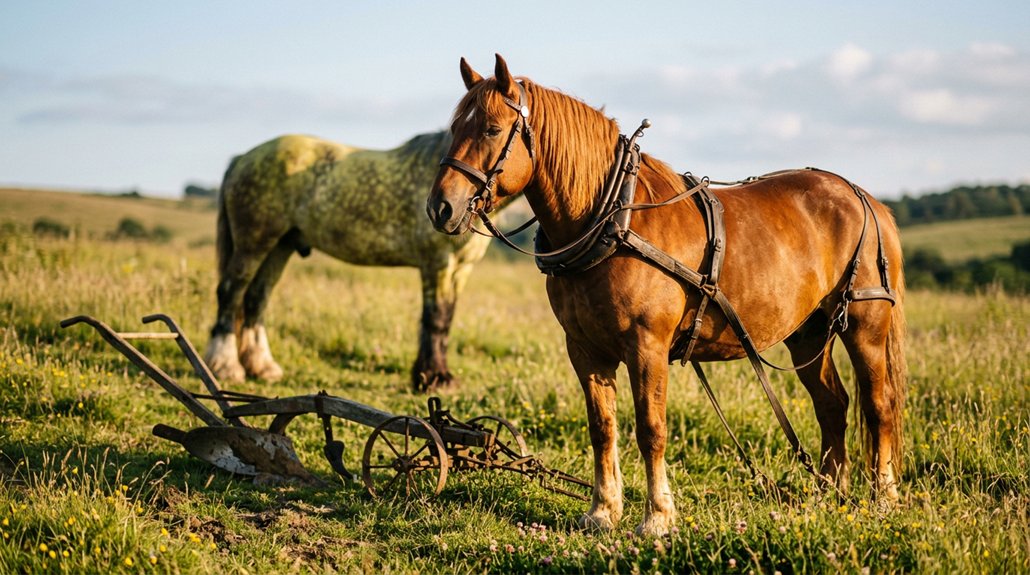
You’re about to explore the Suffolk Punch, a breed with roots stretching back to 1768, whose robust build made it indispensable for agricultural tasks. Now facing a critical state, with fewer than 300 in the UK, the breed’s plight underscores the urgent need for effective conservation efforts. These gentle giants are not only a reflection of history but also a current call-to-action, as dedicated groups endeavor to revive and protect this resilient powerhouse.
Historical Significance of Suffolk
Although modern agriculture often calls upon machines for efficiency, the gravitas of the Suffolk Punch stands as a testament to the power and endurance that dominated the fields for generations. With roots back to 1768, this breed epitomizes the Suffolk heritage and agricultural legacy, cherished for its robust build and tireless labor. Imagine:
- The rhythmic thud of hooves as the Suffolk Punch plowed fields year after year, sustaining farms.
- Massive, muscular frames effortlessly hauling goods, a lifeline in pre-mechanized agriculture.
- A dwindling 300 in the UK today, yet still a poignant symbol of British farming history.
- The breed’s drastic fall post-World War I, a narrative of strength fighting extinction, mirroring an era’s change.
Each hoofbeat echoes a crucial past.
Conservation Efforts and Challenges
While the mechanization of agriculture has considerably contributed to the decline of the Suffolk Punch, the path to preserving this venerable breed is not without hope. With fewer than 300 Suffolk Punch horses left in the UK, intensive breeding strategies and awareness campaigns play a critical role in conservation efforts. These strategies aim to bolster their numbers and promote their distinct qualities, which go beyond their remarkable strength and reliability. By raising awareness, organizations emphasize the breed’s historical significance and its promise for sustainable farming and land management.
Collaborative initiatives unite enthusiasts and organizations dedicated to this cause, working to secure a future for the Suffolk Punch. Highlighting its indispensable contributions, such efforts guarantee the legacy of this agricultural powerhouse endures.
Frequently Asked Questions
What Unique Adaptations Do the Zaniskari Horses Have for High Altitudes?
When you’re exploring high altitudes, Zaniskari horses impress with their endurance and unique high altitude anatomy. Their compact build, sturdy hooves, and efficient respiration guarantee they thrive in low oxygen levels, traversing rugged terrains with ease.
How Does the Giara Horse Thrive in Sardinia’s Rocky Landscapes?
You’ll find the Giara horse thrives in Sardinia’s rocky landscapes due to its stocky build and hard hooves, adapted for uneven terrain. Its hardy nature and ability to forage in sparse vegetation define its efficient Giara habitat use.
What Makes the Noma Horse Significant in Japanese History?
You’d find the Noma horse deeply significant in Japanese heritage due to its historical use by samurai warriors and its rarity today. It’s a living symbol of resilience, embodying Japan’s cultural history and equestrian tradition.
Why Is the Vyatka Horse Considered Endangered in Russia?
You’d think Vyatka horses are as rare as unicorns! Due to dwindling populations and habitat loss, they’re endangered in Russia. Vyatka history and conservation efforts aim to preserve this breed’s rich cultural legacy and natural beauty.
What Role Does the Henson Horse Play in Equestrian Tourism in France?
In France, you’ll find the Henson horse enriching equestrian tourism with its unique blend of Henson heritage and versatility. These horses are perfect for various equestrian activities, offering unforgettable experiences for riders exploring scenic landscapes.
Conclusion
In the grand tapestry of equine history, these rare breeds are the delicate, vibrant threads that captivate the soul. Like hidden jewels, the Canadian Horse, Akhal-Teke, Dales Pony, American Cream Draft, Newfoundland Pony, and Suffolk Punch each tell a tale of resilience and wonder. As you wander through this garden of equine wonders, remember that their stories are the whispers of the past in the winds of the present, urging you to cherish and preserve their legacy.