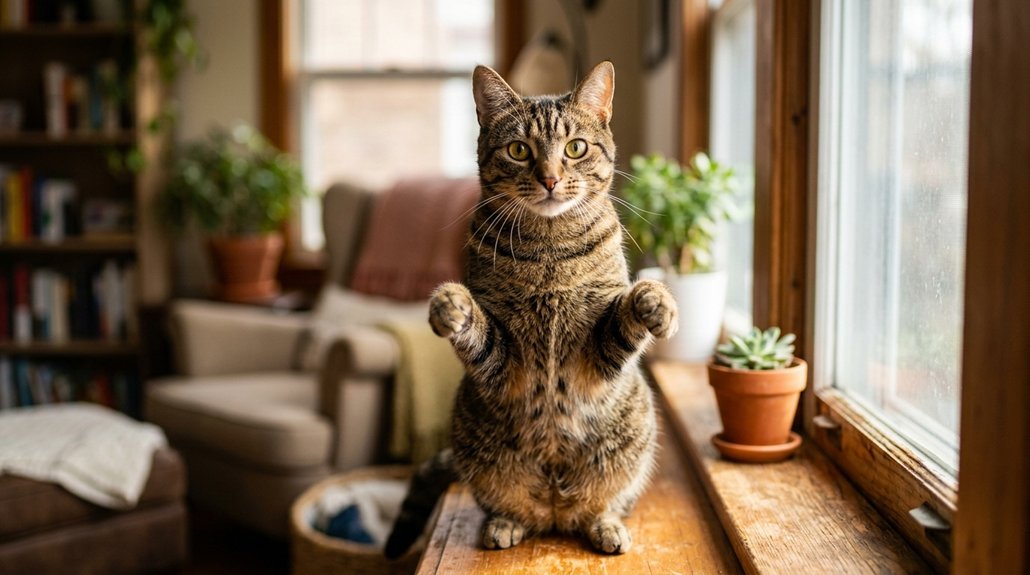
You’ll find certain cat breeds, like Abyssinians and Bengals, exhibit exceptional intelligence and playful disposition, making them particularly adept at learning tricks. Breeds like the American Shorthair and Maine Coon, known for their sociable and calm demeanors, also excel with positive reinforcement techniques. Siamese cats’ vocal curiosity and Turkish Vans’ strong human bonds enhance their training enthusiasm. These cats respond well to interactive play, fostering a deep bond and offering further insight into their remarkable capabilities.
Key Takeaways
- Abyssinians are exceptionally intelligent and thrive on playful learning, easily mastering tricks through interactive games and social interaction.
- American Shorthairs, with their calm demeanor, respond well to positive reinforcement, making them adept learners over extended lifespans.
- Bengals’ high energy levels and ancestral instincts are harnessed through structured challenges, excelling in tricks like fetch and obstacle courses.
- Siamese cats are quick learners with a sociable nature, mastering commands rapidly and engaging actively in interactive training sessions.
- Maine Coons, known for their friendly disposition, enjoy participating in training activities, benefiting from sociable play and positive reinforcement.
Abyssinian: Playful and Intelligent Companions
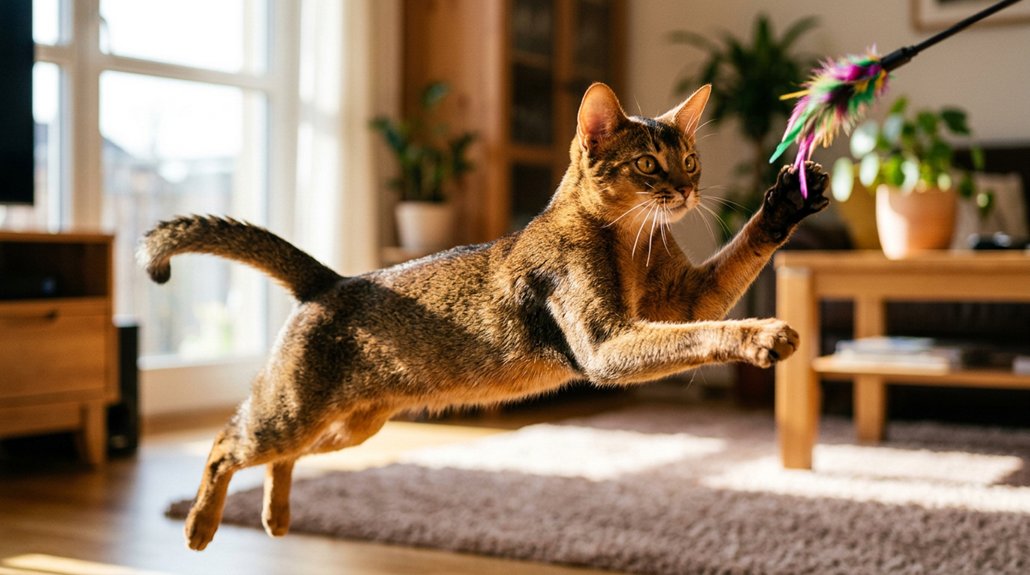
When considering cat breeds that excel at learning tricks, the Abyssinian stands out due to its exceptional intelligence and playful disposition. This breed’s curiosity and enthusiasm make it highly receptive to Abyssinian training techniques, focusing on playful learning activities to keep their attention. Engage them through mentally stimulating games—like fetch or interactive puzzles—that tap into their problem-solving capabilities. Abyssinians are social creatures, thriving on the interaction and bonding such activities provide. It’s crucial to conduct regular training sessions that enhance their cognitive skills and encourage positive behavior. With the right mental and physical stimulation, they can adapt to activities like leash walking, showcasing their adaptability and keen willingness to learn. Their training can be both enjoyable and enriching.
American Shorthair: Media-Friendly and Trainable
As you explore the trainability of the American Shorthair, you’ll find its calm demeanor greatly enhances its receptivity to learning new tricks. This breed thrives with positive reinforcement, allowing you to develop an engaging training regimen tailored to its skills. Its visually appealing silver tabby pattern not only makes it media-friendly but also underscores its charismatic presence, making it an ideal candidate for dynamic interactive activities.
Calm Demeanor Benefits Training
Renowned for its calm demeanor, the American Shorthair is an exceptional breed that excels in training scenarios. Its even temperament makes it highly receptive to various training techniques, especially in calm environments that foster focus and concentration. This breed’s adaptable nature is enhanced by its sturdy build, standing 10-14 inches tall and weighing 8-15 pounds, allowing it to engage confidently in diverse training activities. Besides physical attributes, its friendly nature supports seamless integration into training routines, often thriving in media roles. The American Shorthair’s impressive lifespan of 12-17 years provides ample opportunity for prolonged training, strengthening the bond between you and your feline companion. Its sparkling personality guarantees an engaging and rewarding training experience for both owner and cat.
Positive Reinforcement Success
While the American Shorthair’s calm demeanor is a standout trait, its receptiveness to positive reinforcement sets it apart in the domain of trick training. This breed’s adaptability and responsiveness to positive training are enhanced by its natural intelligence, allowing for quick assimilation of new commands. You’ll find that when using reward techniques—such as treats or praise—these cats often demonstrate heightened enthusiasm to engage actively in training sessions. Their friendly disposition facilitates a strong bond with trainers, further cultivating an effective learning environment. By employing positive reinforcement, you can harness the American Shorthair’s inherent willingness to learn and optimize their trick-learning potential. Consequently, they’re ideal candidates for structured training programs that leverage scientifically grounded reward methodologies.
Media-Friendly Silver Tabby
A notable quality of the American Shorthair is its adaptability, making it a prime candidate for training to perform tricks on cue, especially in media settings. This breed’s calm demeanor and responsiveness to positive reinforcement methods endear them to engaging trainers, allowing for a polished performance. Their striking silver tabby pattern enhances their allure in media appearances, perfectly complementing their intelligent nature.
| Trait | Benefit |
|---|---|
| Adaptable | Easily trained for various tasks |
| Calm Demeanor | Performs well under prepared conditions |
| Photogenic | Attracts media attention |
| Intelligent | Learns commands and tricks with ease |
| Social Nature | Enjoyable training and companionship |
Ultimately, American Shorthairs’ unique blend of traits makes them a delightful presence in media appearances, surprising audiences with their ability to perform diverse tricks.
Maine Coon: Gentle, Smart, and Easy to Train
As one of the most intelligent and sociable cat breeds, Maine Coons stand out due to their remarkable ability to learn tricks and commands effortlessly. Their label as “gentle giants” reflects a friendly demeanor and laid-back nature, which makes them approachable and receptive to training techniques. By engaging them in interactive sessions, you’ll find they respond remarkably well to positive reinforcement. This approach, coupled with their sharp intelligence, enhances their enthusiasm to learn. Their versatile and adaptable nature allows them to thrive in various environments, whether in spacious homes or compact apartments. In addition, Maine Coons enjoy being a part of family activities, transforming training into a joyful and bonding experience that strengthens the relationship between cat and owner.
Bengal: Energetic Learners Through Play
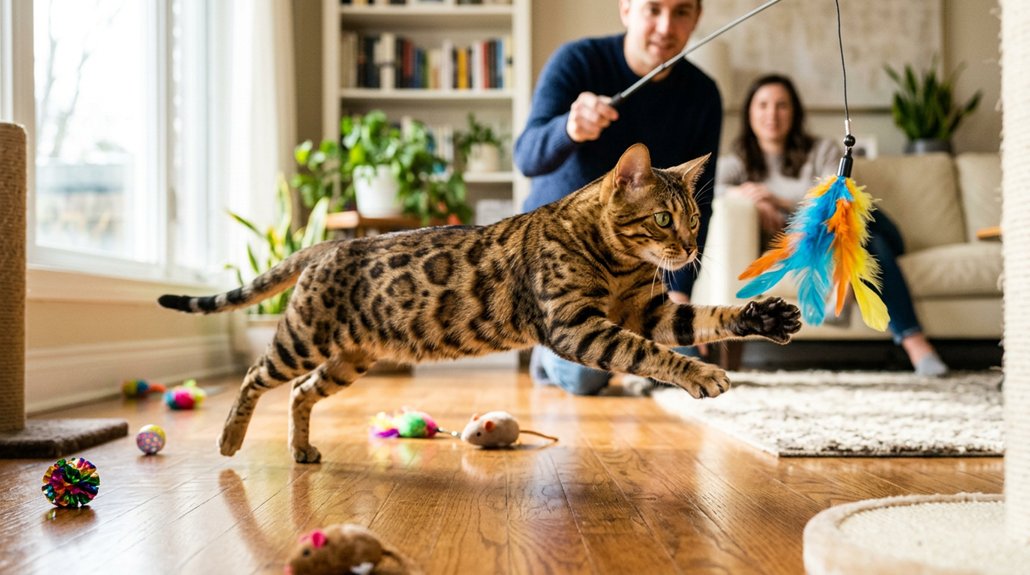
You’re likely to notice that Bengals, with their ancestral ties to the Asian Leopard Cat, are incredibly receptive learners when engaged through interactive play. Their natural intelligence and social disposition make them highly responsive to motivation via fun challenges, where playful rewards are essential to their learning process. This breed’s enthusiasm for both mental and physical stimulation is vital in ensuring they stay engaged and can master a variety of tricks and commands.
Engage Through Interactive Play
While the Bengal’s high energy levels may initially seem overwhelming, they become a key asset when incorporated into interactive play sessions, facilitating learning and engagement. Interactive training through diverse play methods allows Bengals to refine their problem-solving abilities while mastering new tricks. Their agility and curiosity are rooted in their exotic lineage, making them enthusiastic participants in activities like fetch or obstacle courses.
To visualize engagement, consider the following:
| Play Method | Skill Developed | Owner’s Role |
|---|---|---|
| Fetch | Retrieval skills | Throw and reward |
| Obstacle Course | Agility | Set up and guide |
| Puzzle Toys | Problem-solving | Introduce and observe |
| Feather Wand Play | Coordination | Direct movement |
| Treat Hunt | Scent and discovery | Hide treats |
Bengals enjoy bonding with you, reinforcing their interactive training and emotional connection.
Motivation Via Fun Challenges
Recognizing their high energy levels and innate curiosity, Bengals benefit from structured yet playful training challenges that cater to their natural instincts. By incorporating interactive rewards and playful challenges, you can effectively channel their exuberance into productive learning. Bengals’ fondness for activities that engage their hunting instincts, like fetch or treasure hunts, allows them to learn quickly and enthusiastically. By crafting sessions that include these natural behaviors, you create an environment where learning becomes an enjoyable and rewarding pursuit. Consistent interaction is key; it not only helps Bengals master new tricks but also fortifies the bond you share, fostering a harmonious relationship. Consequently, structured play not only satisfies their need for mental and physical engagement but also cultivates a positive training atmosphere.
Tricks With Playful Rewards
Harnessing the Bengal’s intrinsic zest for life, you can transform training into an engaging and effective learning experience by integrating playful rewards. These energetic learners thrive on interactive play, making trick fetching strategies ideal for their curious nature. Incorporating activities like obstacle courses or fetch can greatly enhance their attention and motivation during training. Utilize interactive playtime tips to plan sessions that captivate their interest. For instance, alternating between toys encourages prolonged engagement and helps prevent boredom. Since Bengals are highly social, they learn commands quickly when the activity is enjoyable and stimulating. This approach not only satisfies their need for mental and physical stimulation but also fosters an environment where they consistently demonstrate their ability to master new tricks.
Siamese: Social Cats With a Love for Learning
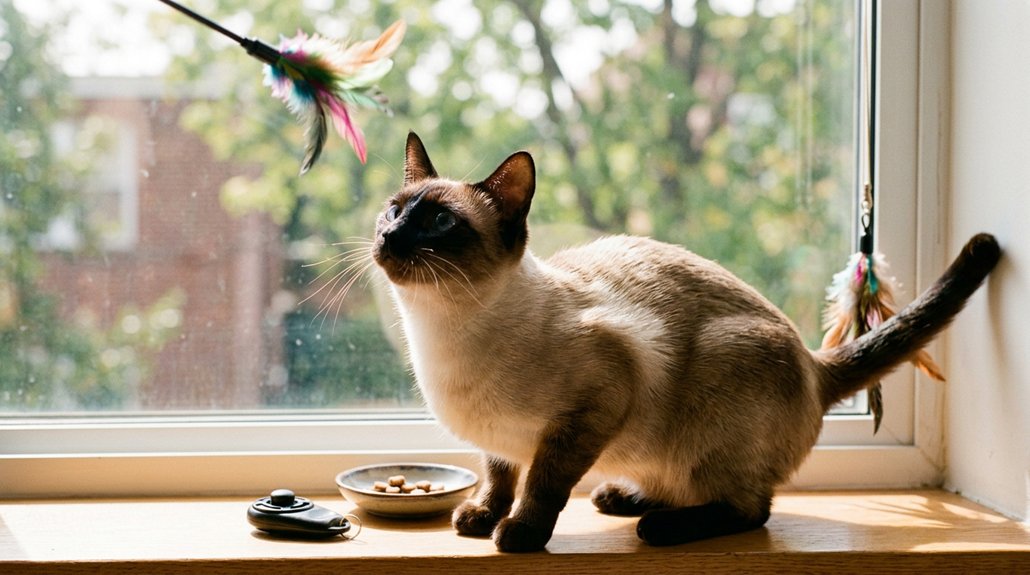
Known for their sociable and affectionate disposition, Siamese cats engage highly during training sessions, making them ideal candidates for learning tricks. Their vocalization skills contribute greatly to interactive learning sessions by expressing curiosity and enhancing communication. Siamese training techniques often incorporate stimulating activities, as their keen intelligence demands mental enrichment.
| Aspect | Details | Benefits |
|---|---|---|
| Sociability | Engaged in training | Ideal for learning tricks |
| Vocalization | Expresses curiosity | Enhances learning desire |
| Mental Stimulation | Interactive sessions | Prevents boredom |
| Quick Learning | Rapid command acquisition | Surprises in performance |
Quick learners by nature, Siamese cats require consistent interaction to avoid boredom. These intelligent felines excel in environments where they can actively engage, making training not just effective but also enjoyable for both cat and owner.
Turkish Van: Playful Creatures With Strong Bonds
Although the Turkish Van’s playful nature might immediately captivate you, it’s their remarkable intelligence that truly sets them apart in the domain of trick training. This breed’s affinity for bonding with humans enhances their training enthusiasm, thriving on your attention and companionship. The Turkish Van playfulness, combined with their high trainability, makes them keen participants in interactive play.
They respond exceptionally well to praise and rewards, creating a mutually enjoyable training experience. Their adventurous disposition necessitates mental stimulation, and trick training offers an enriching outlet for their energy. Engaging in games like fetch, their cleverness shines as they master various activities. Consequently, nurturing your Turkish Van’s intelligent, curious spirit not only deepens your bond but also fulfills their inherent needs.
Frequently Asked Questions
Which Cat Breed Is Most Trainable?
You’d find the Abyssinian most trainable due to its exceptional intelligence levels and playful nature. Its trainable traits include quick learning and adaptability, making Abyssinians excel in learning commands and tricks through interactive and positive reinforcement methods.
What Is the 3-3-3 Rule for Cats?
The 3-3-3 Rule for cats is a rhythm of adaptation, guiding you through understanding cat behavior. Use training techniques during this period: cats hide for three days, explore globally after three weeks, and fully trust in three months.
What Annoys a Cat the Most?
Cats are most annoyed by abrupt changes or interruptions, especially in their environment. Recognize cat body language to avoid overstimulation. Feline behavior tips suggest observing for signs like flattened ears or twitching tails indicating their discomfort.
How Do I Say “Hi” in Cat Language?
To say “hi” in cat language, adopt a soothing demeanor: gently slow-blink, echo a soft meow or trill, and honor feline body language by maintaining a relaxed presence, inviting feline vocalizations and welcoming affectionate interaction.
Conclusion
In exploring these cat breeds, you’ve seen how intelligence and playfulness combine to create perfect learning companions. Abyssinians, with their inquisitive nature, and Maine Coons, with their gentle disposition, demonstrate the power of training. Bengals shine through energetic exploration, while Siamese cats thrive in social learning environments. American Shorthairs impress with media-friendly aptitude, and Turkish Vans forge strong emotional connections. Embrace the fascinating interplay between these traits, knowing each breed’s unique abilities enrich your life immeasurably.