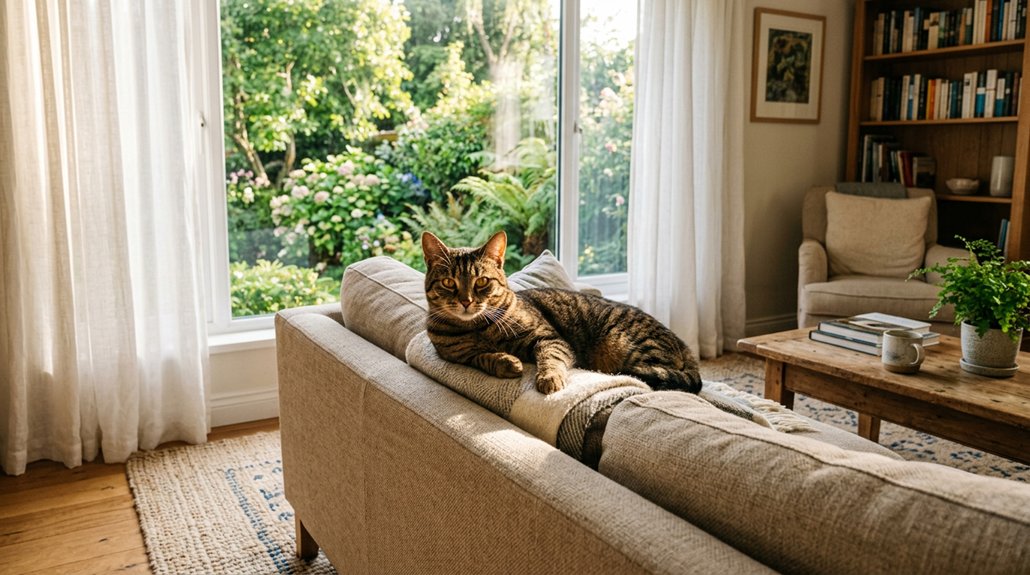
Some cat breeds do indeed thrive better indoors. Breeds like Ragdolls and British Shorthairs exhibit calm demeanors and lower activity levels, making indoor living ideal for their longer, healthier lives. Controlled environments enhance relaxation, mental stimulation, and overall well-being. You’ll find that indoor living protects these cats from road traffic, disease, and encourages stronger emotional bonds with humans. To explore further insights and practical advice, you’ll uncover more about creating joyous indoor environments and selecting the perfect indoor cat.
Key Takeaways
- Ragdolls, with their calm demeanor, are ideal for indoor living and require mental stimulation through interactive play.
- British Shorthairs adapt well to indoor environments due to their lower activity levels, promoting a relaxed lifestyle.
- Persians thrive indoors where their need for a tranquil environment helps avoid respiratory issues.
- Siamese cats perform better indoors with ample human interaction, enhancing their need for social engagement.
- Indoor living provides a stable environment beneficial for breeds like Russian Blues, reducing breed-specific stressors.
Why Do Some Cats Prefer Indoor Living?
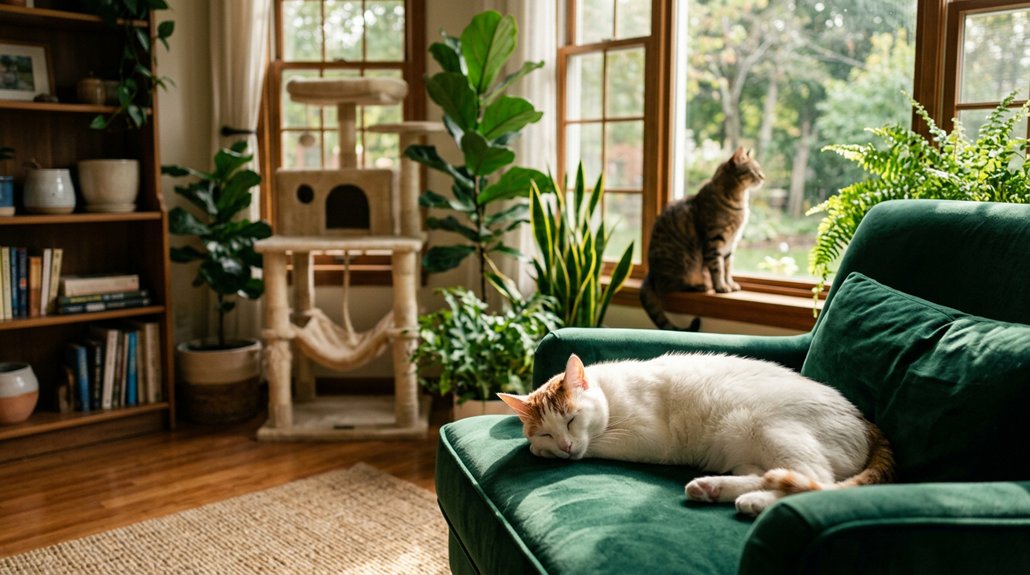
Many cats prefer indoor living due to the substantial environmental benefits it offers. Observational studies show that breeds like British Shorthairs and Ragdolls, with their longer lifespans, thrive away from traffic and wildlife. You might notice cat behavior that’s more relaxed and sociable indoors, especially in affectionate breeds such as Persians and Burmese. They adapt well because they get the companionship they’re drawn to. If a cat learns indoor adaptation early, it often adjusts more smoothly and forms positive habits. Cats requiring mental stimulation, like Ragdolls, benefit from interactive play to stay engaged. Also, consider breeds like Russian Blues and Birmans, prone to genetic stressors; a stable environment helps mitigate such challenges. Grooming remains manageable, especially with long-haired breeds.
Benefits of Indoor Cat Living
While some cats naturally gravitate towards indoor living for environmental advantages and companionship, there are numerous tangible benefits for keeping cats indoors. One significant health benefit is lifespan longevity; indoor cats typically live longer since they aren’t exposed to traffic, predators, or diseases. This controlled environment also helps protect local wildlife from being hunted.
Furthermore, it’s easier to manage regular vet check-ups, which helps identify health issues early, improving overall well-being. Indoor living offers controllable stimulation, where you can use interactive toys and climbing structures to keep your cat mentally and physically active. Many cats form richer bonds with you in an indoor setting, adding emotional benefits to the list. Indoor environments allow cats to excel with less grooming and care than outdoor living demands.
Breeds Best Suited for Indoor Lives
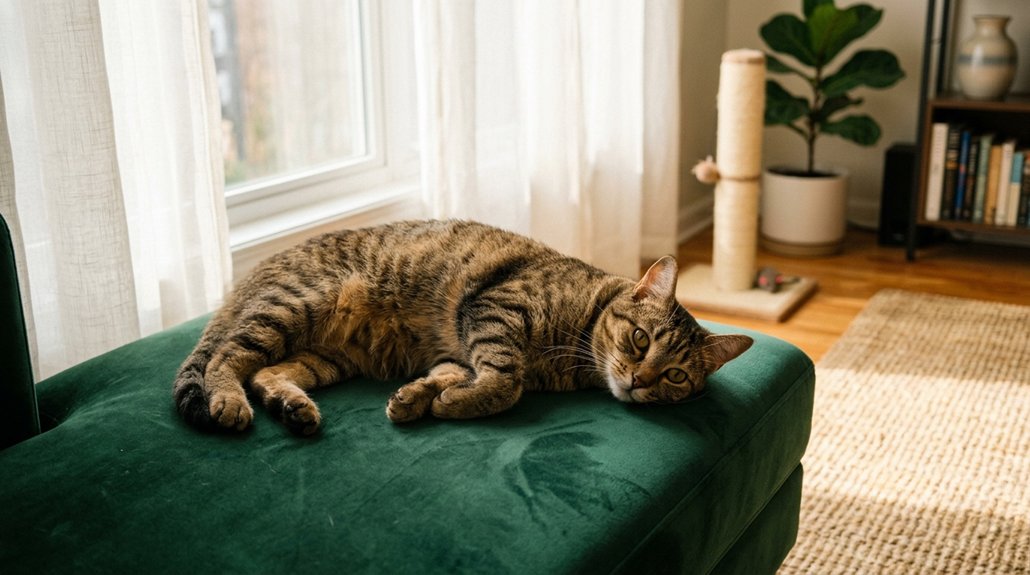
Choosing the right cat breed for an indoor lifestyle can markedly impact both the feline’s and the owner’s well-being. For instance, Ragdoll characteristics such as their calm demeanor make them perfect for apartment living, while British Shorthairs thrive similarly with their lower activity levels. When it comes to Siamese socialization, they’re highly social and vocal, so they require constant human interaction to thrive indoors. Meanwhile, Persian cats appreciate tranquility and do better indoors to avoid respiratory issues.
| Breed | Ideal Traits | Special Needs |
|---|---|---|
| Ragdoll | Calm, Affectionate | Suitable for apartments |
| Siamese | Social, Vocal | Needs interaction |
| Persian | Tranquil, Independent | Regular grooming |
| Sphynx | Sensitive, Playful | Skin care |
These breeds, with specific lifestyles, can enhance your indoor companion experience.
Building an Enriching Indoor Space for Cats
Identifying breeds suited for indoor living isn’t only the first step in fostering a harmonious environment for your feline friends; crafting their living space is equally essential. Enrich your cat’s environment with interactive toys. Puzzle feeders and scratching posts stimulate both mind and body, guaranteeing mental engagement and physical wellness. Implement climbing areas like cat trees or shelves to fulfill your cat’s intrinsic climbing instincts, granting them the thrill of exploration. Enhance their world with “Kitty TV” by installing bird feeders outside windows, providing safe wildlife interaction. Regularly rotate toys and introduce new ones to fend off boredom. For social breeds like Burmese and Siamese, companionship through a second cat or your consistent interaction guarantees sustained happiness indoors.
How to Pick the Perfect Indoor Cat
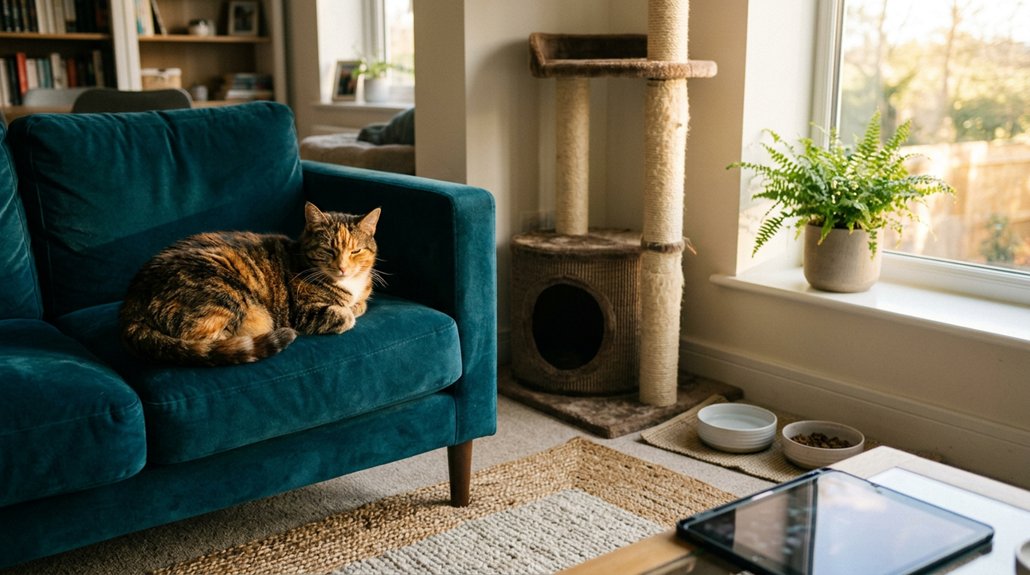
How do you decide which cat breed is perfect for life indoors? It’s important to evaluate several factors. First, consider grooming requirements: breeds like Persians need regular grooming due to their long, luxurious fur, whereas Devon Rex cats require minimal maintenance.
Furthermore, assess energy levels and social interactions:
- Ragdolls and British Shorthairs are calm and adaptable, ideal for quieter environments.
- Burmese and Siamese, with higher energy levels, thrive in more interactive settings needing mental stimulation.
- Potential breed-specific health issues, such as British Shorthairs’ gastrointestinal and heart vulnerabilities, should also inform your choice.
Size and activity requirements are vital. Larger breeds like Maine Coons require ample space, while smaller ones like Singapura adapt well to apartments. Selecting a cat involves aligning their traits with your lifestyle.
Frequently Asked Questions
What Breed of Cat Is Best for Indoors?
You might find the British Shorthair or Ragdoll perfect for an indoor lifestyle due to their calm breed characteristics. Consideration of cat behavior, activity levels, health needs and safety concerns is essential for ideal indoor living.
What Is the 3-3-3 Rule With Cats?
The 3-3-3 rule in cat adaptation highlights their emotional and behavioral changes in a new indoor environment. Over three months, cats explore, build trust, and establish routines, needing your patience and support for smoother changes.
What Is “I Love You” in Cat Language?
Curious about how your cat says “I love you”? Watch for their slow blinking, frequent purring, gentle kneading, affectionate head-butting, and loyal following. These feline behaviors are subtle yet profound forms of cat communication showcasing their cherished affection.
What Annoys Cats the Most?
Cats hate loud noises, sudden movements, and unfamiliar scents. They’re sensitive to territorial changes and interrupted sleep. Lack of attention frustrates them too. Observing these factors can help you maintain a peaceful environment for your feline friend.
Conclusion
Choosing the perfect indoor cat is like finding a puzzle piece that completes your home. Breeds like Ragdolls and Scottish Folds thrive indoors, blending seamlessly into domestic life. Observations show these cats benefit from a controlled setting, minimizing health risks and maximizing safety. Creating an enriching indoor environment enhances their well-being, offering stimulation and comfort. Evaluate your living space and lifestyle needs carefully to guarantee your feline friend fits perfectly and lives contentedly indoors.