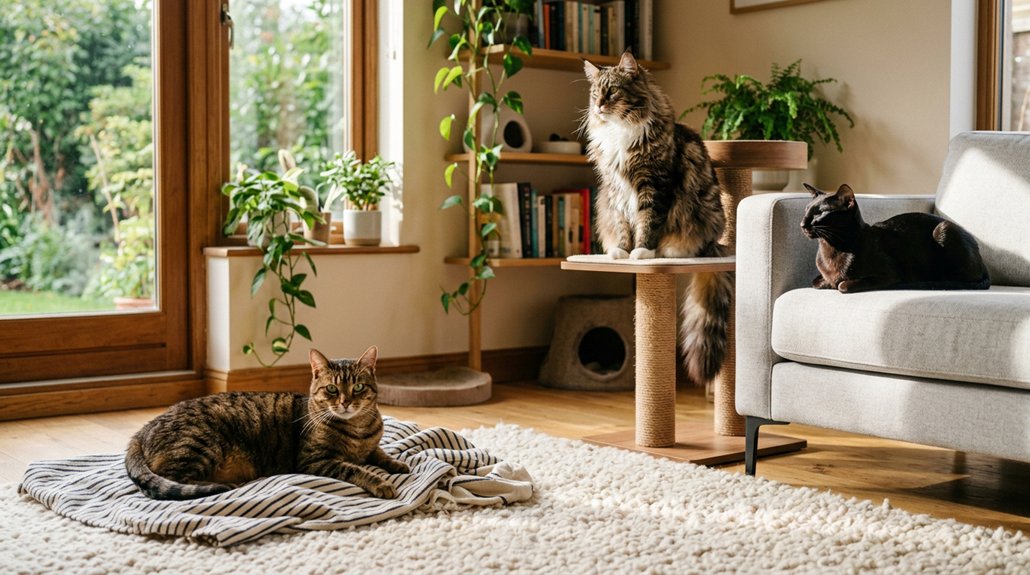
Selecting the right cat breed involves balancing health, energy levels, grooming needs, and adaptability with your living environment and experience. If you’re a first-time owner, consider low-maintenance breeds like Ragdolls. Compact spaces benefit from adaptable breeds such as Russian Blues. Evaluate your willingness to engage with high-energy breeds or manage vocal ones. Determine if a kitten’s playful demand suits you, or a mature cat’s companionship. Explore how different breeds can enhance your lifestyle further.
Key Takeaways
- Assess the size of your living space to determine if a compact or expansive breed would best suit your home.
- Consider your energy level preference; choose between high-energy breeds needing engagement or low-energy breeds preferring relaxation.
- Evaluate grooming commitment; long-haired breeds require frequent maintenance, while short-haired breeds demand less grooming.
- Factor in your household dynamics; sociable breeds fit families, while independent breeds suit solo owners or busy households.
- Reflect on your experience with cats; first-time owners may benefit from adaptable, low-maintenance breeds.
What Factors Influence Your Ideal Cat Breed Choice?
When selecting the ideal cat breed, several key factors must be considered to guarantee a harmonious fit with your lifestyle. Health considerations are paramount. Some breeds may be predisposed to specific health issues, necessitating regular veterinary check-ups and preventive care. For instance, Persian cats are prone to respiratory challenges. It’s vital to assess the breed lifespan; different breeds have varying longevity, and understanding this helps manage long-term commitments. Energy levels, grooming needs, and sociability also impact suitability. Active breeds demand engagement, whereas more relaxed breeds require less interaction. Long-haired cats necessitate frequent grooming compared to short-haired varieties. The adaptability of the breed to your living arrangement and family dynamics mustn’t be overlooked. Properly considering these factors secures the right match for your environment.
How Does Your Experience Shape Breed Suitability?
Your experience level with cats profoundly shapes breed suitability, ensuring a harmonious living arrangement. First-time owners benefit from breeds with adaptable temperaments and minimal grooming needs, like Ragdolls or British Shorthairs. Conversely, experienced owners might seek out the dynamic engagement of Bengals or Siamese, known for their distinct personality differences and behavioral traits.
Understanding these factors is critical:
| Experience Level | Recommended Breeds | Key Considerations |
|---|---|---|
| First-Time Owners | Ragdoll, American Shorthair | Easygoing, low grooming |
| Experienced Owners | Bengal, Siamese | High engagement, vocal |
| British Shorthair | Low maintenance |
Evaluating your past interactions and familiarity with cat care routines allows you to select a breed aligned with your comfort level, ensuring satisfaction and fulfilling bond between you and your companion.
How Does Your Home Environment Affect Breed Choice?
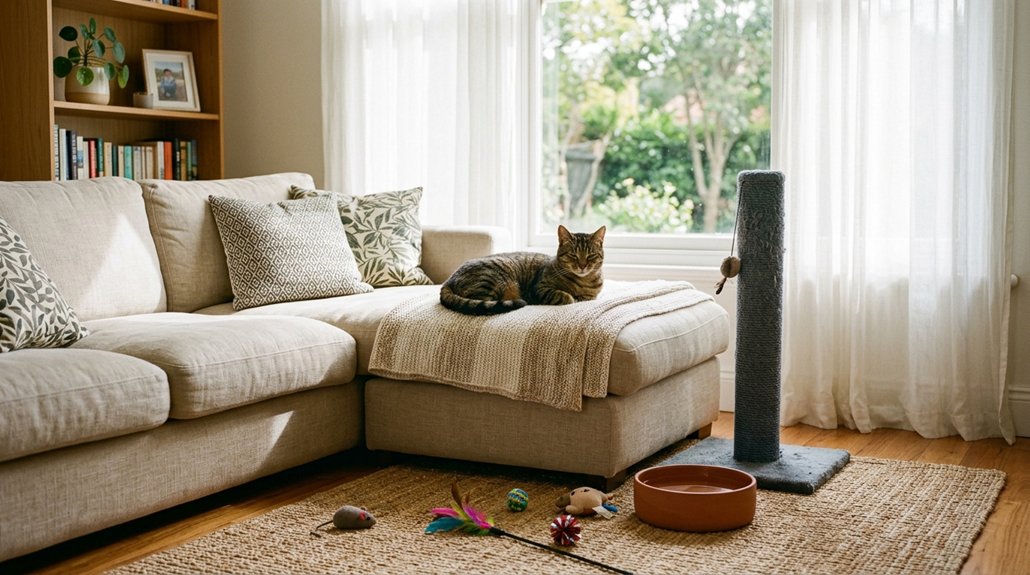
When choosing a cat breed, the size and energy level of your living space are critical factors; compact breeds like Russian Blues thrive in smaller, more enclosed environments. You’ll also need to evaluate your household dynamics, as sociable breeds such as Maine Coons are ideal for families with children, while high-energy breeds require ample stimulation and space. Additionally, assess how often the cat will be left alone, since a breed like Siamese demands companionship, whereas more independent breeds might better suit a busy household.
Living Space Considerations
Selecting the ideal cat breed is closely tied to your living space and its specific characteristics. For apartment adaptability, opt for breeds like the Russian Blue or British Shorthair, which thrive in smaller spaces due to their lower energy levels and contentment with indoor enrichment. These breeds easily adapt to limited space without feeling constrained. However, the layout of your home plays an important role too. Bengal cats, known for their climbing prowess, can benefit from vertical enrichment through cat trees or shelves, maximizing compact areas effectively. If you have larger living quarters, breeds like the Maine Coon might suit your environment better, as they require ample room to roam. Remember, all indoor cats need engaging toys to maintain their physical and mental health, ensuring a harmonious adaptation.
Family Dynamics Impact
Understanding breed compatibility with your family’s living space can naturally extend to contemplating family dynamics, which are equally significant in choosing the right cat. The age of children in your household affects breed choice; breeds like Maine Coons and Ragdolls are ideal for homes with young kids due to their patience and sociability. Contrast this with more active environments—Bengals and American Shorthairs could better suit energetic families. Assess existing pet interactions as well; certain breeds exhibit greater tolerance for cohabitation with other animals, beneficial for multi-pet homes. Additionally, align breed attributes with your family’s schedule and interaction frequency. Cats demanding attention and engagement will need consistent interaction, while breeds like British Shorthairs can adapt better to busy, work-centric lifestyles.
Alone Time Tolerance
Though your home environment greatly influences breed choice, understanding a cat’s tolerance for alone time is vital for making a well-informed decision. If you lead a busy lifestyle, consider a British Shorthair. These cats manage solitude better, requiring minimal cat companionship. In contrast, breeds like Ragdolls or Maine Coons, which thrive on social interaction, might suffer from breed anxiety if left alone frequently. Their tendency for separation anxiety can manifest in destructive behaviors or excessive vocalization. Older cats typically handle solitude better than their younger, more energetic counterparts that demand engagement. To mitigate potential stress, guarantee an enriched environment with toys or climbing structures to help cats alleviating boredom, important for any breed prone to anxiety due to frequent alone time.
Which Cat Energy Levels Fit Your Lifestyle?
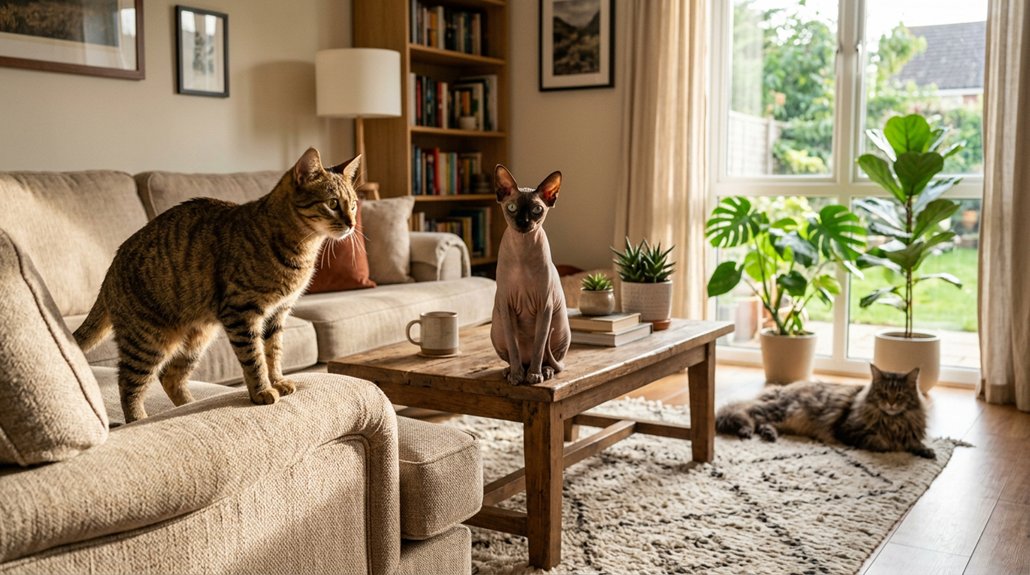
When considering a cat breed, evaluating how its energy level aligns with your lifestyle is essential for a harmonious relationship. Low-energy cats, like Persians, fit well in a laid-back environment, whereas high-energy breeds, such as Bengals, require active engagement and regular play. Understanding your daily routine and activity preferences will guide you in selecting a breed that complements your lifestyle, ensuring a contentment for both you and your feline companion.
Matching Cat Activity Levels
How do you guarantee that your choice of a feline companion fits seamlessly with your daily routine and energy levels? Consider the role of cat playtime when evaluating breed compatibility. High-energy cats like Bengals and Siamese demand regular interaction, thriving in active households where engagement can prevent behavioral issues. If your lifestyle supports such activities, these breeds may suit you well. Alternatively, moderate-energy breeds such as Ragdolls and British Shorthairs balance play with relaxation, aligning with families who juggle busy schedules. They require attention but appreciate downtime too. Low-energy cats, including Persians, are perfect for more laid-back environments, ideal for those with limited time for interaction. Matching your schedule to their needs guarantees a harmonious coexistence and strengthens your bond.
Finding Your Ideal Energy
Evaluating the activity levels of various cat breeds is integral to guaranteeing your lifestyle harmony and meeting your feline’s needs. High-energy cats like Bengals and Abyssinians thrive on daily mental and physical stimulation. They’re ideal for those who can commit to frequent high energy play sessions. Conversely, breeds such as Persians and Maine Coons prefer low energy lounging. They’re perfect if you favor a quieter, more relaxed environment. For a balanced approach, consider moderate-energy breeds like Ragdolls and British Shorthairs. They blend playfulness with tranquility, fitting families with varied activity levels. To secure the right match, assess your daily routine and available playtime. This guarantees compatibility with your cat’s energy demands, leading to a harmonious living experience.
How Much Time Are You Willing to Spend on Grooming?
While choosing a cat breed, it’s essential to evaluate how much time you can dedicate to grooming. Long-haired breeds like Persians require daily grooming techniques to prevent matting and maintain coat health. You’ll need an array of grooming tools, such as combs and brushes, to manage their luxurious fur. In contrast, short-haired breeds like the American Shorthair demand less frequent grooming, roughly once a week, making them low-maintenance for busy owners. A vital consideration is aligning the grooming needs of the cat with your lifestyle to guarantee proper care. Regular grooming not only enhances a cat’s appearance but also serves as a preventive measure to detect health issues, such as skin problems or parasites, ensuring overall feline wellness.
What Sociability Traits Should You Consider?
As you contemplate the grooming commitments associated with your chosen breed, it’s equally important to evaluate their sociability traits. Consider interactive breeds like Ragdolls or Maine Coons if you seek companionship and enjoy regular interaction. Conversely, an independent breed such as the British Shorthair might suit you better if you prefer a pet that thrives solo. Vocal preferences also matter; for a chatty companion, consider a Siamese, known for its engaging and expressive nature. However, quieter breeds might appeal if a serene living space is your goal. Also, consider how well a cat like the Abyssinian, which enjoys vibrant households, fits your family dynamics, while breeds like the Persian favor calmer, less bustling environments. Understanding these traits guarantees alignment with your lifestyle.
Should You Choose a Kitten or a Mature Cat Breed?
When deciding between a kitten and a mature cat, it’s essential to weigh the different demands each will place on your time and lifestyle. Kittens, with their playful and energetic nature, require extensive training and supervision, making them a demanding choice if your schedule is tight. Kitten traits include a higher need for socialization and learning, equating to a longer commitment. Conversely, mature cats exhibit adult adaptability, swiftly integrating into new environments and routines. Their established behaviors, such as litter training and predictable feeding, considerably reduce the initial upheaval for new owners. With a calmer demeanor and less mischievousness, mature cats offer immediate companionship, ideally suited for busy households or those with children in need of a gentle presence.
How Do Different Breeds Handle Training and Adjustment?
Considering whether a kitten or mature cat better fits your lifestyle leads naturally into understanding how various breeds handle training and adjustment. Breeds like the Siamese and Abyssinians are known for their inquisitiveness and responsiveness, making them more amenable to training strategies, especially those using positive reinforcement. Conversely, Persians tend to be more laid-back, often presenting different training challenges. Kittens might require consistent time and patience due to their need for learning basic behaviors, whereas adult cats often navigate adjustment challenges more easily due to established habits. Breeds such as Ragdolls and Maine Coons exhibit remarkable adaptability, easing their integration into a new environment. However, more sensitive breeds may need more time and careful introduction to settle in comfortably.
How Can You Ensure Your Cat Thrives Long-Term?
Ever wondered how you can guarantee your cat thrives in the long term? Prioritizing health maintenance and meeting dietary needs are key. Regular veterinary check-ups pinpoint potential health issues early, promoting longevity. Tailor a balanced diet to your cat’s age, breed, and specific health needs; this deters obesity and related ailments. Complement dietary care with stimulating activities—through playtime and mental challenges—to ward off behavioral problems. Offering a safe, enriching environment with vertical spaces and interactive toys assures your cat can express natural instincts, reducing stress. Consistent grooming, matched to their coat type, prevents conditions like matting or skin infections, facilitating comfort and happiness. These practices together create a foundation for a healthy, thriving feline companion.
Frequently Asked Questions
What Are Some Hypoallergenic Cat Breeds?
Siberian, Balinese, and Russian Blue are hypoallergenic cat breeds. You shouldn’t react as strongly to these, though individual results vary. Siamese allergies might be milder, thanks to lower protein levels in their saliva compared to typical felines.
How Do Cats Adapt to Changes in Environment?
Cats can adapt to environmental stressors through gradual exposure, but you might notice behavioral changes like hiding or reduced appetite. It’s essential to provide stability and comfort to help them shift more smoothly to new surroundings.
Can Cats Coexist With Other Pets?
Where there’s a will, there’s a way, and yes, cats can coexist with other pets. Success hinges on understanding cat personality traits and utilizing proper pet introduction strategies, ensuring harmony in your multi-pet household.
What Health Issues Are Common in Certain Breeds?
Certain cat breeds are prone to breed specific diseases and hereditary conditions. For example, Persians may face polycystic kidney disease, while Maine Coons are susceptible to hypertrophic cardiomyopathy. Research well, consult breeders, and stay informed.
What Are the Costs of Owning Different Cat Breeds?
Consider owning a cat as nurturing a bonsai: precision matters. Persian cats require regular grooming, akin to tending intricate roots, increasing costs. Additionally, breed-specific food preferences can inflate expenses, irrespective of the breed’s initial purchase price.
Conclusion
When it comes to choosing the purrfect feline companion, keep in mind that every whisker and tail has its quirks. Tailor your choice to your own daily whims and fancies, blending seamlessly into your home’s cozy embrace. Whether you’re prepared for a bit of fluff management or seeking a low-maintenance charmer, doing your homework will guarantee your pawed pal thrives. With a dash of care and a sprinkle of patience, you’ll find feline harmony.