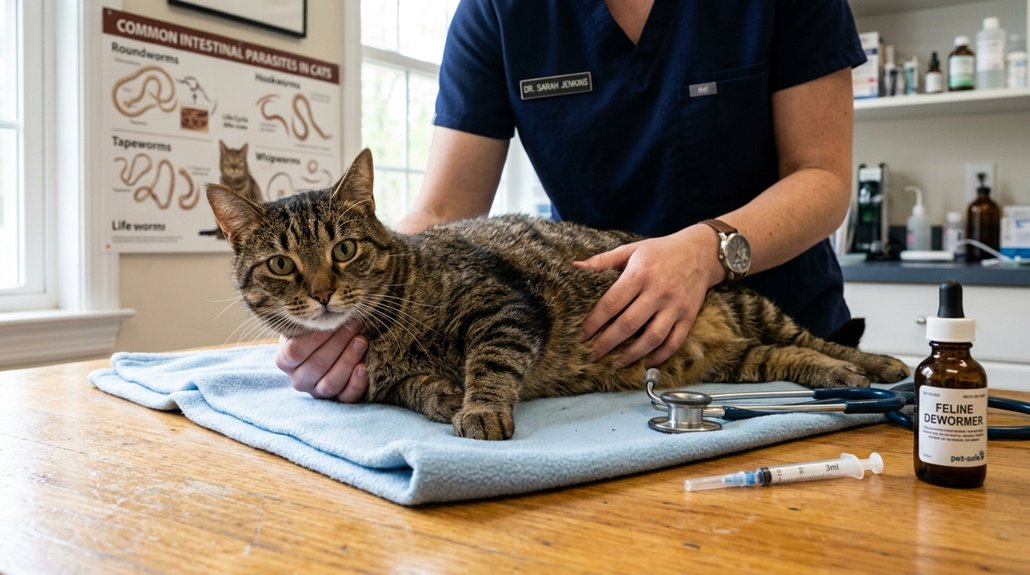
If your cat has worms, you’ll notice symptoms like weight loss, vomiting, diarrhea, or a distended abdomen. Their gums might pale due to anemia from a hookworm infection. Vets diagnose worms through fecal analysis and blood tests. For treatment, deworming medications are effective, often showing results within a week. Regular vet visits and a deworming schedule are essential for prevention. Want to make sure your furry friend stays healthy and free from worms? There’s more to discover.
Key Takeaways
- Common symptoms include weight loss, vomiting, diarrhea, and distended abdomen due to nutrient theft by worms.
- Worms like tapeworms and roundworms can be observed in the cat’s feces.
- Veterinarians diagnose worm infestations through fecal analysis, blood tests, and physical examinations.
- Treat worm infections with veterinary-prescribed deworming medications, and improvements are usually seen within a week.
- Prevent worm infections with regular deworming, hygiene practices, and effective flea control measures.
How to Recognize Worm Symptoms in Cats
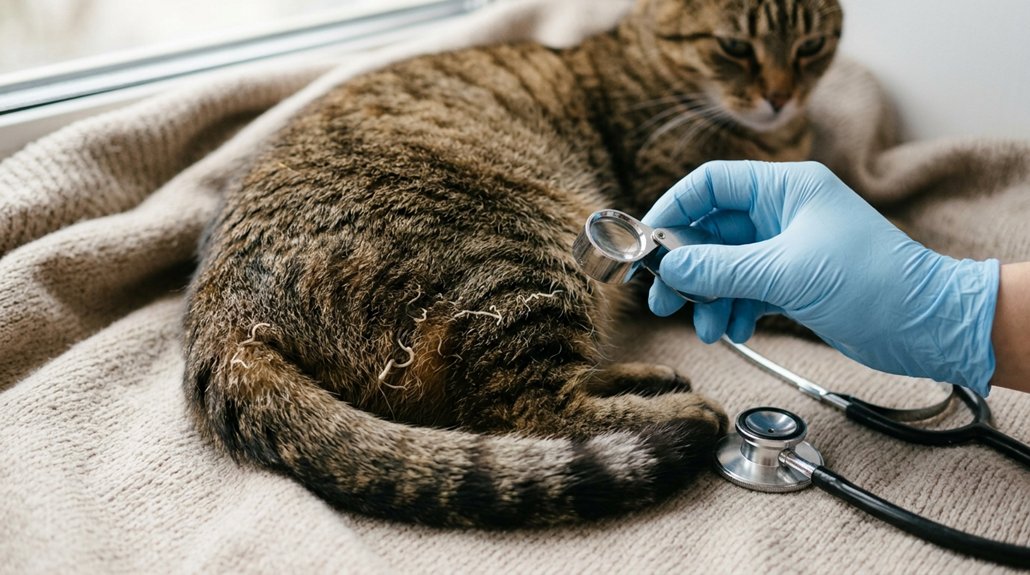
How can you tell if your cat has worms? Recognizing symptoms of worm infestations is essential for your cat’s intestinal health. Common worm types such as tapeworms and roundworms manifest visibly in your cat’s feces, appearing like grains of rice or spaghetti. Watch for a distended abdomen—a pot-bellied appearance often signals a serious infestation. Although your cat might eat normally, weight loss is a red flag, as these parasites siphon nutrients. Episodes of vomiting and diarrhea might occur, with the latter possibly being soft or even bloody. Additionally, changes in your cat’s gums, like turning pale or white, may suggest anemia from hookworms. Early detection guarantees effective treatment and prevents severe health issues.
How Vets Diagnose Worms in Your Cat
Identifying symptoms of worms in your cat is the first step, but confirming the diagnosis requires veterinary expertise. Vets primarily use a fecal analysis to detect parasites. They examine samples under a microscope to spot eggs or worms. This method is often complemented by blood tests, especially when suspecting hookworms or heartworms, as these can reveal anemia or other health complications.
In addition to laboratory tests, your vet may perform a thorough physical examination, checking for signs like a distended abdomen, weight loss, or visible worms. In severe cases, imaging techniques like X-rays or ultrasounds assist in identifying complications. Follow-up checks often include multiple fecal tests to guarantee all parasites are addressed post-treatment. Trust your vet to guide you through each diagnostic step with care.
Where Do Cat Worms Come From?
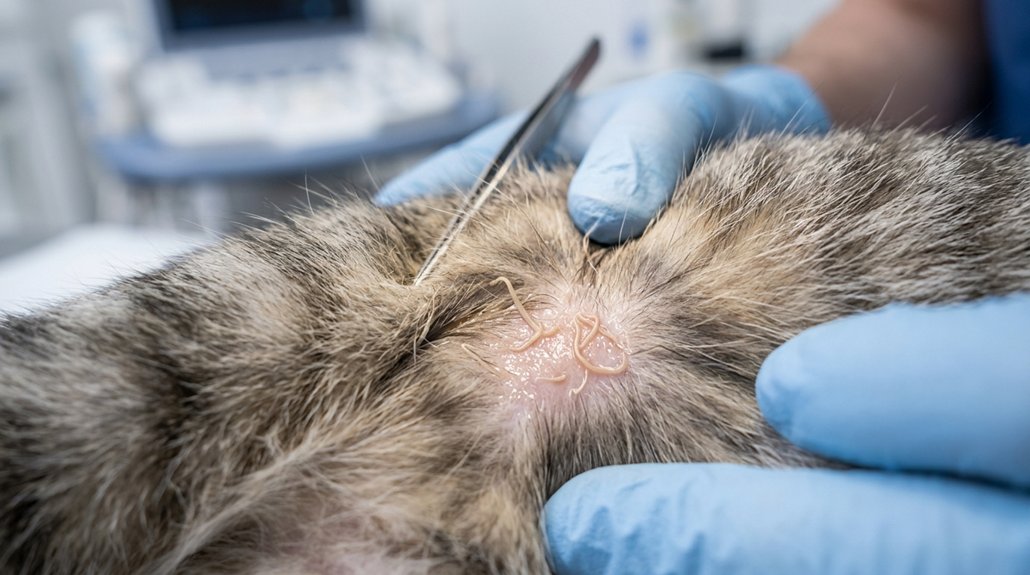
Ever wonder where those pesky worms come from that manage to affect your beloved feline? Understanding the worm life cycle is essential. Cat worms typically originate from environments contaminated by infected animals’ feces. Through various transmission methods, such as ingesting contaminated soil or hosts like rodents, birds, or insects, worms find their way into your cat. Remarkably, even the act of grooming can lead to infection, as cats consume infected fleas, often carrying tapeworms.
Kittens are particularly vulnerable, acquiring worms through their mother’s milk. Additionally, hookworms can directly penetrate the skin from contaminated environments, further complicating prevention. It’s not just direct contact though—eggs and larvae can persist in soil, facilitating a stealthy and persistent means of transmission. Understanding these pathways helps in protecting your pet.
Treating Worm Infections: Options and Expectations
When dealing with worm infections in cats, it’s важливо to understand that effective treatment requires veterinary intervention and the use of specific deworming medications like Panacur or Drontal, tailored to the type of worm present. Worm treatment options vary, and you should expect:
- Multiple Courses: Some worms have prolonged life cycles; repeated treatments might be necessary to guarantee complete eradication.
- Observable Improvement: Typically, health improves within a week post-treatment, showcasing the effectiveness of the approach.
- Post-Treatment Symptoms: Vomiting of worms, especially roundworms, can occur and usually resolves within 1-2 days. Persistent vomiting necessitates further reevaluation by a vet.
Understanding these deworming expectations helps manage costs, which might include medication priced between $5 and $15 and potential follow-up treatments.
Preventing Future Worm Infections in Cats
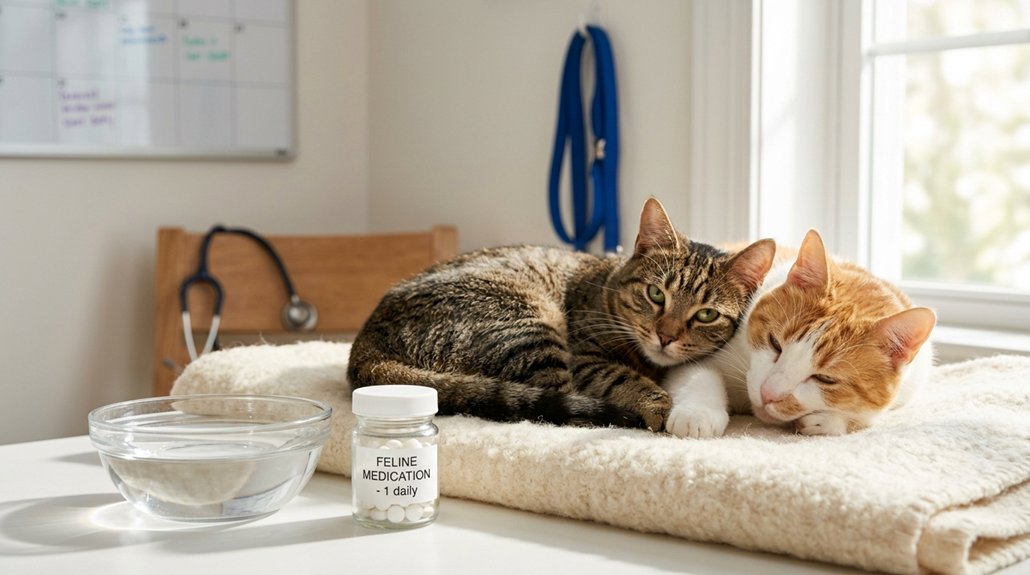
Although worm infections in cats can be a serious concern, there’s much you can do to prevent them effectively. Establish a consistent deworming schedule—starting preventive treatment at six weeks for kittens and every two to six months for adults to mitigate risks. Regular vet check-ups are essential for early detection since many cats might not show symptoms. Emphasizing hygiene practices, like timely litter box cleaning and hand washing after handling feces, greatly reduces transmission. Avoid flea infestations, a common worm source, with monthly controls. Safeguard your indoor kitty from contaminated food or wildlife exposure.
| Emotion | Cause | Solution |
|---|---|---|
| Worry | Asymptomatic carriers | Regular vet visits |
| Stress | Flea-related tapeworm risk | Monthly flea control |
| Concern | Hygiene lapses | Routine cleaning |
| Relief | Infected without outdoor access | Indoor protection |
| Assurance | Fear of transmission | Stringent hygiene practices |
Frequently Asked Questions
What Are the First Signs of Worms in Cats?
You might notice vomiting with visible worms, a distended abdomen, or weight loss despite normal eating—typical signs of common worm types like roundworms. To prevent worm infection, keep your cat’s environment clean and discuss deworming with your vet.
What Is the Fastest Way to Get Rid of Worms in Cats?
You should consult your vet for prescribed deworming meds, the quickest method. Although natural remedies can help, they’re slower. You’ll also want prevention tips: maintain hygiene, conduct regular fecal exams, and avoid outdoor exposure.
What Happens if Worms Go Untreated in Cats?
Left untreated, worms can wreak havoc, causing critical complications like anemia or blockages. Long-term effects include malnutrition and severe distress. Prevention methods include regular vet visits, sanitation, and appropriate medications — ensuring your feline’s health stays fortified.
Can I Treat My Cat for Worms Without Going to the Vet?
You can attempt using home remedies, but they’re generally ineffective. Veterinary advice is essential for accurate diagnosis and treatment. It’s compassionate to guarantee your cat receives proper care tailored to the specific worm type.
Conclusion
In the battle against worms, your vigilance is your cat’s best shield. Recognizing symptoms, understanding causes, and pursuing prompt treatment isn’t just smart—it’s essential. Like a finely tuned machine, your proactive care guarantees your feline friend thrives. Work hand in hand with your vet, embracing preventative measures to keep those pesky invaders at bay. Remember, an ounce of prevention is worth a pound of cure, guaranteeing your cat enjoys a healthier, happier life.