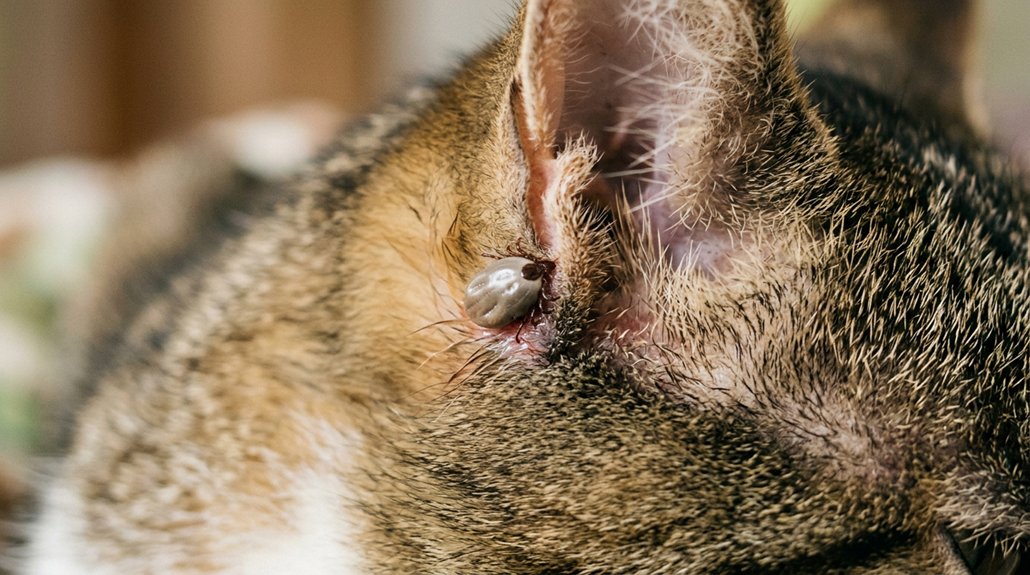
Tick bites on cats can lead to serious health issues like anemia and paralysis, requiring early detection and removal. Look for ticks, especially in hidden spots like hind legs and abdomen. Symptoms include red, itchy skin, pale gums, and lethargy, which can indicate tick-borne diseases. Use fine-tipped tweezers for removal and consult a vet if needed. Year-round prevention is critical. Explore further to understand more about managing and preventing tick-related health complications in cats.
Key Takeaways
- Regularly check cats, focusing on the head, neck, and between toes for early tick detection and removal.
- Ticks can cause symptoms like itchy skin, lethargy, anemia, and joint stiffness in cats.
- Use fine-tipped tweezers to remove ticks, ensuring the tick’s mouthparts are not left behind.
- Preserve the removed tick for potential veterinary analysis to assist in diagnosis and treatment.
- Consult a vet for prevention strategies, including year-round treatments and regular blood tests for tick-borne diseases.
Identifying Ticks on Your Cat
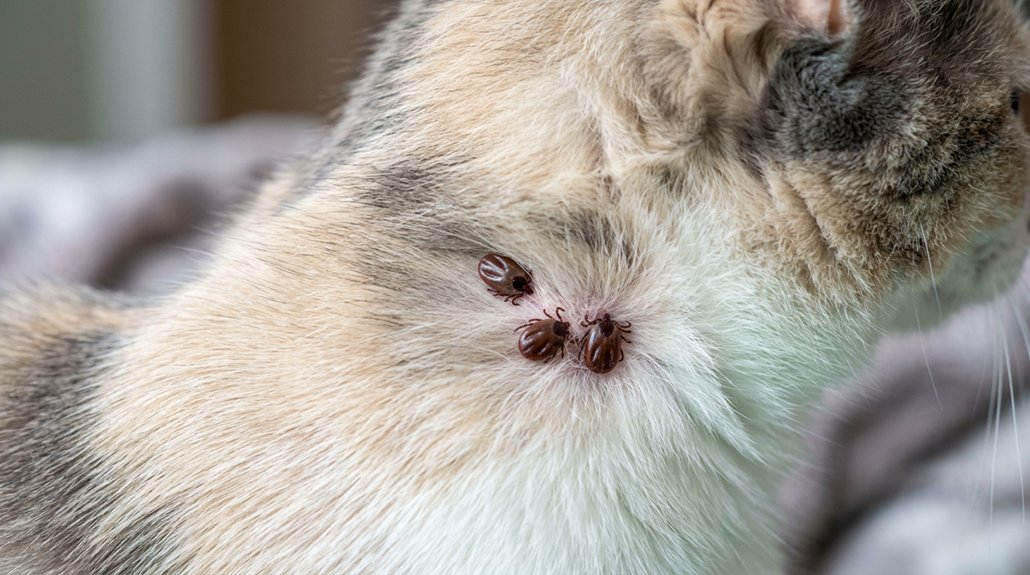
Ticks, as small ectoparasites, present a significant concern for pet owners, particularly cat guardians. Identifying these parasites on your feline is vital. Ticks are usually less than 10mm in size, with a distinctive round or tear-shaped body. You’ll often find them on the abdomen and hind legs. Incorporate tick identification tips by inspecting your cat’s coat, especially following any outdoor activity. It is important to be aware that ticks tend to attach in hard-to-see areas, so thorough checks are necessary. Look for signs like a tick crater or swelling at the bite site, which are indicative of tick presence. Recognizing these factors early can prevent complications, including irritation from tick saliva, which may escalate into more serious health conditions.
Symptoms of Tick Bites in Cats
When monitoring your cat’s health, it’s vital to understand the symptoms of tick bites in felines. Tick bite reactions often result in red, swollen, and itchy skin, prompting grooming behaviors that may lead to secondary infections. Pay attention to pale gums, an indicator of anemia potentially caused by severe infestations and hemobartonellosis. Lethargy and a reduced appetite may suggest underlying tick-borne diseases.
| Symptom | Indication |
|---|---|
| Pale gums | Possible anemia due to hemobartonellosis |
| Weak hind legs | Paralysis from neurotoxic tick |
| Presence of tick crater | Indicates recent tick attachment |
Watch for weakness in the hind legs or breathing difficulties caused by paralysis ticks’ neurotoxins. Recognizing these symptoms allows prompt veterinary care, significant in mitigating potential health complications from tick infestations.
Effective Tick Removal Techniques for Cats
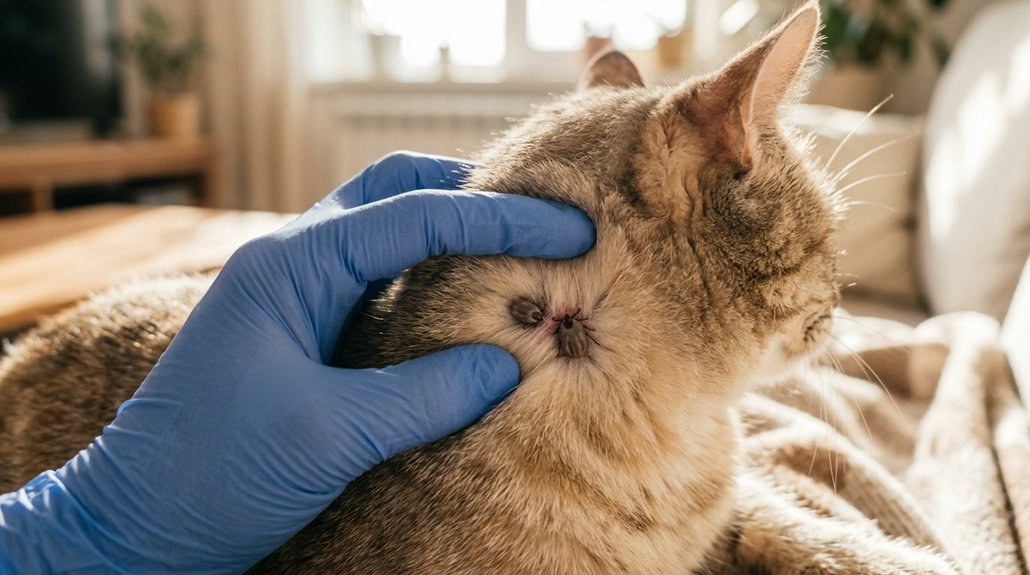
When addressing tick removal from cats, it’s essential to use fine-tipped tweezers or a designated tick removal tool to securely grasp the tick near the skin, guaranteeing steady pressure to extract it without breaking off mouthparts. Avoid twisting or jerking motions during extraction, as these can leave parts embedded in the skin, increasing infection risk. Post-removal, disinfect the area with soap and water, and consider preserving the tick for identification and potential veterinary consultation to assure your cat receives appropriate care.
Proper Tick Extraction
Although often a challenging task for pet owners, properly removing a tick from your cat is essential to prevent potential health complications. Effective tick removal tips involve using fine-tipped tweezers or a specialized tick remover to achieve safe extraction. Carefully grasp the tick as close to your cat’s skin as possible and apply steady, even pressure, pulling straight out to prevent leaving the mouth parts embedded. Avoid squeezing the tick’s body, as this increases the risk of transmitting diseases. Post-removal, cleanse the bite area with soap and water, then wash your hands thoroughly. Preserve the tick in a sealed container with rubbing alcohol for identification, aiding in the diagnosis of any tick-borne diseases. Monitor your cat for symptoms and consult a veterinarian if needed.
Avoid Common Mistakes
After successfully extracting a tick from your cat, understanding potential pitfalls in this process remains important for ensuring your pet’s well-being. It’s essential to use the precise technique and avoid home remedy misconceptions that may cause more harm than good. When you remove a tick, choose fine-tipped tweezers or a professional tick remover, maintaining steady pressure without twisting—common tick removal pitfalls often stem from inappropriate tools and methods. Ignoring post-removal disinfection increases the risk of infection, so cleanse the area thoroughly. Retain the tick for identification, significant for addressing possible illness.
- Avoid using heat or petroleum jelly, it can agitate the skin.
- Disinfect the bite site promptly and thoroughly.
- Seal the tick in alcohol.
- Consult a vet if symptoms arise.
- Always wear protective gloves.
Common Tick Species Affecting Cats
Understanding the diverse common tick species that can affect cats is essential for maintaining their health and wellbeing. The American dog tick flourishes across various U.S. regions, adapting to multiple tick habitats and feeding behaviors, which include targeting a variety of hosts. The brown dog tick, although primarily infesting canines, occasionally impacts felines. Lone star ticks, identifiable by their characteristic white spot, thrive in wooded areas and represent another concern due to their dynamic tick behavior and pathogenic potential. Black-legged ticks, or deer ticks, are pivotal vectors for Lyme disease. In humid coastal regions, paralysis ticks pose significant risks due to their neurotoxin, while bush ticks can induce anemia through heavy infestations, emphasizing the need for routine scrutiny of outdoor cats.
How Ticks Can Transmit Diseases to Cats
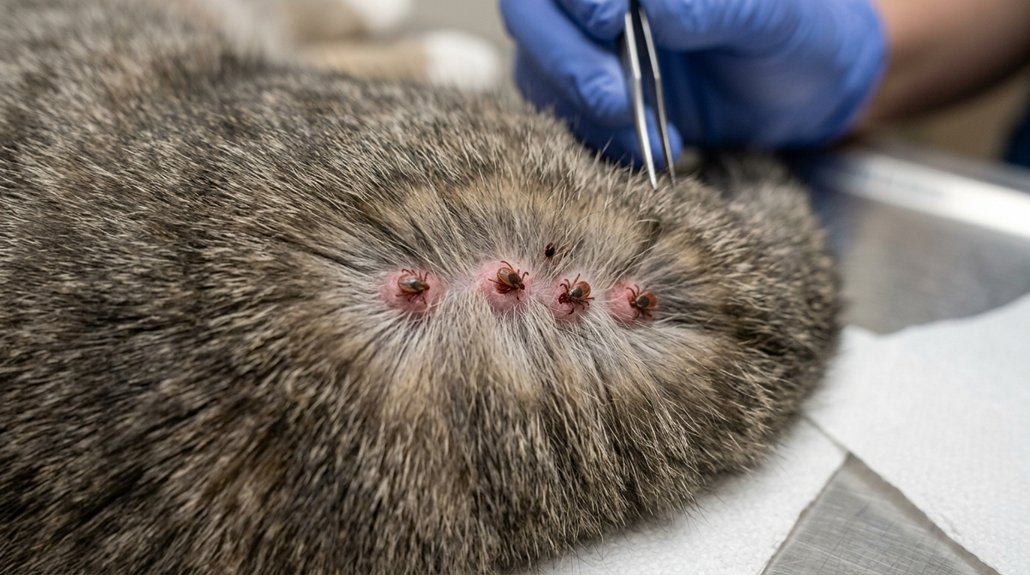
Having identified the various tick species that can infest cats, it’s important to understand how these parasites can transmit diseases. Ticks transmit pathogens like bacteria, protozoa, and viruses through their saliva while feeding on a cat’s blood. As part of the tick life cycle, their behavior enables them to latch onto hosts, such as cats, facilitating the spread of diseases. Common tick-borne illnesses in cats include hemobartonellosis and cytauxzoonosis, the latter often being fatal. Although rare in felines, Lyme disease can occur via the black-legged tick. Rapid pathogen reproduction can lead to severe complications without prompt veterinary care. Be informed about the following risks:
- Severe anemia from hemobartonellosis
- Rapid protozoan infection (cytauxzoonosis)
- Rare occurrences of Lyme disease
- Potential for zoonotic tularemia
- Criticality of immediate veterinary intervention
Veterinarian-Approved Tick Prevention Tactics
While safeguarding your cat from tick-borne diseases is vital, adopting veterinarian-approved prevention tactics can greatly mitigate risks. It’s advisable to consult veterinarians for recommendations on effective tick prevention products, as certain dog treatments can be toxic to cats. Regular application of topical treatments specifically formulated for felines can markedly reduce tick infestations. Additionally, tick collars or oral medications, sanctioned by veterinary experts, offer effective protection. Daily tick checks are essential, especially post-exposure to tick-prone environments, focusing on the head, neck, and between toes. Creating a tick-safe environment through regular lawn maintenance and debris clearance further complements these measures. Verify routine veterinary visits to discuss seasonal parasite control plans tailored to your cat’s specific needs for peak tick prevention.
Potential Health Risks From Tick Bites
You should be aware that tick bites can introduce your cat to infectious agents responsible for diseases like hemobartonellosis, cytauxzoonosis, and tularemia. Recognizing symptoms such as fever, lethargy, and the hallmark signs of anemia is essential for early intervention. Given the life-threatening potential of these conditions, implementing veterinarian-endorsed prevention strategies and seeking immediate treatment if a tick is found are paramount to safeguarding your cat’s health.
Common Tick-Borne Diseases
Although cats generally exhibit a higher resistance to Lyme disease compared to other animals, they remain susceptible to several other tick-borne illnesses, posing significant health risks. Hemobartonellosis symptoms include severe anemia, necessitating swift veterinary diagnosis and intervention. Cytauxzoonosis, caused by Cytauxzoon felis, requires immediate cytauxzoonosis treatment to prevent fatal outcomes. Tularemia risks, despite its rarity, include fever, abscesses, and swollen lymph nodes, demanding urgent care. It’s essential to understand that even with Lyme disease resistance, ticks can quickly introduce pathogens into a cat’s bloodstream during feeding.
- Hemobartonellosis: Severe anemia consequences
- Cytauxzoonosis: Immediate treatment required
- Tularemia: Fever and lymph node complications
- Quick pathogen transmission by ticks
- Importance of veterinary care and intervention
Symptoms Indicating Tick Infestation
Tick-borne diseases pose serious health risks, and recognizing the signs of tick infestation in cats is essential for prompt intervention. Symptoms may include red, swollen skin around the bite, indicating localized inflammation and irritation. Be vigilant for lethargy, loss of appetite, and fever, which may signal a tick-borne illness. Pale gums and rapid breathing could signify severe anemia, likely due to hemobartonellosis, a complication from tick bites. Joint stiffness and swelling might suggest Lyme disease or cytauxzoonosis infections. Signs such as difficulty breathing and weakness in hind legs are particularly concerning, associated with paralysis ticks, which can be life-threatening. Consistent cat grooming techniques and effective tick bite prevention are vital for maintaining your cat’s health and minimizing these severe risks.
Prevention and Treatment Methods
One critical component of safeguarding your feline companion against the serious health implications of tick bites is through thorough prevention and treatment strategies. Routine veterinary consultations will help determine the most effective tick prevention methods, considering topical solutions and collars designed specifically for cats. Daily inspections of your cat’s fur, especially post-outdoor excursions, are essential for early tick detection. Prompt removal using forceps can mitigate infection risks. It’s important to recognize the symptoms of tick-borne ailments—including fever and anemia—and seek immediate veterinary intervention, possibly requiring antibiotics like doxycycline. Integrating natural remedies and home treatments can supplement conventional approaches. Consider implementing:
- Routine veterinary check-ups
- Daily coat inspections
- Quick tick removal techniques
- Usage of feline-safe products
- Natural remedies and home treatments
Treating Tick-Borne Diseases in Your Cat
While early diagnosis is key to effectively treating tick-borne diseases in cats, extensive veterinary care, including thorough examinations and blood tests, is essential to identify specific infections. The treatment regimen commonly involves targeted antibiotic protocols, such as doxycycline, which are vital for combating pathogens like those causing hemobartonellosis. Supporting your cat through these illnesses also requires supportive therapies to alleviate symptoms like fever, anemia, and loss of appetite. These supportive therapies may include fluid therapy and nutritional support, tailored to stabilize your cat’s health. It’s imperative to follow your veterinarian’s prescribed course of treatment rigorously. Post-treatment, vigilance is essential, as tick-borne ailments can have long-term effects. Regular follow-up appointments help monitor your cat’s recovery and address any lingering health concerns.
Daily Tick Checks and Monitoring Tips for Cat Owners
Incorporating daily tick inspections into your routine is vital for early detection and prevention of tick-borne illnesses in your cat. Focus on examining areas where ticks are commonly found, such as the head, neck, and between the toes, using a small flashlight to assist in spotting these parasites in darker fur. If you notice any unusual symptoms such as lethargy or loss of appetite post-exposure, it’s important to consult a veterinarian promptly to guarantee appropriate intervention.
Importance of Regular Inspections
Although it might seem a minor task, conducting daily tick checks on your outdoor cat is essential for their health. Integrating tick awareness into your grooming routine can guarantee the early detection of ticks, reducing the risk of disease transmission. Focus on common attachment sites: head, neck, and between toes. Carefully inspect your cat’s coat for small brown or grey bumps, indicating possible tick attachment and potential blood feeding.
To assist in maintaining tick-free pets, consider these tips:
- Conduct checks in a calm environment to prevent stress.
- Examine for any red, swollen skin around scratch marks.
- Utilize brushing to reveal abnormalities on the coat and skin.
- Lightly massage during inspections to keep your cat relaxed.
- Keep your cat’s grooming routine consistent for best results.
Recognizing Early Signs
For cat owners, daily tick checks are an indispensable aspect of maintaining your pet’s health. Focus on areas like the head, neck, and between the toes, particularly after your cat has explored tick-prone environments. Ticks, sometimes as small as 1mm when unfed, require diligent inspections to prevent them from becoming engorged and more dangerous. Recognize skin reactions such as redness, swelling, and excessive scratching, indicative of tick behavior and potential bites. Familiarize yourself with symptoms of tick-borne diseases—lethargy, loss of appetite, anemia—which necessitate prompt veterinary evaluation. It’s wise to retain extracted ticks in a sealed container with alcohol. This allows your veterinarian to identify tick species and assess possible disease transmission, facilitating timely intervention and protecting your cat’s well-being.
Managing Long-Term Health After Tick Exposure
After a tick bite, monitoring your cat’s long-term health becomes vital, as tick-borne diseases like hemobartonellosis and cytauxzoonosis can have subtle yet serious impacts. Long-term monitoring through regular veterinary check-ups and blood tests is essential for early detection. Consider holistic care to support your cat’s well-being, focusing on immune system support through a balanced diet. Vigilance is important, as subtle signs like lethargy and pale gums can indicate underlying problems.
- Implement year-round tick prevention: Include inspections and treatments.
- Schedule regular vet visits: Enable timely detection of issues.
- Track vaccination status: Discuss area-specific shots with your vet.
- Monitor for symptoms: Be aware of changes in behavior or appetite.
- Maintain a healthy diet: Support overall immune function.
Frequently Asked Questions
When to Worry About a Tick Bite on a Cat?
You should worry if your cat exhibits signs like lethargy, fever, or breathing issues post-tick bite. Prioritize tick bite prevention and utilize effective tick removal techniques to minimize health risks, ensuring prompt veterinary evaluation when symptoms arise.
Will My Cat Be Ok After a Tick Bite?
Your cat’s well-being hangs in the balance like a tightrope walker after a tick bite. Quick tick removal is a lifesaver, part of effective tick bite prevention. Monitor health changes closely and consult a vet immediately.
Can a Cat Survive a Tick Bite?
Yes, a cat can survive a tick bite. Monitor for tick bite symptoms like lethargy or fever. Use tick removal tips: tweezers close to skin, pull steadily. Regular coat checks and prompt veterinary care enhance safety.
What Are Bad Signs After a Tick Bite?
After a tick bite, bad signs include lethargy, fever, swollen joints, or pale gums. Swift tick removal’s essential to prevent serious illnesses like hemobartonellosis. Always observe tick bite symptoms closely and consult a vet promptly.
Conclusion
You’re vigilant, inspecting your cat daily, but what if you miss that tiny, hidden tick? It’s essential not to overlook the potential threats—tick-borne diseases can silently compromise your cat’s health. You’ve mastered tick identification, removal, and preventive strategies, but the unknown looms. Could your cat face Lyme disease or other tick-induced illnesses? The stakes are high; constant monitoring is imperative. Stay informed, consult your vet, and remember, your proactive measures could be a lifesaver.