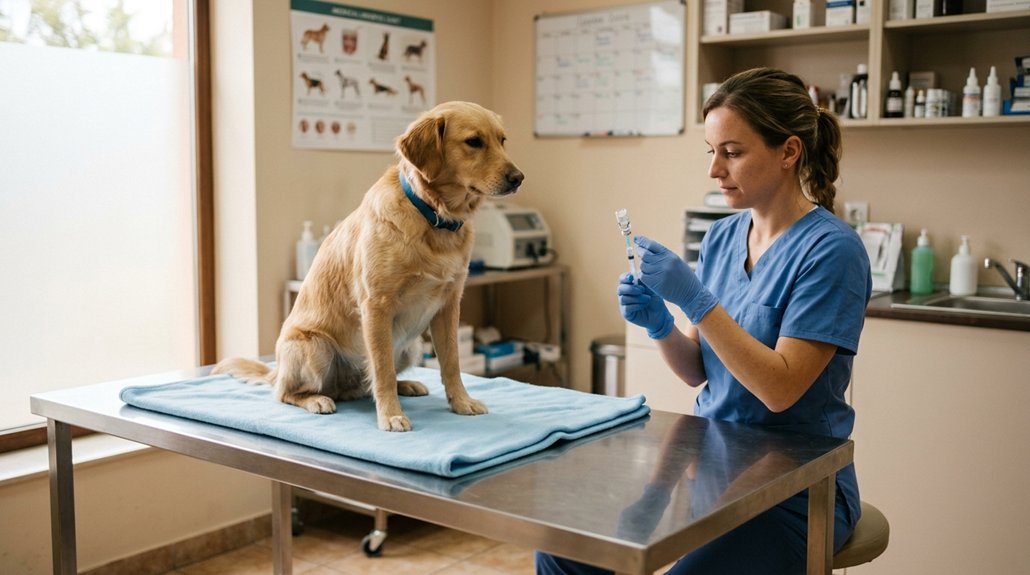
You’ll need to start your puppy’s vaccinations at 6-8 weeks with the DA2PP shot, and follow up with boosters at 10-12 weeks and 14-16 weeks, including a rabies shot. Adult dogs require annual rabies and leptospirosis vaccines, with lifestyle vaccines as needed. Be aware of mild vaccine side effects and prepare for them. Vaccination costs vary, so budgeting is important. Understanding these vaccines is essential for your dog’s health, and there’s more to discover about each element.
Key Takeaways
- Puppies start vaccinations at 6-8 weeks, beginning with the DA2PP shot.
- Boosters and optional vaccines are given at 10-12 weeks.
- Final DA2PP and rabies vaccine occur at 14-16 weeks.
- Annual rabies and other vaccines are often required for adult dogs.
- Consult veterinarians to tailor vaccinations based on health and risk factors.
When Should My Puppy Get Vaccinated?
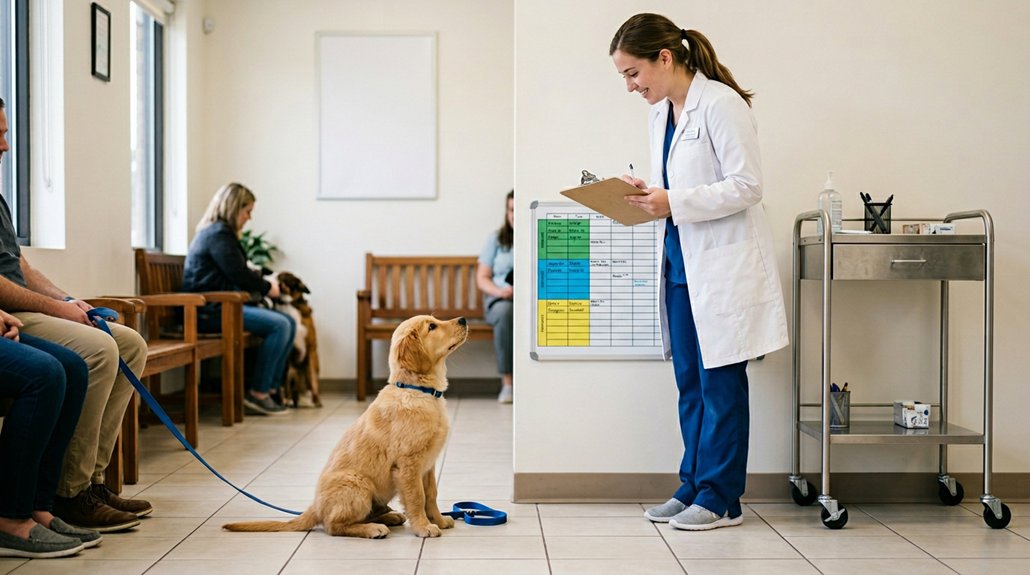
The initial step in ensuring your puppy’s health is adhering to a recommended vaccination schedule, which typically begins at 6-8 weeks of age. By starting the vaccination series at this time, you’re prioritizing your puppy’s protection against serious diseases. The first vaccination, known as the DA2PP shot, covers Distemper, Adenovirus, Parvovirus, and Parainfluenza. This stage is essential for establishing initial immunity.
Around 10-12 weeks, a DA2PP booster and optional lifestyle vaccines, such as Bordetella and Leptospirosis, follow. Depending on local regulations and specific health conditions, your veterinarian will guide you through a customized plan. The final DA2PP booster and rabies vaccine conclude the series at 14-16 weeks. Consultation with your vet determines any additional vaccine needs, aligning with your puppy’s environment and risk factors.
Understanding Adult Dog Vaccination Schedules
- Annual Necessities: Rabies and leptospirosis shots are often required yearly, sometimes by law.
- Risk-Based Lifestyle Vaccines: For diseases like Bordetella or Lyme, administration depends on your dog’s risk factors.
- Address Overdue Shots: Late vaccinations might need boosters or adjustments.
Stay in touch with your veterinarian to keep vaccinations current and your dog safe.
How to Handle Vaccine Side Effects and Aftercare
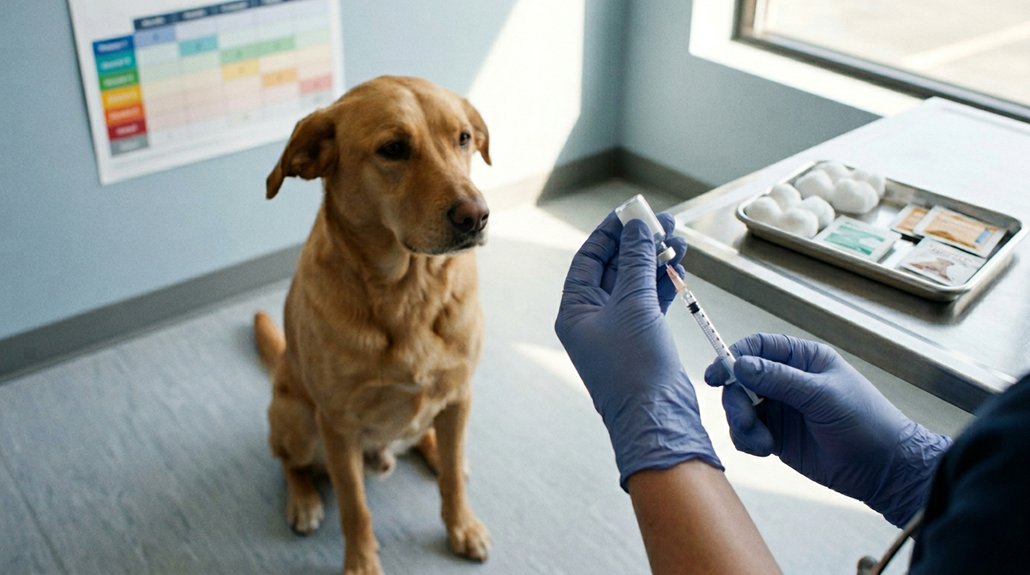
After confirming your dog is up-to-date with essential vaccines, attention turns to managing possible side effects and guaranteeing proper aftercare. Mild vaccine reactions like soreness, lethargy, and slight fever usually resolve within 48 hours. For post vaccination care, create a quiet space to help your dog recuperate comfortably. Make certain they have constant access to fresh water and engage only in light activities; avoid strenuous exercise until they’re fully recovered. Vigilantly watch for severe symptoms, such as vomiting, diarrhea, swelling, or breathing difficulties, as these demand immediate veterinary consultation. Keep detailed records of any reactions and vaccination dates to aid in future veterinary consultations. This information supports ongoing care and effective planning in your dog’s health management.
Vaccination Costs: How to Plan and Save
Maneuvering the costs of canine vaccinations involves strategic financial planning to guarantee your pet’s health without straining your budget. Understanding the price range for core vaccines, such as the $75 to $100 for puppy series, is crucial. Consider tactics like comparison shopping and look for vaccination packages to save money. Here’s how you can plan effectively:
Strategically plan canine vaccination costs to ensure pet health without financial strain.
- Explore Local Options: Check local animal shelters and municipal programs offering vaccinations as low as $20 or free.
- Look for Bundles: Some clinics offer bundled vaccination packages reducing costs on essential vaccines like DHLPP and rabies.
- Plan for Boosters: Initial puppy shots need several boosters; budgeting for these can prevent financial strain since costs drop when dogs reach adulthood.
Keep these strategies in mind for cost-efficient pet care.
Why Vaccines Are Vital for Your Dog’s Health
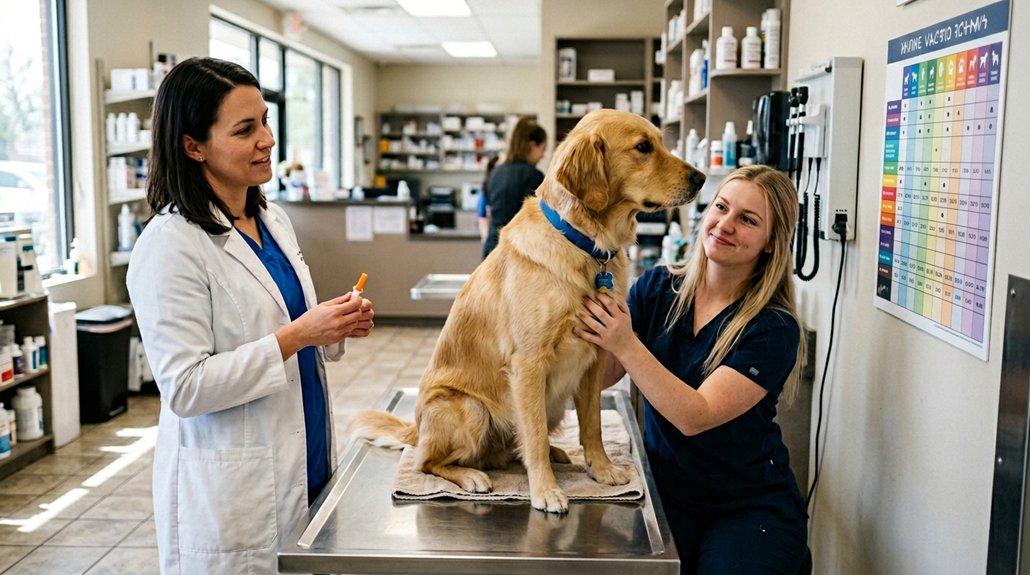
Immunity is a cornerstone of your dog’s health, and vaccines play an indispensable role in building that shield. By stimulating your dog’s immune response, vaccines teach their system to recognize and combat specific disease-causing agents, considerably mitigating the risk of severe health issues. Core vaccines, essential for every canine, protect against highly contagious diseases like canine distemper, parvovirus, and rabies—ailments not only potentially fatal to dogs but transmissible to humans. Starting at 6-8 weeks, your puppy’s immunization series guarantees robust immunity during their susceptible phase. Regular vaccination is paramount to maintaining long-term defense against outbreaks, safeguarding pet health in environments susceptible to contagion, such as shelters and kennels. Timely vaccination adherence fosters lasting immunity, reducing re-vaccination frequency post-initial series.
Frequently Asked Questions
What Is the 3 2 1 Vaccine Rule for Dogs?
The 3 2 1 vaccine rule involves three core vaccine types (DA2PP, Rabies, Leptospirosis), ensuring robust immunity duration. Administer three by 16 weeks, then two boosters, plus one rabies shot per local law for ongoing protection.
Do Muslims Get Their Children Vaccinated?
Muslims generally vaccinate their children, as preservation of health is essential. However, cultural perspectives and vaccination myths can throw a wrench in the works, sometimes causing hesitancy. Educated outreach can effectively address these concerns for improved vaccination rates.
What Vaccines Do Dogs Actually Need Yearly?
Your dog typically requires the Rabies vaccine annually. Discuss with your veterinarian if Leptospirosis is necessary based on lifestyle. Core vaccines, like DA2PP, need booster shots triannually, not yearly. Lifestyle vaccines depend on exposure risks.
How Many Shots Until a Dog Is Fully Vaccinated?
Your puppy requires at least three rounds of core vaccinations and a rabies vaccine. After these, include any necessary booster shots, depending on the lifestyle and risks. Full protection typically occurs about two weeks post-final booster.
Conclusion
You’ve learned when your puppy should get vaccinated to guarantee early protection, understood adult dog vaccination schedules to maintain that shield, and grasped how to handle any side effects while prioritizing aftercare. You’ve planned vaccination costs to keep everything budget-friendly and recognized why vaccines are crucial for your dog’s health. With parallel strategies of prevention, maintenance, and care, you’re equipped to safeguard your dog’s well-being, guaranteeing they remain healthy, happy, and thriving.