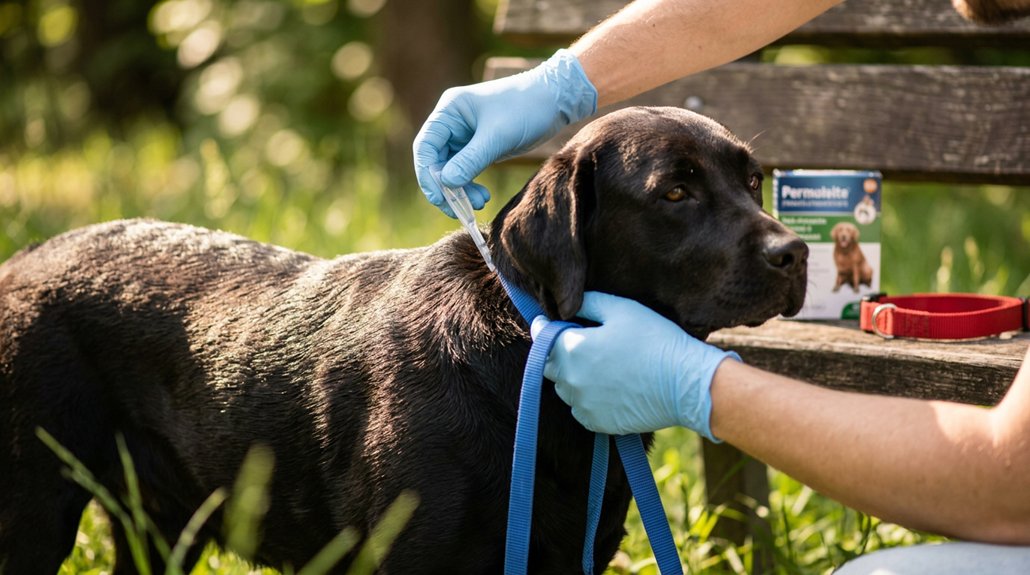
To protect your dog from parasites, stick to a monthly medication regimen covering fleas, ticks, and worms. Regular vet check-ups are essential for early detection and personalized prevention plans. Keep your home and yard clean, and inspect your dog for external parasites like ticks, especially after outdoor activities. A balanced diet with prebiotics and omega-3s boosts your dog’s defenses. Consistent care and vigilance will guarantee your dog stays healthy, with more insights available for thorough protection.
Key Takeaways
- Administer monthly preventive medications for fleas, ticks, heartworms, and intestinal worms to protect your dog from parasites.
- Conduct regular veterinary check-ups and fecal tests to ensure early detection and prevention of parasite infections.
- Maintain environmental cleanliness by vacuuming, washing bedding, and promptly disposing of dog waste to minimize parasite contamination.
- Regularly inspect your dog’s coat for external parasites like ticks and fleas after outdoor activities.
- Provide a protein-rich diet with prebiotics, probiotics, and antioxidants to strengthen your dog’s immune system against parasites.
Start With Preventive Measures to Protect Your Dogs From Parasites

To effectively shield your dog from parasitic threats, begin with a proactive approach to prevention. Implement a month-to-month preventive medication regimen, including oral tablets or topical treatments, that specifically targets flea prevention and tick control, while also covering heartworms and intestinal worms. This thorough method guarantees your dog is safeguarded against a wide range of parasites.
Schedule regular veterinary check-ups and annual fecal tests to monitor your dog’s health, allowing for adjustments to your prevention strategies as needed. Maintain a clean environment by promptly disposing of pet feces and routinely vacuuming your home. Supervise outdoor activities to limit your dog’s exposure to wildlife and contaminated areas, and avoid stagnant water, reducing the risk of parasites infiltrating your dog’s surroundings.
Spotting Parasites Like Ticks, Fleas, and Mites on Your Dog
How often do you thoroughly inspect your dog for parasites? Regular inspection and parasite grooming are essential in catching pests like ticks, fleas, and mites early. Here’s a structured approach:
- Paw Inspections: Check between toes, around the tail, and in the ears—often overlooked areas for mites and ticks to hide.
- Post-Walk Checks: Especially after wooded or grassy strolls, examine your dog’s coat for ticks, which prefer warm, moist habitats.
- Flea Monitoring: Look for excessive scratching or biting which might indicate fleas. Flea dirt, those black specks on the coat, are also telltale signs.
Regular grooming with vet-recommended shampoos enhances these checks, helping in early detection and control of infestations before they become severe.
Recognize Internal Threats: Roundworms, Hookworms, and Tapeworms

To safeguard your dog from internal parasites such as roundworms, hookworms, and tapeworms, it’s essential to recognize key symptoms like vomiting, diarrhea, anemia, and rice-like stool segments. Understanding common transmission methods, including contact with contaminated soil or ingestion of infected fleas, aids in preventing infestation. Regular fecal examinations and appropriate treatments prescribed by a veterinarian can effectively manage these parasites, protecting both your pet and family from potential zoonotic risks.
Key Symptoms to Monitor
Recognizing the warning signs of parasite infections in dogs can be challenging, but it’s essential for their health. There are common misconceptions that pets appear healthy despite being infected. Through early interventions, you can prevent severe health issues. Dogs with roundworms may show symptoms like vomiting, diarrhea, a pot-bellied look, or a dull coat. Watch out for these indicators:
- Roundworms: Look for vomiting, a pot-bellied appearance, and dull coat.
- Hookworms: Symptoms include anemia, bloody stools, and lethargy.
- Tapeworms: Visible segments in stools resembling rice, weight loss, and scooting behavior.
Regular fecal examinations are imperative since early signs can be subtle. Understanding these symptoms allows for timely treatment, protecting your dog’s well-being.
Common Transmission Methods
When understanding the common transmission methods of parasites in dogs, vigilance is key to preventing infections. Roundworms, hookworms, and tapeworms each have unique transmission routes that you must be aware of. Roundworms are often transmitted through contaminated soil, feces, or nursing, with puppies most at risk. Hookworms penetrate through skin contact with infected environments, causing anemia. Tapeworms result from a dog ingesting fleas or rodents carrying larvae. It’s important to highlight the zoonotic risks, where roundworms and hookworms can affect humans, particularly children, via contaminated settings.
Here’s a quick reference table:
| Parasite | Transmission Route |
|---|---|
| Roundworms | Ingestion of soil or feces |
| Hookworms | Skin contact with contaminated soil |
| Tapeworms | Ingesting infected fleas/rodents |
| Risks | Zoonotic potential, especially in children |
Effective Treatment Options
While keeping parasites at bay can be challenging, understanding effective treatment options is critical to maintain your dog’s health. Identifying parasites like roundworms, hookworms, and tapeworms early is essential. Here are scientifically-backed methods to protect your dog:
- Veterinary Treatment: A precise diagnosis through fecal testing allows for tailored deworming medications. Professional guidance guarantees effective removal of internal threats.
- Preventive Measures: Regular deworming and annual fecal exams are important. Preventive treatments and maintaining hygiene protect against transmission from contaminated soil or infected fleas.
- Home Remedies and Holistic Approaches: While not a replacement for medical treatment, some owners explore natural remedies and dietary adjustments as supplementary strategies in maintaining gut health.
Consistent attention to these strategies can greatly reduce parasite-related health risks for your dog.
How to Recognize Parasite Infections in Your Dog

Ever noticed your furry friend acting a bit off and wondered if it could be a parasite infection? Dog behavior can change due to parasites disrupting their health. Roundworms often cause vomiting, diarrhea, and a pot-bellied demeanor as part of their lifecycle. Hookworms may lead to anemia, bloody stools, and lethargy. Whipworms typically trigger diarrhea, weight loss, and dehydration. Look for tapeworm segments resembling rice in feces or around the tail, indicating infection. Giardia and coccidia can result in severe diarrhea, lethargy, and significant weight loss, often leading to dehydration. These symptoms highlight the importance of identifying infections promptly. Understanding these signs and the parasite lifecycle aids in safeguarding your dog’s health and well-being.
Why Regular Vet Visits Matter for Parasite Prevention
Routine veterinary visits are indispensable for effective parasite prevention in dogs, playing a pivotal role in early detection and treatment. With vet education, you can stay informed about your dog’s specific needs, ensuring tailored preventive plans. Parasite awareness is heightened through consistent vet consultations, allowing monitoring for emerging threats and evaluating prevention efficacy. Consider the following benefits:
Regular vet visits are essential for personalized parasite prevention and early detection in dogs.
- Early Detection: Vets perform thorough exams and fecal tests, catching internal parasites before health issues surface.
- Tailored Plans: Personalized medication schedules are based on factors like age and lifestyle, offering ideal protection.
- Regular Screenings: Annual exams include heartworm and intestinal parasite checks, minimizing infestation risks.
Monthly treatments, recommended during vet visits, bolster your dog’s health, stressing the importance of proactive, preventive care.
Top Medications and Methods for Parasite Prevention
To effectively safeguard your dog against parasites, you can choose from a range of medications and preventive care techniques. Oral medications, topical treatments, and injectables offer varying protection against fleas, ticks, and heartworms, allowing for monthly or extended dosing intervals. Combination products can streamline your regimen, while regular veterinary check-ups and fecal tests guarantee early detection and thorough health monitoring.
Effective Parasite Medications
When it comes to safeguarding your canine companion against parasites, there are several effective medications poised to offer complete protection. Consider exploring natural remedies and holistic approaches to complement these treatments. Here’s a breakdown of options:
- Oral Preventatives: Available in flavored chewable tablets, they offer convenient monthly protection against fleas, ticks, heartworms, and intestinal worms.
- Topical Treatments: Applied to the skin, these provide month-long protection, spreading through natural oils and potentially offering internal parasite protection once absorbed.
- Injectable Preventatives: With a single veterinary visit, these offer long-lasting heartworm protection for six to twelve months, solving compliance issues for pet owners.
To guarantee thorough protection, combine these methods with regular veterinary check-ups, including annual fecal testing, to detect and treat any infections early.
Preventive Care Techniques
Stepping up your dog’s preventive care regimen is essential in curbing the threat of parasites. Monthly oral medications provide broad-spectrum defense against pests like fleas, ticks, heartworms, and intestinal worms. For dogs that resist oral treatments, topical options offer a waterproof solution that safeguards your pet for a month. Injectable preventatives provide long-lasting heartworm protection while possibly covering fleas and ticks. Consider combination products to simplify this routine and reduce expenses. Alongside medical solutions, natural remedies and vigilance concerning environmental factors—such as reducing standing water and maintaining clean living spaces—further shield your pet. Regular veterinary visits and annual fecal tests remain vital, allowing early detection of any infestations and ensuring your dog’s sustained health and well-being.
Seasonal Strategies for Parasite Prevention
Although seasonal changes bring varied threats from parasites, implementing specific strategies year-round is essential for your dog’s health. First, develop seasonal awareness by recognizing that parasites like fleas, ticks, and heartworms flourish in warmer months. Integrate natural deterrents into your routine, such as maintaining clean environments and utilizing herbal sprays. Here are key strategies:
- Warm Weather: Administer monthly preventive medications in spring and summer to combat thriving fleas, ticks, and heartworms.
- Check for Ticks: Even in fall, ticks remain active. Examine your dog daily, focusing on ears, neck, and between toes after outdoor activities.
- Cold Weather Precautions: With indoor fleas becoming an issue in winter, vacuum regularly and wash pet bedding frequently to control infestations.
Implement these steps, aligning with vet visits, for optimized parasite prevention.
Cleaning Tips to Keep Parasites Away From Your Dog’s Environment
To minimize the risk of parasitic infestations in your dog’s environment, it is crucial to maintain a rigorous routine of sanitizing living spaces and practicing safe waste disposal techniques. Vacuum often to capture flea eggs and excreta, and regularly wash your dog’s bedding and toys in hot water to eliminate parasites. Additionally, promptly disposing of your dog’s waste and ensuring effective yard drainage will further reduce the likelihood of parasite attraction and proliferation.
Regular Living Space Sanitization
Sanitizing your dog’s living space is crucial in your quest to protect them from parasites. Incorporating strong pet grooming habits goes hand in hand with maintaining ideal environmental hygiene. Here’s how you can effectively sanitize:
- Vacuuming: Regularly vacuum areas where your dog spends time. This action removes hidden parasite eggs and larvae among carpets and upholstery.
- Washing: At least once a week, wash your dog’s bedding and toys in hot water. This process eradicates potential flea infestations and lowers allergen buildup, ensuring a hospitable environment for your pet.
- Yard Maintenance: Keep your yard well-maintained by mowing and clearing debris. This practice greatly deters parasites like ticks and fleas from infesting your dog’s outdoor area.
These steps form a formidable barrier against parasites.
Safe Waste Disposal Practices
Effective waste disposal is essential in minimizing your dog’s exposure to parasites. Implementing robust waste management protocols involves promptly sealing dog waste in bags and placing them in outdoor trash bins. This practice prevents environmental contamination and reduces the spread of parasites. Choose compostable bags for an eco-friendly disposal approach, balancing hygienic practices with environmental responsibility. Remove any leftover feces in your dog’s outdoor play area regularly to decrease exposure to parasites and avoid reinfection. Designate a specific waste zone away from play areas to limit contact with contaminated soil. Maintain cleanliness by routinely checking your yard, mowing grass, and clearing leaf litter. By doing so, you eliminate parasite habitats and foster a safer environment for your dog.
Boosting Your Dog’s Health: The Role of Nutrition
While a robust immune system forms the backbone of disease prevention, nothing bolsters your dog’s health quite like a balanced diet. To enhance their ability to fend off parasites, consider these elements in their nutrition:
A balanced diet is key to strengthening your dog’s defense against parasites.
- Protein-Rich Diet: Proteins, along with vitamins and minerals, are essential for a fortified immune response. High-quality commercial foods may also include prebiotics and probiotics to promote digestive health.
- Omega-3 Fatty Acids: Found in fish and flaxseed oil, these nutrients help maintain healthy skin and coat, naturally deterring parasites.
- Nutritional Supplements and Healthy Treats: Antioxidants like vitamins E and C support cellular health, while supplements can fill nutritional gaps, guaranteeing peak parasite resistance.
Additionally, confirm your dog stays hydrated to flush out potential parasites effectively.
When to Seek Professional Help for Suspected Parasite Issues
Nutrition is a strong foundation for your dog’s health, but recognizing when to seek veterinary advice is equally important. If you notice changes in your dog’s behavior, like lethargy or reduced appetite, it might hint at a parasitic infection. Symptoms such as vomiting, diarrhea, weight loss, or a pot-bellied appearance can indicate a disruption in the parasite lifecycle. Immediate professional help is essential if your dog displays anemia symptoms—pale gums, blood in stool—from severe intestinal parasites. Additionally, visible worms or “rice-like” segments near the tail necessitate veterinary intervention. Regular check-ups are important, especially if you live in areas prone to parasite outbreaks or your dog frequently interacts with wildlife. They help guarantee timely diagnosis and treatment, safeguarding your pet’s health.
Frequently Asked Questions
What Can I Give My Dog to Prevent Parasites?
Consider natural remedies like diatomaceous earth for flea control or garlic for general parasite prevention. Don’t skip seasonal precautions; adjust treatment for ticks and fleas depending on the season. Always consult your vet for tailored advice.
What Is the 7 7 7 Rule for Dogs?
The 7-7-7 Rule enhances dog hygiene and minimizes parasite symptoms: check your dog every 7 days for ticks, bathe them with flea preventive, guarantee veterinary check-ups every 7 months, and clean their environment every 7 days.
What Is the 80 20 Rule for Parasites?
The 80/20 rule for parasites highlights that 80% of infections come from just 20% of parasites. Focus your prevention strategies on understanding the parasite life cycle and target fleas, ticks, roundworms, and heartworms for effective dog health management.
What Are the Three Meats You Should Never Feed a Dog?
Avoid feeding your dog raw chicken, which poses raw meat dangers, toxic fatty meats like bacon, and processed meats such as hot dogs. These meats increase risks of infections, pancreatitis, and other serious health issues in dogs.
Conclusion
By staying proactive and nipping potential problems in the bud, you can effectively safeguard your dog from parasites. Regular vet visits and keen observation are worth their weight in gold, ensuring your furry friend remains healthy and happy. Remember, a clean environment and proper nutrition are your strongest allies in this battle. If you suspect an issue, don’t hesitate to seek professional help. After all, it’s better to be safe than sorry when it comes to your dog’s well-being.