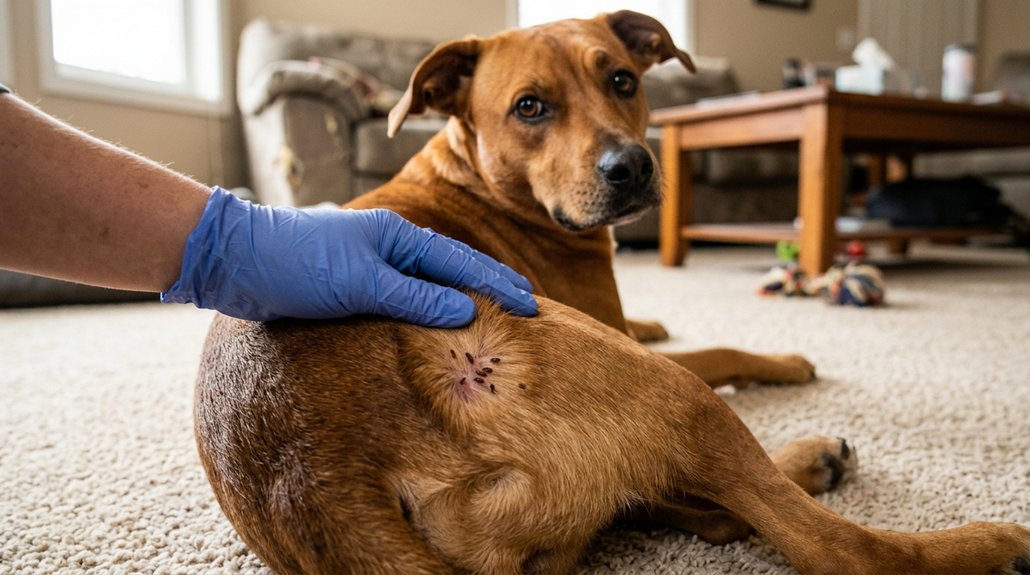
If your dog has fleas, start by using a fine-toothed metal flea comb to remove fleas and flea dirt. Bathe your dog with a vet-approved medicated shampoo for immediate relief. Consider using systemic treatments like Simparica Trio or Bravecto for extensive control. Guarantee thorough home cleaning, washing pet bedding, and applying insect growth regulators (IGRs). Consult your vet to choose the best treatment plan tailored to your dog’s needs. Explore further for in-depth strategies.
Key Takeaways
- Use a fine-toothed metal flea comb to remove fleas and eggs from your dog’s fur.
- Administer a veterinarian-recommended flea bath with medicated shampoo for immediate relief.
- Consult your vet for oral or topical flea treatments like Simparica Trio or Bravecto.
- Regularly vacuum and wash your dog’s bedding in hot water to eradicate fleas.
- Apply flea control sprays and insect growth regulators in your home for comprehensive prevention.
Quick Relief Steps for Your Flea-Infested Dog
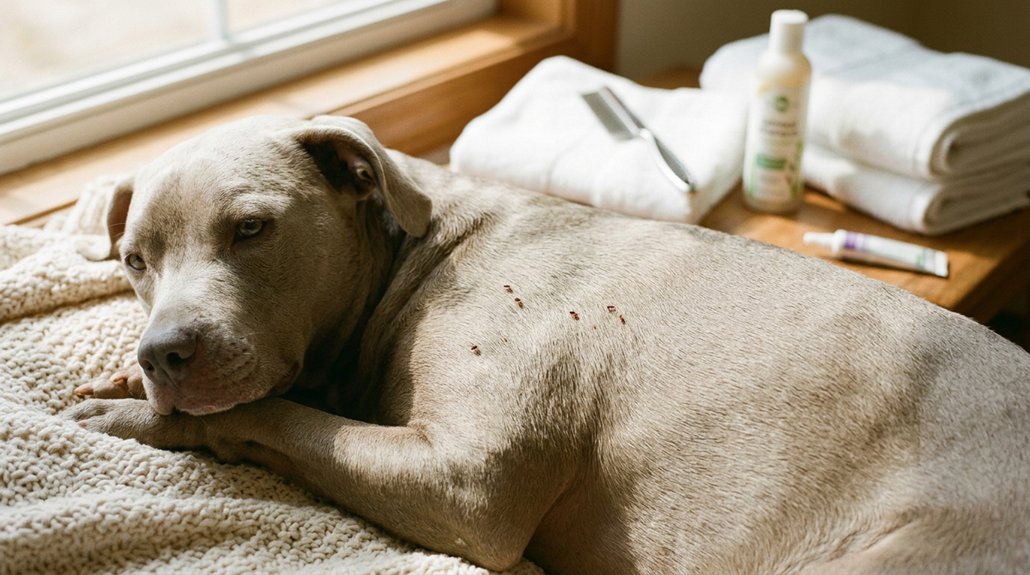
If you’re dealing with a flea-infested dog, taking swift and effective action is essential to provide immediate relief. Begin by employing flea combing with a fine-toothed metal comb designed specifically for this purpose. It’s important for extracting not only adult fleas but also flea dirt and eggs, which should be disposed of in soapy water to avert reinfestation. Following this mechanical removal, a flea bath using a vet-recommended medicated shampoo offers a therapeutic cleansing. Although it’s an effective acute treatment, it’s not intended for long-term control. For thorough management, complement these steps with veterinarian-approved systemic options such as oral medications like Simparica Trio or topical treatments like Bravecto, ensuring sustained flea prevention and eradication in future scenarios.
Recognize the Signs of Flea Infestation in Dogs
After addressing immediate relief for your dog’s flea problem, it’s imperative to understand how to identify a flea infestation. Examine your dog for flea symptoms; red bumps, particularly around the neck, back, and legs, signal flea bites. Observe intense itching near the tail base and hind legs, potentially leading to self-inflicted skin irritation. Inspect the fur for flea dirt—tiny black specks—and live fleas, reddish-brown and approximately one-eighth of an inch long. Additional indicators include tapeworm segments resembling rice grains near the anus, which often accompany flea infestations. Be vigilant for severe flea allergy dermatitis, characterized by hair loss, skin redness, and nonstop scratching—all suggesting heightened sensitivity, even in the absence of visible fleas. Address these signs promptly.
What Your Vet Suggests for Flea Control
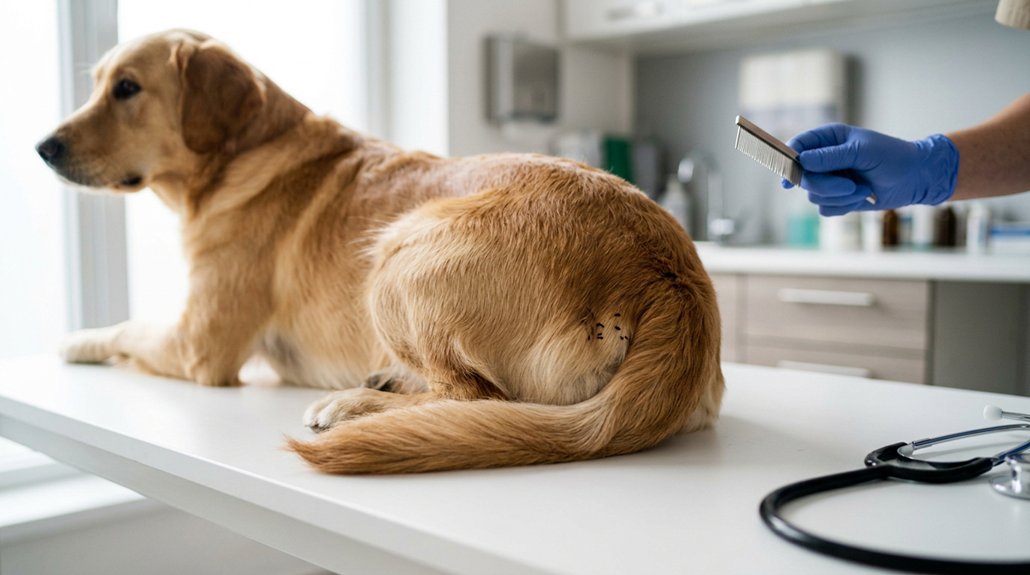
Expert guidance from your veterinarian is vital in effectively managing flea infestations and preventing their recurrence. They’ll recommend flea medication options such as oral treatments like Simparica Trio or Credelio Quattro, known for their systemic action in eradicating fleas. These can be complemented by topical treatments, with Bravecto offering prolonged protection against new infestations. Precision in application is important—apply between the shoulder blades for ideal absorption. Use fine-toothed metal flea combs regularly to meticulously monitor and remove fleas, eggs, and flea dirt, particularly from sensitive areas like the neck and base of the tail. Veterinary-prescribed medicated shampoos can provide immediate relief. It’s essential to treat all pets concurrently and discuss with your vet to guarantee thorough flea control and prevention.
How to Flea-Proof Your Home
Ensuring effective flea management involves not just treatment of your pet, but also addressing the environment where fleas thrive. Start by consistently vacuuming carpets, rugs, and upholstery to eradicate fleas at all life stages. Dispose of vacuum contents in sealed bags promptly. Wash your dog’s bedding and fabric items in hot soapy water (60°C or above) to kill fleas and eggs. Apply home treatments like flea control sprays to carpets, furniture, and floor cracks. Integrate insect growth regulators (IGRs) to halt flea egg development. Utilize flea traps strategically to capture active fleas. Maintaining cleanliness is essential; dormant pupae can persist for months, ready to re-emerge.
| Action | Focus Area | Purpose |
|---|---|---|
| Vacuum regularly | Carpets & Upholstery | Remove fleas at all stages |
| Hot water wash | Bedding & Fabrics | Destroy eggs & larvae |
| Apply flea spray | Furniture & Cracks | Target adult fleas |
| Use IGRs | Wide-area treatment | Prevent hatching |
| Deploy flea traps | Near pet areas | Trap & monitor flea activity |
Long-Term Flea Prevention for Dogs
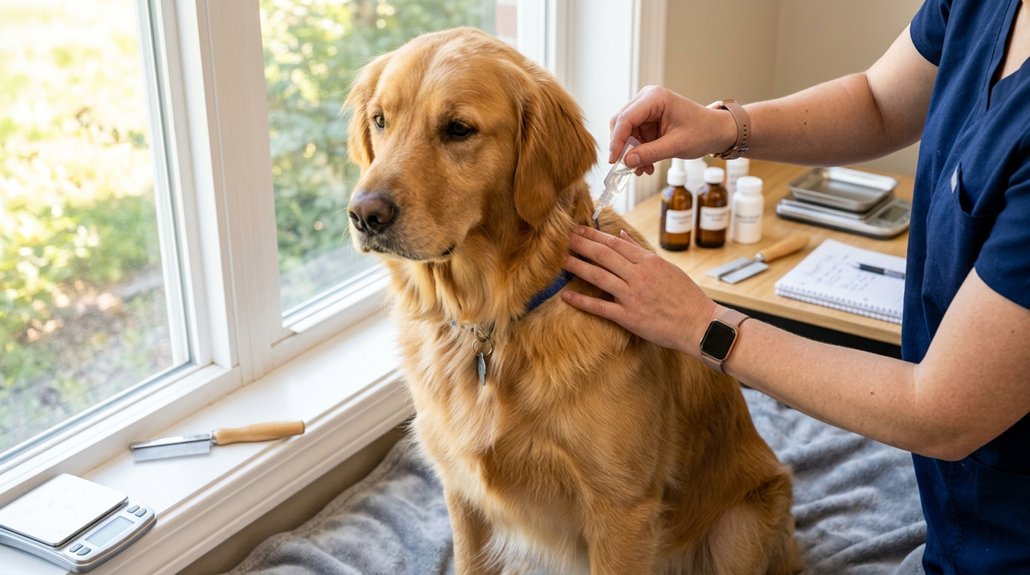
Long-term flea prevention for dogs hinges on a thorough approach combining pharmaceutical interventions with environmental controls. Implement monthly flea treatments like Simparica Trio or Bravecto to guarantee constant protection, especially in warm, humid climates. These medications disrupt the flea lifecycle by acting systemically. Maintain a rigorous cleaning regimen—vacuum regularly, launder pet bedding in hot water, and use effective flea sprays. All these control measures minimize environmental flea habitats. Remember, natural remedies like diatomaceous earth can complement but shouldn’t replace prescribed treatments. Annual veterinary evaluations tailor preventive strategies to your dog’s lifestyle and environmental risk factors. Finally, educate yourself about the flea life cycle, guaranteeing simultaneous treatment of all household pets to prevent cross-infestation.
Frequently Asked Questions
Do I Need to Treat My Home if My Dog Has Fleas?
Yes, you’ve got to treat your home for effective flea prevention. Use home remedies like vacuuming and washing bedding in hot water. Consider flea control sprays targeting various life stages, and even professional pest control for persistent infestations.
What Kills Fleas on Dogs Immediately?
Imagine an army dismantling an invader; natural remedies like diatomaceous earth symbolically act against fleas. Immediate relief comes through medicated baths, while flea prevention involves cytological and topical protectants, ensuring thorough annihilation and ongoing defense against future infestations.
Do I Need to Wash My Bedding if My Dog Has Fleas?
Yes, you’ll need to wash your bedding. Effective bedding cleaning disrupts the flea life cycle and aids in flea prevention by eliminating eggs, larvae, and adults. Make certain you use hot water, as it’s essential for extermination.
Is It My Fault My Dog Has Fleas?
It’s not your fault. Despite excellent dog hygiene and diligent flea prevention, environmental factors make fleas unavoidable. Fleas thrive in diverse habitats and hitch rides on other animals or humans, illustrating infestation occurs beyond direct control.
Conclusion
By vigilantly addressing fleas, you’ll transform your dog into the happiest creature on the planet. Implement quick relief strategies, recognize infestive signs promptly, and consult your vet for professional advice on flea control. Flea-proof your home meticulously, creating a sanctuary free from pests, and employ long-term prevention techniques. With expert knowledge, clinical precision, and detailed practices, you’ll guarantee your dog remains flea-free, turning your home into an impenetrable fortress against these tiny invaders.