
As a new cat owner, you might grapple with your cat’s initial stress responses, such as hiding, reduced appetite, and increased vocalization. Creating a calm and safe environment is essential to help your cat adjust. Litter box issues and ensuring proper nutrition can also be challenging. Play and interaction foster bonding and confidence, but introducing a cat to existing pets requires patience. Understanding these challenges can make your home shift smoother and your pet happier. Discover how to make this shift easier.
Key Takeaways
- New cat owners struggle with hiding behavior due to the stress of a new environment.
- Litter box issues arise from accessibility problems or inadequate cleanliness.
- Maintaining a consistent feeding routine is essential for cats’ dietary adjustment.
- Ensuring a safe and calm environment helps new cats acclimate comfortably.
- Introducing new cats to existing pets requires gradual and supervised interactions.
Understanding Your Cat’s Initial Behavior

When you bring a newly adopted cat into your home, understanding their initial behavior is crucial for a smooth change. Shelter cats often exhibit hiding behavior, a natural response to stress. This cautious exploration is part of feline communication, allowing them to seek out safe spaces and build confidence gradually. Keep an eye on behavioral signs like changes in appetite—eating less or refusing food is common due to stress. Monitor their eating habits closely. Litter box issues might arise if the box isn’t clean or accessible, so it’s essential to maintain a tidy area. Increased vocalization, such as meowing or yowling, signals they’re seeking reassurance or expressing discomfort, requiring patience and gentle interaction from you.
Immediate Steps for a Calm Arrival
To guarantee a smooth changeover for your new cat, focus on setting up a safe, quiet space where it can gradually adjust to its surroundings. Minimize early stressors by keeping the environment calm and free from loud noises, allowing the cat to explore without feeling overwhelmed. Establishing a consistent routine with feeding and interaction times will help foster a sense of security and stability in its new home.
Setting Up Safe Spaces
For new cat owners, creating a designated quiet area upon your pet’s arrival sets the stage for a stress-free shift. Establishing a safe retreat guarantees they’re not overwhelmed. Fill this area with essentials: a cozy bed, food and water bowls, and a litter box. Enhance environmental enrichment by providing multiple hiding spots like cardboard boxes and cat trees, where your feline can find solace. Gradually introduce your cat to the new environment by confining them to a single room initially. This minimizes exposure to potentially stressful new sights and sounds. Prioritize safety by securing electrical cords, removing toxic substances, and blocking off any risky hidden areas. Maintaining a calm atmosphere with limited noise also helps your cat adjust smoothly.
Minimizing Early Stressors
Having set up safe spaces for your new feline friend, attention turns to minimizing early stressors for a calm arrival. Swift, thoughtful actions can ease their adjustment and adapt to environmental changes. Here’s how:
- Create a Secure Environment: Confine them to a quiet room initially, outfitted with essentials and a pheromone diffuser to reduce anxiety.
- Manage Exploration: Let your cat gradually explore the home at their own pace, ensuring they don’t feel overwhelmed.
- Observe and React: Watch for early signs of stress, like hiding or reduced appetite, and engage them through gentle play or treats to build trust.
Establishing Routines Quickly
Although the excitement of bringing a new cat home is palpable, swiftly establishing routines is essential for a calm arrival. Start by setting up a quiet room equipped with a litter box, food, and water. This helps your cat acclimate without overwhelming stimuli. Routine adjustments include maintaining a consistent feeding schedule, employing feeding techniques that promote security. Gradually introduce your cat to the rest of the house, allowing exploration at their own pace. Secure windows and doors to prevent escapes. Offer multiple comfortable sleeping spots to guarantee a tranquil environment. Monitor behavior closely for signs of stress, like hiding or decreased appetite. Tailor routines and interactions to facilitate a comfortable, anxiety-free change, fostering a harmonious start for you and your cat.
Creating a Safe and Welcoming Space
- Safe Space: Set up multiple hiding spots, like cardboard boxes, to provide security and retreat options for your cat.
- Natural Behavior: Introduce a sturdy scratching post or cat tree. This not only encourages natural behavior but also offers exercise and mental stimulation.
- Hygiene Maintenance: Keep the litter box clean by scooping daily and conducting a thorough clean every two weeks to avoid olfactory aversion.
These steps guarantee a welcoming environment for your cat.
How to Reduce Your Cat’s Stress
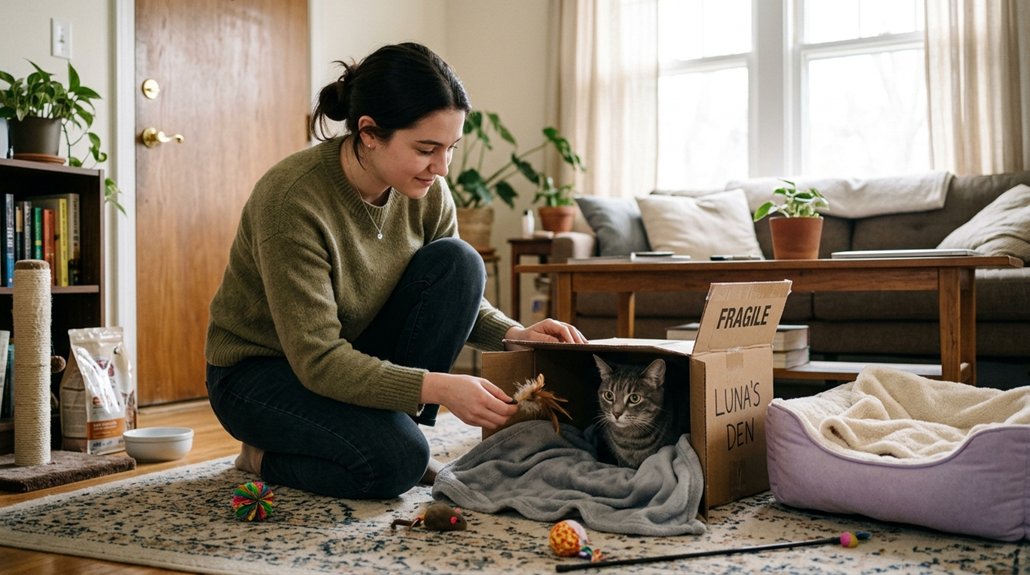
Welcoming a new cat into your home can be an exciting yet challenging experience, as everything is novel and sometimes overwhelming for your feline friend. Cat anxiety is a common issue during the initial weeks. To mitigate stress, offer a quiet space equipped with food, water, and a litter box. Monitor your cat for stress indicators like decreased appetite or hiding. Using pheromone diffusers can establish a calming atmosphere, addressing anxiety and fostering security. Implement environmental enrichment by introducing changes gradually, letting your cat explore new spaces at their pace. When introducing other pets, proceed slowly to avoid overwhelming your cat. Maintain positive interactions through treats and engaging play, reinforcing trust and making your home their sanctuary.
Solving Common Litter Box Issues
Keeping your cat’s litter box clean is essential for both preventing and managing litter box aversion. Make it a habit to scoop daily and thoroughly clean with mild soap every two weeks to keep odors at bay, as cats are sensitive to smell and need a comfortable environment. If problems persist beyond basic maintenance, don’t hesitate to consult a veterinarian to confirm there’s no underlying health issue contributing to your cat’s reluctance.
Consistent Litter Box Maintenance
Even though it may seem tedious, consistent litter box maintenance is essential to keeping your cat content and your home accident-free. Implement effective litter box techniques and odor control methods to guarantee the best environment:
- Daily Scooping: Remove waste every day to maintain cleanliness and prevent odors from building up.
- Bi-weekly Cleaning: Use mild soap for a thorough cleaning every two weeks to keep the box hygienic and odor-free.
- Unscented Litter: Choose unscented litter to avoid overwhelming your cat’s sensitive nose and to prevent deterrence from using the box.
Place the litter box in a quiet, accessible location. This setup guarantees privacy and security for your cat. Monitor your cat’s behavior closely, as any avoidance might indicate stress or medical concerns needing prompt attention.
Managing Litter Box Aversion
While maintaining a clean and inviting litter box is essential, managing litter box aversion requires understanding the common triggers that cause your cat to avoid it. An unclean box, inappropriate litter type, or lack of privacy can deter usage. Start by scooping daily and incorporating odor control with a thorough cleaning every two weeks. Cats typically prefer uncovered, unscented litter boxes to enhance comfort.
If your cat shows aversion, consider litter box alternatives. Gradually introduce new litter types or different box designs, especially if sensitivity to previous choices was noted. Place multiple boxes in quiet, accessible areas to guarantee privacy and prevent territorial conflicts, particularly in multi-pet households. A thoughtful approach will encourage your cat’s natural inclination to use the box confidently.
Meeting Your Cat’s Diet and Nutrition Needs
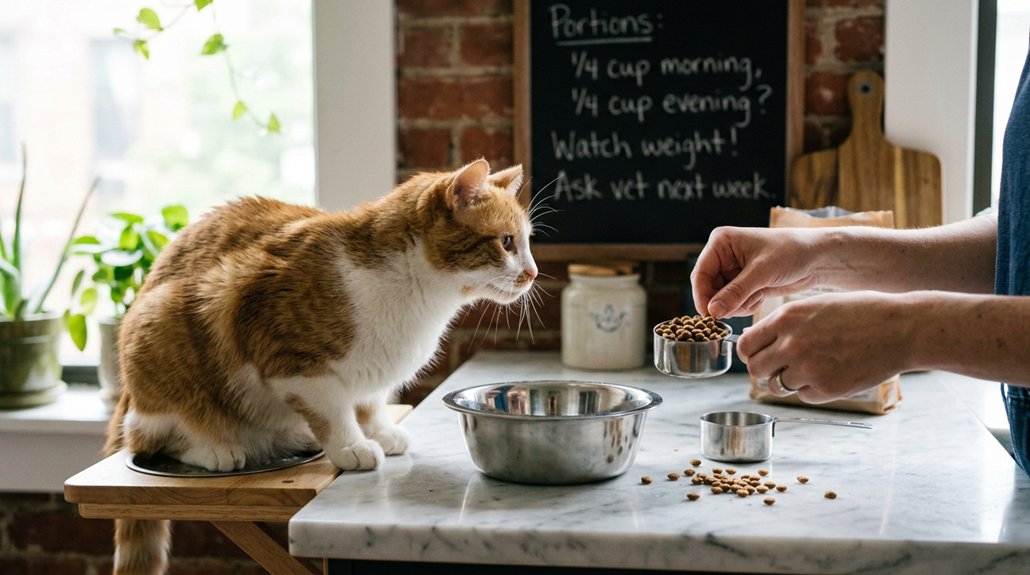
Understanding your cat’s diet and nutrition needs is essential for guaranteeing their long-term health and happiness. Start by choosing high-quality cat food rich in animal-based proteins, as cats are obligate carnivores. Pay attention to these three critical points:
- Check Standards: Confirm the food meets AAFCO standards, tailored to your cat’s life stage—growth or maintenance.
- Monitor and Adjust: Gradually adjust to new diets over a week to prevent gastrointestinal issues. Mix 25-75% new food with the old.
- Observe Eating Habits: Watch your cat’s appetite for signs of stress or health problems. Non-eating for over 24 hours signals a need for veterinary consultation.
Discuss any potential nutritional supplements or dietary restrictions with your vet to customize your cat’s nutrition plan.
Encouraging Positive Interaction With Play
You’re not alone in wanting to encourage positive interactions with your cat through play. Engaging in interactive play with sensory toys that mimic natural hunting behaviors can provide essential mental stimulation and strengthen the bond with your feline friend. Establishing a routine and observing your cat’s body language are key in ensuring these play sessions remain enjoyable and stress-free.
Stimulating Interactive Playtime
Engaging your cat in stimulating interactive playtime is essential for its physical and mental well-being, as it mimics natural hunting behaviors and strengthens your bond. Consider using toys that provide interactive enrichment, like feather wands or laser pointers, allowing you to cater to your cat’s play preferences.
To optimize playtime:
- Consistency: Schedule at least 20-30 minutes of daily play to prevent obesity and boredom.
- Puzzle Feeders: Incorporate these to mentally challenge your cat while regulating eating habits, promoting healthy digestion.
- Rotate Toys: Change toys every few days to maintain interest and excitement, encouraging active engagement.
Recognize enjoyment cues such as purring or relaxed postures, and be mindful of signs like hissing that may indicate overstimulation, ensuring a positive experience.
Engaging Sensory Toys
When you introduce engaging sensory toys into your cat’s environment, you’re not just adding playthings but enhancing their well-being. Sensory enrichment, through toys like feather wands and crinkle toys, taps into their natural hunting instincts, offering both mental stimulation and physical exercise. Interactive puzzle feeders can boost problem-solving skills, decrease boredom, and alleviate stress.
Paying attention to your cat’s toy preferences, such as those involving varied textures, sounds, or catnip, can lead to tailored play experiences, ensuring they remain captivated and content. Regularly engaging in playtime with these sensory toys not only promotes better health but also strengthens the bond between you and your cat, fostering trust and companionship. Monitor preferences and adapt to keep them engaged and happy.
Encouraging Natural Behaviors
While introducing interactive toys like feather wands or laser pointers into your cat’s daily routine, you’re encouraging their natural behaviors, such as hunting instincts, in a way that’s both enriching and beneficial. To effectively engage your cat, incorporate structured play techniques that capitalize on their innate curiosity and need for mental stimulation.
- Engage and Exercise: Schedule regular play sessions once or twice a day, lasting 15-30 minutes. This routine not only provides necessary exercise but also reduces stress.
- Mental Stimulation: Use puzzle feeders to challenge their problem-solving abilities, diverting attention from potentially destructive behaviors.
- Diverse Toys: Offer a mix of toys like balls, crumpled paper, and DIY options such as shoeboxes, catering to your cat’s varied preferences and encouraging healthy cat behavior.
Helping Your New Cat Meet Other Pets
Introducing your new cat to existing pets can be a delicate process, and it’s essential to approach it with care to guarantee a harmonious household. Start the cat introductions by separating them initially, and let each adjust to scents through bedding exchange. Recognize the pet hierarchy will influence reactions. Gradually introduce visual contact using baby gates or crates. Supervise all interactions vigilantly to mitigate aggression. Create safe retreats so the cat can escape if threatened.
| Step | Description |
|---|---|
| Separation | Keep pets apart; exchange bedding to share scents. |
| Visual Contact | Use gates/crates for stress-free exposure. |
| Supervision | Closely monitor every interaction for safety. |
| Safe Retreat | Provide high perches/enclosed spaces. |
| Patience | Allow weeks for adjustment, respecting each pet’s pace. |
Building a Routine for Comfort and Stability
Successfully introducing your new cat to other pets sets the stage for their comfort and stability within your home. Establishing a daily routine is essential for your feline friend. The routine benefits are far-reaching, helping them feel secure and less anxious. Consider these efficient strategies:
- Set consistent feeding times to regulate appetite and soothe nerves.
- Incorporate playtime importance by scheduling daily interactive sessions to boost bonding and provide mental and physical stimulation.
- Prioritize hygiene by cleaning the litter box daily and doing a thorough clean every two weeks.
Create a calming environment using pheromone diffusers and respect their personal space. Allow your cat to identify its safe spots, enhancing its sense of security and making your home their haven.
When to Call the Vet for Persistent Issues
Recognizing when to call the vet for persistent issues is essential to ensuring your cat’s health and well-being. If your cat refuses food for over 24 hours, it’s time for a vet consultation. This behavior may signal underlying health issues or stress. Persistent behavior problems, like excessive hiding, aggression, or vocalizing beyond the adjustment phase, should prompt a health indicator evaluation. Recurrent litter box accidents or changed elimination patterns also require veterinary advice. Importantly, observe for signs of distress such as drastic weight loss, excessive grooming resulting in bald spots, or visible pain. Respiratory issues like coughing or labored breathing necessitate immediate vet consultations. Early identification and intervention can prevent serious complications and maintain your cat’s wellness.
Frequently Asked Questions
What Is the 3-3-3 Rule With Cats?
The 3-3-3 rule describes a cat’s adjustment period in a new environment. Initially, expect fear, then gradual adjustment, and ultimately, comfort and confidence. Understanding this timeline helps support your cat’s adaptation and enhances their well-being.
What Color Cat Is Least Desired?
Gray cats are often least desired due to misconceptions about their personalities. You might think they lack sociability, but they possess unique charm. Society’s cat color preferences overlook their warmth, labeling them with unwanted cat traits unfairly.
What Is “I Love You” in Cat Language?
“I love you” in cat language involves body language and feline vocalizations. A cat might slow blink, purr, or rub against you, while kneading signifies contentment. These behaviors show their affection and trust in you.
What Is the One Meat to Never Feed a Cat?
Picture pork as a wolf in sheep’s clothing when it comes to cat food. It’s crammed with harmful ingredients like fat and salt. High risks of trichinosis and pancreatitis make it a dangerous choice for your cat.
Conclusion
As a new cat owner, you’ll encounter curious challenges when welcoming your feline friend. By building a calm and cozy environment, you’re ensuring initial stress is minimized. Remember, resolving restroom routines and fostering fun interactions cultivates contentment. If persistent problems persist, seek professional advice to protect your pet’s well-being. By nurturing their needs, you’ll see seamless integration into your home, creating comfort and stability. With patience and preparation, your bond with your cat will surely soar.