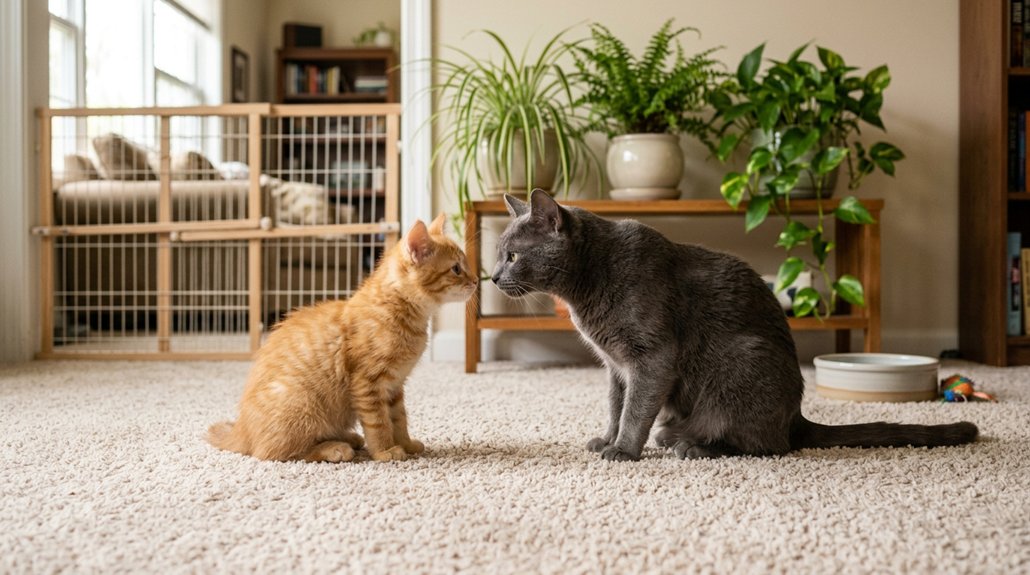
To introduce a new cat to another, understand their temperaments, as compatible traits reduce stress. Establish separate spaces with essentials and swap scents to build familiarity. Gradually increase visual contact while monitoring for stress signals. Use calming techniques like diffusers and maintain consistent routines. Supervise interactions with toys to foster positive relations and prevent resource-related conflicts. Observing these steps guarantees successful integration, and further insights can guide a smoother change.
Key Takeaways
- Establish separate spaces with individual resources to prevent territorial disputes and ensure comfort for each cat.
- Use scent swapping techniques by exchanging bedding to build scent familiarity before visual introductions.
- Gradually introduce visual contact using barriers after establishing positive scent associations to reduce stress.
- Monitor body language, like hissing or growling, to identify stress and adjust interactions as needed.
- Utilize calming techniques such as diffusers and consistent routines to minimize anxiety during the introduction process.
Understanding Cat Personalities and Preparation
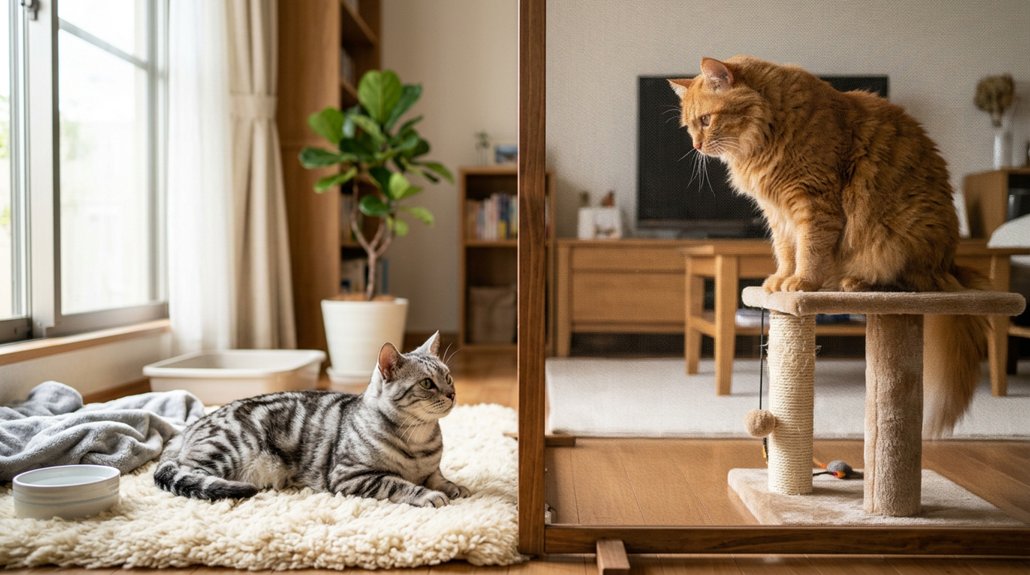
When introducing a new cat to your household, it’s crucial to understand the individual personalities and needs of both the existing and incoming feline companions. Analyzing cat personalities, you should focus on temperamental traits such as playfulness, energy levels, and sociability. Behaviorists suggest that compatibility in these traits increases the likelihood of a harmonious relationship. Recognize that cats with differing temperaments might experience heightened stress or territorial issues. Gradually introducing the cats helps mitigate these challenges, reducing potential aggression. Be observant of behavioral cues; hissing or growling might indicate stress. Adopting a patient approach is important, as this allows both cats to adjust without fostering negative associations. Your understanding and responsiveness to each cat’s specific characteristics are foundational for successful integration.
Establishing Separate Spaces for Initial Acclimation
Creating a designated base camp for your new cat is vital for reducing initial anxiety and ensuring a smooth shift. Equip this space with essential items such as food, water, a litter box, and bedding to meet their basic needs. Additionally, consider using scent soakers and anxiety-reducing products like Comfort Zone® with Feliway® to facilitate a calm environment.
Comfort in Base Camp
Introducing a new cat to your home requires careful planning and attention to detail to guarantee a smooth changeover. Establishing a base camp comfort is paramount. This space should be equipped with scent soakers like beds, blankets, and scratching posts that absorb the new cat’s scent, aiding territorial establishment. Initial phases should exclude any visual contact with resident cats to minimize stress, fostering a comforting atmosphere. Monitor the newcomer’s comfort within this base camp to ensure it feels secure and relaxed. To further decrease anxiety, employ Comfort Zone® with Feliway® diffusers or sprays. These tools can alleviate stress for both newcomer and resident felines, promoting a tranquil environment. Post-acclimation, allow the resident cat to explore the newcomer’s scents, encouraging gradual acceptance.
Reducing Initial Anxiety
Although introducing a new cat to your household can be exciting, it’s important to address potential sources of anxiety by establishing separate spaces for initial acclimation. Keep the new cat in a separate room for at least seven days, allowing both cats to become accustomed to each other’s scents without direct interaction. Employ calming techniques such as using Comfort Zone® with Feliway® diffusers or sprays to mitigate anxiety triggers for both cats. Expect some hissing or growling; these are typical responses and should not be punished.
- Allocate a dedicated room for the new cat with essential resources like food, water, and a litter box.
- Use scent soakers such as blankets to share scents between cats.
- Comfort Zone® products can help ease the adjustment.
- Natural behavioral responses should be accepted.
Separate Essentials Setup
To guarantee a successful introduction, it’s critical to establish separate spaces for initial acclimation when bringing a new cat into your home. Equip a designated room with room essentials like food, water, a litter box, bedding, and toys to foster a safe environment. Integrate scent soakers such as beds and blankets from your resident cat to familiarize the newcomer with prevailing scents, reducing territorial stress. Implement a strict no-visual-contact policy to mitigate anxiety, using products like Comfort Zone® with Feliway® for stress reduction. Understand that initial hissing or growling is a natural part of acclimation. Avoid punishment; these behaviors facilitate boundary setting. By following these guidelines, you guarantee both cats adapt peacefully, optimizing a harmonious coexistence.
Scent Swapping and Positive Associations
Scent swapping is a pivotal technique in the process of cat introductions, as you might wonder how it aids in mitigating stress and fostering familiarity. By exchanging bedding or blankets between each cat, you’re promoting scent familiarity without direct interaction. This method allows them to acclimate slowly to each other’s unique smells, which can lay a foundation of comfort. During this phase, positive reinforcement is essential. Here’s how you can achieve this:
- Feed both cats near the separation door using enticing treats or canned food.
- Praise and reward calm behavior upon scent detection.
- Monitor their reactions to ascertain no distress is present.
- Address any anxiety promptly to prevent future setbacks.
Proper execution of these methods encourages a relaxed and positive introduction process.
Introducing Visual Contact Gradually
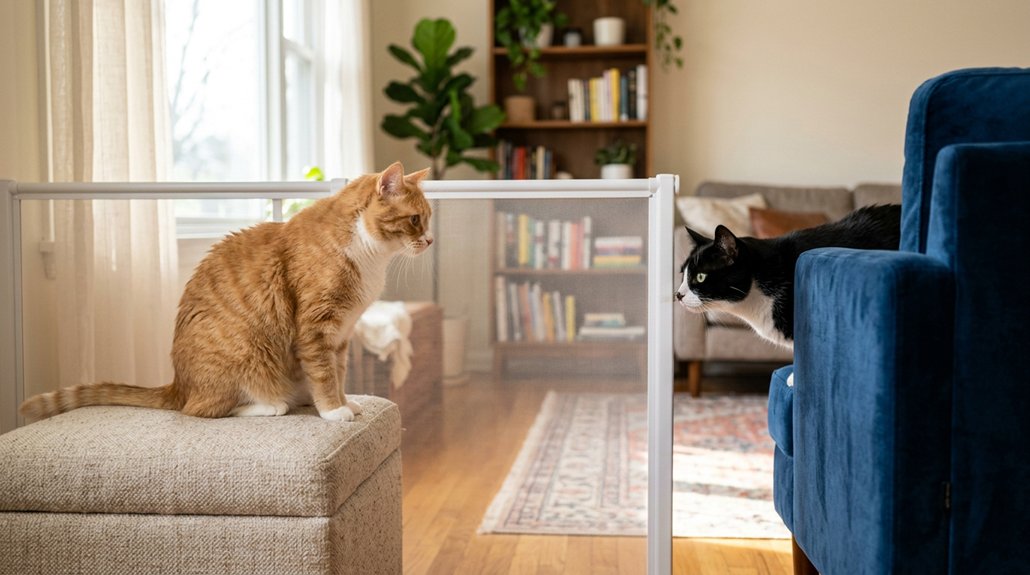
Following scent swapping and positive associations, the next logical step is to start introducing visual contact gradually between the cats. Initiate this
Supervised Interactions and Play
Once you’ve established visual contact between the cats, it’s time to move to supervised interactions and play to confirm their gradual acclimatization. Aim for 4-5 hours of peaceful engagement, gradually increasing based on their comfort. Start with physical barriers, like baby gates, to allow observation without direct contact. During these sessions, monitor body language vigilantly for signs of stress or aggression. Engaging toys and treats can make playtime benefits tangible, fostering a positive atmosphere.
- Separate spaces: Ascertain the new cat has its own litter box and feeding area.
- Barrier use: Utilize baby gates for initial interactions.
- Observe closely: Watch for any signs of aggression.
- Incorporate toys: Use engaging activities to encourage bonding.
Managing Resources and Ongoing Monitoring
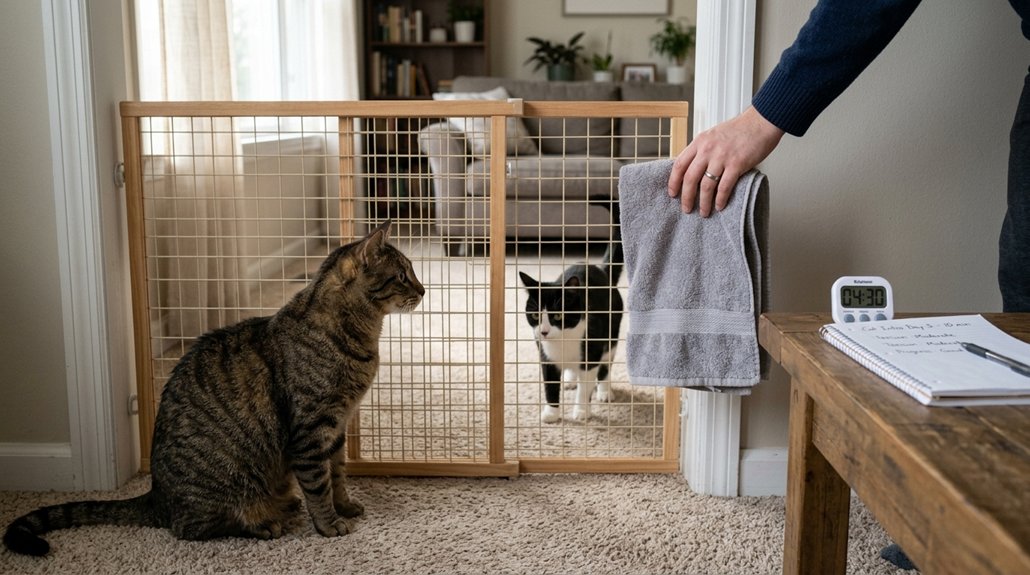
To successfully integrate a new cat, you must allocate resources like feeding areas and litter boxes separately, adhering to the guideline of one box per cat plus one extra. Consistently monitor their behaviors and stress indicators, such as hissing or growling, to gauge comfort and potential aggression. By maintaining a balanced environment and reintroducing tools like physical barriers if needed, you can minimize conflicts and facilitate a harmonious coexistence.
Resource Allocation Strategies
Successfully managing resources when introducing a new cat involves strategic allocation and ongoing monitoring to guarantee harmony in your home. Preventing territorial disputes and achieving resource equality are essential in this process. Implement resource allocation strategies by making sure a minimum of one litter box per cat, plus an extra one. This prevents competition and promotes peace.
- Separate feeding stations: Place these in different areas to reduce food-related aggression.
- Frequent monitoring: Observe resource usage to identify stress or aggression signs.
- Introduce shared resources: Gradually add scratching posts and toys, watching for conflicts.
- Re-evaluate layout: Confirm both cats have space and access to all necessities.
These strategies will help maintain a peaceful and balanced environment for multiple cats.
Behavioral Monitoring Techniques
Balancing resource allocation effectively lays the groundwork for the next critical step: monitoring and managing behavioral dynamics during the introduction of a new cat. You’ll want to closely monitor body language and vocalization cues to identify stress, aggression, or comfort levels. Implement separate feeding and litter areas to reduce resource guarding. Observe interactions during supervised sessions, watching for hissing, growling, or retreat. Positive reinforcement, such as treats and praise, fosters calm behavior and positive associations. Be prepared to revert to controlled interactions or increase space between cats if stress indicators arise.
| Monitoring Aspect | Action Needed |
|---|---|
| Body Language | Watch for signs of aggression or comfort. |
| Vocalization Cues | Note hissing, growling for stress indicators. |
| Feeding Areas | Establish separate locations. |
| Litter Box Usage | Maintain distinct areas initially. |
| Positive Reinforcement | Use treats and praise for calm interactions. |
Stress Reduction Tips
While introducing a new cat into your home can be thrilling, managing stress for both your resident and new feline is paramount to a smooth adjustment. Utilize targeted calming techniques to reduce anxiety and guarantee a peaceful coexistence.
- Individual Resources: Each cat should have its own litter box and feeding area to mitigate territorial stress.
- Calming Aids: Incorporate diffusers such as Comfort Zone® with Feliway® to promote a serene environment.
- Routine Consistency: A regular schedule for feeding, play, and cuddle times fosters security and normalcy.
- Close Monitoring: Vigilantly watch for stress signals like hissing or hiding. If necessary, separate the cats and allow them to adjust at their own pace.
Consistency in these strategies is key for successful feline integration.
Frequently Asked Questions
What Not to Do When Introducing Cats?
Don’t rush introductions or ignore common mistakes like skipping scent swapping. Avoid punishing hissing; it’s a normal sign. Carefully monitor for aggression until you’re sure they’re calm. Refrain from forcing proximity with litter or food areas initially.
How Long Will It Take for a Cat to Get Used to a New Cat?
Imagine building a puzzle; patience is essential. Introducing a new cat can take 4-6 weeks. Familiar scents aid the gradual introduction. Monitor behavior closely, using positive reinforcement to guarantee comfort and acceptance between feline friends.
What Is the 3-3-3 Rule for Cats?
The 3-3-3 rule for cats outlines a timeline for cat behavior and introduction tips, starting with 3 days of stress, 3 weeks of gradual acclimation, then 3 months for full integration, aiding the shift scientifically.
Which Cat Gender Gets Along Best?
You’ll find female-female and male-female pairings generally succeed due to differing cat personality traits. Carefully crafted introduction strategies influence compatibility more than gender. Observe early interactions scientifically, noting that each cat’s unique personality is the ultimate factor.
Conclusion
With a touch of finesse and a sprinkle of patience, you can transform the initial tête-à-tête between your feline companions into a harmonious living arrangement. By respecting their unique quirks and ensuring gradual familiarization through scent and sight, you’re laying the groundwork for a peaceful coexistence. Remember, a little oversight and resource management can prevent any unwelcome theatrics. Consider this a scientific experiment in crafting an idyllic feline friendship that purrs with success.