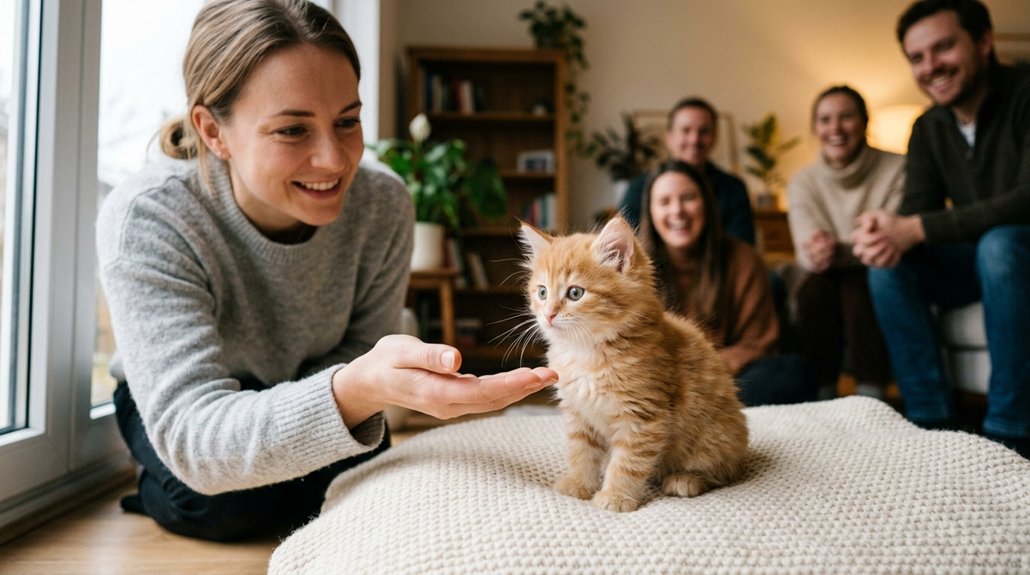
To introduce your kitten to new people, start by understanding their body language, looking for signs like flattened ears or a bottle brush tail. Create a calm environment with soft sounds and familiar scents. Let your kitten approach at their own pace, using gentle interactions and soft voices. Encourage positive experiences with treats and allow for retreats if needed. By observing your kitten’s reactions and adjusting accordingly, you’ll guarantee their comfort and security. Discover additional strategies tailored to your kitten’s unique needs.
Key Takeaways
- Choose a quiet area to minimize stress for the kitten during introductions.
- Allow the kitten to approach newcomers at their own pace for comfort.
- Encourage seated and calm behavior from newcomers to reduce anxiety.
- Use slow movements and soft voices to avoid startling the kitten.
- Introduce one person at a time, providing rest periods to build trust.
Understand Your Kitten’s Body Language

Understanding your kitten’s body language is essential for fostering a positive relationship and ensuring their comfort when meeting new people. Observing kitten behavior and body signals helps in identifying their emotional state. Flattened ears can indicate distress, guiding you to gently retreat and pause interaction. If you hear hissing, that’s a clear warning the kitten feels threatened, so it’s important to provide space. Notice an upright tail resembling a bottle brush? This suggests fear or anxiety—signs your kitten isn’t ready for close interactions. Keep an eye on other body signals like wide eyes or crouching. Such signals often denote discomfort and suggest the need for a quieter environment. By understanding these cues, you help create a secure space for your kitten.
Create a Calm, Stress-Free Introduction Space
Once you’ve become adept at reading your kitten’s body language, it’s time to focus on crafting a calm, stress-free introduction space that promotes comfort and safety. Selecting a quiet, low-traffic area is the first step toward creating a safe environment. This helps prevent overwhelming your kitten with too much stimulation. Make certain that loud noises and sudden movements are kept at bay, as they can easily startle your feline friend.
Set up comfortable surfaces like blankets or soft beds where the kitten can retreat if it feels anxious. Introduce soothing sounds such as soft music or a ticking clock to establish a calming atmosphere. Incorporate familiar scents, such as the kitten’s own bedding, to further enhance its sense of security and ease during introductions.
Allow Your Kitten to Lead Interaction
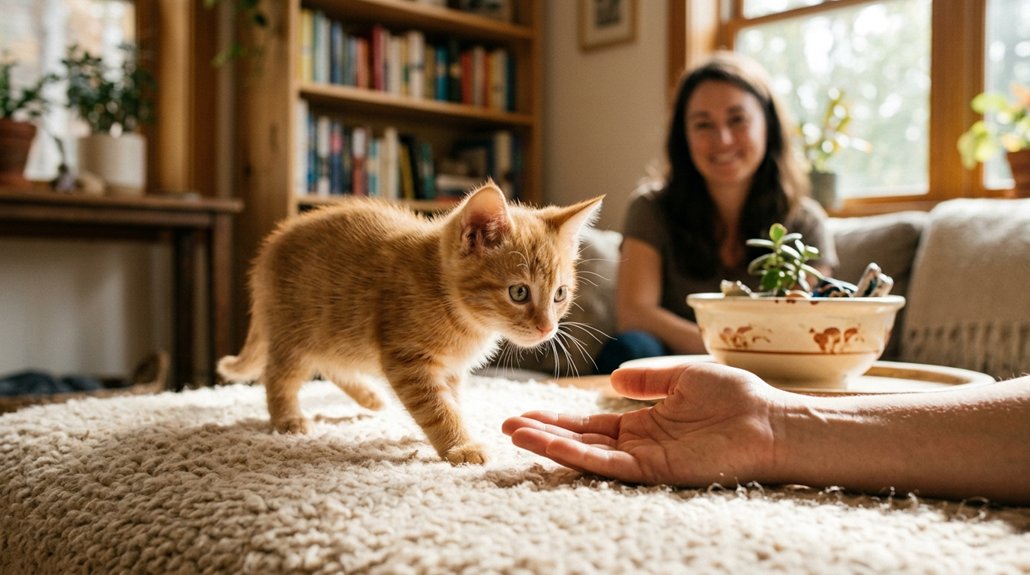
Empowerment comes when you let your kitten lead interactions with new people. Recognizing her pace as a core part of socialization strategies guarantees she remains comfortable and secure. Encourage visitors to sit calmly, avoiding quick movements or noises. This encourages your kitten to venture forth on her terms, fostering trust and safety. Using a low, soothing voice helps maintain a reassuring environment, revealing to your kitten that new interactions needn’t be frightening.
- Allow her to approach at her own speed, enhancing her control.
- Gradual exposure to new faces helps build her confidence over time.
- Provide opportunities for retreat, respecting her comfort boundaries.
These steps guarantee your kitten feels empowered and supported, forming positive associations with people she meets.
Facilitate Gentle and Positive Interactions
When helping your kitten meet new people, facilitating gentle and positive interactions is key to easing her into the experience. Encourage individuals to remain seated and exude calmness during introductions. This helps prevent overwhelming your kitten, allowing her to approach at her own pace. Promote the use of slow movements and soft, soothing sounds to minimize startling her, creating a secure atmosphere. Allow the kitten to dictate the tempo of interaction, respecting her comfort and backing off if she shows distress signs such as flattened ears or hissing. Gradually introduce new people one at a time, ensuring ample rest periods between meetings. Reinforce her positive experience by offering treat rewards and gentle praise, building confidence and positive associations with people.
Watch How Your Kitten Reacts and Adjust
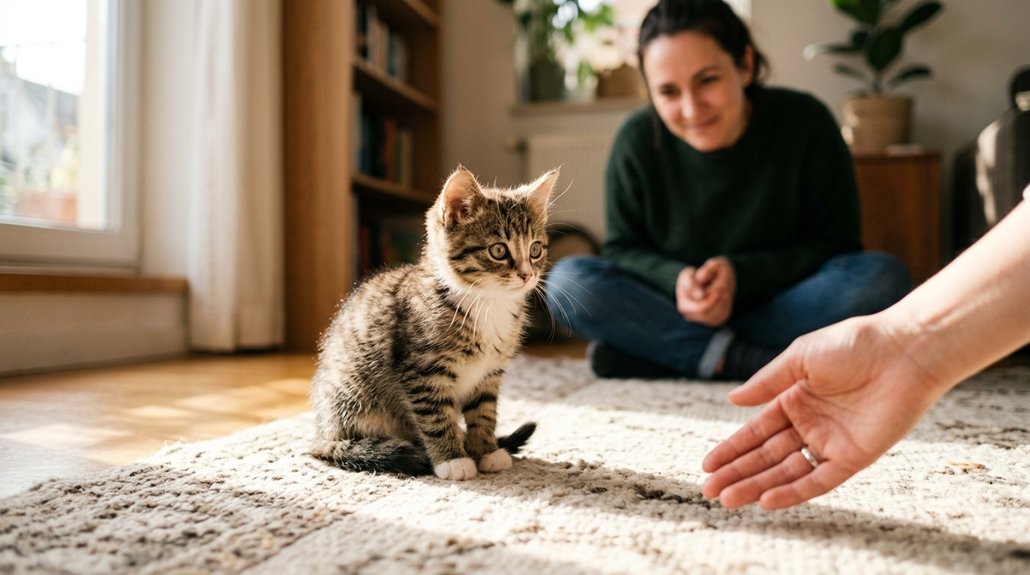
As you introduce your kitten to new people, it’s crucial to monitor her reactions closely and be ready to adjust the approach as needed. Pay attention to her body language, such as flattened ears or hissing, which signal discomfort. Her tail offers key observer cues; an upright tail shows confidence, while a bottle brush appearance hints at fear or anxiety. To guarantee kitten comfort, allow her to approach others at her own pace.
- Encourage calm behavior with slow movements and low voices from new acquaintances to ease potential stress.
- Understand that each kitten has unique comfort thresholds; be patient, as the acclimation period varies.
- Acknowledge these cues to modify interactions, creating a relaxed environment for your kitten’s social growth. Your attentiveness assures her positive experiences.
Frequently Asked Questions
What Is the 3-3-3 Rule for Kittens?
The 3-3-3 rule for kittens outlines three phases of acclimatization: first three days to settle, next three weeks for socialization, and three months for full adjustment, improving kitten behavior with patience and socialization tips.
What Is “I Love You” in Cat Language?
How do cats say “I love you”? Through feline communication like slow blinking, purring, and rubbing their cat body against you. These behaviors use scent marking and show trust, affection, and happiness, signaling your special bond with them.
What Annoys a Cat the Most?
Cats get annoyed by sudden loud noises, aggressive handling, unfamiliar scents, and unwanted attention. Respect feline boundaries by understanding cat communication; avoid sudden movements and let them initiate interaction to prevent stress and defensive behavior.
What Are the Red Flags When Introducing Cats?
Imagine your kitten’s like a shy student on the first day of school. Look for behavior signs like flattened ears or hissing. Socialization tips include slow introductions and giving them space to reduce stress and fear.
Conclusion
Introducing your kitten to new people can be a rewarding experience when done mindfully. Have you noticed how their tiny whiskers twitch with curiosity? By understanding their body language and creating a calm environment, you’re setting the stage for positive interactions. Let your kitten guide the process and watch their confidence grow. Adjust as you observe their reactions, ensuring every encounter builds trust. Remember, patience and attentiveness will pave the way for lasting relationships.