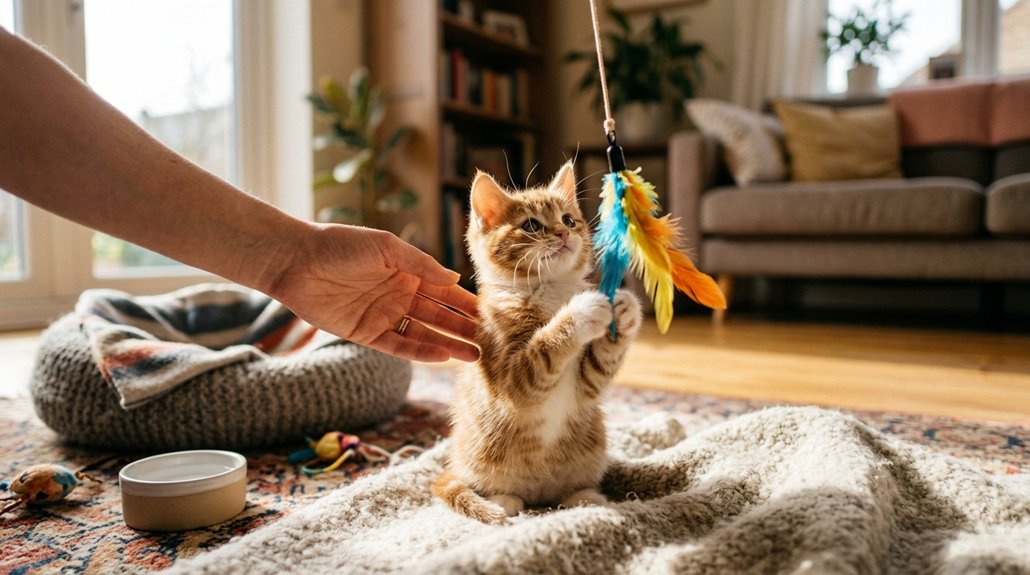
To socialize a kitten correctly, start handling them at 2 weeks old with their mother nearby. Gradually increase the frequency and variety of stimuli, including textures and sounds, by 4 weeks. Aim for them to interact with at least 100 different people by 5 weeks. Understand kitten body language to guarantee comfort and avoid overstimulation. Use positive reinforcement like treats and praise effectively, and avoid socialization mistakes by respecting their boundaries. Discover more effective strategies to promote confident development.
Key Takeaways
- Begin handling kittens at 2 weeks old, ensuring the mother is present to ease the process.
- Gradually introduce household sounds and textures by the time kittens are 4 weeks old.
- Utilize positive reinforcement with treats or praise to encourage calm behavior during interactions.
- Allow kittens to explore new experiences individually from 4 to 17 weeks, watching for stress signals.
- Moderate socialization to prevent overstimulation, ensuring interactions are at the kitten’s comfort level.
How to Begin Kitten Socialization
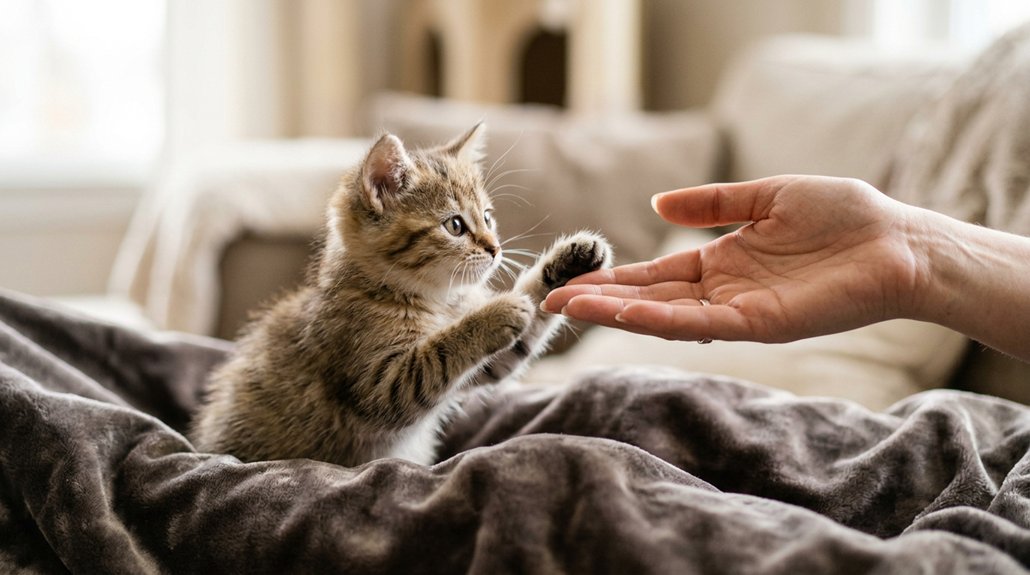
Although it might seem early, beginning kitten socialization as soon as they hit 2 weeks old is vital for fostering well-adjusted pets. Start with gentle kitten handling several times a day, always with their mother present to promote early bonding. Increase handling gradually, exploring different positions to boost their confidence and adaptability. By 4 weeks, introduce various textures and household sounds. Use tools like CDs with childcare sounds to mimic real-world environments. Aim to have your kitten interact with at least 100 different people by 5 weeks, ensuring a range of ages, genders, and demeanors. Daily interactions are important, so make sure to touch all parts of the kitten’s body to acclimate them to human contact and handling.
Understand Kitten Body Language for Positive Interactions
Understanding kitten body language is essential for guaranteeing positive interactions and forging a strong bond with your feline friend. When kittens are at ease, you’ll notice signs of comfort like a relaxed body, a loose tail, and narrowed eyes. These indicators reveal they’re open to interaction. Conversely, stress signals such as a stiff body, wide eyes, or crouching mean it’s time to give them space. Ignoring these could lead to overstimulation, which might result in hissing or fleeing. Observing these behaviors guarantees you respect their boundaries, creating enjoyable encounters. Reinforcing calm behavior with treats and praise during handling helps establish trust and associate human contact with positive experiences. This understanding paves the way for meaningful, stress-free bonding.
Introduce New Experiences Gradually
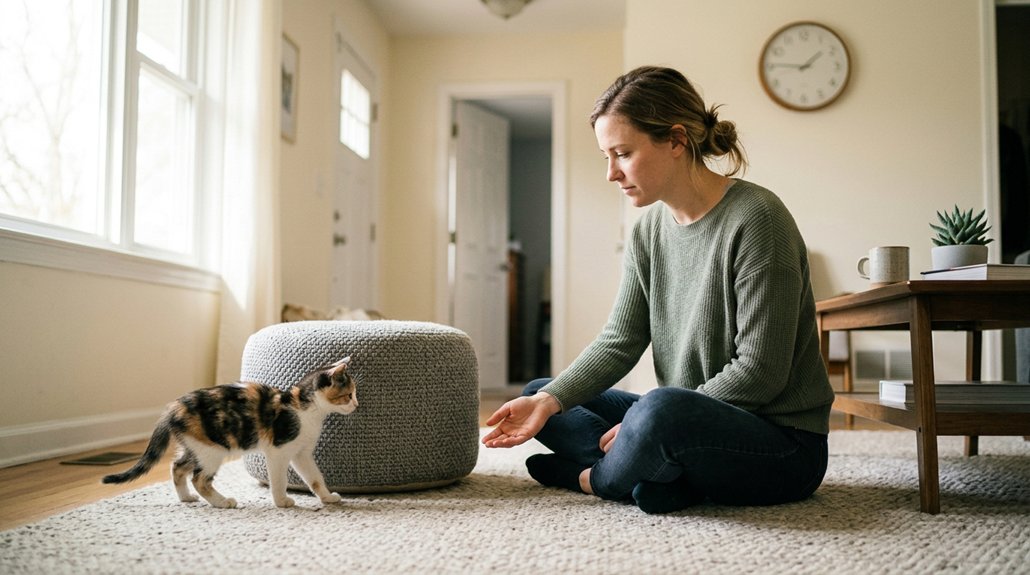
When introducing new experiences to your kitten, it’s crucial to do so gradually and carefully to guarantee their comfort and adaptation. Start by focusing on single experiences during the critical socialization period of 4-17 weeks, ensuring each new scenario builds positive associations. Pay attention to texture exposure and sound acclimation by:
Gradually introduce new experiences to kittens during the 4-17 week socialization period to ensure comfort and positive associations.
- Presenting different surfaces for them to walk on, enhancing tactile adaptability.
- Playing low-volume recordings of household noises like doorbells.
- Gradually increasing sound volume over time to prevent fear responses.
- Observing for signs of stress, such as hiding or vocalizing.
- Taking breaks if they appear overstimulated, allowing for gradual comfort.
Monitor their reactions closely—about 80% of negative responses are normal, yet your goal is progressive comfort and resilience.
Use Positive Reinforcement Effectively
To effectively employ positive reinforcement in socializing your kitten, timing is essential; deliver treats or praise within three seconds of desirable behavior to create a robust connection between the action and reward. This treat timing is critical for reinforcing behaviors like calmness around new stimuli or adventurous exploration. Utilize a reward variety to keep your kitten engaged; incorporate small portions of their daily food allowance to prevent overfeeding. Consistently rewarding positive behaviors strengthens their confidence and eases the socialization process. Always respect your kitten’s boundaries; allow them to opt-out of interactions if they seem uncomfortable. Tailor training sessions to their comfort level, watching for stress signals and providing breaks as needed, ensuring a nurturing environment for your kitten’s development.
Avoiding Socialization Mistakes
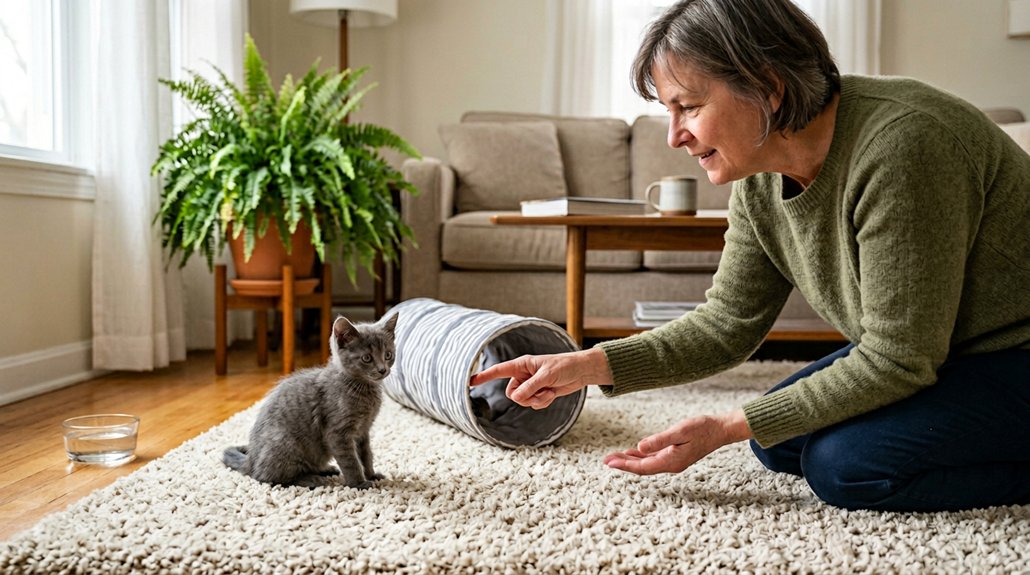
While introducing your kitten to new experiences, remember that moderation is key to avoiding socialization mistakes. Overloading a kitten with stimuli can lead to stress, hindering adaptability due to common pitfalls in crowded environments. Always be attentive to signs of fear, such as hissing or fleeing, and adjust their exposure. A nurturing environment should encourage voluntary interactions and gently engage with humans and pets. Avoid loud noises and sudden movements to prevent long-lasting fear responses. Instead, follow these authoritative guidelines:
- Gradually introduce new experiences to prevent stress.
- Observe and reduce exposure immediately upon detecting signs of stress.
- Guarantee gentle handling by multiple people for robust social development.
- Allow kittens to approach strangers at their own pace.
- Create a quiet setting free of loud noises during socialization.
Frequently Asked Questions
What Is the 3-3-3 Rule for Kittens?
The 3-3-3 rule for kittens guides you through behavior expectancies and socialization techniques, suggesting three days to acclimate, three weeks to adjust routines, and three months for them to feel at home, ensuring a smoother adjustment.
What Is “I Love You” in Cat Language?
“I love you” in cat language is expressed through various cat body language signals and feline vocalizations. You’ll notice slow blinks, gentle nuzzling, purring, soft kneading, and a high, slightly curved tail as signs of affection.
At What Age Should Kittens Be Socialized?
Start socializing kittens between 4 and 17 weeks. Imagine a kitten named Luna, who experienced diverse people, sounds, and environments. Her behavior blossomed through these socialization techniques, reducing fear while fostering adaptability and confidence in adulthood.
Where Should a Kitten Sleep on the First Night?
On the kitten’s first night, guarantee it sleeps in a cozy, safe space with essentials like water and a litter box nearby. Avoid cramped spaces; open areas invite exploration and comfort, helping reduce anxiety and promoting security.
Conclusion
As you commence on the journey of kitten socialization, remember that patience and understanding are your greatest allies. Like nurturing a blossoming friendship, gradually introduce new experiences, interpret body language accurately, and employ positive reinforcement to build trust and confidence. Avoid common mistakes by approaching each interaction with care. With expertise and attention to detail, you’ll guarantee your kitten grows into a friendly and well-adjusted companion, enriching both its life and yours immeasurably.