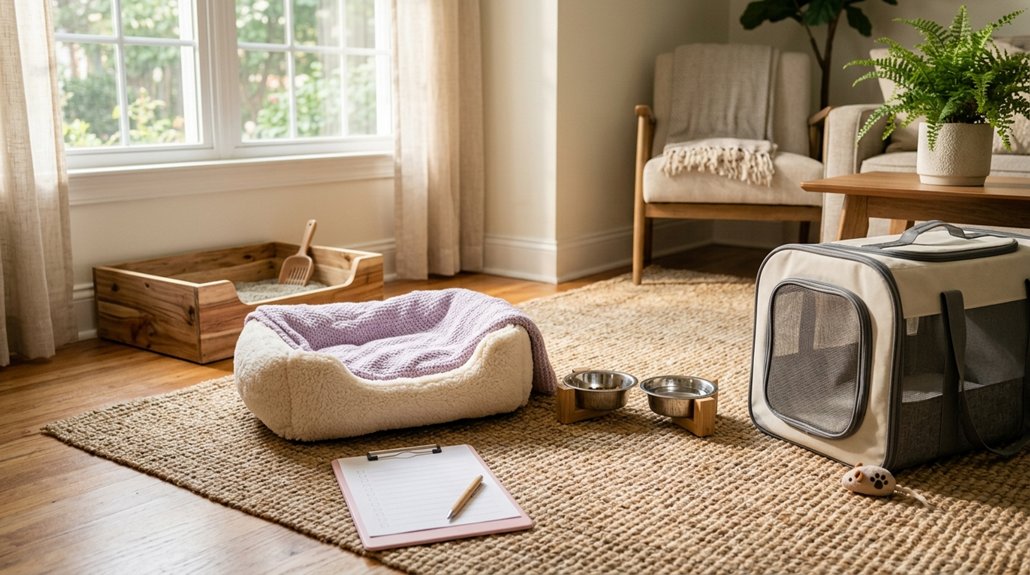
Bringing a new kitten home involves meticulous preparation for safety, nutrition, and comfort. Secure play spaces, hide electrical cords, and guarantee toxic items are out of reach. Feed a protein-rich diet with kitten-specific formulations, using shallow, stainless steel or ceramic bowls. Create an accessible litter box with unscented clumping litter. Schedule vet visits for vaccinations and discuss microchipping. Choose a durable, well-ventilated carrier. With these considerations, you’ll be well-prepared for your kitten’s seamless change.
Key Takeaways
- Create designated playspaces and kitten-proof areas for safe exploration.
- Select protein-rich, kitten-specific food and provide multiple small meals daily.
- Set up a quiet, easily accessible litter box with unscented, low-dust litter.
- Schedule initial veterinary visits for vaccinations, deworming, and microchipping.
- Choose a hard-sided, well-ventilated carrier and familiarize your kitten with it.
Kitten-Proofing Your Home for Safety
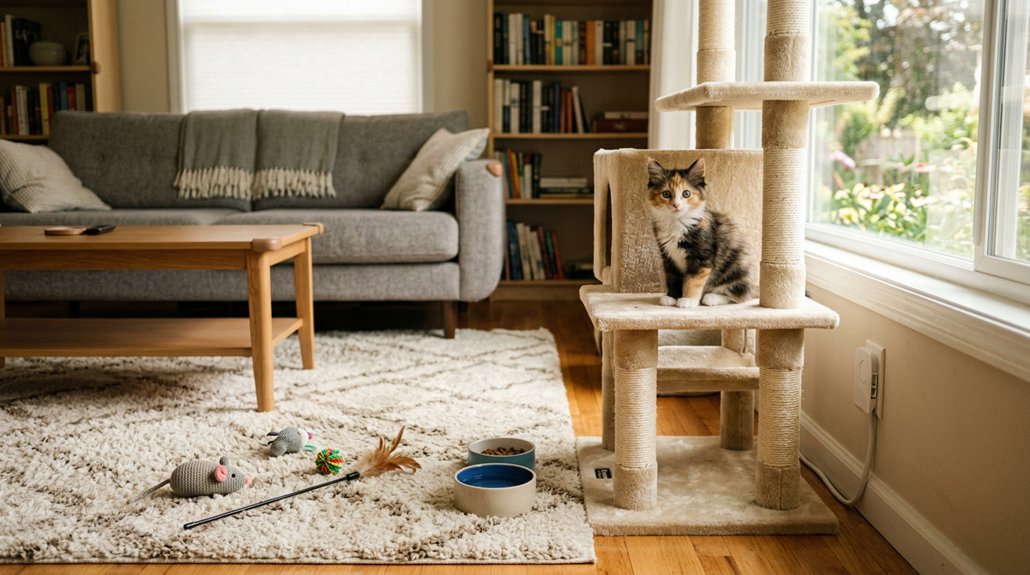
To guarantee your kitten’s safety, it’s crucial to kitten-proof your home thoroughly, minimizing risks they might encounter. Start by designating safe playspaces, like confined areas, gradually allowing access to avoid dangerous explorations. Make sure all electrical cords and cables are securely hidden or shielded, reducing the risk of chewing—a common hazard for curious kittens. Remove or secure small objects that could be ingested, preventing choking incidents. Keep toxic items, including cleaning supplies and certain houseplants like lilies and pothos, stored safely out of reach. Window screens are important; install them securely to prevent escapes and falls from elevated spaces. These kitten proofing essentials are designed to create an environment where your new companion can safely explore and grow.
Understanding Kitten Nutrition
A thorough understanding of kitten nutrition is essential for guaranteeing your furry friend grows into a healthy adult cat. Kittens require diets rich in protein to support muscle and bone development. When selecting food, carefully examine nutritional labels to verify it’s specifically formulated for kittens. Diversify their diet by incorporating both wet and dry foods, which aids hydration and dental health. During kitten feeding, offer 4-5 small meals daily to align with their energy requirements and avoid obesity by controlling portion sizes rather than free-feeding. Gradually introduce new foods to prevent gastrointestinal distress, and consult your veterinarian for personalized recommendations. Always provide fresh, clean water in shallow dishes to encourage regular hydration and avoid whisker fatigue.
Choosing the Right Bowls for Feeding
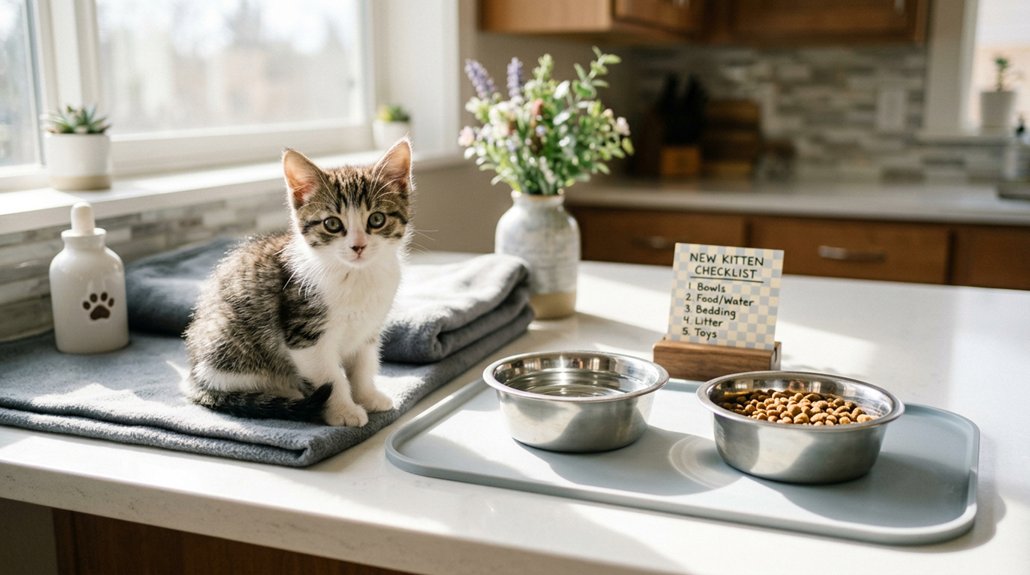
Selecting the right feeding bowls is vital for your kitten’s health and comfort. Opt for bowl materials like stainless steel or ceramic due to their durability and resistance to bacteria. These options guarantee your kitten’s meals remain hygienic. Avoid plastic, which can harbor bacteria and smells. Consider bowl size carefully; shallow bowls are preferable to prevent whisker fatigue, a condition where the sides of the dish irritate your kitten’s sensitive whiskers. Look for tip-resistant designs to minimize spills, assuring a tidy feeding area. For hydration, a combination of a sturdy bowl and a pet water fountain may encourage more frequent drinking by providing fresh, flowing water. Remember, cleaning and replenishing fresh food and water daily is vital for maintaining proper hygiene.
Creating a Comfortable Litter Box Setup
After confirming your kitten’s feeding area is optimized for health and comfort, it’s imperative to focus on their litter box setup to maintain a stress-free environment. Strategically choose the litter box location, confirming it’s quiet and easily accessible to reduce stress. Opt for a low-entry design suitable for your kitten’s small size and confirm it’s kept clean by scooping daily and conducting monthly deep cleans. Use unscented, low-dust, clumping litter to accommodate their sensitive needs and assist in efficient litter box cleaning. Implementing one litter box per cat, plus an extra, minimizes territorial disputes. Reinforce positive behavior with praise and maintain hygiene by regularly checking for odors and accidents, using enzymatic cleaners as needed.
Selecting Safe Toys for Kitten Stimulation
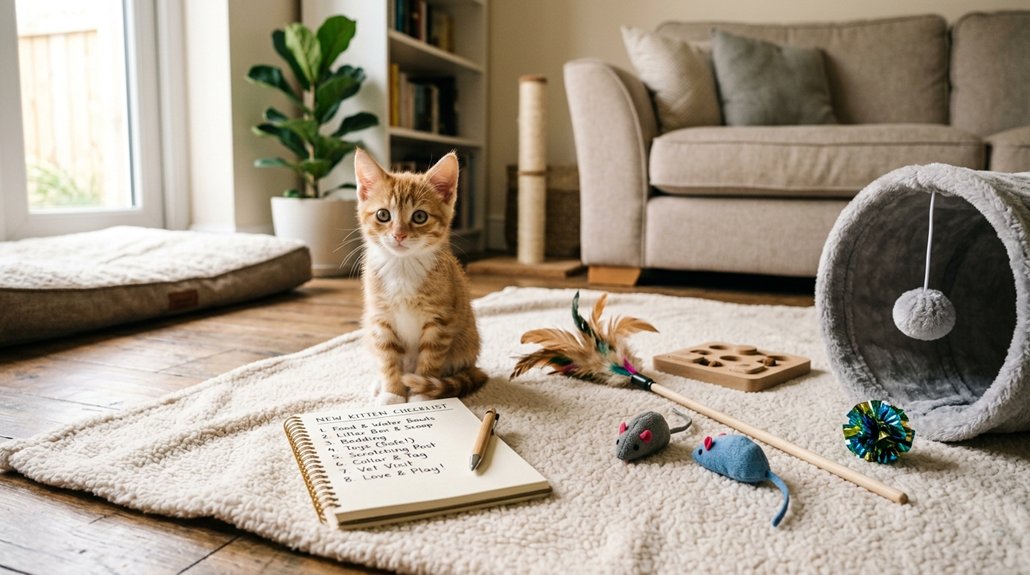
When you’re selecting toys for your kitten’s stimulation, prioritize those crafted from durable materials explicitly designed for feline play. Steer clear of items that could shred or splinter, such as rubber bands or aluminum foil, which pose significant choking risks. To enhance interactive play and keep your kitten engaged, you should regularly rotate a variety of safe and engaging toys, ensuring they lack small, ingestible parts.
Choosing Durable Materials
To guarantee your kitten’s safety and stimulation, choosing toys constructed from durable materials is essential. Prioritize toy durability by opting for items specifically designed for cats that can withstand biting and clawing. Material safety is also vital—opt for toys free from small parts or sharp edges. Look for a solid construction to prevent choking hazards. Consider a mix of textures and shapes like plush, rubber, and rope toys to engage your kitten’s instincts. Make sure you supervise playtime to assess toy wear and replace as needed.
| Toy Type | Material | Benefits |
|---|---|---|
| Plush Toys | Soft Fabric | Comfort and gentleness |
| Rubber Balls | Rubber | Durability and bounce |
| Rope Toys | Cotton Rope | Chew resilience and texture |
Regularly rotate toys to prevent boredom.
Avoiding Hazardous Items
While selecting durable materials for your kitten’s toys is important, it’s equally critical to avoid hazardous items that could jeopardize their safety. Prioritize toy safety by choosing toys specifically designed for cats. Stay away from small or loose items like yarn, rubber bands, and twist ties, as they pose choking risks or may cause intestinal blockages.
Consider these safe alternatives:
- Homemade toys: Crumpled paper or cardboard tubes offer engaging and safe options without injury risks.
- Non-toxic materials: Opt for toys made from substances that won’t break down or be ingested inadvertently.
- Routine inspections: Regularly check toys for signs of wear and tear, replacing damaged ones promptly.
Finally, supervise your kitten with interactive toys, especially those involving strings or feathers, to guarantee an accident-free playtime.
Encouraging Interactive Play
Engaging your kitten in interactive play is essential for their physical and mental development. Selecting the right interactive toys is key to fostering natural hunting instincts and promoting activity. Opt for durable items like feather wands and laser pointers, specifically designed to stimulate kitten playtime. Make certain toys are made from safe, hard-wearing materials like catnip-filled fabric or hard rubber to prevent ingestion hazards. Avoid dangerous items such as strings or rubber bands that could result in choking or internal injuries. Rotate toys weekly to maintain your kitten’s interest and avoid boredom-induced behaviors. During play sessions, supervise diligently, especially with teaser toys, to prevent accidents such as entanglements or swallowing of small parts—making sure a safe, engaging environment for your kitten.
Finding Ideal Scratching Surfaces
As kittens commence on their journey of growth, finding the ideal scratching surfaces becomes vital for their development and well-being. Scratching is significant not only for maintaining claw health but also for alleviating stress and fostering natural behaviors. To guarantee your kitten doesn’t turn to your furniture for these needs, consider the following expert recommendations:
- Cardboard options: Economical and versatile, these provide kittens with satisfying claw resistance.
- Sisal benefits: Durable sisal-covered posts offer texture and longevity that encourages healthy scratching.
- Placement strategy: Position them in high-traffic areas, ensuring they’re stable against vigorous scratching.
Regularly rotate these surfaces to keep your kitten engaged and happy, promoting diverse scratching habits that contribute to your kitten’s well-being and your home’s preservation.
Planning Regular Vet Visits
The first vet visit for your kitten should be scheduled within the initial week of bringing them home to establish a baseline for health care and initiate the necessary vaccination schedule. Maintaining a consistent vaccine schedule is essential; your kitten will need the core FVRCP series, administered every 3-4 weeks until they reach at least 16 weeks old. Don’t overlook parasite prevention—discuss deworming and flea prevention strategies with your veterinarian. Even indoor kittens can be at risk for parasites. Consider microchipping during this initial check-up for a permanent identification method. After the initial series, guarantee annual vet visits to monitor your kitten’s overall health, update vaccinations, and address emerging health issues. Consistency in veterinary care fosters long-term well-being.
Selecting the Perfect Cat Carrier
When preparing to transport your kitten, selecting the perfect cat carrier is essential for ensuring their safety and comfort. Choose a hard-sided plastic carrier, prioritizing safety and simple cleaning, with a secure latching mechanism to avoid accidental openings. Important carrier features include:
- Well-ventilated designs to maintain air circulation, reducing travel stress.
- Adequate size allowing for your kitten to stand, turn, and lie comfortably.
- Top-loading options for stress-free placement of your kitten.
For travel tips, familiarize your kitten with the carrier ahead of time by enticing them with treats and toys inside. This encourages positive associations and a sense of security. Remember, a carefully chosen carrier supports a stress-free journey for both you and your cat, enhancing their well-being and comfort.
Frequently Asked Questions
How Do I Introduce My Kitten to Other Pets?
Start by using controlled introduction techniques. Let your kitten and existing pets sniff each other’s scents before any face-to-face interaction. Gradually increase pet interaction time while supervising closely, ensuring a calm environment to prevent any aggressive behaviors.
What Documents Should I Have Before Adopting a Kitten?
Before adopting a kitten, make sure you’ve the adoption paperwork and health records. These documents verify vaccinations, spaying/neutering status, and microchip details, guaranteeing you’re fully informed about your new pet’s medical history and ownership rights.
How Can I Help My Kitten With Separation Anxiety?
To help your kitten with separation anxiety, observe anxiety signs, provide comfort through familiar items, establish a routine, and consider pheromone diffusers. Your attentive approach will ease your kitten’s anxiety, promoting a calmer, more secure environment.
What Should I Do if My Kitten Has Fleas?
If your kitten’s got fleas, follow a focused flea prevention plan with proficient products. Consider extensive treatment options like topical treatments or oral prescriptions. Consistently clean and vacuum your home to curb pesky pests from proliferating further.
How Often Should I Groom My Kitten?
You’ll want to groom your kitten weekly using appropriate grooming tools. Focus on brushing to reduce shedding and check for any potential health issues. Regular grooming helps build a bond and guarantees your kitten appreciates the grooming process.
Conclusion
Bringing home a new kitten is like setting the stage for a tiny, furry explorer. You’ve kitten-proofed your home, chosen nutritious food, and picked the perfect bowls. A comfortable litter box is ready, as are safe toys and the ideal scratching surfaces. Regular vet visits are planned, and the cat carrier is set for adventures. With these preparations in place, your kitten has a world tailored for growth and safety, ensuring a healthy and happy life ahead.