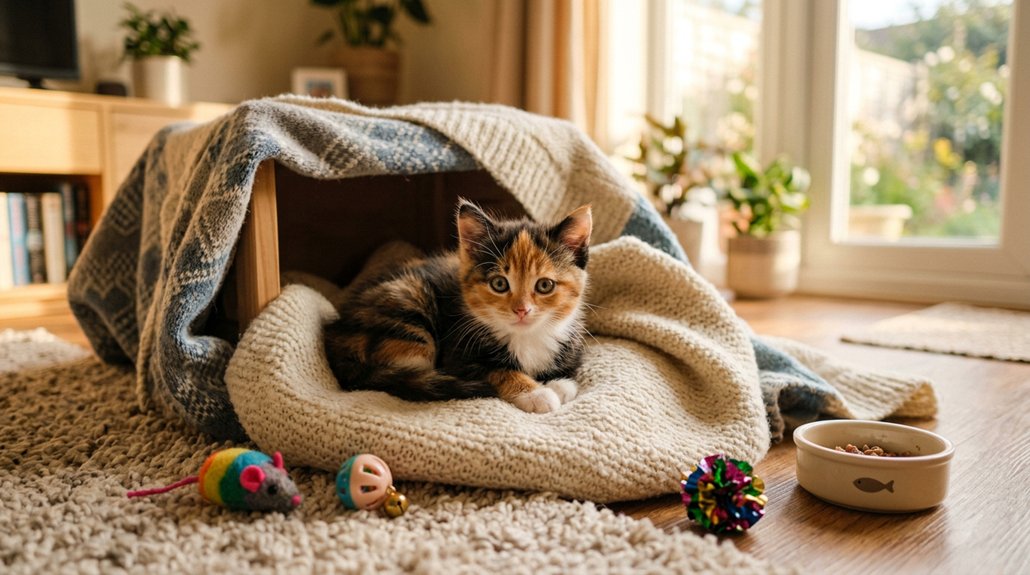
In the first 30 days with your kitten, focus on creating a safe, welcoming space. Designate a kitten-proof area equipped with essentials like food, water, and a litter box. Establish a feeding routine and monitor their health, including weight and litter habits. Socialization begins early, encouraging play with toys and gentle interactions. Use positive reinforcement to foster good behavior. Gradually introduce them to your home. You’ll soon discover more about nurturing their growth and well-being.
Key Takeaways
- Set up a safe, kitten-proof space with necessary supplies like food, water, and a litter box.
- Allow the kitten to explore and settle in its designated safe room without disturbance from other pets.
- Establish a consistent routine with regular feeding times and positive reinforcement for good behavior.
- Monitor the kitten’s health by observing litter box habits, tracking weight, and scheduling a vet check-up.
- Begin socialization through playtime, introducing safe toys, and gradual interaction with friendly, vaccinated pets.
Creating a Safe and Welcoming Space for Your Kitten
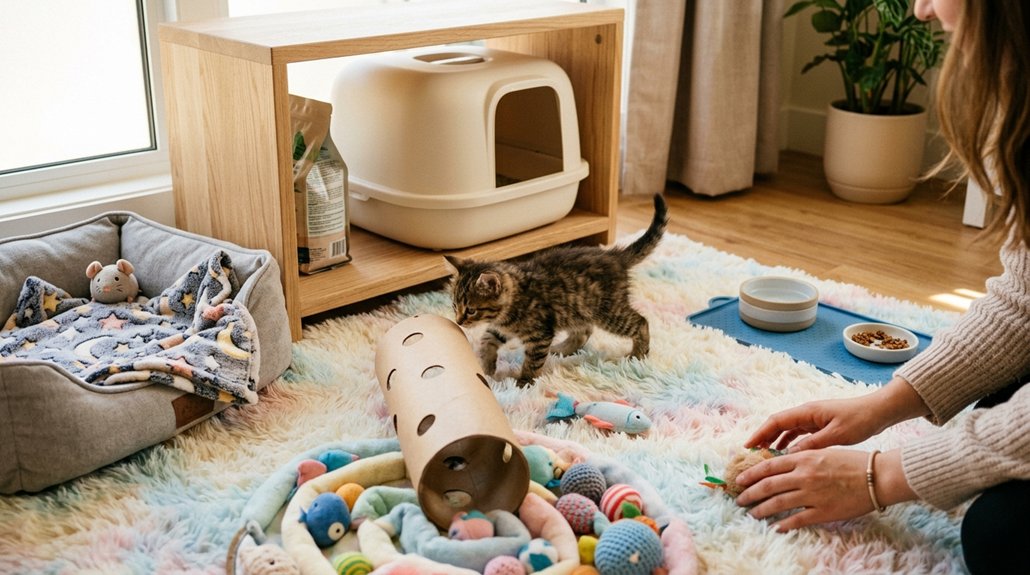
When welcoming a kitten into your home, priority should be given to establishing a safe and welcoming area that facilitates a smooth shift. Start with a designated safe space like a guest room or large bathroom. Make certain this area is kitten-proofed by securing cords, concealing fragile items, and removing hazards. Equip the space with essentials: food, water, a litter box, a scratching post, and engaging toys. Create cozy hiding spots to boost their sense of security. Introduce synthetic calming pheromones via sprays or diffusers to reduce stress. Gradually, under supervision, your kitten can explore other home areas. Secure doors and windows to maintain safety. By following these steps, you’ll create a nurturing environment for your kitten’s development.
First-Day Settling-In Tips for Kittens
Though bringing a new kitten home is exciting, the first day is essential for setting the tone for its acclimatization. Begin by allowing your kitten to make positive first impressions within a designated safe room. This creates a controlled environment for safe exploration without overwhelming stimuli. Make certain that other pets remain at a distance to minimize stress. Introduce your kitten to necessary resources by guiding it to food, water, and the litter box. Facilitate comfort by providing retreat options, like a cozy bed or carrier, where the kitten can hide if it feels anxious. Importantly, resist the urge to force it out of these hiding places. Instead, allow the kitten to emerge at its own pace, fostering a secure sense of safety.
Building Routine for Early Comfort
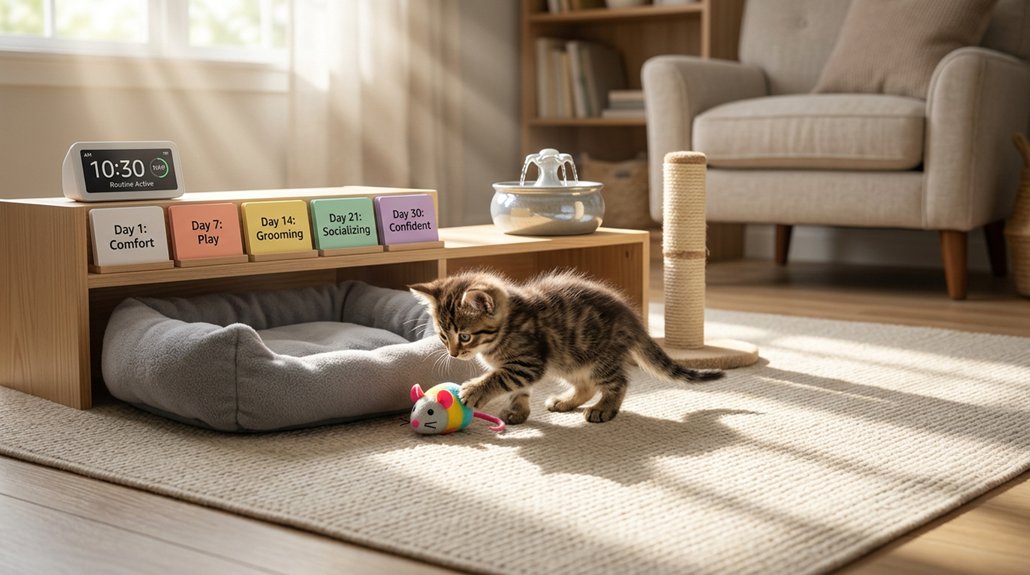
Establishing a routine is essential for a kitten’s early comfort, as it provides structure and predictability during its adjustment period. Start by setting a consistent feeding schedule, ensuring you feed your kitten multiple times a day based on its age and nutritional needs. A regular feeding routine promotes stability and helps your kitten acclimate to its new environment. Designate a specific area with a bed, food, litter box, and toys to create a safe and comfortable space. Use positive reinforcement techniques like treats and affection to encourage desirable behaviors, such as using the litter box after meals and naps. Gradually introduce your kitten to different home areas while using synthetic calming pheromones to maintain a soothing atmosphere.
Kitten Health Monitoring Tips
Maintaining your kitten’s health begins with diligent monitoring and swift action. Daily observation of litter box habits is vital. Make sure they urinate and defecate normally, as irregularities could indicate underlying issues. Record the appearance of urine and feces; any abnormality should prompt a veterinarian visit. Weight tracking is essential, too. Their weight must steadily increase; sudden drops or stagnation require immediate attention.
| Monitoring Aspect | Healthy Indicator | Action Required |
|---|---|---|
| Litter Box Habits | Normal urination/defecation | Report irregularities to vet |
| Weight Tracking | Steady weight gain | Address drops with a vet promptly |
| Behavior Observation | Active, normal appetite | Investigate signs of distress |
Schedule a vet appointment within the first 10 days for health checks and vaccinations to prevent future ailments.
Making Socialization Fun for Your Kitten
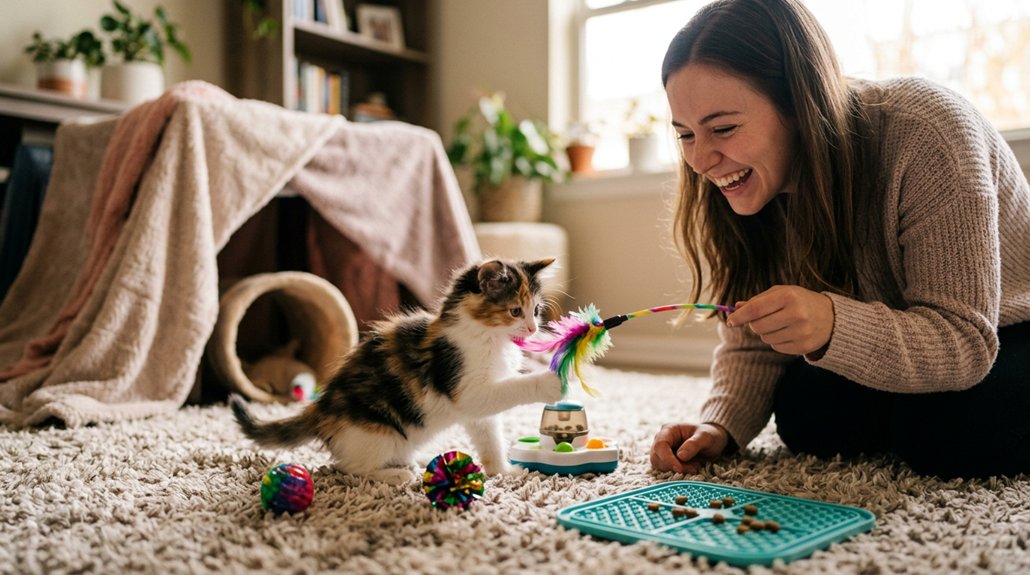
Introducing socialization early in a kitten’s life can greatly impact their adaptability and comfort in future environments. Begin socialization at 5-6 weeks, focusing on playtime activities to stimulate their developing personalities. Use a variety of toys to encourage exploration and reinforce positive behavior, ensuring they learn that human hands aren’t for biting or scratching. Expose them to different surfaces and engage in gentle interaction during the critical 3 to 9 weeks window to minimize future anxiety. Gradual introduction to friendly, vaccinated pets during playtime fosters positive interactions and reduces aggression or fear. Employ positive reinforcement techniques, like treats and praise, to build confidence as your kitten experiences new stimuli, ensuring their socialization is both effective and enjoyable.
Frequently Asked Questions
Where Should a Kitten Sleep on Their First Night Home?
Your kitten should sleep in a designated safe space with proper kitten bedding on its first night home. Establish a calming nighttime routine featuring familiar items like a blanket or toy to ease them into their new environment comfortably.
What Is “I Love You” in Cat Language?
When your cat gives you a slow blink, in feline communication, it’s akin to hitting the nail on the head in expressing love. This behavior in cat language, alongside purring and kneading, shows deep affection.
What Is the 3 3 3 Rule for Kittens?
The 3 3 3 rule means initial stages of adjusting a kitten involve three days of potential anxiety, three weeks of gradual comfort and emerging personality, and three months for full socialization. Provide patience and socialization tips throughout.
What Age Are Kittens the Hardest?
Kittens are the hardest between 5-10 weeks. Imagine them as fledgling actors improvising roles—behavior challenges arise through playful aggression. Guide them with socialization tips and consistent litter training, setting the stage for well-mannered adult cats.
Conclusion
Balancing your kitten’s enchantment and vulnerability is essential in the first 30 days. You’re crafting a nurturing haven while introducing structured routines to foster comfort. Close health monitoring aligns with joyous socialization, ensuring your kitten thrives both physically and emotionally. Amidst the tender moments and watchful care, remember: every playful pounce is a step towards confidence, each gentle purr a signal of trust. Your guidance transforms their world, merging discovery with security, creating a lifelong bond.