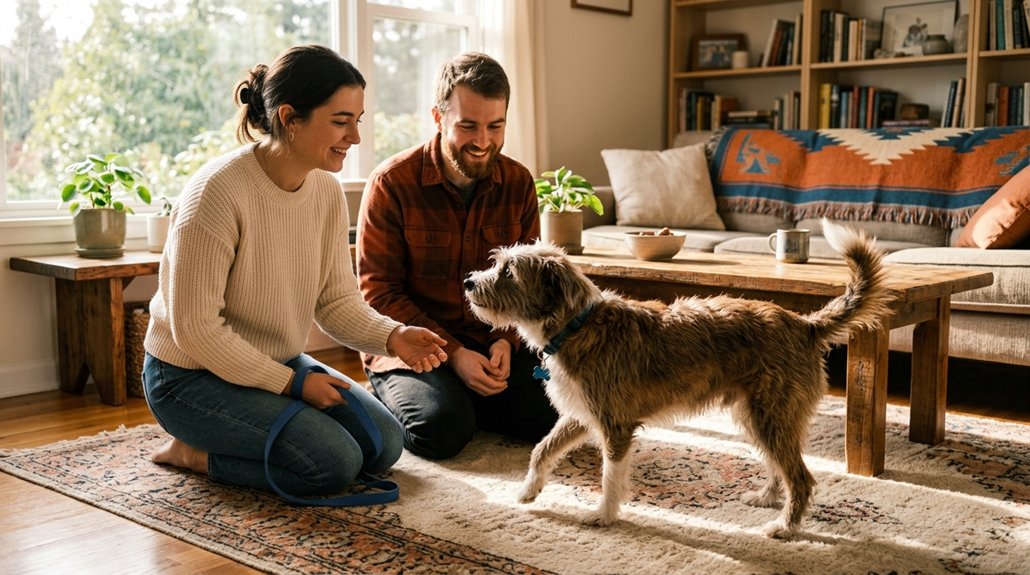
When adopting a dog for the first time, expect an adjustment period as your pet familiarizes with their new environment. Create a safe and cozy space, and equip yourself with essential supplies like a dog bed, food bowls, and chew toys. Introduce your pet gradually to their new home, family, and routine. Understand that initial behaviors may shift as your dog grows comfortable. For further insights on creating a seamless changeover, stay engaged with the following guidance.
Key Takeaways
- Expect an adjustment period as your new dog acclimates to their surroundings.
- Create a calm, safe space to help reduce initial anxiety and stress.
- Provide essential supplies like a comfortable bed, food, and water bowls.
- Introduce family members and other pets gradually to minimize stress.
- Utilize community and professional resources for training and support.
Setting Up a Safe Welcome Home
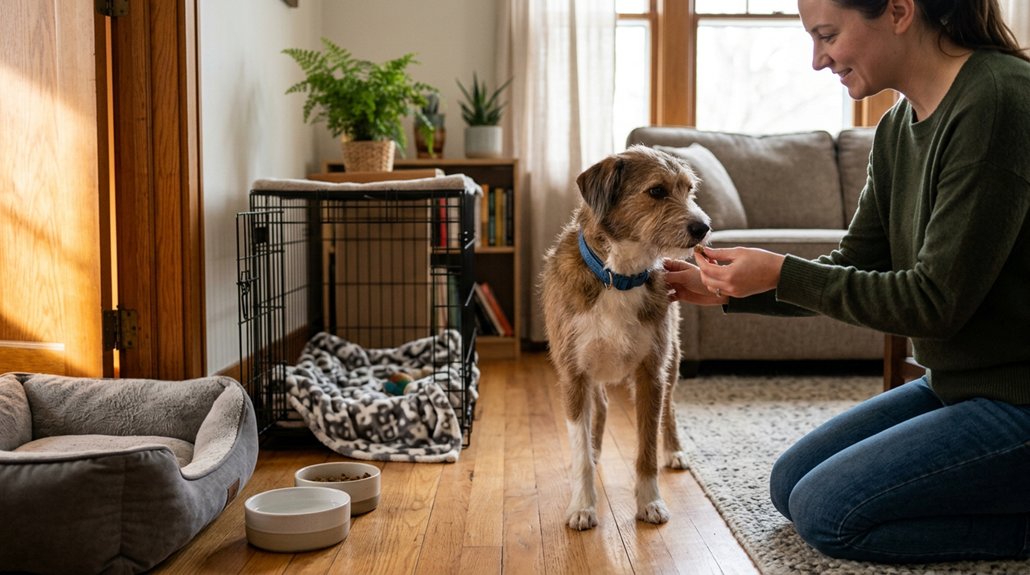
When adopting a dog for the first time, setting up a safe welcome home is essential to helping your new pet feel comfortable and secure. Designate a quiet area as your dog’s safe space, which may include a cozy bed or crate. This environment allows your furry friend to decompress. Use effective dog proofing tips by removing hazardous items like toxic plants and sharp objects from reach. Verify chewable items are stored safely to prevent any accidents. Outdoors, create a secure area for exploration—safety should be your priority. Introduce calming elements such as soothing music to ease initial anxiety. By creating a nurturing and hazard-free environment, you’re setting the foundation for a trusting and happy relationship with your new companion.
Essential First-Day Supplies
Starting with the right essentials can make your dog’s adjustment into their new home smooth and stress-free. Your first day checklist should include essential supplies like a comfortable dog bed to provide security and relaxation. Food and water bowls filled with their current diet prevent digestive upset, easing mealtime changes. Equip your dog with a collar and an ID tag featuring your contact information for safety. A sturdy leash and a harness—especially important for large or energetic dogs—facilitate safe walks and healthy leash training. To keep anxiety at bay, stock up on chew toys, blankets, or favorite comfort items. These thoughtful preparations not only guarantee your pet’s immediate needs are met but also foster a nurturing environment for their new start.
How to Introduce Your Dog to Their New Space
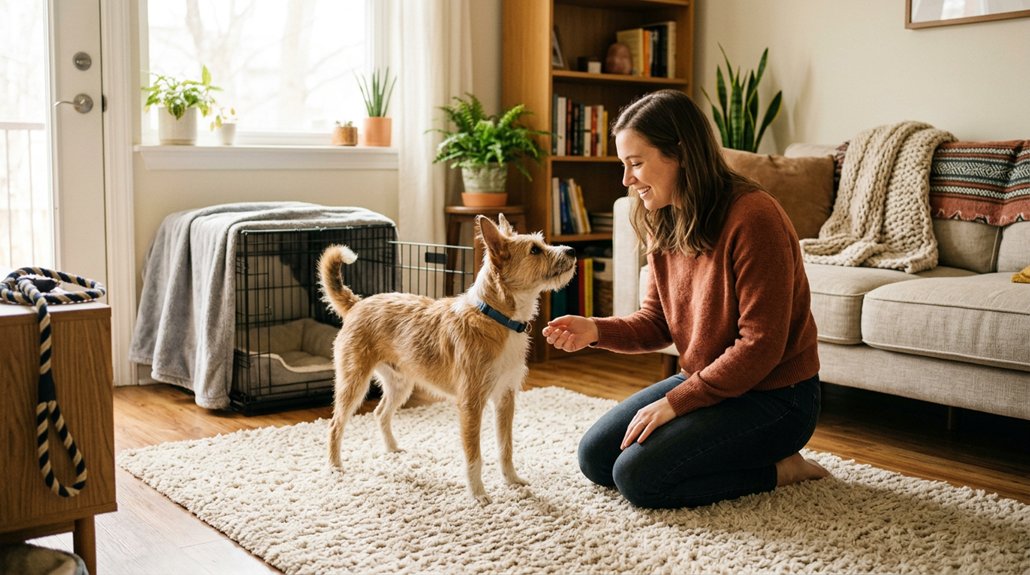
Although bringing a new dog home can be an exciting experience, it’s important to approach this change with patience and understanding to guarantee a smooth adjustment. Start by allowing your dog to engage in space exploration at their own pace; a calm environment is critical to prevent overwhelming them. Use a leash during this initial exploration to guide their behavior and maintain control. To reduce stress, keep other pets away and allow for gradual introductions to family members—one at a time fosters trust. Designate a quiet, comfortable area for them to retreat, ensuring they feel secure during this shift. By implementing these steps, you’re creating a supportive environment that prioritizes your new dog’s emotional and psychological well-being.
What to Expect During Your Dog’s Initial Weeks
During your dog’s initial weeks, expect a period of adjustment that’s both challenging and rewarding. Early interactions during these weeks can reveal your dog’s true personality. Initially, they might display fearful behaviors, especially if their past has been tumultuous. Here’s how to navigate this adjustment phase:
- Create a calming environment to counteract any anxiety and provide comfort.
- Observe gradually changing behaviors; what might start as shyness can evolve towards openness.
- Recognize variations in acclimation speed—some dogs adapt quickly, others take their time.
- Be attuned to hidden behaviors emerging as your dog settles in, addressing them with patience.
During these weeks, your understanding and empathy form the foundation for a trusting relationship, supporting their journey from apprehension to assurance.
Create a Routine to Bond With Your Dog
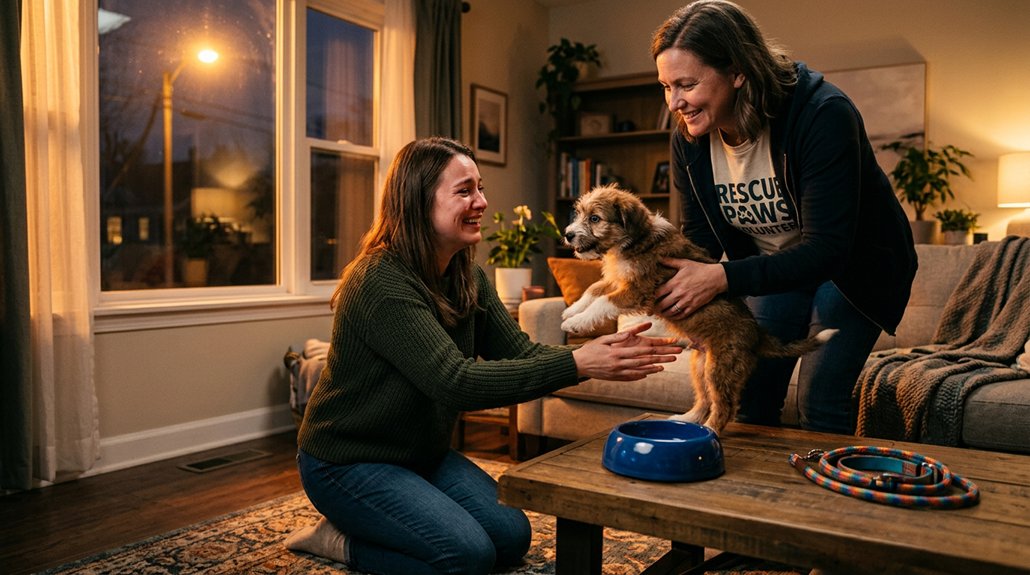
As you navigate your dog’s initial adjustment weeks, establishing a consistent routine can greatly ease their shift into your home. Daily activities like regular feeding times, walking schedules, and play sessions provide structure, promoting trust and security. Incorporate bonding techniques such as training sessions focusing on basic commands and positive reinforcement, essential for strengthening your connection and encouraging good behavior. Set aside moments for quiet bonding activities, like petting or simply relaxing together, to foster comfort and acceptance. Engage your dog with interactive toys and puzzles, which mentally stimulate and deepen your relationship through shared enjoyment. Gradually introduce them to household habits and rules, helping them understand their place in your family, reinforcing their sense of belonging and stability.
Tackle Behavioral Challenges Confidently
Understanding your dog’s body language is essential for effectively addressing behavioral challenges such as separation anxiety. By paying close attention to cues like tail position, ear movements, and vocalizations, you’ll be better equipped to interpret what your dog is experiencing and respond appropriately. Managing separation anxiety also involves creating a safe environment and providing comfort, reassurance, and structure to help your dog adjust to their new home confidently.
Understanding Dog Body Language
How often have you found yourself puzzled by your dog’s behavior, unsure of what they’re trying to communicate? Understanding canine communication can transform your relationship with your furry friend. Dogs express emotions primarily through body language signals, covering a range of emotional cues. Recognizing stress indicators like tucked tails or flattened ears can prevent anxiety escalation.
With effective observation, you’ll notice behavioral reactions that highlight emotional states. Enhance positive interactions by adjusting training techniques based on your dog’s cues. Remember, dogs have four stress responses: fight, flight, avoid, and acceptance. Acknowledge environment influences and adjust accordingly to foster a sense of security.
Consider these insights for decoding your dog’s behavior:
- Use the Dog Decoder app for guidance
- Adjust to training cues promptly
- Foster positive reinforcement
- Respond to anxiety signs early
Managing Separation Anxiety
Recognizing your dog’s body language is just the beginning; addressing behavioral challenges like separation anxiety takes your understanding to a new level. Dogs might whine, bark, or become destructive when left alone, especially early on. Practice low-key goodbyes to ease adjustments, reassuring them that absences are routine. Establish a calm atmosphere by utilizing crating techniques that offer a sense of security—it’s about creating a haven, not confinement. Thoughtful use of calming aids, like interactive toys or stuffed Kongs, shifts their focus, making alone time rewarding. Consult professional trainers or behaviorists for customized strategies. This empathy-driven approach promotes a smoother adjustment and healthier bond, ensuring your new canine companion feels secure even in your absence.
Where to Get More Training Help
Steering your dog’s training journey can be smoother with the right resources. Local dog trainers offer personalized solutions for tackling unique challenges, while online resources like training apps and video tutorials provide flexible options to enhance your understanding of dog behavior. Consider professional guidance through group sessions to build your confidence and strengthen your dog’s social skills.
Finding Local Trainers
When you’re adopting a dog for the first time, where exactly can you turn to find trustworthy local trainers who’ll provide needed guidance? You can start by researching online directories and pet care websites. Seek trainers that specialize in behavior modification using positive reinforcement—a proven and humane approach to dog training techniques. Shelters and rescue organizations often offer referrals to trusted trainers. Attending local training events or breed meetups allows for valuable networking and can lead you to esteemed trainers.
Here are helpful options to take into account:
- Check local directories and pet care websites
- Ask shelters or rescues for trainer referrals
- Attend local dog training events and workshops
- Explore apps or online platforms for connecting with trainers
Choosing the right trainer guarantees a positive training experience.
Exploring Online Resources
Have you ever wondered where to get reliable dog training advice online? Start your journey with platforms like YouTube, where a wealth of online training videos demonstrates essential commands and behavioral techniques. For breed-specific questions, the American Kennel Club (AKC) offers detailed breed resources, helping you understand your dog’s unique needs. Consider dog training apps such as GoodPup or Pupford, which provide structured programs and community support. Engage with online forums like Reddit’s r/dogs or DogForum to seek wisdom from experienced pet owners. Additionally, many animal shelters and rescue organizations provide free or low-cost online workshops and resources, ensuring ongoing education. These digital tools empower you with knowledge and confidence as you navigate the rewarding path of dog ownership.
Seeking Professional Guidance
Sometimes, the guidance of a professional is just what you need to assure your new dog adapts smoothly to their new environment. Utilizing local dog trainers with proper trainer certifications assures the strategies fit your specific situation. They can elaborate on various training philosophies, from positive reinforcement to balanced methods, catering to your pup’s unique personality. Don’t overlook shelters or rescues—they often offer invaluable, affordable workshops. Additionally, keep an eye on community forums, where shared experiences can be both enlightening and reassuring.
- Consult a certified local trainer for personalized help.
- Explore shelters’ free workshops for adoptive parents.
- Use apps like Dog Decoder to interpret body language.
- Discuss behavior concerns with your vet for professional referrals.
Professional guidance supports both you and your furry friend on this heartwarming journey.
Frequently Asked Questions
Where Should an Adopted Dog Sleep First Night?
Place your dog’s bed or crate in your bedroom to establish a comfort zone. This sleeping arrangement helps with anxiety reduction. Crate training, paired with a consistent nighttime routine, reassures them and encourages restful sleep.
What Is the 3-3-3 Rule for Adopting Dogs?
The 3-3-3 rule highlights a dog’s adjustment period and behavioral adjustment: 3 days to acclimate, 3 weeks to start relaxing, and 3 months to form trust. It’s juxtaposed by patience versus overwhelming change, requiring your empathetic guidance.
What Is the 7 7 7 Rule for Dogs?
The 7 7 7 rule outlines the phases your dog will experience in a new home. Focus on gentle bonding techniques and progressive training tips during each stage for successful acclimation. Patience and empathy are key.
What Do I Wish I Knew Before Adopting a Dog?
You’ll wish you knew about the training challenges and breed considerations that impact time investment and financial commitments. Understanding behavioral issues and socialization needs can prevent stress. Patience and knowledge foster a better shift and stronger bond.
Conclusion
Adopting a dog for the first time can feel like a significant undertaking, but remember, every seasoned pet owner started where you are now. You’ve got your essentials, introduced your furry friend to their new home, and dealt with some challenges. But what’s next? Establishing a consistent routine will cement your bond, ensuring they feel secure and loved. Need more help? Seeking professional training can ease the journey. Are you ready to embrace this rewarding companionship?