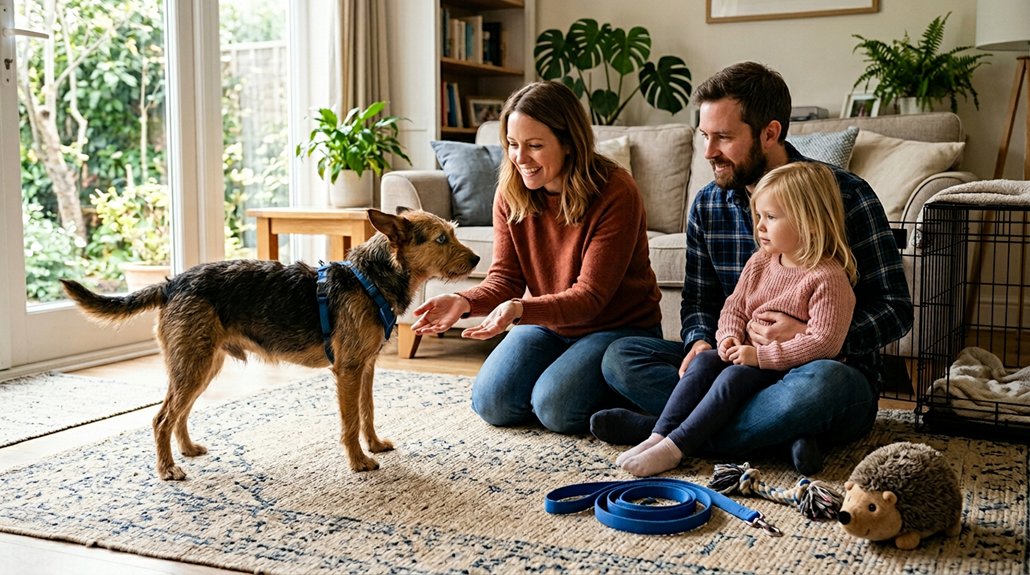
As a first-time dog adopter, know that long-term commitment and financial planning are key. Assess your lifestyle to find a compatible breed, and prepare your home for safety. Initial challenges like nervousness require patience and structure. Consistent training and understanding dog body language foster a strong bond. Utilize positive reinforcement to encourage good behaviors. Your dedication can ease changes and guarantee a fulfilling relationship. There’s more to discover about embracing this rewarding journey.
Key Takeaways
- Understand the long-term commitment and financial responsibilities of owning a dog.
- Choose a dog based on lifestyle compatibility, not just appearance.
- Prepare your home by removing hazards and pet-proofing spaces.
- Use consistent training and positive reinforcement to shape desired behaviors.
- Learn to read dog body language to better understand their needs and stress signals.
What Long-Term Dog Ownership Really Means
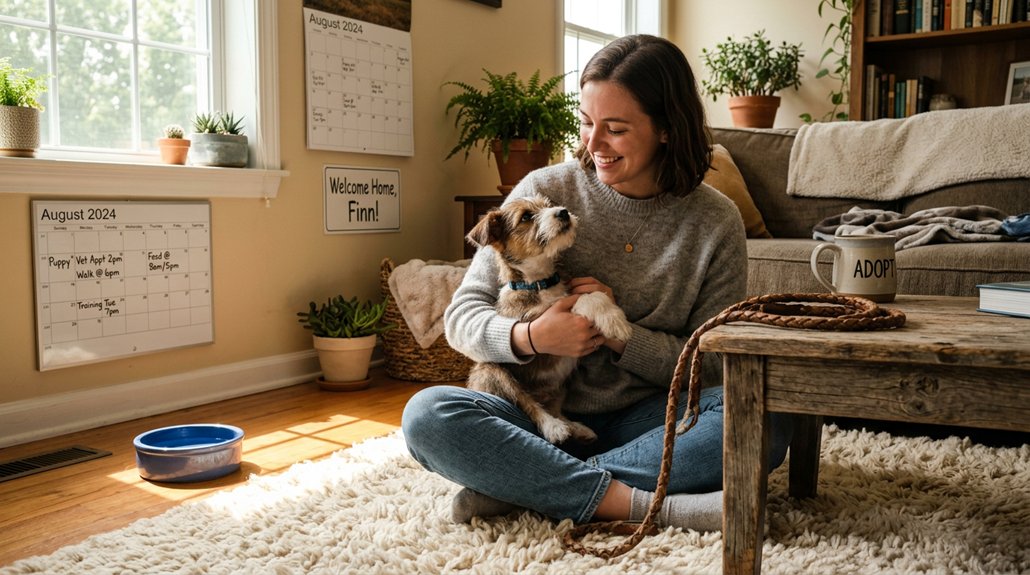
When you decide to adopt a dog, understanding the commitment involved is essential, given that a dog’s lifespan generally ranges from 10 to 15 years. You’ll need a stable environment and a genuine emotional commitment, as these are key to steering behavior expectations and any quirks arising from their past. Anticipate health implications with consistent veterinary care, covering everything from vaccinations to emergency treatments. Financial planning is significant—budget for food, supplies, training, and potential medical expenses. Consider the lifestyle impacts: daily routine adjustments must accommodate feeding, exercise, and social responsibilities to guarantee your pet’s well-being. Ultimately, adopting a dog isn’t just about companionship; it’s a long-term pact requiring responsibility and foresight.
Choosing the Perfect Dog for Your Lifestyle
Selecting the right dog to match your lifestyle involves more than just picking the cutest face; it requires a thoughtful assessment of your daily habits and living environment. Dog breed compatibility is key. Conduct an energy level assessment to guarantee breeds with higher activity needs won’t be a mismatch if your schedule is already packed. Here’s what to reflect on:
Finding the perfect dog involves assessing daily habits and living environment, beyond just choosing a cute face.
- Activity Level: Are you active or relaxed? High-energy breeds need exercise; low-energy ones suit calmer homes.
- Living Space: Do you have a spacious home or a cozy apartment? Larger dogs often need more room, while smaller breeds adapt well to limited space.
- Current Pets: Evaluate your existing pets and potential dog’s temperament for harmonious integration.
Engage with shelter staff for insights into temperament and background.
Preparing Your Home for Your New Furry Friend
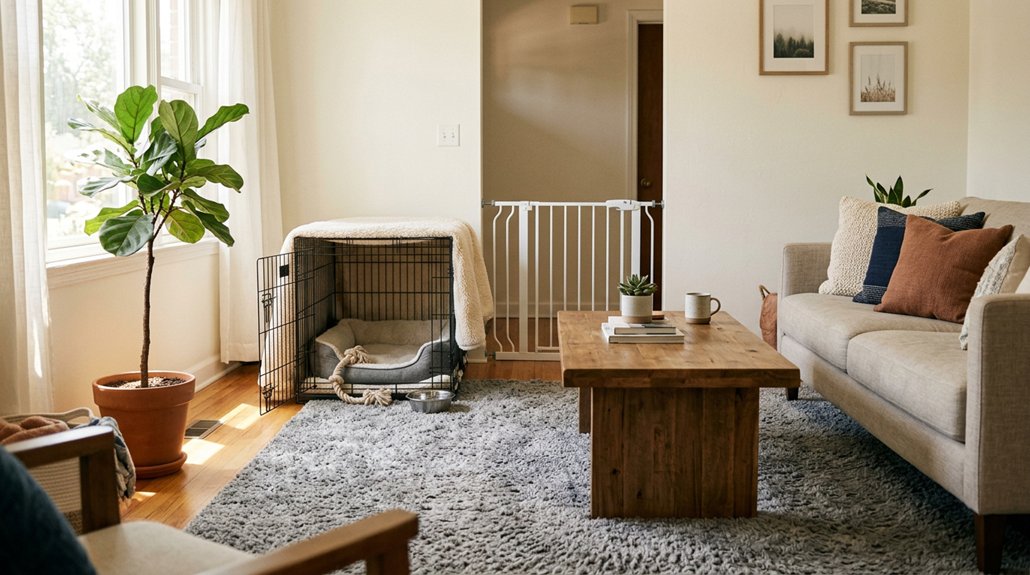
Before bringing your new furry friend home, it’s crucial to make certain your living space is ready to support a positive start for both of you. Prioritize safety measures by removing hazards and securing electrical cords. Create a designated space with essentials like a comfy bed, food bowls, and toys. Pet-proof your yard, checking for escape routes and toxic plants. Structure your dog’s environment with clear rules to establish boundaries.
| Essential Steps | Actions | Purpose |
|---|---|---|
| Safety Measures | Remove hazards, secure cords | Prevent accidents |
| Designated Space | Comfy bed, food/water bowls, toys | Comfort and routine |
| Yard Safety | Check for escape routes, toxic plants | Secure outdoor environment |
Stock up on supplies like an appropriately-sized crate, dog food, and grooming tools to aid in a smooth adjustment.
Navigating Early Challenges With Your New Dog
Although the early days with your new dog can be filled with joy, it’s important to anticipate the challenges that often accompany this adjustment period. Your dog might initially display nervousness or shyness, necessitating effective anxiety management and emotional support. To help ease this changeover:
- Designate a calm space: Create a secure environment for your dog to decompress, like a crate or cozy corner, providing emotional support as it acclimatizes to new stimuli.
- Gradual social exposure: Slowly introduce your dog to various social settings and household noises to minimize anxiety and understanding boundaries.
- Consistent training: Focus on basic cues and signals that foster communication, curbing any undesirable behaviors linked to past experiences and ensuring smoother interactions.
Understand that patience is your strongest asset during this period.
Establishing a Routine to Build a Strong Bond
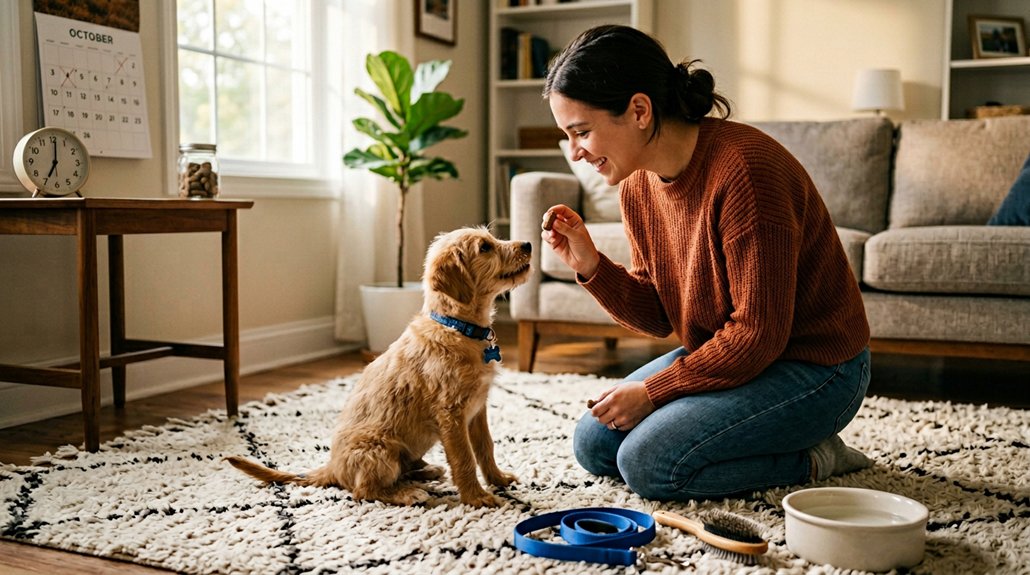
Establishing a routine is essential in forming a strong bond with your new dog, as it creates predictability that dogs thrive on. Begin with a consistent daily structure for feeding, walking, and playtime—crucial for anxiety reduction in shelter dogs. Set clear boundaries to help them understand household expectations, promoting routine benefits like positive behavior reinforcement. Introduce a safe space in your home where your dog can retreat, assisting in acclimation and providing emotional support. During training sessions, utilize positive interactions and reinforcement to foster trust building, strengthening your relationship. Gradually integrate structured activities and boundaries to enhance your dog’s sense of security. This methodical approach not only cultivates a harmonious connection but also guarantees lasting emotional support and communication.
Committing to Ongoing Training and Socialization
Consistent training and socialization are pivotal components in developing well-adjusted canine companions, enhancing both behavioral skills and social adaptability. Scientific research emphasizes starting socialization early, exposing your dog to diverse environments and stimuli to reduce anxiety and fear. Using positive reinforcement not only fosters a deeper bond but also makes the learning process more effective and rewarding for your dog.
Consistency Enhances Dog Behavior
When you consistently commit to ongoing training and socialization for your dog, you’re laying the foundation for successful behavioral development. Dogs thrive on a structured routine. Implementing scientifically-backed training techniques guarantees behavior consistency and routine benefits, improving your dog’s adaptability strategies. Socialization importance can’t be overstated, as it reduces anxiety and promotes confidence building.
Consider these steps:
- Establish a Reinforcement Schedule: Regularly reinforce commands to maintain behavioral clarity and establish clear communication.
- Integrate Structure Significance: Consistent routines build a sense of security, guiding your dog through expected behaviors and boundaries.
- Emphasize Consistent Socialization: Expose dogs to varied environments, enhancing their social skills and reducing anxiety.
Consistency is key—helping your dog adapt to structured expectations, ultimately promoting harmony in your shared life.
Social Skills Through Exposure
Building on the importance of maintaining consistent routines, enhancing your dog’s social skills requires ongoing exposure to varied settings and interactions. Through strategic socialization techniques, you can reduce your dog’s fear of new environments, people, and pets, creating a well-adjusted companion. Gradual exposure benefits your dog by fostering resilience; when faced with unfamiliar scenarios, dogs adapt and thrive. Enrolling in socialization classes or attending dog meet-ups offers controlled opportunities for learning and peer interaction, promoting behavioral growth. Consistent training reinforces your dog’s ability to engage appropriately, curbing reactive tendencies and encouraging positive interactions. Regular practice of commands and social experiences is critical, as learning remains an ongoing process. By committing to exposure and training, you’re investing in your dog’s lifelong behavioral success.
Positive Reinforcement Strategies
To foster a well-adjusted pup, integrating positive reinforcement into your training and socialization routines is essential. Utilizing strategies like clicker training enhances communication, precisely marking desired behaviors. Reward timing is significant; reward your dog immediately to cement the connection between action and reward. Here’s how you can effectively apply positive reinforcement:
- Consistency: Regularly practice commands and techniques. Routine helps dogs internalize behaviors, ensuring they understand expectations.
- Variability: Use a mix of treats, praise, and play. This not only keeps your pup engaged but also strengthens your bond.
- Socialization: As your dog encounters new people and environments, employ positive reinforcement. This encourages calm interactions, making experiences less stressful and more enjoyable for both of you.
Understanding Dog Body Language
Although often overlooked, understanding dog body language is pivotal for fostering a successful relationship between you and your canine companion. Canine emotions are intricately communicated through body signals, indicating their feelings and intentions. Recognize the four primary stress responses: fight, flight, avoid, and acceptance. Each response requires specific handling to guarantee safety for both you and your dog. Noticing a wagging tail and soft eyes reveals a relaxed dog, while stiff posture, raised hackles, or a lowered head can signal potential aggression. The scientifically-backed Dog Decoder app can be an invaluable resource for decoding these signals and enhancing your ability to communicate effectively. By understanding these cues, you’ll prevent misunderstandings and cultivate a stronger bond with your pet.
Tackling Behavioral Challenges With Patience
When tackling behavioral challenges with your new dog, patience and a structured approach are essential. By understanding canine body language, you’ll be better equipped to interpret stress signals, thereby facilitating smoother interventions. Employing positive reinforcement techniques such as treats and praise can greatly enhance trust-building and encourage desirable behaviors, setting the stage for your dog’s successful adaptation to the new environment.
Embrace The Adjustment Phase
Adjusting to a new home can be an intimidating experience for any dog, particularly for first-time adopters maneuvering this sensitive phase. Understanding the adjustment timeline is essential as it helps in setting realistic expectations. As their new environment becomes familiar, it’s vital to prioritize trust building. This journey demands dedication and an empathetic approach.
- Timeline Awareness: Dogs need varying lengths of time to adapt, ranging from a few days to several months. Patience is key.
- Trust Building: Utilize positive reinforcement to reward desirable behaviors and gradually introduce unfamiliar stimuli to foster confidence.
- Observant Patience: Be attentive to behavioral quirks that emerge. These are normal, indicative of comfort, and often addressed through consistent training.
Understanding Canine Body Language
Recognizing your dog’s body language is a fundamental skill that complements the adjustment phase, offering insights into their emotional state and intentions. Understanding canine emotions through body posture, tail signals, and behavioral cues allows you to detect stress indicators and respond appropriately. You should note the four primary stress responses: fight, flight, avoid, and acceptance. By honing your communication skills, you’ll foster emotional awareness and trust-building between you and your pet. Tools like the Dog Decoder app can be instrumental in enhancing your ability to interpret these signals. This proactive approach not only reinforces the bond with your dog but also helps prevent unwanted behaviors. By mastering these cues, you’re setting the stage for a harmonious living environment.
Positive Reinforcement Techniques
Harnessing the power of positive reinforcement can revolutionize your approach to training, enabling a healthier, trusting relationship with your dog. By employing reward-based learning, you motivate your dog to repeat desired behaviors. High-value treats increase training motivation, pushing your dog to engage enthusiastically. Start with basic commands like “sit” and “stay” to build an obedience foundation.
Consistency is key; use the same rewards and commands each session. Here’s how to get started:
- Choose High-Value Treats: Select enticing treats that your dog loves, enhancing their training motivation.
- Establish Clear Commands: Use simple, consistent verbal cues for clarity.
- Encourage Calm Behavior in Varied Settings: Gradually expose your dog to new environments, rewarding their calm behavior to ease anxiety and reduce behavioral challenges.
Embrace the Joy of Dog Adoption
Although it might seem intimidating at first, embracing the joy of dog adoption can transform your life in remarkable ways. The adoption benefits are profound, fostering emotional connections that enrich daily experiences. Scientific studies underscore how dogs offer unconditional love, enhancing emotional well-being and reducing stress. By adopting a shelter dog, you’re not just gaining a pet; you’re gaining a companion who turns everyday moments into cherished memories.
Engaging in activities like walks and cuddling establishes a strong emotional foundation between you and your new friend. The process of rescuing a dog is more than just adjusting to a new routine; it’s a celebration of companionship. While initial challenges exist, they’re eclipsed by the rewards of unconditional love and mutual understanding.
Practical Tips for a Seamless Transition
Creating a seamless change for your new dog begins with strategic preparation that’s rooted in behavioral science and veterinary insights. Equip yourself with a checklist that includes establishing a calm space, setting a routine, and procuring essential supplies to promote comfort and security. As your dog acclimates, introduce them gradually to their new environment, balancing exploration with calming techniques to prevent anxiety and guarantee a healthy adjustment.
Essential Preparations Checklist
When preparing for your first dog, a few essential steps can guarantee a smooth changeover for both you and your new furry friend. Understanding your initial supplies and safety measures is vital. Here’s what to focus on:
- Initial Supplies: Stock up on high-quality kibble, a properly sized crate, a comfy bed, and interactive toys. These items will provide comfort and stimulation, fostering a warm, welcoming environment.
- Safety Measures: Pet-proof your home by removing potentially hazardous items like unsecured electrical cords and loose rugs, especially if the dog isn’t housetrained. Secure dangerous objects to prevent accidents.
- Schedule Adjustments: Align your routine with your pet’s needs. Implement consistent feeding times, regular walks, and dedicated training sessions to establish a structured environment. Research local dog care resources for added support.
Gradual Adjustment Strategies
Since bringing a new dog home can be overwhelming, it’s crucial to approach the shift with patience and understanding. Start with a decompression period, allowing your dog a couple of weeks to settle. During this time, their anxious behaviors might not reflect their true personality. Establish a safe, calm space using crate training. Make the crate inviting—feed meals there to associate it with positive experiences. Introduce basic commands like “sit” and “leave it” during walks to provide structure while your dog acclimates to their new environment. Observe their reaction to high-value items, which can reveal comfort levels, guiding your acclimation strategy. Always rely on positive reinforcement, gradually exposing them to new experiences at their comfortable pace to cultivate trust.
Frequently Asked Questions
What Is the 3-3-3 Rule for Dog Adoptions?
The 3-3-3 rule is essential for understanding dog behavior during their adjustment period. Focus on training essentials, bonding techniques, health considerations, and socialization tips to ease the shift over three days, three weeks, and three months.
What Is the 7 7 7 Rule for Dogs?
Picture an Odyssey: the 7 7 7 Rule suggests your dog takes 7 days to acclimate, 7 weeks to bond, and 7 months to fully settle. Apply training techniques and thoughtful breed selection to cultivate this journey.
What Is the 10 10 10 Rule for Dogs?
The 10-10-10 rule outlines a dog’s adjustment timeline: 10 days to settle, 10 weeks for personality emergence, and 10 months to acclimate. Prioritize training basics and health tips for effective integration and well-being.
What Should a First Time Dog Owner Know?
Are you ready for the journey of dog ownership? Consider dog breeds suited to your lifestyle, learn training basics, schedule regular veterinary care, follow feeding guidelines, understand exercise needs, groom regularly, and recognize behavioral cues for effective socialization.
Conclusion
As you cradle your sleeping pup in the warm glow of twilight, remember that this journey is a tapestry woven with patience and love. Mastering the art of dog whispers through understanding body language, you’ll transform challenges into victories. A structured routine becomes a gentle lullaby, nurturing trust, while practical tips act as guiding stars. With each wagging tail, you’re embraced by joy, armed with science-backed wisdom, ready for the lifelong odyssey of dog ownership.