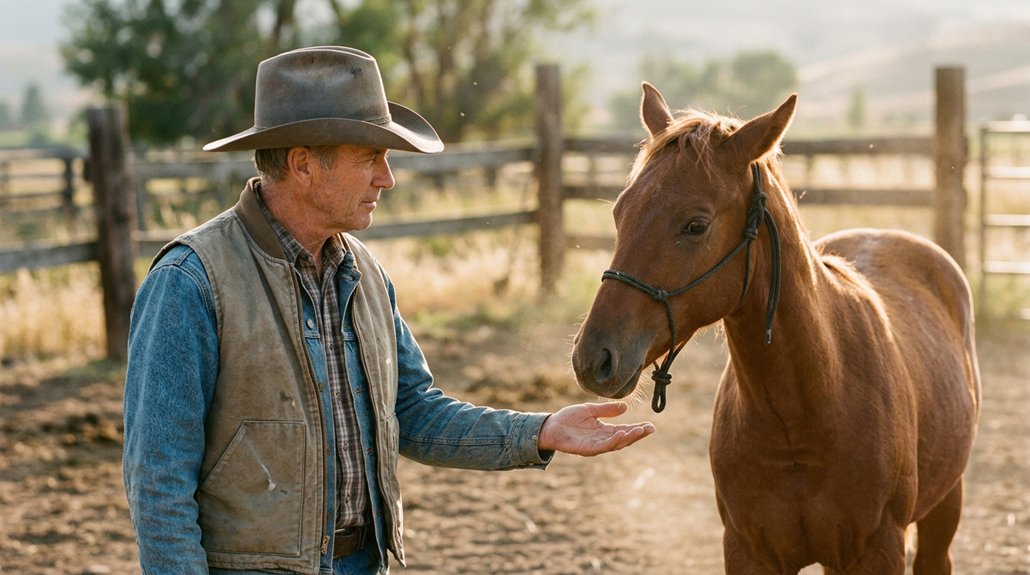
Building trust with a new horse involves a patient and consistent approach. Start by establishing a soothing routine with gentle grooming and hand walking. Guarantee their environment is stress-free by maintaining consistent feeding and exercise schedules. Practice effective groundwork with simple commands and reinforce them with treats. Kindness and careful observation are key—watch for signs of discomfort, like tense muscles or a raised head, and adjust your tactics accordingly. By doing so, you’ll nurture a meaningful, lasting bond.
Key Takeaways
- Establish a routine with calming grooming sessions to create positive associations.
- Use gentle, calming body language and soft tones to reassure the horse.
- Provide consistent schedules for feeding, grooming, and exercise to build predictability.
- Engage in groundwork exercises to enhance respect and responsiveness.
- Offer treats and engage in bonding exercises to foster cooperation and trust.
Why Trust Matters in Horse Training
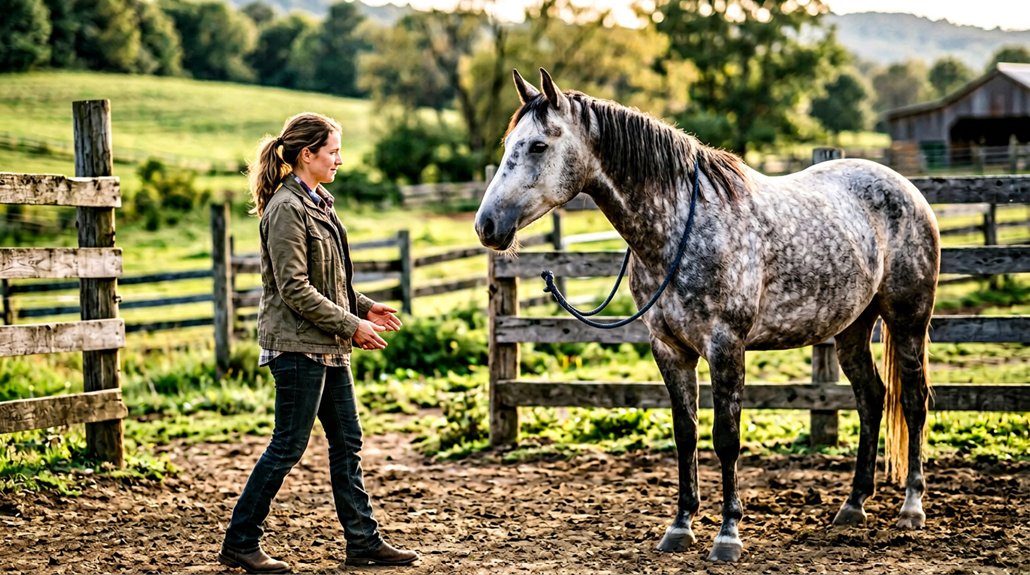
When you’re training a horse, trust is more than a nice-to-have; it’s the foundation for a harmonious partnership that transforms the animal into a willing participant rather than just a responder. Trust dynamics create an emotional connection between you and your horse, paving the way for safety, effective communication, and mutual enjoyment. Horses instinctively seek security, and when trust is absent, anxiety and safety concerns can escalate. Your ability to understand and interpret a horse’s emotional state depends on the strength of your bond. Consistent positive interactions build this trust, turning training into a cooperative experience. As trust grows, the horse becomes more open to learning, feeling secure and respected. This dynamic enhances the training experience markedly for both rider and horse.
First Steps to Building Trust
To foster trust with a new horse, start by establishing a calming routine through dedicated grooming time. Employ gentle grooming techniques that soothe the horse, reinforcing positive associations with your presence. Engage in hand walking away from other horses; this solo time helps the horse acclimate to your company and the surrounding environment.
| Aspect | Benefit |
|---|---|
| Grooming Techniques | Establishes a soothing, positive connection |
| Hand Walking | Acclimates the horse to new environments and builds security |
| Routine Consistency | Creates predictability, fostering a sense of security and understanding |
Use calming body language and soft tones, signaling safety and building trust. Offering treats encourages the horse to see interactions as rewarding. Consistency in these behaviors makes your horse feel understood and secure, which is critical for nurturing a lasting, trusting bond.
Ensuring a Stress-Free Horse Environment
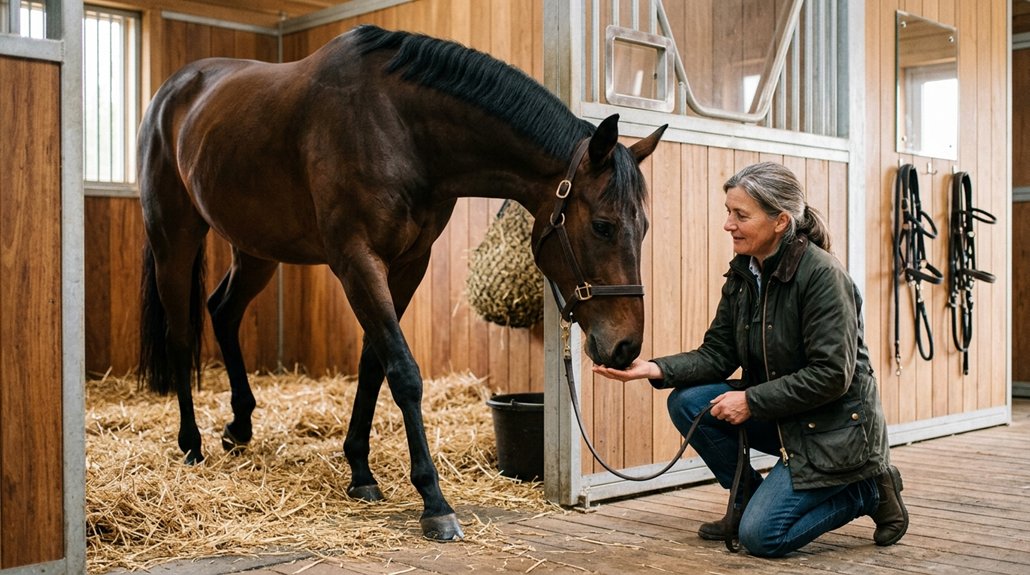
You’re starting on a rewarding journey of building trust with your new horse, and ensuring a stress-free environment is an essential foundation. Observing how the horse reacts to loud noises, sudden movements, or unfamiliar items can help you adjust the surroundings to prioritize its safety and well-being. By consistently providing a tranquil atmosphere with daily routines and familiar objects, you’ll foster confidence and a sense of security, aiding in the development of a strong bond.
Prioritizing Horse’s Safety
Creating a safe and stress-free environment for your horse is essential for building trust and ensuring their well-being. Start by providing a secure environment with keen hazard awareness—remove sharp objects and check fence stability. This creates a safe space significant for stress reduction. Routine stability is also important; establish consistent feeding, grooming, and exercise schedules to reduce anxiety. These predictable patterns offer a calming presence and foster a bond between you and your horse. Observe their behavior; ample space for movement avoids overcrowding-induced stress. When interacting, use calming body language and gentle tones—this reassures the horse, enhancing trust. Remember, your actions and environment shape the horse’s perception of safety, fundamental for trust development.
Minimizing Environmental Stressors
Having established a foundation prioritizing your horse’s safety, the focus naturally shifts to minimizing environmental stressors. Creating a calm and quiet environment allows your horse to relax and engage in positive interactions. Pay attention to sensory awareness—horses are sensitive to sudden movements and loud noises, which can trigger anxiety. Providing a safe, spacious area with shelter and fresh water supports their comfort and well-being, promoting environmental enrichment.
Introduce new stimuli gradually and carefully to prevent overwhelming them, fostering a secure and stress-free environment. It’s crucial to limit the presence of aggressive horses nearby, as they can contribute to stress and hinder trust-building. Observing these practices guarantees your horse feels secure, fundamentally laying the groundwork for a trusting relationship.
Maintaining Calm and Consistency
Although building a strong foundation for a horse’s comfort takes time and dedication, maintaining a calm and consistent approach is critical in guaranteeing a stress-free environment. Horses are keenly sensitive to your emotions; calm interactions are essential for fostering security. A relaxed demeanor reassures and positively influences your horse’s behavior. Implement routine benefits by establishing consistent feeding, grooming, and handling schedules. Such predictability reduces anxiety and confusion, enhancing their ability to trust. Create a safe space by minimizing distractions like loud noises, fostering comfort and positivity. Regular observation of your horse’s body language—looking for signs of stress or comfort—allows you to tailor your approach. This careful attention guarantees a calm setting, conducive to building lasting trust.
Effective Groundwork for Boundary Setting
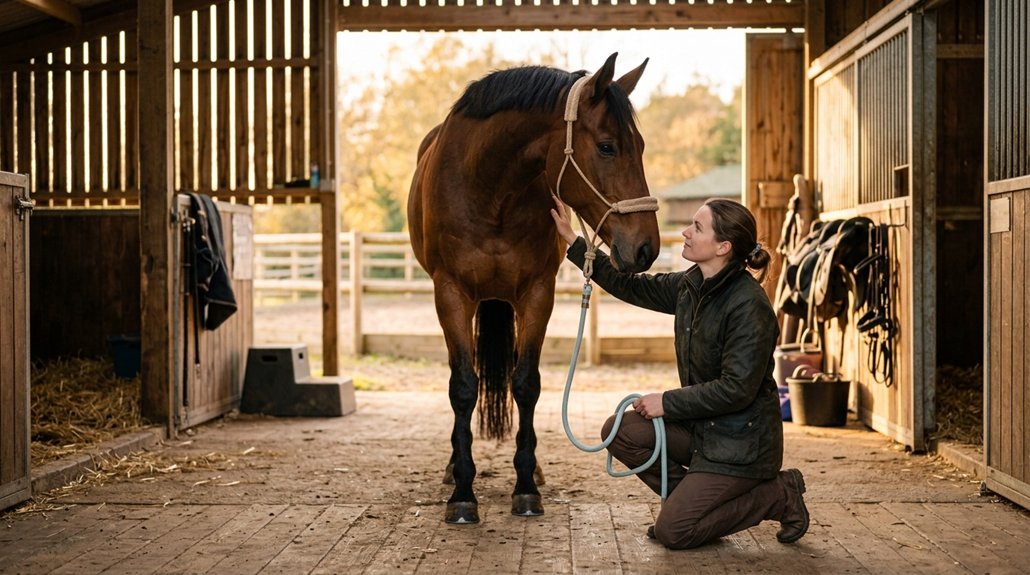
Establishing clear boundaries with your horse starts with effective groundwork exercises that serve as a cornerstone for communication and trust-building. By incorporating basic commands like leading, stopping, and backing up, you reinforce respect and responsiveness, laying the groundwork for trust exercises. Observing how your horse reacts to these simple tasks lets you understand its comfort levels and attentiveness.
Gradually introducing more complex groundwork exercises builds on these basic skills, boosting your horse’s confidence in your leadership. Consistent body language and cues during this process guarantee clarity in your intentions and boundaries, helping your horse understand its space. Regular sessions offer shared experiences, deepening your connection and fostering mutual trust, essential for any successful human-horse partnership. Remember, patience and observant communication are key.
Establish a Routine of Patience and Consistency
When building trust with your new horse, prioritizing consistent daily interactions is essential, as this creates a sense of security and predictability. As you establish a routine, cultivate patience by allowing your horse to gradually adjust to experiences, which fosters understanding and minimizes stress. Observing your horse during these interactions helps you intuitively adapt your approach, reinforcing a strong, cooperative relationship grounded in trust and respect.
Prioritize Consistent Daily Interactions
To foster trust in a new horse, it is crucial to prioritize consistent daily interactions, setting a foundation of patience and reliability. Engaging in scheduled routines like grooming and feeding allows the horse to adjust to your presence, gradually elevating its comfort levels. This familiar environment promotes relationship building as the horse begins associating your visits with positive experiences.
Observably, non-demanding activities such as gentle walks and soft-spoken interactions create a calming, non-threatening space, encouraging the horse to let its guard down. These consistent exchanges reduce anxiety by establishing clear expectations and offering repeated assurances of security. Over time, these daily interactions anchor your bond, enhancing understanding and paving the way for enriched training endeavors. Your dedication transforms uncertainty into trust.
Cultivate Patience Through Routine
Building upon the foundation of consistent daily interactions, cultivating patience through routine becomes essential to deepening your horse’s sense of security. Establishing a predictable pattern helps minimize anxiety, as predictability fosters trust. By incorporating regular grooming techniques and ground exercises, you create a stable environment that accommodates positive bonding experiences. Observing horse behavior during these moments is vital, as your approach should adjust based on their comfort and stress levels. Your consistency signals clear expectations, reinforcing trust. As you allow your horse to progress at its own pace, both stress and resistance decrease, encouraging a more cooperative partnership. Familiar activities, paired with gradually more complex tasks, bolster the horse’s confidence, demonstrating that patience facilitates mutual growth and understanding.
How Kindness Enhances Training
Even though horses can’t vocalize their thoughts, their behavior provides clear insights into the effectiveness of kindness in their training. Kindness benefits extend beyond emotional well-being, fostering a secure and engaging environment for learning. Practicing empathy training involves balancing kindness with fair discipline, ensuring trust and respectful behavior. When kindness is integrated into training, horses form positive associations, enhancing receptivity and cooperation. Additionally, this approach mitigates stress-related behaviors, ultimately enriching the riding experience for both horse and rider. Observing horses, you’ll find that nurturing a culture of kindness cultivates respectful relationships, bolstering mutual understanding and enhancing overall training processes. Consider these effects of kindness:
- Reduced stress-related behaviors
- Increased willingness to engage
- Improved mutual respect and trust
Using Treats to Build Horse Associations
When introducing treats into a new horse’s training regimen, you’re employing a strategic tool to foster trust and positive associations. Selecting appropriate treat types is essential. You might consider small, healthy options like apple slices or carrots. Initially, introduce these treats gradually to let your horse explore your presence without feeling pressure.
| Treat Types | Reward Timing |
|---|---|
| Apple Slices | After Desired Behavior |
| Carrots | Consistent & Gradual |
| Sugar Cubes | Post-Interaction |
| Peppermint | As Positive Actions |
The timing of the reward is key. Offering treats after desired behaviors strengthens their connection to positive actions. Consistent reward timing guarantees your horse associates every positive behavior with a treat, building a reliable pattern. With patience, hand-feeding techniques can also enhance the bond, encouraging voluntary approach.
Reading Your Horse’s Signals
Successfully employing treats to encourage positive behaviors is just the beginning of building a trusting relationship with your new horse. Understanding cues in your horse’s body language is key to deepening this bond. Observe their ear positioning, tail activity, and eye behavior to discern emotional states. Recognizing discomfort can prevent setbacks in training. Watch for:
- Tense muscles and raised head: Signs of anxiety.
- Lowered head and soft eyes: Indications of relaxation and comfort.
- Subtle shifts in weight or turning away: Signals of discomfort needing attention.
Assess their reactions to new stimuli and interactions, identifying trust levels and readiness. Respect their personal space; a defensive response often implies boundary discomfort. Developing this observational skill enhances mutual respect and understanding.
Strengthening Long-Term Trust Together
Building a strong, enduring bond with your horse relies on consistent and meaningful interactions that foster trust and comfort. By engaging in bonding exercises and trust games, you’ll cultivate cooperation, confidence, and deep connection. Regular routines like grooming or hand-walking, alongside deliberate groundwork exercises, instill a sense of security and understanding in your horse. Positive experiences, such as quiet moments or shared treats, reinforce emotional ties. Monitor your horse’s responses as you introduce it to new experiences, gradually expanding its comfort zone.
| Activity | Purpose |
|---|---|
| Grooming | Enhances comfort and care |
| Hand-walking | Builds familiarity |
| Groundwork exercises | Develops cooperation |
| Simple trust games | Increases confidence |
| Sharing quiet moments | Strengthens emotional bonds |
Consistency and empathy are your allies in achieving lasting trust.
Frequently Asked Questions
How Do You Get a New Horse to Trust You?
You get a new horse to trust you by employing bonding techniques like consistent grooming and hand walking. Engage in trust-building exercises, maintain clear boundaries, and attentively observe its body language to guarantee a secure, relaxed environment.
What Is the 1/2/3 Rule for Horses?
The 1/2/3 Rule involves trust-building techniques over one month focusing on familiarity, two months understanding horse body language and reactions, and three months developing a partnership. Regular interaction and patience are essential for successful bonding.
How Long Does It Take for Horses to Accept a New Horse?
Coincidentally, you’ll notice that integrating into horse herd dynamics can vary greatly, from a few days to weeks. Effective introduction strategies, including gradual steps and observing behavior, facilitate smoother acceptance, ensuring the new horse becomes a welcomed companion.
What Is “I Love You” in Horse Language?
In horse language, “I love you” is shown through body language, trust signals like mutual grooming rituals, and soft vocalizations. Calm eyes, relaxed ears, gentle nuzzling, and content vocalizations reflect their affection and bond with you.
Conclusion
Building trust with a horse is like nurturing a delicate bloom in your garden. It thrives with patience, observation, and understanding. As you initiate this journey, remember that each calm moment and gentle touch lays a cornerstone for a strong, lasting bond. With kindness as your compass and consistency as your guide, you’ll find the shared language that transcends words, weaving a beautiful tapestry of trust that can weather any storm.