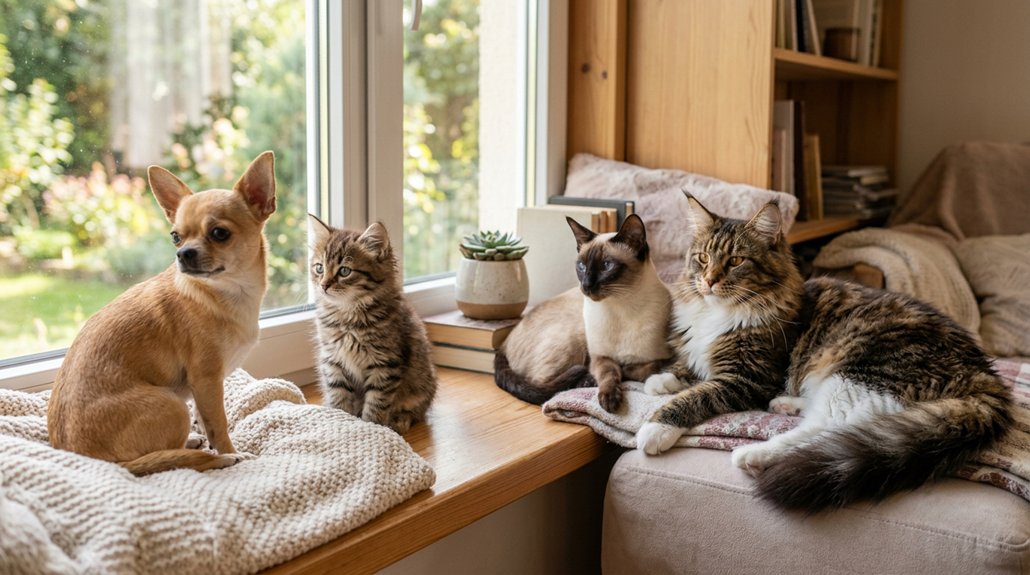
If you’re looking for a cat breed that gets along well with other pets, consider options like Maine Coons, Ragdolls, Siamese, Burmese, and Birmans. These sociable breeds are known to foster peaceful, harmonious environments. Mixed breed and rescue cats can also offer surprising compatibility due to their diverse backgrounds. Focus on individual personalities over stereotypes when integrating new cats. Understanding these traits will help you create a serene multi-pet home filled with joy and companionship. Explore further for more insights.
Key Takeaways
- Maine Coons are gentle giants known for playful interactions with dogs and other pets.
- Ragdolls possess a docile temperament, making them ideal for bonding without territorial conflicts.
- Sociable Siamese are extroverted and thrive in lively multi-pet environments.
- Burmese cats exhibit dog-like behaviors and engage playfully, fitting well into family settings.
- Birmans combine sociability with gentleness, perfect for active play and calm cuddling.
The Importance of Sociability in Cat Breeds
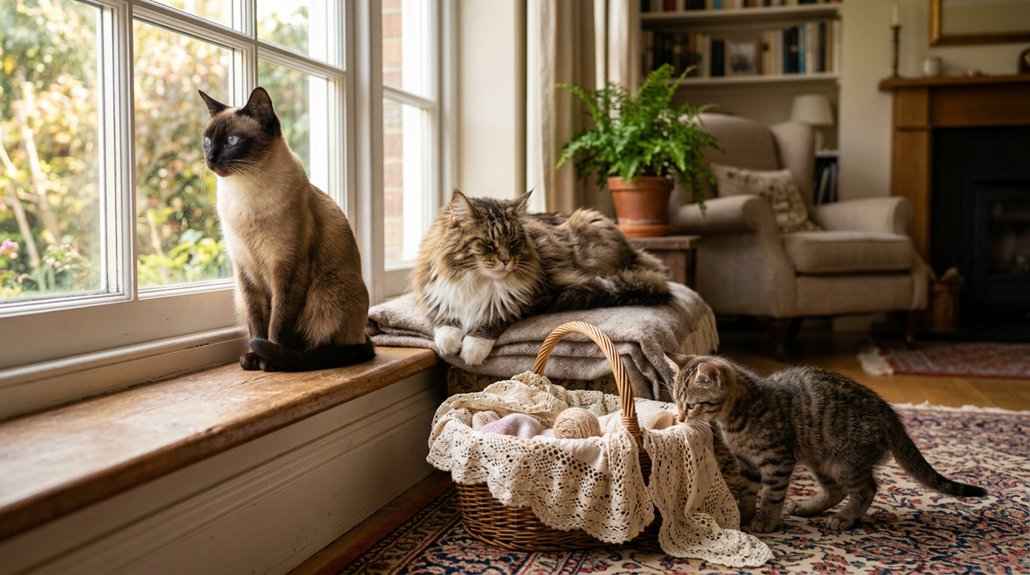
Understanding the importance of sociability in cat breeds can fundamentally transform your multi-pet household. Sociability benefits your pets by promoting harmonious interactions and reducing territorial conflicts. When you choose sociable breeds like Maine Coons and Ragdolls, who are inherently gentle and friendly, the dynamics in your home become more peaceful and satisfying for everyone involved.
It’s crucial to recognize how temperament influence plays a role. Early socialization is paramount. Cats exposed to diverse pets at a young age are more adaptable and acquire enhanced social skills. Breeds such as Siamese and Burmese exemplify this with their extroverted and playful nature, ensuring they thrive in multi-pet environments. Choosing cats with naturally sociable temperaments leads to a smoother integration and reinforces a serene home atmosphere.
Top 5 Cats for Dog-Friendly Homes
When adding a feline to a dog-friendly home, it’s important to take into account breeds known for their compatibility with canine companions. Maine Coons stand out as gentle giants, fostering playful interactions with both dogs and humans due to their adaptable nature. Ragdolls, with their docile temperament, offer affectionate companionship, bonding easily and avoiding territorial skirmishes. Siamese cats infuse energy and extroversion into the environment, enriching multi-pet homes with their lively presence. Burmese cats mimic dog-like behaviors such as fetching, engaging well in playful interactions and seamlessly fitting into family life. Finally, Birmans blend sociability with gentleness, ideal for dog-friendly homes where they thrive in both active play and relaxing cuddle times. Select these breeds to guarantee harmonious, affectionate companionship in your home.
Why Mixed Breeds and Rescues Can Surprise You as Social Pets
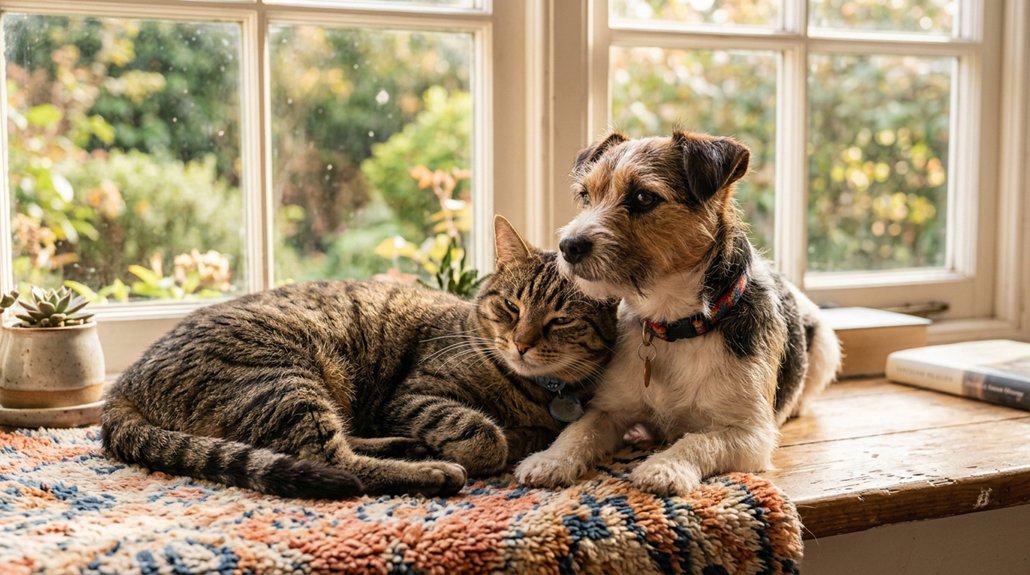
Even though they often come with unexpected dynamics, mixed breed and rescue cats can be some of the most social pets you’ll ever welcome into your home. Thanks to their diverse ancestries, mixed breed cats inherit a variety of social qualities that enable them to adapt to life with other pets. You’ll find that these mixed breed traits often result in unique companionship dynamics, fostering harmony in multi-pet households. On the other hand, rescue cats offer significant benefits because many have been fostered in environments with multiple pets. Such experiences guarantee they’re already socialized with both cats and dogs. Observing their behavior in shelters or foster homes can reveal compatibility insights, helping you choose a cat adapted to positive interactions and second chances with other pets.
Practical Tips for Integrating New Cats With Pets
Introducing a new cat to a household with existing pets requires patience and a strategic approach to guarantee harmony. Start with a scent introduction by allowing your pets to sniff objects with each other’s scents. This step helps in reducing territorial behaviors and sets the stage for a gradual integration. Remember, it’s essential to provide separate spaces for your new cat and existing pets. Here’s a three-step process:
Patience and strategy are key when introducing a new cat to existing pets for a harmonious home.
- Scent Exchange: Swap bedding or toys between animals to acclimate them to each other’s scent.
- Gradual Integration: Allow controlled, short, and supervised meetings, increasing interaction time slowly.
- Monitor and Reward: Observe interactions closely; use treats to reward calm, positive behavior.
These steps foster a harmonious environment, ensuring your furry companions coexist peacefully.
How to Match Cat Personalities With Existing Pet Dynamics
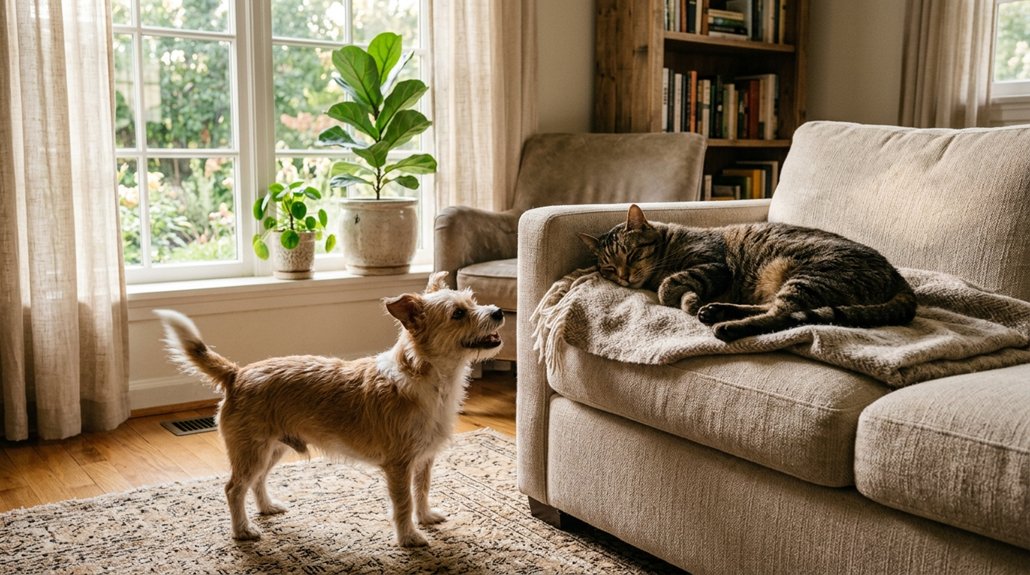
How do you guarantee a smooth match between a new cat and your existing pet dynamics? Begin with personality assessments. Identifying compatibility is key, starting with an understanding of each pet’s persona. Existing energetic pets might pair well with breeds like Bengals, known for their high energy levels. Conversely, laid-back pets could find harmony with a serene British Shorthair or Persian. The friendly nature of Ragdolls or Maine Coons can blend nicely into most situations. Gradual introductions are essential—monitor, and observe interactions closely. Prioritize individual personalities over breed stereotypes; a non-aggressive cat might integrate more peacefully. Early socialization plays a pivotal role—a kitten raised in a multi-pet environment likely adjusts with less fear or aggression, ensuring household harmony.
Frequently Asked Questions
What Cat Breed Is Best With Other Cats?
You’ll find that sociable breeds like the Ragdoll, Burmese, and Maine Coon excel in feline friendliness, promoting harmony in multi-cat households. Their playful, affectionate nature guarantees thriving relationships, fostering an enriching environment for all involved.
What Is the 3-3-3 Rule With Cats?
The 3-3-3 rule has helped 80% of adopted cats adjust smoothly. During their adjustment period, you should offer patience and safe spaces. Feline socialization tips like gradually introducing environments can make your cat feel more at home.
What Is “I Love You” in Cat Language?
“I love you” in cat language involves cat communication through actions like slow blinking, purring near you, rubbing head against you, and kneading paws. Recognizing these signs shows your cat’s affectionate bond with you.
What Annoys Cats the Most?
Loud noises and sudden movements can be particularly annoying to cats. They cherish routine and quiet. Your actions, if unpredictable or intrusive, can disrupt their peace, causing them stress or anxiety. Always approach them gently and calmly.
Conclusion
In the grand circus of pet dynamics, finding a cat that’s as sociable as a dog might seem like chasing a unicorn. Yet, with a mix of top breeds and the occasional rescue surprise, harmony isn’t just a fairy tale. Remember, integrating new cats with existing pets isn’t rocket science—more like a delicate dance. Ironically, sometimes the pet labeled as ‘aloof’ becomes the star performer in the multi-species household symphony. Who knew cats could be such team players?