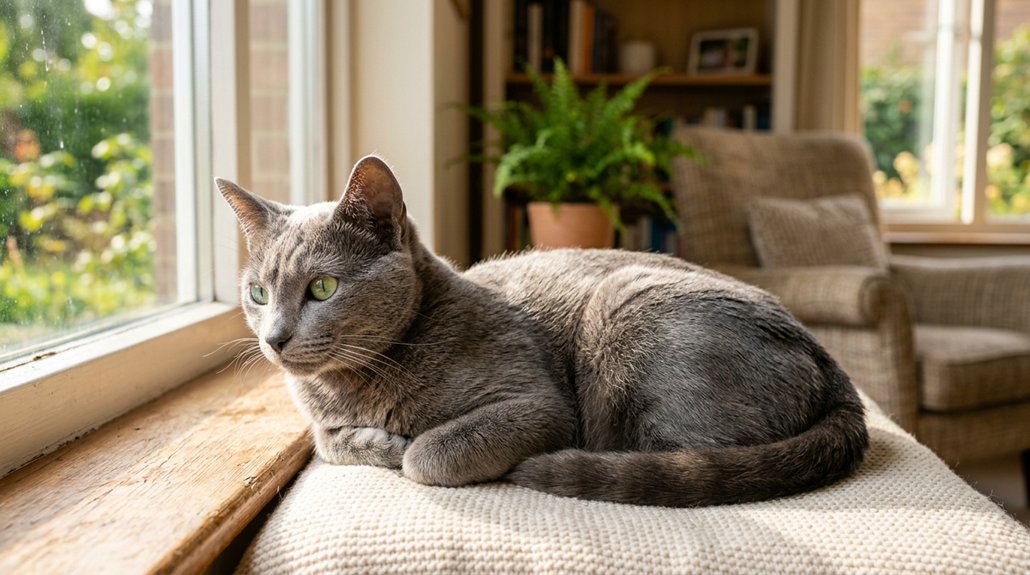
For low-shedding cat breeds that are easier to manage, consider the Sphynx, Cornish Rex, or Devon Rex. These breeds produce fewer allergens and require minimal grooming. While they aren’t truly hypoallergenic, their low shed can help reduce allergens in your home. Regular grooming and cleaning are key to maintaining skin health and managing dander. By understanding individual care needs and sensitivities, you can choose a breed that’s right for you and learn more about effective allergen management methods.
Key Takeaways
- Devon Rex cats are low-shedding and require minimal grooming, making them easy to manage.
- Burmese cats are low-shedding, generate less dander, and need minimal grooming attention.
- Sphynx cats need consistent bathing for skin care but shed little, simplifying allergen control.
- Cornish Rex cats thrive with regular interactive play, balancing easy maintenance and low shedding.
- Bengals are affectionate with low grooming needs, ideal for families seeking low-shedding pets.
Understanding Low-Shedding Cat Breeds
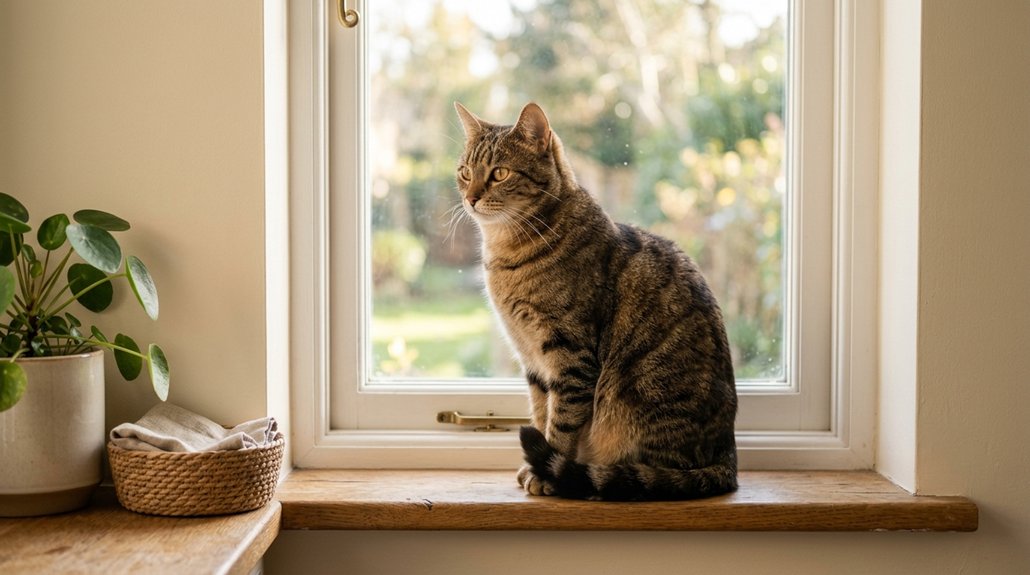
How well do you know the concept of low-shedding cat breeds? These breeds, including the Sphynx, Cornish Rex, and Devon Rex, offer significant low shedding benefits, particularly in households where reducing allergens and hair accumulation is critical. Although no breed is entirely hypoallergenic, these cats can produce fewer allergens, ideal for those with mild allergies. Compare breeds like Burmese and Birman, known for their affectionate natures and manageable shedding, which are excellent for families. Regular grooming routines, including brushing and bathing, are essential for maintaining skin health and managing dander. Owners of breeds like Russian Blue and Siamese enjoy benefits like less frequent cleaning due to reduced hair, exemplifying the practical allure of low-shedding cat breeds.
Ever Wonder Why Cats Aren’t Truly Hypoallergenic?
While low-shedding cat breeds offer numerous advantages for reducing hair accumulation, it’s important to understand why no cat can be classified as truly hypoallergenic. All cats produce the Fel d 1 protein, a primary allergenic protein source found in their skin, saliva, and urine. This remains true even for breeds like the Sphynx, challenging allergen myths by demonstrating that hairlessness doesn’t equate to hypoallergenicity. Even low-shedding cats can trigger reactions due to dander, microscopic skin flakes. Some breeds, such as the Siberian and Balinese, are known to produce less Fel d 1, but individual sensitivities vary. To manage allergies, consider your reaction to this protein source and consult an allergist, as complete avoidance is the most effective strategy.
Notable Low-Shedding Breeds for Allergy Sufferers
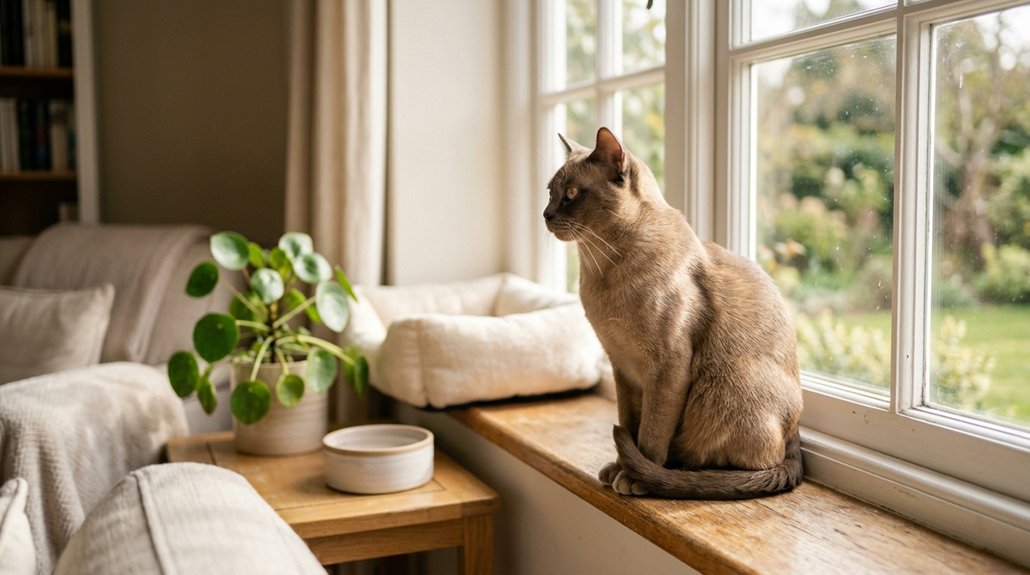
- Devon Rex: Known for its playful nature and short, curly coat, it sheds infrequently.
- Burmese: Their short coats necessitate minimal grooming and they generate less dander.
- Bengals: Affectionate and requires minimal grooming, ideal for families with sensitivity concerns.
While no breed is entirely hypoallergenic, choosing low-shedding types can help alleviate allergy trigger exposure.
Caring for Low-Shedding Hairless Breeds
When caring for low-shedding hairless breeds like the Sphynx and Peterbald, it’s essential to implement a consistent bathing regimen to manage excess skin oils, as their fur-free skin doesn’t absorb these naturally. Regular inspection and gentle cleaning can help prevent irritations and guarantee your cat’s skin health, as allergens from their skin and saliva contribute to home accumulation. Additionally, providing adequate warmth can support their well-being, given their vulnerability to temperature changes and skin sensitivities.
Essential Grooming Practices
Although hairless cat breeds like the Sphynx are renowned for their low-shedding properties, they require specific grooming practices to maintain ideal skin health. Understanding grooming frequency is crucial to prevent skin conditions. Bathe your Sphynx every 1-2 weeks to remove residual oils using gentle, hypoallergenic soap to avoid irritation. Cleaning the ears regularly is essential, given their tendency to accumulate wax and debris due to moisture exposure. Despite minimal hair, allergens can still be present, making frequent vacuuming necessary.
- Use soft, non-abrasive tools for gentle exfoliation, promoting healthy skin.
- Regular ear cleaning prevents wax buildup and debris accumulation.
- Maintain a clean environment through systematic dusting and vacuuming.
Following these measures guarantees effective care and reduces potential dermatological issues in your hairless feline.
Managing Skin Oils
Managing skin oils in hairless breeds like the Sphynx or Peterbald necessitates a meticulous approach to grooming. These cats require regular bathing to manage skin oil accumulation and prevent irritation. Ideally, aim for a bathing frequency of every one to two weeks. Use hypoallergenic, gentle shampoos—formulated for sensitive skin—to avoid causing irritation. After bathing, thoroughly dry your cat and consider applying a light moisturizer, particularly if your environment is dry. For interim care, a damp cloth can efficiently manage skin oil management by removing surface dirt and oil, reducing the need for frequent baths. This routine maintains skin health, minimizes acne risk, and controls allergen levels in your home, making these breeds easier to manage.
Tips to Minimize Allergens
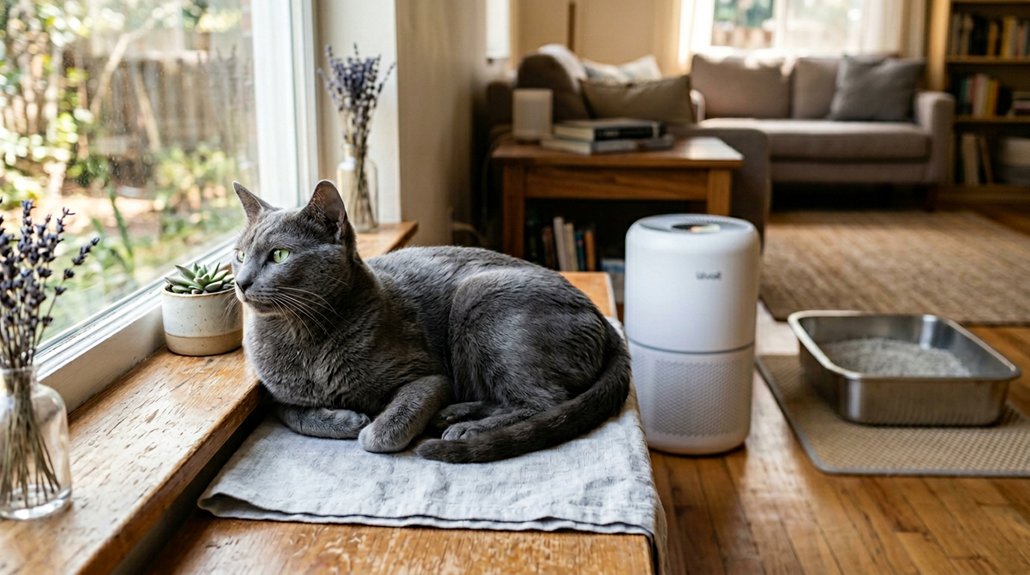
Ensuring a low-allergen environment with a cat starts with regular grooming, as this practice not only removes loose hair but substantially reduces dander levels—a key allergen in the home. Employ effective grooming techniques at least once a week to contribute to allergen reduction. Bathing your cat every few weeks also helps eliminate skin oils and dander; remember to use cat-specific shampoos to prevent irritation. Further reduce allergens by implementing:
- Air purifiers with HEPA filters: These trap airborne allergens, promoting a cleaner home.
- Cat-free zones: Establish areas, like bedrooms, where those with allergies can be more comfortable.
- Routine cleaning: Regular vacuuming and dusting effectively remove accumulated dander.
Integrating these strategies supports a healthier environment for those sensitive to allergens.
Breed Personalities: Playful and Affectionate Options
When choosing a cat breed, focusing on personality traits can greatly enhance the harmony between pet and owner, especially for those seeking playful and affectionate companions. Consider breeds like the Devon Rex, known for its curious playful personalities and love of interactive play. Burmese cats exhibit a dog-like, affectionate nature, perfect for snuggling post-fetch games, strengthening your bond. Cornish Rex cats thrive with their sweet, affectionate temperaments, charming families through playful antics. Additionally, the unique Sphynx breed forms deep attachments and prioritizes playful interactions with owners, reinforcing their sociable tendencies.
| Breed | Playful Personalities | Affectionate Companions |
|---|---|---|
| Devon Rex | Interactive play | Curious personality |
| Burmese | Enjoys fetch | Dog-like demeanor |
| Cornish Rex | Small, endearing behavior | Sweet temperament |
| Bengal | Energetic activities | Striking appearance |
Compare Low-Shedding Breeds by Activity Level and Care Needs
When comparing low-shedding cats by activity level and care needs, you’ll find the Devon Rex and Cornish Rex are both active, requiring regular playtime, though their grooming needs are minimal due to their unique coats. On the other hand, the Sphynx requires more extensive care with regular bathing due to its lack of fur, despite its sociable nature. For a more independent and low-maintenance option, the Russian Blue offers a gentle temperament with minimal grooming, contrasting with the playful yet manageable grooming needs of the Burmese.
Activity Levels of Breeds
While evaluating low-shedding cat breeds by activity level and care needs, it’s vital to recognize the energy requirements and interaction demands of each breed. Sphynx cats exhibit high exercise engagement, thriving with consistent playtime to satisfy their interactive nature. Similarly, Cornish Rex cats are active and require substantial play, aligning well with families or those with an active lifestyle. The highly inquisitive Devon Rex also necessitates frequent interaction, fostering owner-pet bonds through ample social exchanges.
- Sphynx Cats: Require regular playtime and significant interaction.
- Cornish Rex Cats: Thrive on interactive games and extensive play sessions.
- Devon Rex Cats: Highly active, emphasizing social interaction and bonding.
For breeds like Burmese, active companionship is important, while Bombay cats balance playful activity with leisure.
Care and Maintenance Tips
Several low-shedding cat breeds present diverse care and maintenance needs, each tailored by their activity level and coat type. For example, the Sphynx requires regular baths due to skin oils, increasing its care needs. In contrast, Russian Blue’s dense coat only needs occasional brushing. Active breeds like Devon Rex benefit from interactive play to maintain health, whereas the Burmese prefers affectionate interactions post-play. It’s critical to monitor each breed’s diet and health closely, ensuring the best care. Regular cleaning routines can help manage allergens effectively. Below is a comparison table of specific care needs.
“`markdown
| Breed | Key Care Tips |
|---|---|
| Sphynx | Regular baths, health monitoring |
| Devon Rex | Interactive play, occasional grooming |
| Russian Blue | Minimal brushing, diet considerations |
| Burmese | Affection-based care, health monitoring |
| American Wirehair | Light grooming, allergen management |
“`
How to Decide Which Breed Suits Your Allergies?
Choosing the right cat breed for your allergies can be a meticulous process requiring careful consideration of hypoallergenic options. Begin with a personal allergy assessment to understand your specific triggers better. Researching hypoallergenic breeds like the Russian Blue and Devon Rex may reveal options producing fewer allergens. This strategy enhances your approach to managing allergies effectively.
Opt for hypoallergenic cat breeds like Russian Blue and Devon Rex to manage allergies effectively.
To refine your choices further:
- Cat interaction experiences: Visit local shelters to meet various breeds, honing in on real-time allergic responses.
- Professional consultation: Seek advice from an allergist for personalized management strategies.
- Maintenance routines: Embrace regular grooming and cleaning to reduce dander, essential for all breeds.
Lifestyle compatibility also plays a role; remember that while playful breeds like the Cornish Rex thrive in active homes, others may enjoy tranquility.
Frequently Asked Questions
What Is the Friendliest Cat That Doesn’t Shed?
You’re looking for both a friendly and low-shedding feline, and the Devon Rex excels in these areas. Known amongst sociable breeds, it boasts a friendly personality, thriving on interaction, and requiring minimal grooming due to its curly coat.
What Is the 3-3-3 Rule of Cats?
Imagine a delicate dance evolving over time—the 3-3-3 rule defines a cat’s adjustment period. Use feline behavior tips to nurture them: allow space initially, encourage exploration next, and await genuine interaction by month three.
What Annoys Cats the Most?
Cats are most annoyed by environmental stressors like loud noises and sudden changes disrupting their feline territory. Unfamiliar scents and overcrowded spatial dynamics also trigger anxiety, as do forced interactions or handling contrary to their preference.
How Do Cats Say I Love You With Their Eyes?
Ironically, cats express love not through grand gestures but subtle cat eye communication. Feline body language, like slow blinking or “cat kisses,” signifies trust and affection. This instinctual behavior, backed by research, strengthens your bond remarkably.
Conclusion
So, you’ve ventured into the delightful world of low-shedding cats, hoping to keep sneeze-fests at bay. Congratulations on choosing a pet that simultaneously defies nature and supports your love for breathing easily! As you navigate choosing between a sleek Sphynx or a cunning Cornish Rex, remember that achieving a sterile, allergen-free environment is as likely as teaching a cat quantum physics. Just embrace the dander-laden chaos, and revel in owning a sophisticated hypoallergenic enigma.