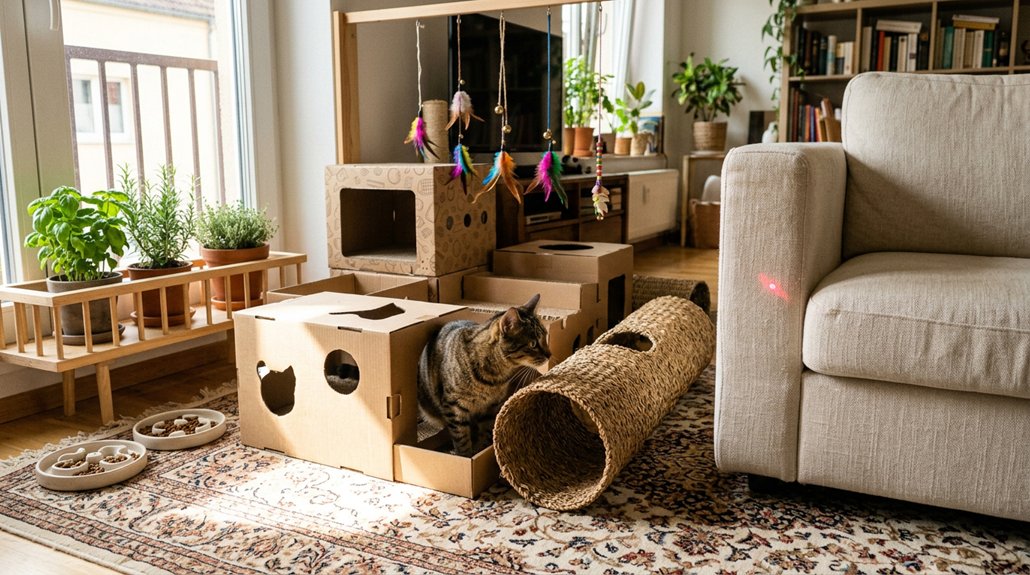
To keep your cat mentally stimulated at home, integrate scent and puzzle feeders to enhance cognitive engagement during meals. Utilize treat-dispensing toys and electronic interactive devices to evoke natural hunting instincts. Create vertical spaces with shelves and perches for environmental enrichment. Rotate toys regularly and conduct supervised play sessions to sustain interest and prevent boredom. Providing various stimuli encourages physical activity and problem-solving skills. Discover deeper insights into ideal feline mental health strategies.
Key Takeaways
- Introduce puzzle feeders to enhance cognitive engagement while transforming mealtime into an interactive, mentally stimulating activity.
- Utilize interactive toys and regular play sessions to mimic natural hunting behaviors, boosting mental and physical stimulation.
- Rotate toys frequently and incorporate scent enrichment to maintain curiosity and prevent boredom in your cat.
- Create a stimulating environment with vertical spaces and varied stimuli to promote exploration and mental well-being.
- Schedule supervised play sessions multiple times daily to satisfy natural instincts and enhance problem-solving skills.
Understand and Mimic Your Cat’s Natural Instincts
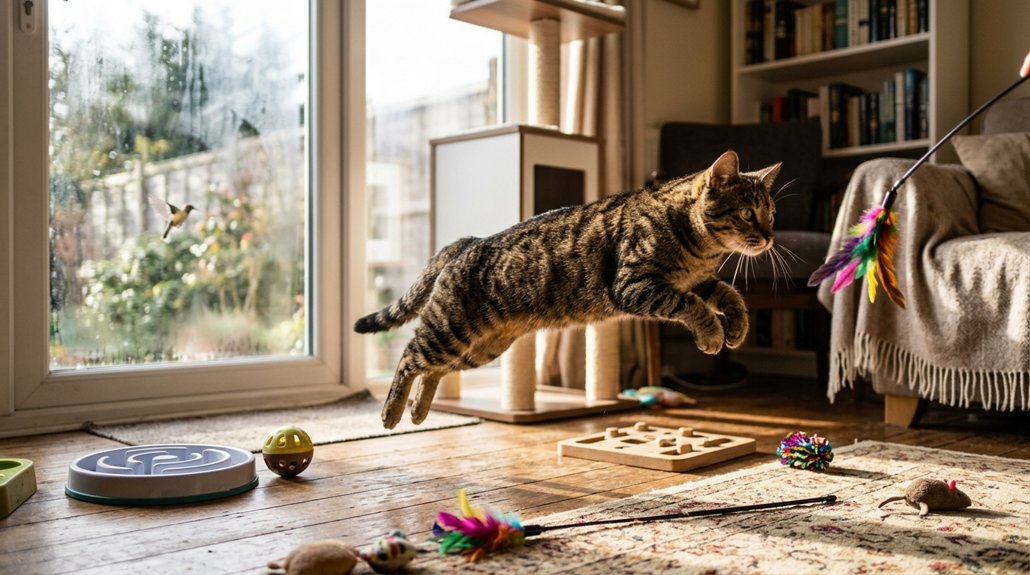
Although cats have been domesticated for thousands of years, understanding and mimicking their natural instincts is essential for their mental health. One effective method is scent enrichment; utilize treat-dispensing toys infused with catnip to appeal to their olfactory senses, engaging their hunting instincts. Implement hunting simulations to stimulate your cat’s prey drive; strategically hide treats or toys, allowing them to stalk, pounce, and chase as they would in the wild. Such activities not only satisfy innate behaviors but also enhance cognitive function through problem-solving. Additionally, diversifying these activities with puzzle feeders during mealtime increases feline engagement, ensuring continuous mental stimulation. By replicating these instinctual activities, you cater to their evolutionary needs, promoting behavioral health and overall well-being.
Add Fun With Interactive Toys
When considering the integration of interactive toys into your cat’s routine, it is important to acknowledge the mental and physical benefits these devices can offer. Puzzle feeders and treat-dispensing devices present interactive challenges that promote cognitive development by enhancing problem-solving skills and mimicking hunting behavior. This type of toy engagement not only stimulates your cat’s instinctual drives but also provides an enriching environment that prevents boredom.
Additionally, electronic interactive toys introduce unpredictability, encouraging chasing and pouncing behaviors. To optimize this stimulation, engage your cat with these toys for at least 10–15 minutes, multiple times daily. Regularly rotating toys is vital for maintaining novelty and interest. By observing your cat’s preferences, you can select toys that sustain both mental and physical activity effectively.
Use Vertical Spaces for Mental and Physical Engagement
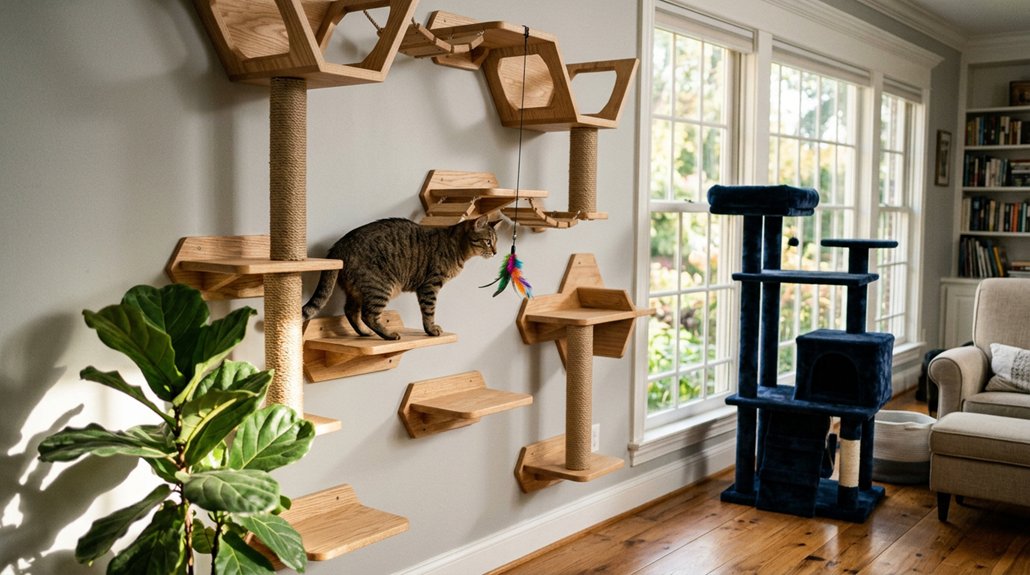
While interactive toys offer substantial mental engagement for your feline, incorporating vertical spaces provides an additional dimension of cognitive and physical enrichment. Cats’ natural climbing instincts are satisfied through strategically planned shelf placement and elevated structures. By creating climbing routes that include cat trees and wall-mounted shelves, you foster exploration, enhancing cognitive function. Elevated perches allow for observation, reducing stress and satisfying predatory instincts. Integrating vertical spaces contributes to a sense of security, offering mental well-being and control over their environment.
| Emotion | Action | Benefits |
|---|---|---|
| Curiosity | Exploring climbing routes | Enhanced cognitive function |
| Security | Elevated shelf placement | Reduced stress |
| Happiness | Strategic perch observation | Mental well-being |
Regularly rotating these spaces maintains interest and engagement.
Schedule Play Sessions With Wand Toys
Engaging in regular play sessions with wand toys is essential for maintaining your cat’s mental and physical health. These playtime benefits include stimulating your cat’s hunting instincts through interactive engagement, as wand toys mimic prey movements. Aim for 10–15 minute sessions, adjusting based on your cat’s age and energy level to optimize engagement without exhausting them. These toys provide a safe distance during interactive play, minimizing risks for injury from scratches or bites. Rotate and switch out wand toys regularly to sustain interest and excitement, preventing toy fatigue. Always supervise play sessions to guarantee safe play, preventing ingestion of small parts while allowing your cat to express natural pouncing behaviors clinically recognized for enhancing mental stimulation.
Offer Optimal Window Views for Stimulation
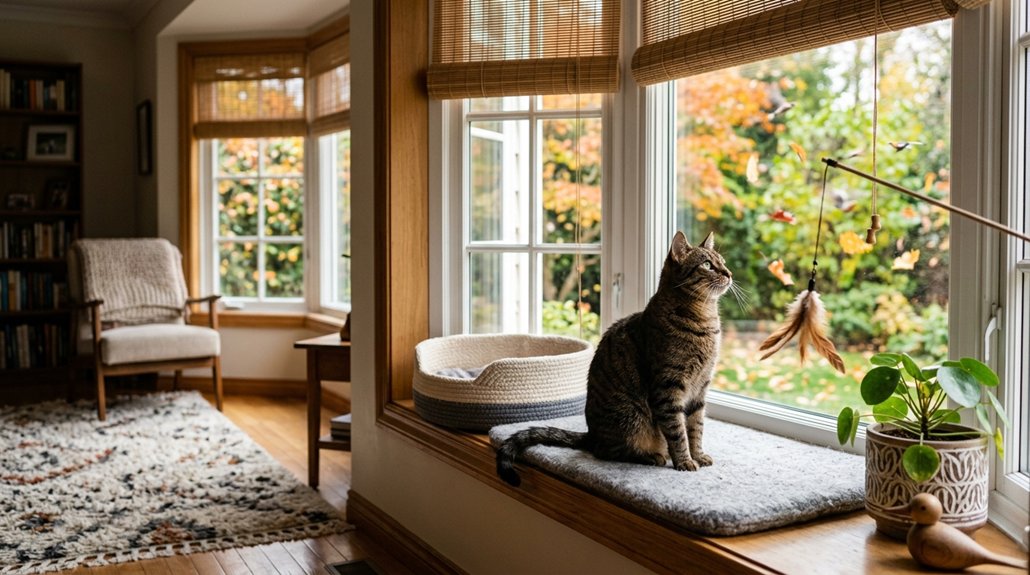
To enhance your cat’s mental stimulation and satisfy their predatory instincts, consider setting up comfortable window perches that allow them unobstructed views of outdoor wildlife. These vantage points not only facilitate engagement with the ever-changing outdoor environment, but also encourage natural climbing behavior by incorporating shelves or hammocks. Make certain that windows are securely fastened to provide a safe space where your cat can captivate their curiosity with the natural sights and sounds of passing birds and other animals.
Setting Up Window Perches
Creating an engaging environment for your cat begins with strategically setting up window perches that offer varied and stimulating views of the outdoors. It’s essential to evaluate window safety and perch heights. Confirm window ledges are secure and support your cat’s weight with non-slip surfaces, minimizing the risk of accidents during jumping or lounging. Position perches at multiple heights to satisfy climbing instincts and provide diverse vantage points for territory observation. Keep your cat’s surroundings engaging by rotating perches or adding new elements periodically.
To further enhance safety:
| Factor | Considerations | Solutions |
|---|---|---|
| Window Safety | Preventing falls and escapes | Use screens/enclosures |
| Perch Heights | Climbing and surveying behavior | Various levels |
| Secure Surfaces | Non-slip for stability | Textured materials |
Regularly inspect all setups for wear and tear to verify continued safety.
Engaging With Outdoor Wildlife
While providing indoor stimulation is essential, the integration of outdoor wildlife into your cat’s daily environment can considerably boost mental enrichment. Establishing comfortable perches near windows guarantees optimal bird watching and outdoor observation, stimulating natural predatory instincts. Engaging with the dynamic interplay of wildlife—such as the flurry of birds or scurrying squirrels—alleviates boredom, providing substantial cognitive enrichment. Position the perch strategically to maximize views, incorporating diverse outdoor scenes to maintain sensory engagement and mitigate stress. Observing seasonal changes also enhances environmental connectivity, offering a tranquil, ever-changing vista. Collectively, these measures promote your cat’s psychological wellness, harnessing natural curiosity constructively, thereby fostering an enriched, mentally stimulating environment conducive to feline well-being.
Enhance Meals With Puzzle Feeders
Puzzle feeders offer an extraordinary way to enhance your cat’s mealtime by integrating mental and physical stimulation. The puzzle feeder benefits are multifaceted; they encourage natural hunting instincts, requiring deft manipulation to access food. This not only transforms feeding into an engaging activity but also promotes feeding engagement by keeping your feline focused and involved. Clinically, these devices can prevent fast eating, reducing obesity risk through moderated food intake. By stimulating cognitive function and honing problem-solving abilities, puzzle feeders act as a mental workout, decreasing boredom and its associated behavioral issues. Incorporating puzzle feeders into your cat’s routine substantially elevates overall feline well-being, providing thorough enrichment that aligns with their innate behavioral repertoire.
Refresh Interest by Rotating Toys Regularly
By frequently rotating your cat’s toys, you can greatly enhance play variety, which is essential for cognitive stimulation and preventing boredom. The introduction of new or repositioned toys taps into cats’ natural hunting instincts, encouraging exploration and active engagement. Implementing bi-weekly toy rotations not only fosters mental enrichment but also mitigates the risk of your cat developing destructive behaviors due to monotony.
Frequent Toy Rotation
A strategic approach to maintaining your cat’s mental engagement involves frequently rotating their toys. Implementing an evidence-based rotation protocol can effectively prevent boredom by reintroducing novelty. Structured toy storage helps accommodate your cat’s preferences, allowing you to stow and retrieve a diverse range of stimuli. Regularly switching out toys, ideally every few days, guarantees that your feline companion can rediscover familiar items with a renewed interest, greatly enhancing mental stimulation.
Incorporate a varied mix of interactive, puzzle, and teaser toys during each rotation to address different play styles and instigate instinctual behaviors. Consider repositioning or hiding toys to simulate a treasure hunt, effectively fostering exploration and mimicking natural hunting behaviors. This strategy not only sustains your cat’s enthusiasm but also supports balanced physical and mental exercise.
Enhance Play Variety
Regular toy rotation lays the foundation for maintaining mental engagement, but enhancing play variety adds an additional layer of cognitive enrichment. Diversifying toys using toy customization and scent enrichment can create a biome rich in stimuli for your feline companion. This approach can satisfy various instincts, supporting a robust exploratory behavior profile.
- Puzzle Feeders: Introducing diverse, interactive challenges to stimulate problem-solving skills, promoting sustained interest.
- Scent Enrichment: Infuse toys with catnip or other feline-friendly scents, offering olfactory stimulation that enhances exploratory activities.
- Hiding Treats: Elevate the play experience by strategically placing toys around the environment, engaging your cat’s hunting instincts and spatial navigation.
These techniques adjust to your cat’s evolving preferences, ensuring their natural predatory behaviors are continuously challenged and satisfied.
Prevent Boredom Quickly
Ever wonder why your cat suddenly loses interest in their once-favorite toy? It’s often due to familiarity, which can lead to decreased engagement and eventual boredom. Clinical evidence suggests that regularly rotating your cat’s toys every few days can serve as effective boredom busters and engagement strategies. By introducing new or different toys, you stimulate their curiosity and renew interest in play. Incorporating puzzle feeders and interactive toys into this rotation provides mental stimulation, as varied challenges captivate your cat’s attention. To replicate natural instincts, hide toys and treats around the house, mimicking hunting behavior and encouraging exploration. Guarantee a diverse range of toys—crinkly items, wand toys, laser pointers—continually cater to your cat’s dynamic interests, promoting active play.
Frequently Asked Questions
How to Keep Cats Mentally and Physically Stimulated?
Make certain your cat’s mental and physical stimulation by using interactive toys, puzzle feeders, and engaging in social play. Introduce environmental enrichment with agility training and scent games, while incorporating catnip activities, hide and seek, and outdoor exploration sessions.
What Is the 3-3-3 Rule for Cats?
The 3-3-3 rule explains cat behavior during adjustment: three days for acclimatization, three weeks for exploring and interacting, and three months to fully settle. Understanding this aids feline enrichment by facilitating a supportive, structured environment.
What Is “I Love You” in Cat Language?
In feline communication, “I love you” is expressed through behaviors like slow blinking (cat kisses), purring, kneading, offering gifts, and showing a relaxed posture. Each cat behavior conveys affection and trust, reflecting evidence-based emotional bonds with humans.
How Do I Say “Hi” in Cat Language?
To say “hi” in cat language, engage in cat communication by using feline greetings: offer a gentle blink, present a short meow, allow a head-butt or nuzzle, or keep your tail gently upright as signals of friendliness.
Conclusion
To keep your cat mentally stimulated at home, understand their natural instincts and mimic them. Add interactive toys that engage them. Use vertical spaces to encourage both mental and physical activity. Schedule play sessions with wand toys to maintain interest. Provide ideal window views for observational stimulation. Enhance their meals with puzzle feeders for cognitive engagement. Refresh interest by rotating toys regularly. Each element collectively enriches your cat’s environment, ensuring they’re occupied, engaged, and content.