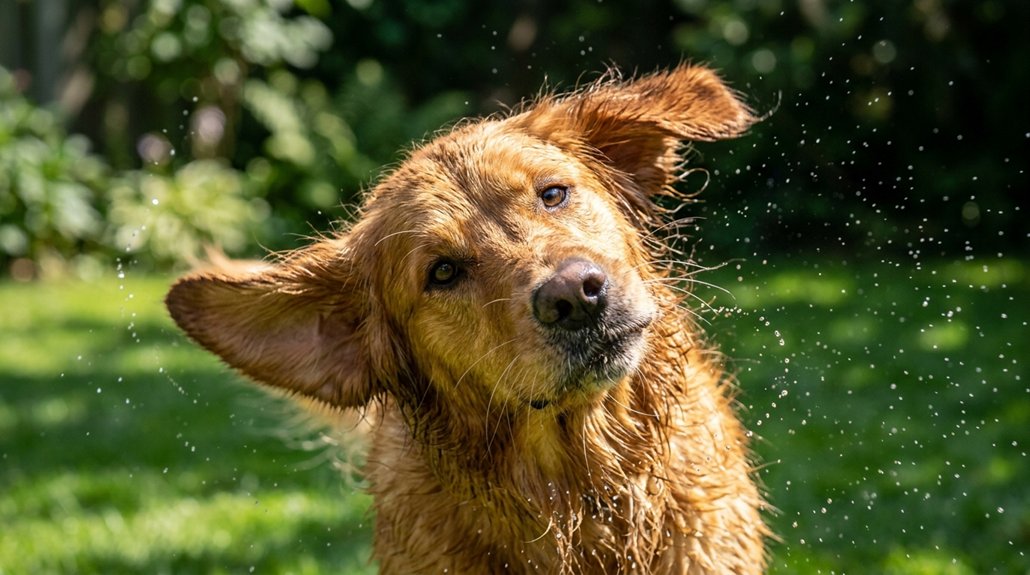
Your dog’s head shaking can indicate issues like ear infections, allergies, or foreign objects in the ear. Checking for redness, swelling, or discharge can help identify ear infections. Allergies may cause itchy ears, prompting your dog to shake its head persistently. Trapped moisture or foreign objects can also be culprits. Consulting a veterinarian is essential for accurate diagnosis and treatment. Explore ways to manage and prevent these issues to guarantee your dog’s comfort and health continues.
Key Takeaways
- Persistent head shaking often indicates underlying issues like ear infections or allergies needing veterinary attention.
- Ear infections present signs such as redness, swelling, and discharge, leading to discomfort and head shaking.
- Trapped water in the ears can cause irritation, prompting dogs to shake their heads to expel moisture.
- Foreign objects, like grass seeds or ear mites, often cause irritation and lead to frequent head shaking.
- Behavioral factors and environmental allergens may also trigger head shaking, requiring appropriate diagnosis and intervention.
Identifying Problematic Head Shaking in Dogs
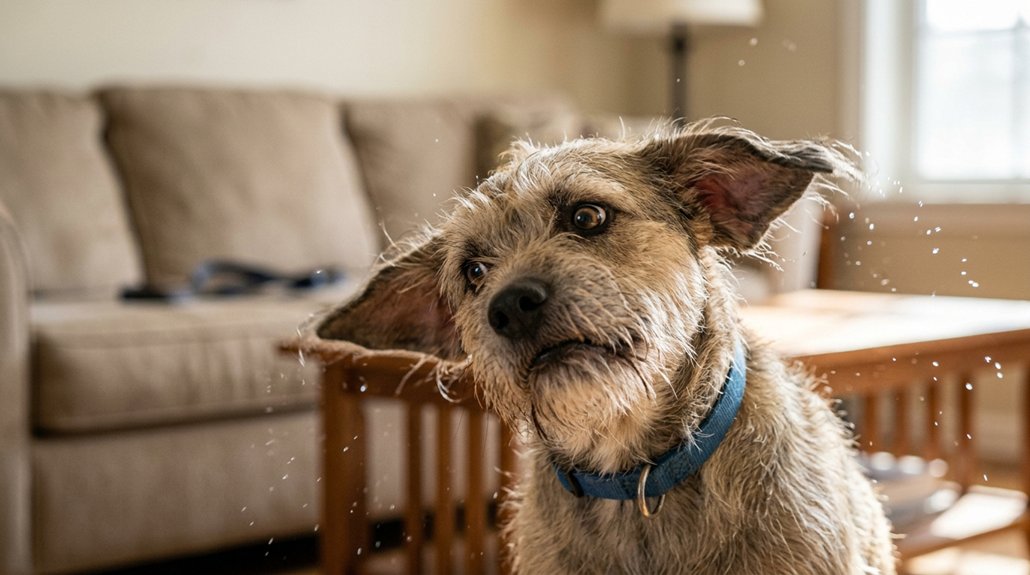
Persistent head shaking in dogs isn’t just a quirky behavior—it’s often a signal of an underlying issue that needs attention. When your dog persistently shakes its head, it might be experiencing discomfort from ear infections or reacting to behavioral triggers. Noticing signs such as redness, swelling, or ear discharge can indicate the presence of an infection requiring prompt veterinary intervention. Don’t ignore this behavior, as excessive shaking can lead to painful aural hematomas, which complicate treatment. By monitoring your dog closely for accompanying symptoms like scratching or balance issues, you can take immediate action to prevent further complications. Remember, persistent head shaking is more than a nuisance; it’s a call for you to evaluate your pet’s health needs attentively.
Common Causes of Head Shaking
Recognizing when your dog shakes its head excessively is the first step, but understanding why it happens is equally important to address the issue effectively. Ear infections, whether bacterial or yeast-based, often result in irritation and inflammation. This discomfort causes frequent head shaking. Allergic reactions, too, can make your dog’s ears itch, compelling them to shake their head for relief. Additionally, water trapped in the ear canal after swimming or bathing can prompt head shaking as your dog tries to remove the moisture. Foreign objects like grass seeds and ear mites are other possible culprits. Each of these factors could contribute to your dog’s behavior.
| Cause | Symptoms | Commonality |
|---|---|---|
| Ear Infections | Itching, inflammation | High |
| Allergic Reactions | Itchy ears, skin irritation | Moderate |
| Foreign Objects | Redness, irritation | Variable |
Diagnosing Head Shaking Issues
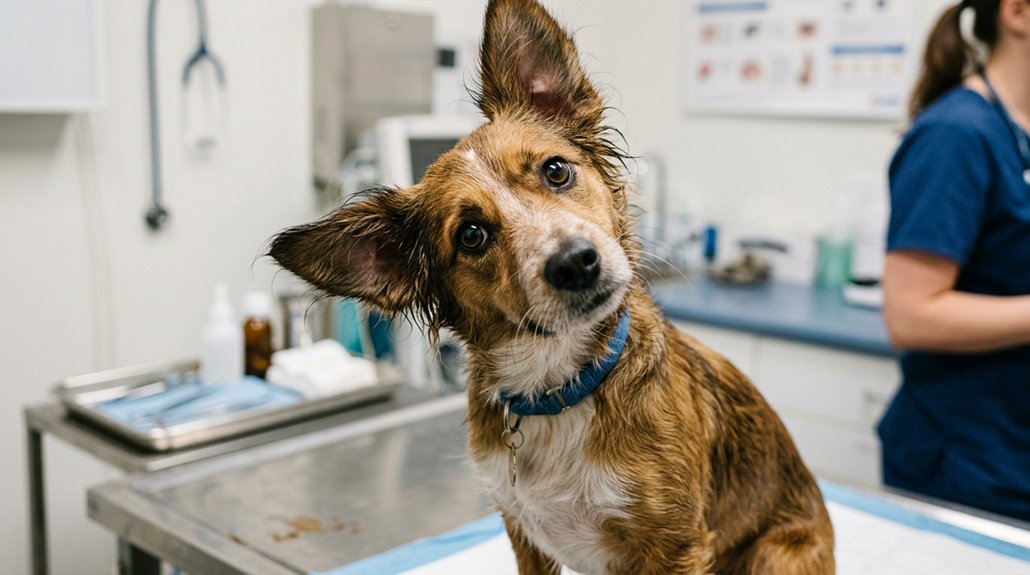
How can you effectively diagnose the causes of your dog’s head shaking? Start with a veterinary examination focused on ear health, as persistent shaking suggests potential issues like infections or allergies. Watch for signs like redness, swelling, and discharge; these may indicate ear problems that need professional care. Diagnostic tests, such as ear cytology or cultures, are invaluable for identifying bacteria or yeast infections. Observe your dog’s head shaking pattern and intensity; vigorous or frequent occurrences might signify serious problems. Recording instances of head shaking on video can equip veterinarians with essential insights to determine if they’re normal shakes or involuntary tremors. This detailed approach guarantees accurate diagnosis, setting the stage for effective treatment of head shaking issues.
Treating Your Dog’s Head Shaking
Understanding the causes behind your dog’s head shaking is just the first step; addressing these issues effectively is the key to your pet’s comfort and health. Begin by visiting a veterinarian to diagnose the root cause, which might be ear infections, allergies, or foreign objects. If an ear infection is found, vet recommendations usually include antibiotics or antifungal medications. Allergies may necessitate dietary adjustments and allergy testing for precise identification and treatment. Regular ear cleaning with vet-approved products can serve as reliable home remedies for preventing irritants. For foreign objects lodged in the ear, prompt professional removal is essential. Here’s a quick guide:
| Common Cause | Treatment Method | Follow-up Actions |
|---|---|---|
| Ear infections | Antibiotics/Antifungal meds | Regular ear check-ups |
| Allergies | Diet changes/testing | Monitor dietary triggers |
| Foreign objects | Vet removal | Weekly ear cleaning |
Preventing Future Head Shaking in Your Dog
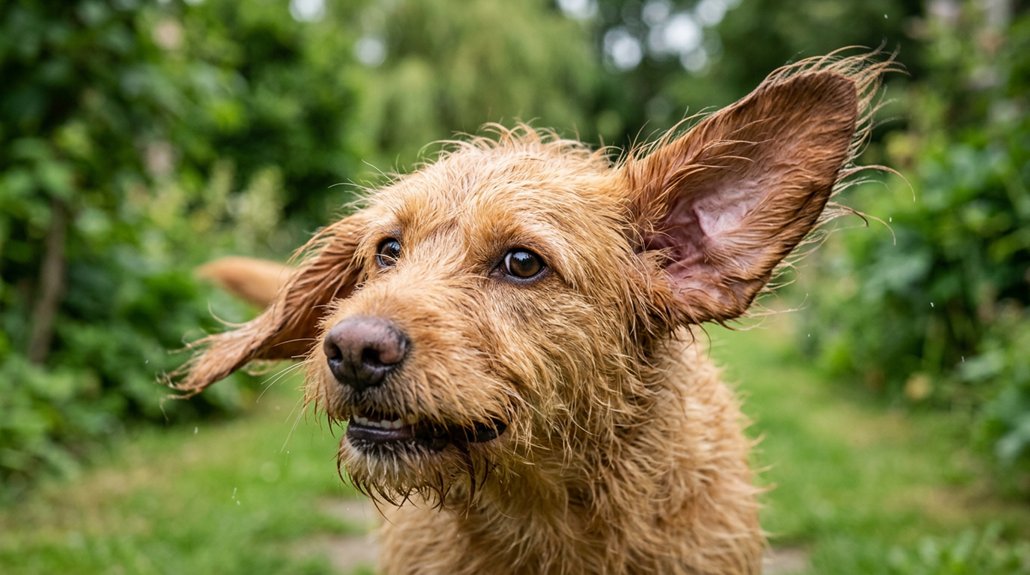
To proactively prevent future head shaking in your dog, it’s important to adopt a thorough ear care routine. Regular ear cleaning with vet-approved solutions helps keep irritation from excess wax and debris at bay. Additionally, drying your dog’s ears thoroughly after swimming or bathing is vital to prevent bacteria and yeast growth, which can cause head shaking. Allergy management is another key aspect; work with your veterinarian to identify and control environmental or food allergies that may trigger ear issues.
- Ear cleaning: Use vet-approved solutions regularly.
- Moisture control: Dry your dog’s ears after water exposure.
- Allergy management: Identify and manage allergies with your vet.
- Veterinary check-ups: Schedule routine exams to monitor ear health.
Prompt attention can reduce the risk of persistent head shaking.
Frequently Asked Questions
What Do I Do if My Dog Keeps Shaking Its Head?
If your dog keeps shaking its head, consult a vet. They’ll help identify potential causes like ear infections or behavioral issues. Avoid home remedies without veterinary advice, as improper care can escalate problems. Prompt action guarantees effective treatment.
How Do Dogs Say “I Love You”?
Dogs say “I love you” through both subtle and obvious interactions. Canine affection often manifests in tail wagging and playful antics, contrasting instinct with emotion. These behaviors indicate a deep bond, ensuring their sincere adoration reaches you.
What Are Signs Your Dog Is Going to Pass Away?
You’ll notice end signs if your dog is in its final days. Watch for significant weight loss, labored breathing, decreased mobility, and behavioral changes like withdrawal or excessive sleepiness, suggesting it’s nearing the end of life.
How Can I Soothe My Dog’s Itchy Ears at Home?
Clean your dog’s ears using a veterinarian-recommended cleaner to remove wax and debris. Try soothing ear oils or drops, and consider hypoallergenic diets or antihistamines for allergies. Keep ears dry after water exposure to prevent itchiness.
Conclusion
In addressing your dog’s frequent head shaking, it’s vital to identify the underlying cause. Did you know that approximately 20% of dogs experience ear infections, a prevalent reason for this behavior? By recognizing the symptoms and seeking prompt treatment, you guarantee your furry friend’s comfort and well-being. Regular check-ups and preventive care can greatly reduce the likelihood of recurrence. By staying informed and proactive, you’re assuring a wagging tail and a healthy life for your dog.