
Before applying to adopt a dog, evaluate your readiness for a long-term commitment by evaluating your lifestyle and guaranteeing household consensus. Confirm your living situation supports a pet and prepare financially for both initial and ongoing costs. Pet-proof your home to create a secure environment. Establish a consistent routine for a smooth shift, and use decompression strategies to help the dog adjust. By doing so, you’ll guarantee a well-prepared adoption journey, with more insights to follow.
Key Takeaways
- Evaluate your readiness and commitment to the long-term responsibilities of dog ownership.
- Ensure all household members agree on adopting a dog and assign daily care duties.
- Confirm pet policies with your landlord and assess space suitability for a new dog.
- Budget for initial adoption costs, ongoing care expenses, and potential emergencies.
- Prepare your home and outdoor environment for safety and pet-friendly living conditions.
Are You Ready to Commit to Dog Adoption?
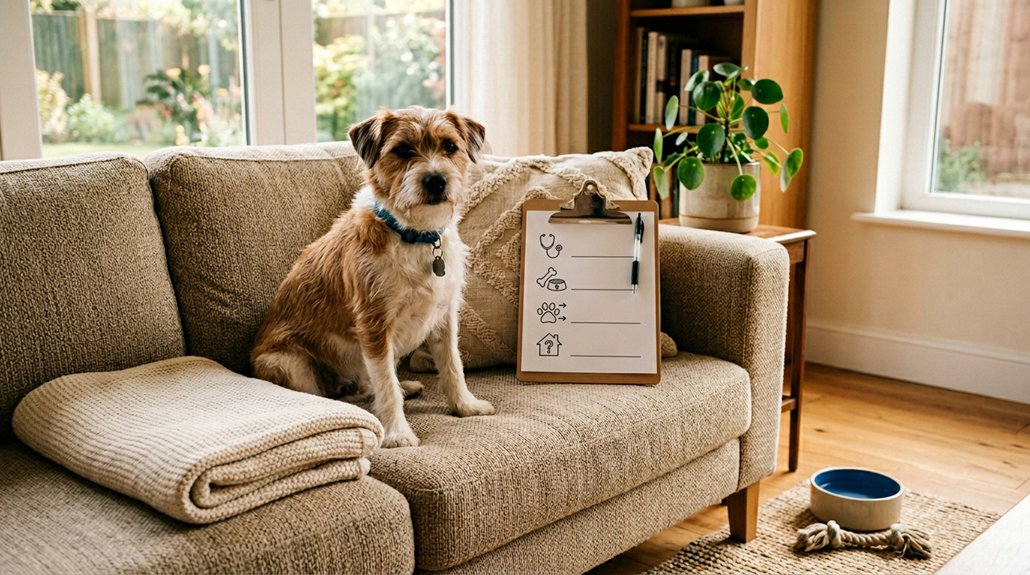
Before adopting a dog, how thoroughly have you evaluated your readiness for this long-term commitment? Honest self-reflection is crucial to assess if your lifestyle alignment matches the responsibilities dog ownership entails. Evaluate your daily routine; certain breeds require more time and energy, affecting your current commitments. Breed compatibility is essential; compare energy levels and temperaments of various breeds to your own lifestyle needs. Make certain all household members agree on embracing the addition of a pet, as compatibility extends to human interactions too. Financial foresight is critical; factor in expenses like food, veterinary care, and other necessities. Finally, recognize that adopting, especially with rescue dogs, requires understanding and patience for their adjustment period. This proactive assessment ensures preparedness for ownership.
Assess Your Living Situation for a New Dog
Once you’ve assessed your readiness for dog adoption, the next step is evaluating your living situation. Start with pet friendly housing: confirm your landlord’s pet policy to guarantee dogs are allowed, and check for any restrictions or additional deposits. Evaluate space requirements by considering the dog’s size and energy levels; different breeds need varying amounts of space.
Here’s a quick assessment:
| Factor | Consideration |
|---|---|
| Pet Policy | Verify lease for dog acceptance, restrictions, or additional fees. |
| Space Requirements | Match dog’s size and energy level to available living space. |
| Home Safety | Pet-proof by removing toxic substances and securing hazards accessible to dogs. |
Assess each factor carefully. A well-prepared environment facilitates a smooth shift for your new canine companion.
Get Everyone Onboard With the Adoption
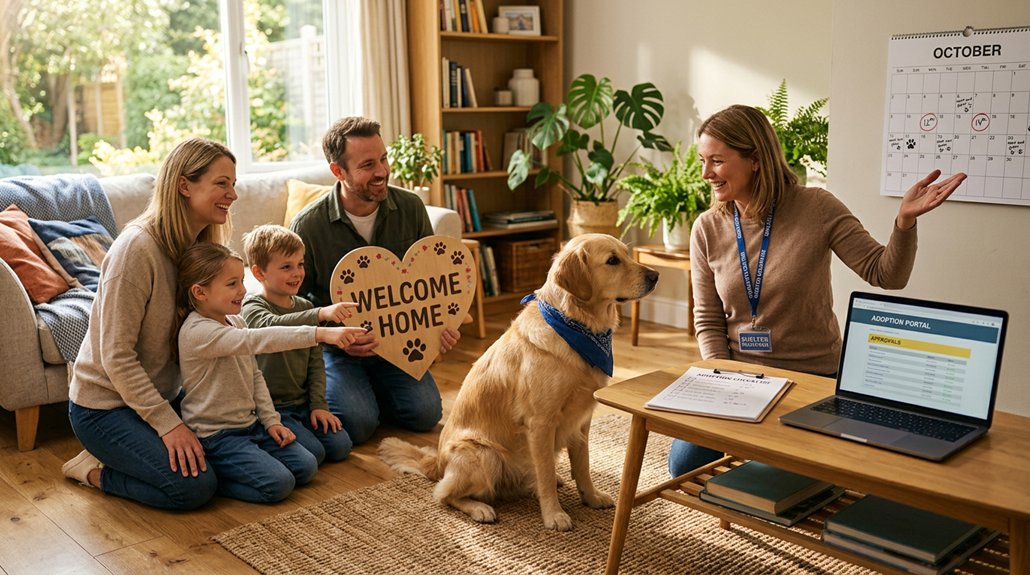
Although adopting a dog is an exciting venture, ensuring harmonized enthusiasm among all household members is essential for a successful integration. Begin by addressing family concerns such as allergies or fears. Open communication is vital to align excitement levels and mitigate potential issues. Consider these steps to facilitate a seamless change:
Begin by addressing family concerns through open communication to ensure a successful dog adoption.
- Hold a Family Meeting: Discuss any apprehensions openly. This helps in forming a unanimous decision on adoption.
- Assign Responsibilities: Clearly outline daily tasks like feeding and walking. Ensuring everyone understands their role prevents future disagreements.
- Plan a Meet-and-Greet: Schedule a session where everyone can interact with the dog. This assesses compatibility and refines excitement levels.
Let’s Talk Costs: Financial Prep for Dog Ownership
When preparing to adopt a dog, you’ll need to focus on budgeting not only for initial expenses like adoption fees but also for ongoing costs such as food, grooming, and veterinary care. It’s essential to be aware of hidden canine costs, including emergency medical care and training classes, which can greatly impact your financial planning. To manage these expenses efficiently, explore affordable care options, such as pet insurance, which can alleviate the burden of unexpected veterinary bills.
Budgeting for Pet Expenses
Before bringing a dog into your home, it’s important to thoroughly budget for pet expenses to assure you can manage both immediate and ongoing financial commitments. Planning for future expenses and maintaining an emergency fund are critical to guarantee your new companion’s well-being. Consider the following:
- Adoption Fees: These can range from $50 to $300, contributing to initial veterinary care.
- Ongoing Costs: Food, grooming, and supplies can add up to $1,000 to $2,000 annually depending on your dog’s size and breed.
- Initial Setup: Expect to spend $200 to $500 on essentials like beds, collars, and toys.
Additionally, pet insurance, with premiums between $30 and $70 per month, can mitigate unforeseen veterinary expenses, safeguarding your budget against unexpected costs.
Hidden Canine Costs
Initiating dog ownership necessitates understanding the hidden costs, which often surpass initial estimates. While adoption fees range from $50 to $300, these cover immediate needs such as vaccinations, spaying/neutering, and microchipping. Beyond these, monthly expenditures for food and grooming fall between $30 to $100, contingent on the dog’s size and dietary requirements. Additionally, veterinary expenses for routine care and emergencies can accrue $200 to $800 or more annually. Licensing fees, although variable, generally cost $10 to $50, often requiring vaccination documentation. Unexpected expenses present further hidden costs, encompassing emergency vet visits, replacement pet supplies, and training classes. Establishing a financial buffer for these unplanned expenditures is key to managing dog ownership effectively without substantial financial strain.
Affordable Care Options
While starting on dog ownership presents significant joys, meticulously planning for affordable care options guarantees you’re financially prepared. Leverage local resources to minimize costs while ensuring your pet’s well-being. Low cost clinics and vaccination events provide essential services without significant financial burden.
Here’s how to manage costs:
- Initial Fees: Adoption costs range from $50 to $250. Most include the pet’s health check-ups and vaccinations, forming a foundation for future care.
- Ongoing Costs: Budget for food, grooming, and training, with annual expenses between $500 and $1,500. Consider low cost clinics for routine check-ups.
- Insurance and Emergencies: Invest in pet insurance ($30-$70 monthly) to cover unexpected costs. Aim to save at least $500 for medical emergencies, offering a safety net for unforeseen events.
Pet-Proofing: Is Your Home Ready for a Dog?
To prepare your home for a new dog, it’s crucial to secure any hazardous items such as toxic plants, chemicals, and sharp objects in accessible areas. Protect your valuable belongings by securing loose wires, cords, and storing small objects that could pose a choking risk. Outdoor spaces should be evaluated for secure fencing and absence of harmful substances to guarantee a safe environment for your pet.
Securing Hazardous Items
- Secure windows and balconies using screens or barriers to prevent falls or escapes.
- Employ access barriers like baby gates to restrict unsupervised access to staircases or certain rooms.
- Confirm that your home is pet-proofed at multiple levels, especially in multi-story residences.
Protecting Valuable Belongings
Securing hazardous items guarantees safety, yet it’s equally important to protect valuable possessions as part of pet-proofing. Begin by identifying items at risk. Store toxic substances, chemicals, medications, and small choking hazards out of reach. Organizing spaces by removing breakable décor and essential documents from accessible areas is vital to prevent damage. Secure electrical cords and wires; these should be hidden or anchored to deter chewing, which poses electrical risks. Consider using baby gates or fences to restrict access to valuable zones, ensuring the dog’s safety and your peace of mind. Investing in dog-proofing furniture is advisable; choose durable options and washable covers to accommodate curious behavior while minimizing cleaning. This meticulous preparation safeguards both possessions and new canine companions.
Ensuring Safe Outdoor Spaces
Creating a secure outdoor environment is vital when preparing your home for a new dog. Start by addressing fence maintenance; make sure there are no gaps in fences or gates to prevent your dog from escaping and to keep other animals out. Next, assess outdoor hazards. Remove toxic plants and secure hazardous materials, such as chemicals or sharp tools. Here’s a checklist to guide you:
- Fence Maintenance: Inspect for gaps or weaknesses in fences and gates; repair as necessary.
- Outdoor Hazards: Eliminate toxic plants and safely store chemicals or sharp tools.
- Barrier Installation: Use barriers or baby gates to limit access to pools or steep stairs.
Regular inspection of your outdoor area for broken glass, sharp objects, or harmful substances is essential.
Introduce and Adjust Your New Dog to Your Life
When adopting a new dog, it’s essential to establish a strategy that prioritizes their smooth integration into your life. Start by creating a decompression space where your dog can acclimate without distractions. Gradual introductions to any existing pets should occur in neutral areas to prevent territorial behaviors. Observe the dog’s body language as their personality emerges during the adjustment period. Implement a consistent daily routine to alleviate anxiety and develop a secure environment.
| Steps | Actions | Benefits |
|---|---|---|
| Decompression | Establish a quiet space | Reduces overwhelm |
| Introduction | Meet in neutral territory | Encourages positive interaction |
| Observation | Monitor body language | Identifies comfort levels |
| Routine | Consistent daily schedule | Provides security |
| Training | Use positive reinforcement | Addresses behavioral issues |
Prepare for behavioral challenges with structured training using positive reinforcement.
Frequently Asked Questions
What Is the 3-3-3 Rule When Adopting a Dog?
The 3-3-3 rule provides a framework for dog acclimation during adoption. It outlines three phases—first three days, weeks, and months—where dogs experience initial bonding, environmental adjustment, routine establishment, and personality revelation in their new homes.
What Is the 7 7 7 Rule for Dogs?
The 7-7-7 rule symbolizes a journey in dog adoption, guiding through phases mirroring emotional growth. Each stage requires patience, as new dogs forge trust, revealing their nature, establishing relationships, and ensuring emotional readiness in their new home.
Is It Hard to Get Approved to Adopt a Dog?
Getting approved to adopt a dog can be challenging. The adoption process involves meeting strict approval criteria, including your living stability, financial readiness, environment suitability, and demonstrated commitment to long-term care, ensuring a good match for the dog.
What’s the 90/10 Rule for Dogs?
The 90/10 Rule for dogs suggests focusing 90% on relaxed environments to promote stable dog behavior, while 10% involves high-energy activities. This balance enhances adoption readiness, minimizes anxiety, and fosters a well-adjusted, manageable companion.
Conclusion
Imagine the soft patter of paws across your home, a wagging tail greeting you at the door, and the warmth of a loyal companion. These joys require preparation. Make certain you’re ready for the commitment; assess your living space for compatibility, and rally your household. Budget for the lifelong financial commitment and pet-proof your environment. With each preparatory step, you’re setting the stage for a harmonious integration, making sure your new pet’s passage is smooth and welcoming.