
Your dog’s itching may indicate allergies, parasites, infections, or stress. Allergies, both food and environmental, are common culprits, leading to conditions like atopic dermatitis. Parasites such as fleas and ticks can cause intense discomfort. Skin infections manifest as redness, swelling, or odors, requiring veterinary help. Stress from changes or separation also triggers itching. Effective management includes antihistamines, preventatives, and soothing home remedies. With further exploration, you’ll discover tailored strategies to alleviate your dog’s itchy woes.
Key Takeaways
- Allergies from pollen, dust mites, or food ingredients often cause persistent itching and require diet adjustments or environmental management.
- Parasites like fleas and ticks contribute to severe itching, requiring veterinarian-approved preventatives for effective control.
- Skin infections from bacteria or fungi cause redness, swelling, and itching, needing professional diagnosis and targeted treatment.
- Behavioral triggers such as separation anxiety can lead to excessive grooming, necessitating environmental enrichment and behavioral modification.
- Home remedies like oatmeal-based baths, cool compresses, and omega-3 supplements provide temporary itch relief and promote skin health.
Why Dogs Itch Excessively and How to Identify It

Excessive itching, or pruritus, in dogs is often a clear indication of underlying health issues that require attention. The primary itching causes can range from allergies to parasites or infections. To determine the precise trigger, consider allergy testing to differentiate between food allergies and sensitivities to environmental allergens like pollen. External parasites, such as fleas, are notorious for instigating intense itching, often linked to flea allergy dermatitis, where a single bite can result in severe skin reactions. Observing symptoms like inflamed skin or hair loss should lead you promptly to a veterinarian. Accurate diagnosis necessitates vigilance. Regular grooming and diligent adherence to flea prevention regimens are pivotal in mitigating these issues. Identifying and managing these contributors requires a multifaceted approach to guarantee your pet’s comfort and health.
Could Allergies Be Making Your Dog Itch?
It’s vital to recognize that allergies, such as those triggered by environmental factors like pollen and dust mites, can contribute considerably to your dog’s itching. Additionally, food allergies often present as dermatological symptoms, with proteins such as chicken and beef being common culprits. Identifying these triggers through clinical evaluations and diagnostic tools like dietary trials is essential for managing your dog’s condition effectively.
Environmental Allergy Triggers
While often overlooked, environmental allergies can greatly contribute to your dog’s itching and discomfort. Pollen exposure, dust mites, and mold can trigger a condition known as atopic dermatitis. This condition leads to chronic irritation, especially during times of high pollen, like spring and fall. Dust mite management and mold prevention are equally essential to alleviating symptoms. Your dog’s symptoms might include itchy paws, ear scratching, and respiratory issues.
Effective management includes pharmacological interventions, such as antihistamines and corticosteroids, coupled with specialized shampoos and avoidance strategies.
| Environmental Trigger | Management Strategy |
|---|---|
| Pollen | Avoid exposure in spring |
| Dust Mites | Frequent cleaning/removal |
| Mold | Improve home ventilation |
| Seasonal Allergies | Antihistamine protocol |
Understanding these triggers is vital in relieving your dog’s discomfort.
Food Allergy Signs
Beyond environmental factors, dietary sensitivities may play a role in your dog’s persistent itching. Symptom duration often varies, lasting beyond the removal of allergens due to residual skin inflammation. You might observe your dog itching particularly around the ears, paws, and abdomen. Ingredient sensitivity commonly involves proteins like chicken, beef, dairy, and grains, triggering recurrent infections, paw licking, and ear discomfort. To accurately diagnose food allergies, an elimination diet is vital. This involves removing suspected allergens and evaluating the dog’s response to novel proteins and carbohydrates over six to twelve weeks. Monitoring your dog’s reaction during this period is critical. Should symptoms persist, veterinary intervention is recommended to guarantee thorough management of stubborn inflammations and recurrent skin irritations.
How Parasites Like Fleas and Ticks Cause Itching
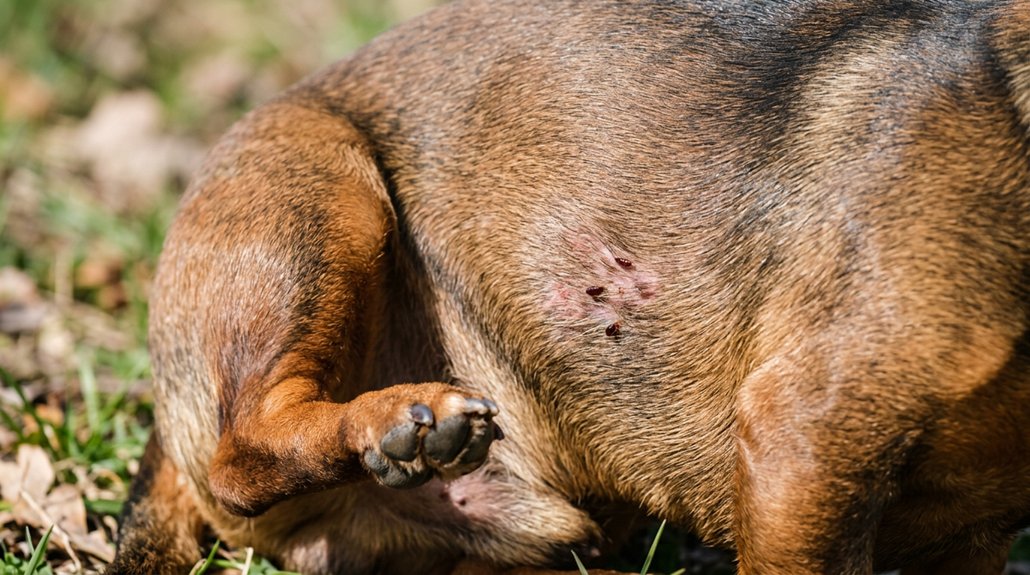
When addressing canine itching, it’s vital to contemplate the impact of parasites such as fleas and ticks, whose presence can lead to significant dermatological issues. Flea allergy dermatitis (FAD), triggered specifically by flea saliva, is a common culprit of profound itching and inflammation, particularly in areas like the neck and tail base. Similarly, tick bites can cause localized inflammatory reactions, and vigilance in using effective preventatives is essential to mitigate these issues and prevent secondary infections.
Flea Allergy Dermatitis
- Regular use of veterinarian-recommended flea prevention products to disrupt the flea lifecycle
- Maintaining a clean environment by washing bedding and thorough vacuuming to remove fleas at all life stages
- Monitoring for excessive grooming and signs of skin barrier disruption to mitigate secondary infections
These strategies help prevent FAD relapses and guarantee your dog’s comfort.
Tick-Borne Skin Reactions
Although the mere presence of fleas or ticks might be elusive, their impact on canine skin is unmistakable. Tick bites can induce localized itching and inflammation due to the dog’s immune response to tick saliva. Sensitive individuals may experience heightened allergic reactions from this exposure. Moreover, ticks and fleas can transmit diseases that complicate skin issues and necessitate medical intervention. Flea saliva, in particular, is notorious for triggering flea allergy dermatitis (FAD), which results in severe itching, especially around the tail base, neck, and groin. The invisible threat posed by these parasites requires vigilance. Employing veterinarian-recommended preventatives consistently minimizes the risk of tick bite reactions and related conditions. Prioritize regular assessments to guarantee effective prevention and prompt treatment of any parasitic infestation.
Is Dry Skin the Reason for Your Dog’s Scratchiness?
Determining whether dry skin is the underlying reason for your dog’s persistent scratching requires a methodical approach. Examine symptoms like flaky patches and a dull coat. Evaluate your dog’s grooming routine, as frequent baths with harsh shampoos can strip essential oils. Consider whether environmental factors might be decreasing skin hydration, such as low humidity or a diet lacking omega-3 fatty acids.
To alleviate dryness and promote healthier skin, you might:
Commence a consistent grooming routine and enhance your dog’s diet with omega-3 supplements for healthier skin.
- Commence a consistent grooming routine using moisturizing products like aloe vera or coconut oil.
- Address nutritional deficiencies by integrating omega-3 supplements into your dog’s diet.
- Consult a veterinarian to exclude underlying conditions that might exacerbate dry skin.
For precise diagnosis and effective intervention, expert veterinary guidance is invaluable.
Spotting a Skin Infection: What to Look For
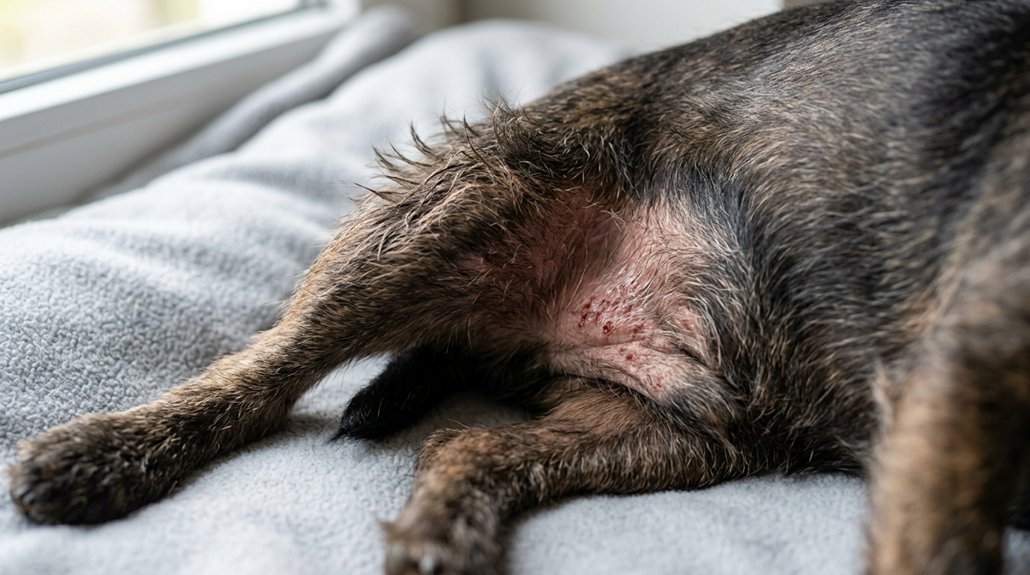
While managing dry skin can alleviate some of your dog’s discomfort, persistent scratching might indicate an underlying skin infection that warrants professional intervention. Look for redness, swelling, or pus in affected areas. These symptoms, alongside foul odors and increased sensitivity to touch, could signify a skin infection needing a veterinary diagnosis.
| Symptom | Potential Indicator |
|---|---|
| Redness, Swelling | Bacterial or Yeast Infection |
| Foul Odor | Evaluation for Bacterial Involvement |
| Hair Loss | Secondary Infection or Irritation |
Hair loss around the irritation site may exacerbate the condition. Additionally, scabs or skin discoloration can indicate inflammation, necessitating timely treatment options. Prompt veterinary care guarantees accurate diagnosis and effective treatment options to alleviate your dog’s distress. Treatment options can include antimicrobial therapies or antifungal medication, depending on the underlying cause.
Anxiety and Stress: Behavioral Reasons for Itchy Skin
In cases where dogs exhibit excessive scratching, licking, or biting of their skin without an apparent medical cause, it’s critical to contemplate anxiety and stress as underlying behavioral factors. Stress-induced itching is often associated with behavioral triggers like:
- Changes in the household: New pets or a move can prompt anxiety.
- Separation anxiety: Heightened stress when left alone.
- Compulsive behaviors: Excessive grooming in stressful situations.
These catalysts may incite compulsive behaviors, exacerbating skin issues and potentially leading to infections. Stress-induced itching stands apart when paired with signs such as pacing, whining, or avoidance of regular activities. Consulting a veterinarian is imperative for diagnosing and implementing behavioral modification strategies, which may include increased exercise and environmental enrichment, to combat the effects of anxiety-related itching effectively.
Simple Home Remedies for Soothing Your Dog’s Itch
Owners often attribute excessive itching in dogs to allergies or parasites; however, if a behavioral cause has been ruled out, simple home remedies can be effective in managing mild cases. Initiate soothing baths utilizing vet-approved shampoos, particularly oatmeal-based formulas, to moisturize and calm irritated skin. Consider administering omega-3 fatty acid supplements for enhanced dermal health and inflammation control. Employ cool compresses on trouble spots for immediate relief. Homemade sprays like an apple cider vinegar and water solution can restore skin pH and mitigate allergen-induced itchiness. Furthermore, routine grooming, including paw wiping, is essential for removing irritants. The following table outlines various methods:
| Remedy | Application | Benefits |
|---|---|---|
| Soothing Baths | Oatmeal shampoo | Hydrate and calm skin |
| Fatty Acid Supplements | Oral intake | Reduce inflammation |
| Cool Compresses | Topical application | Immediate itch relief |
| Homemade Sprays | 50:50 vinegar-water mix | Balance skin pH |
| Routine Grooming | Regular paw wiping | Allergen removal |
Key Signs That Need a Vet’s Attention
How do you know when your dog’s itching requires a professional’s expertise? Certain symptoms warrant veterinary diagnostics and skin assessments to identify underlying issues. If you’ve noticed your dog losing hair, developing red, inflamed skin, or exhibiting open sores, these signs could indicate severe conditions such as infections or allergies. Persistent itching unresponsive to home treatments often necessitates professional evaluation.
Look for:
- Signs of infection: odor, oozing, or swelling
- Behavioral changes: excessive scratching or chewing affecting daily activities
- Symptoms of distress or anaphylaxis: vomiting, diarrhea, or difficulty breathing
Immediate veterinary attention is essential if your dog displays any distress or pain. Early intervention can prevent complications and guarantee effective treatment. Always consult a veterinarian to confirm your dog’s well-being.
How to Prevent Future Itchiness
To proactively manage and prevent future itchiness in your dog, regular grooming is imperative. Incorporate a consistent grooming routine using hypoallergenic shampoos to effectively remove allergens and prevent skin irritations. Implementing cleaning tips is vital; vacuum your home frequently and use air purifiers to minimize exposure to dust mites, pollen, and other allergens. A veterinarian-recommended flea prevention regimen is essential for mitigating the risk of flea allergy dermatitis (FAD) and related skin issues. Ascertain your dog’s diet is balanced, emphasizing omega-3 fatty acids to support skin health and reduce itch-inducing dryness. Monitor any environmental or dietary changes closely to identify and eliminate potential allergens promptly, maintaining your dog’s comfort and preventing future episodes of itchiness.
Frequently Asked Questions
What Helps a Dog From Itching All the Time?
Consider allergy triggers and skin conditions. Regularly groom your dog with vet-approved shampoos, provide omega-3 supplements, and use antihistamines wisely. Implement a nutritionally balanced diet. Consultation with a vet is essential for accurate diagnosis and tailored treatment.
What Stops Itching Immediately?
You should try applying a cool compress and using vet-approved topical anti-itch creams or sprays for immediate relief. These soothing treatments offer quick, effective anti-itch solutions to alleviate discomfort and prevent further irritation.
What Is the Fastest Acting Dog Itch Relief?
Like a balm for an inflamed soul, the fastest relief combines oral treatments like Benadryl with topical solutions such as hydrocortisone sprays. These solutions act swiftly to alleviate discomfort, targeting allergic reactions and soothing your dog’s skin.
Why Is My Dog Constantly Scratching but No Fleas?
Your dog might be scratching due to skin allergies or environmental triggers like pollen. Allergies can cause significant itching without fleas. Consult a veterinarian to diagnose the exact cause and develop a tailored treatment plan.
Conclusion
In the itch-inducing world of canine care, comprehending causes is essential. Whether it’s allergies, annoying parasites, or anxiety, you’ve got the power to provide relief and restore your pup’s peace. Dry skin demands diligence, while infections necessitate immediate intervention. With watchful eyes and wise choices, you’ll whip your furry friend back into itch-free shape. Remember, recognizing symptoms and responding swiftly with suitable solutions will greatly soothe your dog’s discomfort and guarantee their sustained serenity.