Your cat’s lethargy may indicate health issues or stressors. Watch for signs like decreased energy, withdrawal, and over-sleeping. Common causes include dietary changes, infections, or metabolic disorders. Environmental factors such as noise or new pets can also affect their energy. It’s important to observe for severe symptoms like vomiting or respiratory distress. Creating a soothing home environment can help, but understanding more about these signs and solutions will better equip you to support your feline friend.
Key Takeaways
- Dietary imbalances or poor nutrition may contribute to reduced energy levels in cats, causing lethargy.
- Viral or bacterial infections can drain energy as the cat’s body works to fight off illness.
- Metabolic disorders like diabetes or hypothyroidism can disrupt normal energy production, leading to lethargy.
- Environmental stressors, such as noisy surroundings or recent changes, can cause stress-induced withdrawal and low energy.
- Lethargy may signal discomfort from injuries or arthritis, prompting energy conservation and reduced activity.
Identifying Signs of Cat Lethargy
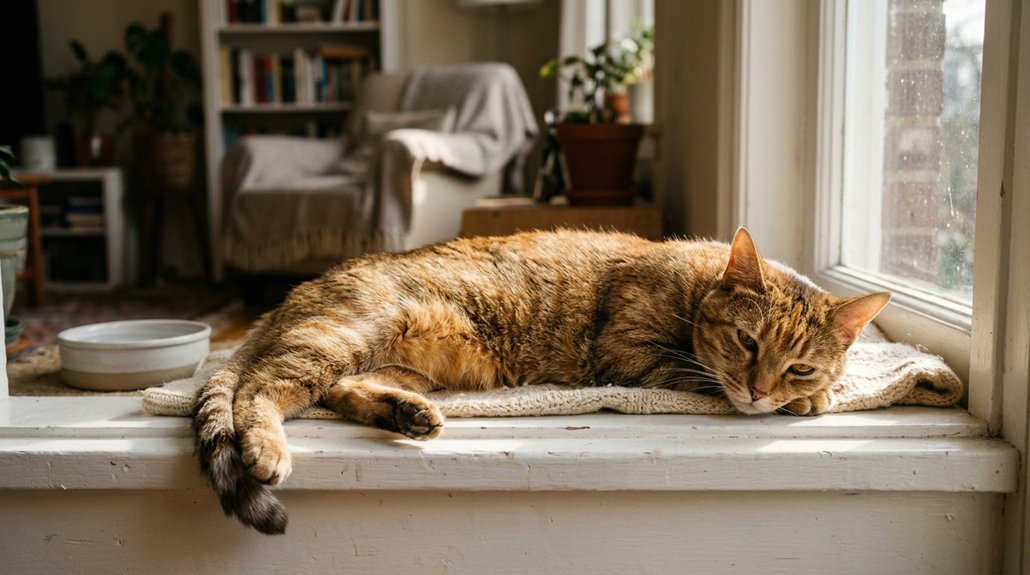
When your cat starts showing signs of lethargy, it’s essential to recognize these early indicators to guarantee their health and well-being. You’ll notice changes in cat behavior, such as decreased energy levels. They might shy away from activities they usually enjoy, like play or exploration. Watch for withdrawal from social interactions, reluctance to groom, or altered sleeping patterns—healthy cats sleep 12 to 16 hours a day but lethargic ones may sleep even more. A lack of interest in food, slow movements, and struggles with stairs or favorite spots can also signal lethargy. If you notice these signs, especially if they persist beyond 24 hours, consider a vet visit to rule out any underlying conditions affecting their energy levels.
Common Causes Behind Cat Lethargy
Understanding the reasons behind your cat’s lethargy is important for providing timely care. Dietary considerations and behavioral observations can help you identify potential causes. Infections like viral or bacterial illnesses often sap energy as your cat’s immune system fights back. Metabolic disorders such as diabetes or hypothyroidism disrupt energy production, diminishing their energy. If your cat’s behavior changes, be observant—injuries or arthritis might be causing pain, prompting them to conserve energy. Environmental stress, like a recent move, can play a role in temporary lethargy as your cat adjusts. Additionally, be mindful of potential poisoning from harmful substances which manifest as lethargy. In such cases, immediate veterinary intervention is essential to prevent serious complications.
Serious Symptoms Accompanying Lethargy
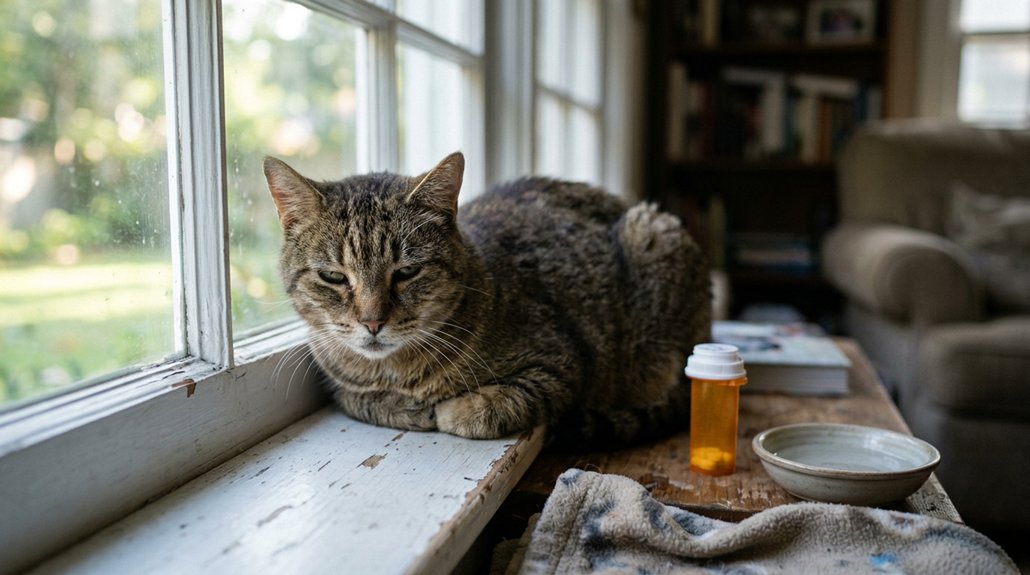
If your cat’s lethargy is coupled with severe symptoms such as vomiting, diarrhea, or massive changes in appetite, it’s crucial to recognize these signals as potential indicators of underlying health issues demanding immediate veterinary attention. Signs like respiratory distress, rapid or labored breathing may suggest conditions such as asthma or heart disease. Notable behavioral changes, including increased hiding or withdrawal, might indicate distress or illness. Changes in litter box habits, especially reduced urination or defecation, could suggest urinary tract infections or metabolic disorders. Additionally, significant weight loss or a disheveled coat accompanying lethargy often points to ongoing health issues. It’s essential to consult with your veterinarian promptly to diagnose and treat these serious conditions effectively.
How Your Cat’s Environment Affects Their Energy
In addition to monitoring serious symptoms, it’s important to reflect on how your cat’s environment impacts their energy levels. Environmental triggers such as loud noises, new pets, or unfamiliar surroundings can cause your cat to withdraw and conserve energy to cope with discomfort. Cats thrive in stable settings, and disruptions like renovations or a move can erode their sense of security, leading to decreased activity. Poor living conditions, including lack of fresh water or dirty litter boxes, also contribute to stress and lethargy. Similarly, insufficient stimulation or enrichment—like minimal interactions or limited access to toys—can result in boredom and decreased energy. In multi-pet households, social dynamics can prompt withdrawal behaviors, as competition may cause further energy conservation.
Supporting Your Lethargic Cat at Home
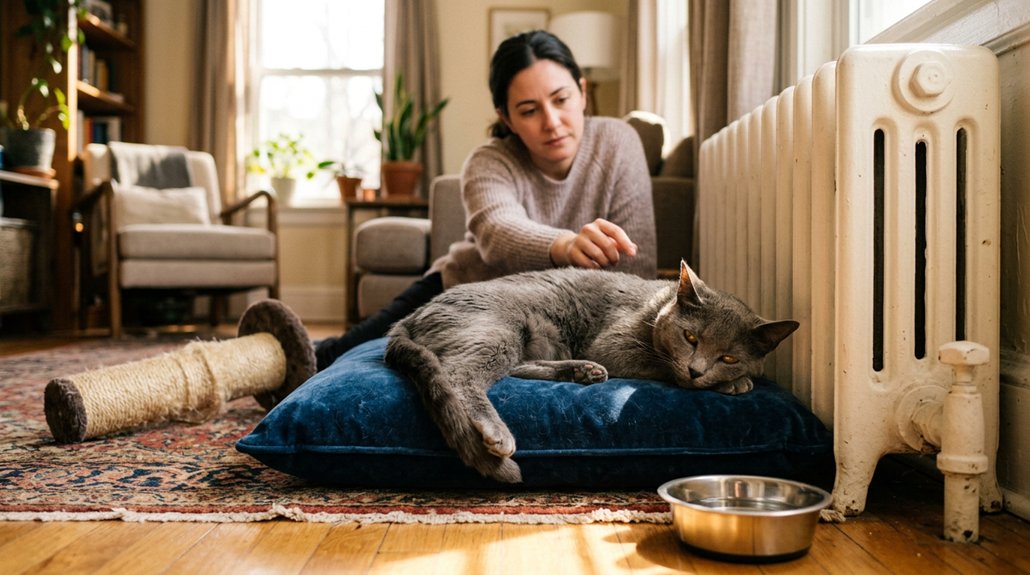
Creating a calming atmosphere for your lethargic cat can greatly alleviate stress, allowing them to relax and recover. Consider using a calming pheromone diffuser like the Feliway® to provide a sense of security. Additionally, make certain your cat stays hydrated by introducing a stainless steel cat water fountain, which can encourage more frequent drinking and promote their overall wellbeing.
Stress Reduction Techniques
Although cats are known for their independence, when they act lethargic, it’s important to address their emotional well-being alongside any physical symptoms. Stress reduction plays a significant role in reviving their energy levels. Using calming products, like the Feliway® calming pheromone diffuser, can create a soothing environment for your feline friend. With a 3.7-star rating from 3.8K reviews, it reduces stress and helps restore your cat’s vigor.
Additionally, consider joint supplements such as Flexadin® with UCII. With a 4.3-star rating from 60 reviews, it can alleviate any discomfort your cat may be experiencing. Also, make sure they have a quiet, safe space to retreat to. This safe haven will minimize environmental stressors and promote a more relaxed state for your cat.
Encouraging Proper Hydration
While stress reduction is essential for your cat’s recovery, another key aspect you can’t overlook is proper hydration. Maintaining adequate hydration supports crucial organ function and can reduce lethargy linked to dehydration. Encourage your cat’s water intake by considering its water preferences. Many cats favor drinking from flowing water sources, making a cat water fountain, like the PawsPikSS-01, an excellent option. Incorporating hydration supplements, such as Purina® Pro Plan® Hydracare™, can also aid in boosting fluid consumption.
| Product/Tip | Benefits |
|---|---|
| PawsPikSS-01 Fountain | Encourages drinking with flowing water, highly rated (4.4/5) |
| Hydracare™ Supplement | Adds essential electrolytes, supports overall health (4.4/5) |
| Hydration Tips | Addressing water preferences can effectively enhance fluid intake |
With these strategies, your cat’s hydration and health can greatly improve.
Urgent Lethargy Symptoms to Discuss With Your Vet
Why does lethargy in cats demand swift and decisive action? Lethargy triggers, like sudden behavioral changes or isolation, could indicate serious underlying health issues needing urgent veterinary evaluation. If your cat shows extreme lethargy, especially with symptoms such as difficulty breathing, severe vomiting, or diarrhea, it’s essential to seek professional help immediately. These signs elevate the risk and necessitate prompt intervention to address potential life-threatening conditions.
Additionally, a loss of appetite or reluctance to drink can worsen lethargy, leading to dehydration, while changes in litter box habits may suggest a medical issue requiring immediate attention. These symptoms should never be ignored, as they could rapidly compromise your cat’s well-being, underscoring the importance of discussing them with your vet right away.
Frequently Asked Questions
When Should I Be Concerned About My Lethargic Cat?
You should be concerned about your lethargic cat if it’s lasting over 24 hours or paired with symptoms like vomiting or breathing issues. Possible causes vary, so consult your vet promptly for a professional evaluation and care.
What Is the 3-3-3 Rule for Cats?
The 3-3-3 rule is a timeline for new cats to adjust: three days to decompress, three weeks to build trust, and three months to feel fully at home. It’s crucial for cat behavior and feline health.
What Are the Signs That a Cat Is About to Pass Away?
You’re noticing end-of-life signs like lethargy, decreased interest in activities, and loss of appetite. Common health issues might also involve grooming neglect, breathing difficulties, and isolation. Your cat’s comfort should be the priority; seek veterinary advice.
What to Do if Your Cat Is Acting Lethargic?
If lethargy grips your cat like a shadow, act swiftly. Consult a vet to explore potential causes; follow cat health tips like monitoring changes, ensuring hydration, and providing comfort to illuminate their path to recovery.
Conclusion
Remember, a lethargic cat is like a drooping flower in need of nurturing. By understanding the causes and signs, you can help your feline friend regain their zest for life. Pay attention to their environment, nurture them with love, and act swiftly if urgent symptoms arise. Just like a gentle gardener tends to their plants, you play a crucial role in restoring your cat’s energy. Your attentive care can be the wind beneath their wings, lifting them back to health.