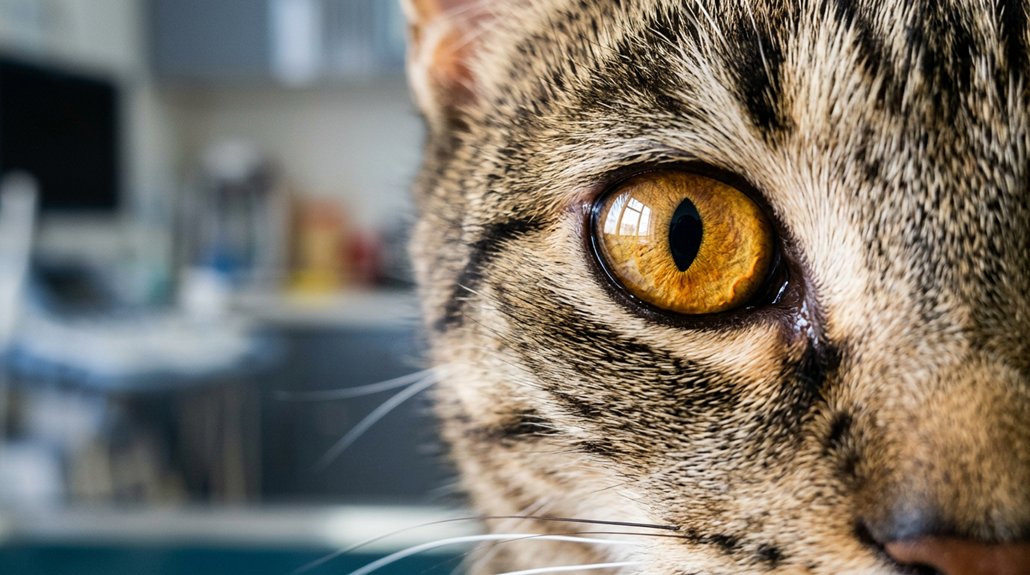
Watch for signs of discomfort in your cat’s eyes, like squinting, redness, or unusual discharge. Frequent squinting or excessive tearing suggests underlying issues. Look for symptoms like cloudiness or swelling that signal serious concerns needing prompt attention. Behavioral changes, such as pawing at eyes, warrant quick action. Regular vet visits and maintaining cleanliness are essential for prevention. Early detection can greatly impact outcomes. Discover more about recognizing and addressing these important symptoms.
Key Takeaways
- Look for squinting or excessive blinking as potential signs of discomfort or pain.
- Watch for thick, colored discharge indicating possible infections in the eyes.
- Monitor redness, cloudiness, or swelling as they can signal severe complications.
- Notice presence of the third eyelid, as it reflects possible underlying health concerns.
- Pay attention to behavioral changes like pawing or rubbing the eyes, suggesting discomfort.
Spotting Early Signs Your Cat Needs Eye Care
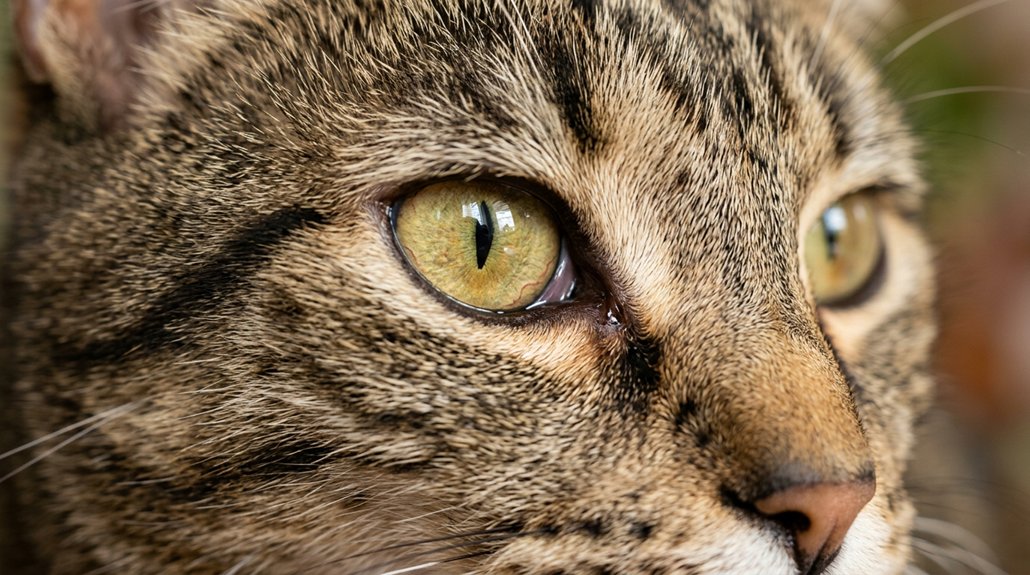
When it comes to your cat’s health, even subtle signs can indicate significant eye issues that require attention. Early detection of eye symptoms is essential. If you observe squinting or excessive blinking, it often points to discomfort or pain and warrants immediate veterinary care. Additionally, any discharge—especially if it’s thick or colored—could signify an infection needing prompt action. The appearance of a third eyelid isn’t normal and may reflect underlying problems, necessitating a professional evaluation. Be vigilant for redness, cloudiness, or swelling, as these indicate potential complications. Behavioral changes, like pawing at their eyes or avoiding interaction, suggest discomfort that demands further investigation. Quick responses to these symptoms can prevent more serious health concerns.
Recognizing Common Cat Eye Issues
Numerous eye issues commonly affect cats, and recognizing them early can prevent serious complications. Understanding cat eye anatomy and feline vision is vital in identifying these conditions. Persistent squinting suggests discomfort or pain and should be closely observed. Viral infections, often stress-induced, may lead to clear discharge and squinting, demanding timely veterinary intervention. Conjunctivitis, an inflammation of the eye tissues, requires evaluation within 24 hours to avert further issues. Additionally, note signs like redness, cloudiness, and swelling—these could signal severe problems and necessitate immediate attention. The visible third eyelid often indicates an underlying health concern. If you notice these symptoms, prompt veterinary consultation is essential to maintain your cat’s eye health and prevent lasting damage.
Dealing With Rare yet Serious Cat Eye Conditions
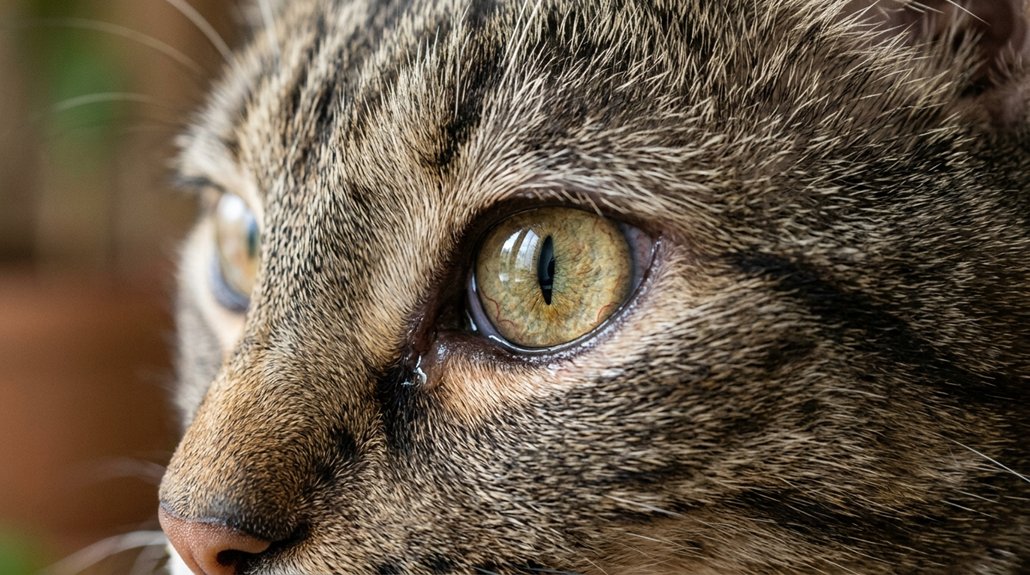
Although cat eye conditions are often manageable, certain rare and serious issues require immediate veterinary attention to prevent severe consequences. Iris melanoma, a rare condition, involves a cancerous growth within the iris that can rapidly proliferate. Quick recognition and consultation with your veterinarian are essential to address this threat effectively. Equally urgent are glaucoma emergencies, where increased intraocular pressure can irreversibly damage vision if not treated promptly. Recognizing symptoms like eye redness, squinting, or excessive tearing can aid in early identification and treatment. Ectropion and entropion also pose risks, with both eyelid conditions potentially causing significant discomfort and requiring surgical correction. While cherry eye and cataracts aren’t as pressing, they do necessitate eventual intervention for comfort and vision restoration.
How to Prevent Common Cat Eye Problems
Whether you’re a seasoned cat owner or new to feline care, preventing common cat eye problems involves a multifaceted approach that combines regular vet visits, proper hygiene, and nutritional support. Here’s how you can effectively minimize risks:
- Regular Veterinary Check-Ups: Essential for early detection and prompt intervention of potential eye issues. Schedule routine visits to catch problems before they escalate.
- Cleaning Routines: Maintain a clean environment. Regularly clean your cat’s face and reduce allergens to prevent infections.
- Balanced Diet and Dietary Supplements: A diet rich in essential nutrients, possibly supplemented with vitamins, supports overall eye health and reduces stress.
- Monitor for Early Signs: Be vigilant for signs like squinting or discharge to act swiftly, avoiding complications.
Implement these strategies to help keep your feline’s eyes healthy.
When to Get Urgent Eye Care?
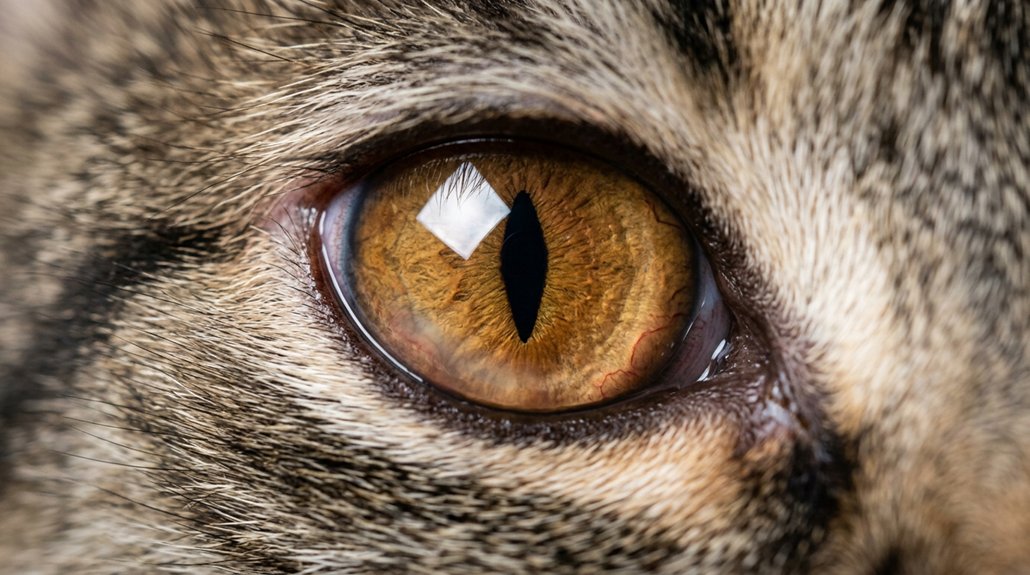
When should you seek urgent eye care for your cat? Urgent symptoms like sudden severe redness, swelling, or discharge are alarming and require immediate veterinary evaluation. Inability to open an eye or excessive squinting may signal considerable pain necessitating urgent care. If you notice rapid changes in pupil size or cloudiness, it could indicate serious conditions like glaucoma necessitating fast assessment. Behavioral shifts such as reduced interaction, aggression near the face, or less appetite alongside eye symptoms also demand prompt attention.
| Symptom | Veterinary Options |
|---|---|
| Severe redness/swelling | Immediate veterinary evaluation |
| Inability to open eye | Urgent care for pain |
| Change in pupil size | Fast assessment for conditions like glaucoma |
| Behavioral changes | Prompt consultation to prevent complications |
Addressing these issues swiftly can considerably affect outcomes.
Frequently Asked Questions
When to Worry About a Cat’s Eye?
You’re right to worry when your cat shows common symptoms like cloudiness or discharge. Treatment options vary; consult a vet immediately to prevent serious complications or chronic conditions. Early detection is pivotal for effective management.
What Are the Serious Eye Conditions in Cats?
You’ll want to be alert for serious conditions like feline cataracts, glaucoma, corneal ulcers, and iris melanoma. These require immediate attention. Addressing issues like conjunctivitis and entropion early can prevent complications and preserve your cat’s vision.
How Can I Tell if My Cat’s Eyesight Is Failing?
It’s painfully obvious when your cat’s eyesight falters; they’ll seem like they suddenly live in a maze. You’ll notice visual signs like bumping into things, wide pupils, and behavioral changes, including anxiety or less interaction.
What Is the #1 Cause of Death in Cats?
Chronic kidney disease (CKD) is the #1 cause of death in cats. To combat common cat illnesses, focus on regular vet check-ups. Feline health tips highlight early detection and management as keys to prolonged, healthier feline lives.
Conclusion
In caring for your cat’s eyes, your vigilance is essential. By spotting early signs and recognizing both common and serious issues, you can prevent potential complications. Isn’t it comforting to know you can mitigate risks with timely intervention? Understanding when urgent care is necessary helps guarantee your feline friend’s eyes remain healthy. Your proactive approach, combined with preventive measures, forms a solid foundation in safeguarding your cat’s vision. Always prioritize their eye health with knowledgeable vigilance.