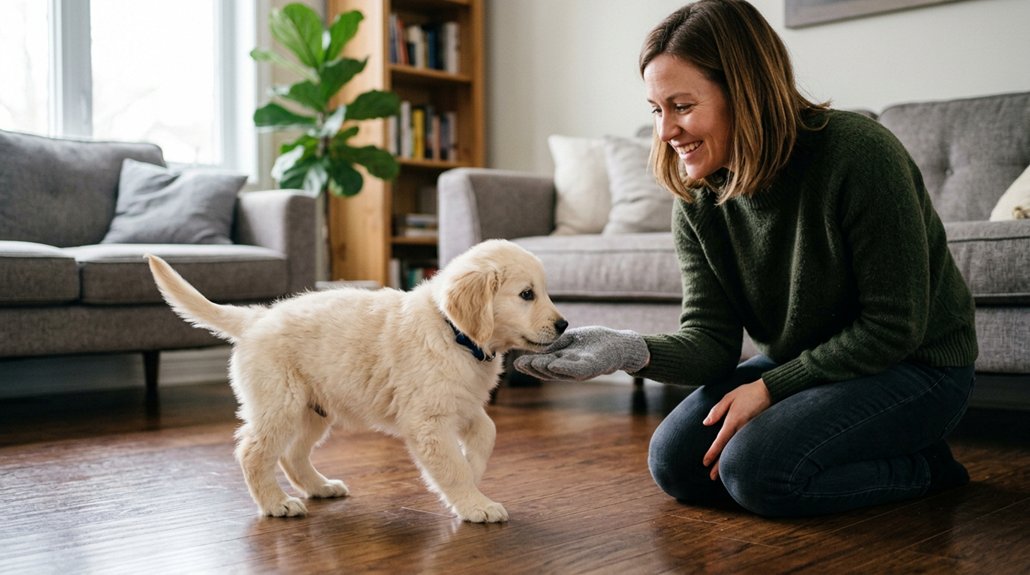
To introduce your puppy to new people, set up a quiet environment and encourage guests to stay calm. Allow your puppy to approach at their own pace, and reward calm behavior with treats. Start with brief encounters, gradually increasing interaction time as your puppy becomes more confident. Pay attention to signs of anxiety or comfort, and respect your puppy’s limits. For a deeper understanding, there are strategies to ease your puppy into social situations efficiently.
Key Takeaways
- Choose a quiet and neutral environment to minimize distractions during introductions.
- Allow the puppy to approach new people at their own pace to build confidence.
- Use puppy treats and positive reinforcement to create positive associations with new people.
- Teach guests to ignore the puppy until calm behavior is displayed for a stress-free introduction.
- Monitor puppy’s body language and conclude interactions if signs of anxiety appear.
Set Up a Relaxing Introduction Environment
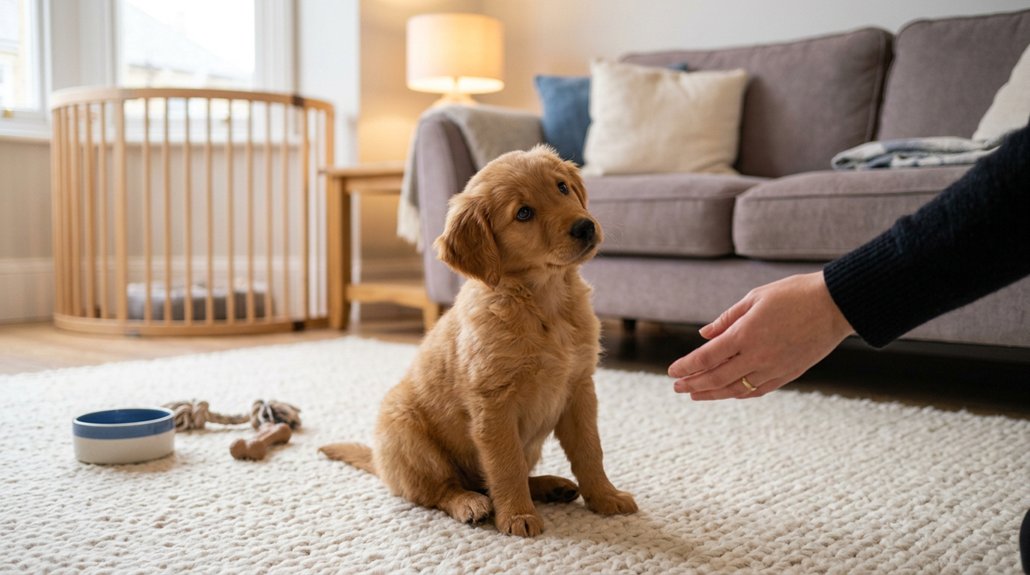
When introducing your puppy to new people, start by choosing a quiet and neutral environment to help minimize any distractions and reduce anxiety. Quiet spaces will facilitate a calm introduction, allowing your puppy to feel secure. Inform your guests about maintaining a relaxed demeanor; sudden movements can disrupt your puppy’s sense of safety. Integrate calming techniques by providing a designated safe space or retreat, so your puppy can retreat if overwhelmed. It’s essential that your puppy approaches at their own pace, reinforcing their confidence. Make certain everyone is prepared with appropriate interaction techniques to support a seamless, stress-free introduction. Remember, a tranquil setting is crucial in promoting a positive experience, paving the way for successful socialization in the future.
Reward Calm Behavior to Encourage Socialization
Although it might seem challenging at first, rewarding calm behavior is an effective strategy to encourage your puppy’s socialization with new people. Use puppy treats and positive reinforcement to associate strangers with positive experiences; this reinforces desirable reactions. Instruct your guests to stay calm and ignore your puppy until they show calm behavior. This approach fosters a more relaxed atmosphere, helping your puppy feel at ease. Implement the three-second rule when allowing petting. Keeping interactions brief and rewarding prevents overstimulation and reassures your puppy. Gradually extend interaction duration and intensity as your puppy displays confidence around new people. Consistent use of structured positive reinforcement will nurture your puppy’s good manners and lessen anxiety in unfamiliar settings.
Ease Nervous Puppies Into New Encounters
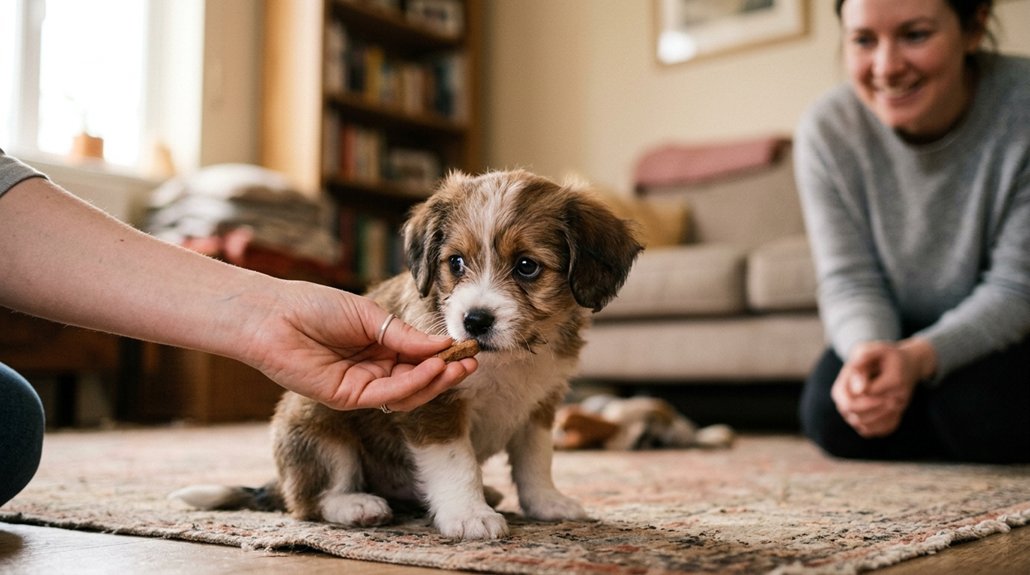
It’s essential to build on calm behavior by gradually easing nervous puppies into new encounters. Start with puppy observation as the key strategy, allowing your pup to watch new people from a safe distance. This helps them acclimate at their own pace. Educate your guests to ignore the puppy when it’s excited or anxious, initiating interaction only when calm. Leverage positive reinforcement by asking guests to toss treats gently towards the puppy. This creates positive associations without pressuring direct contact. Keep initial interactions brief and upbeat, progressively extending them as your puppy gains confidence. Always stay attuned to your puppy’s body language, and be ready to conclude any interaction if they seem overwhelmed. Your careful approach guarantees a comforting experience.
Interpreting Signs of Anxiety or Comfort in Your Puppy
Understanding your puppy’s body language is essential for gauging their emotional state during interactions. Recognize social behavior signals to guarantee your puppy’s comfort. If you see signs like lip-licking, yawning, pinned-back ears, or avoiding eye contact, your puppy may be anxious. Stress is also signaled by excessive panting, pacing, or hiding behind you. In these situations, avoid forcing introductions and allow your puppy space.
Conversely, comfort is indicated by a relaxed posture, wiggly body, and open mouth with a relaxed tongue. Observe tail position; a wagging tail suggests excitement, while a low or tucked tail indicates fear. If your puppy backs away or refuses to approach, respect their feelings and let them acclimate on their terms. This understanding fosters positive social experiences.
Troubleshooting Common Socialization Issues
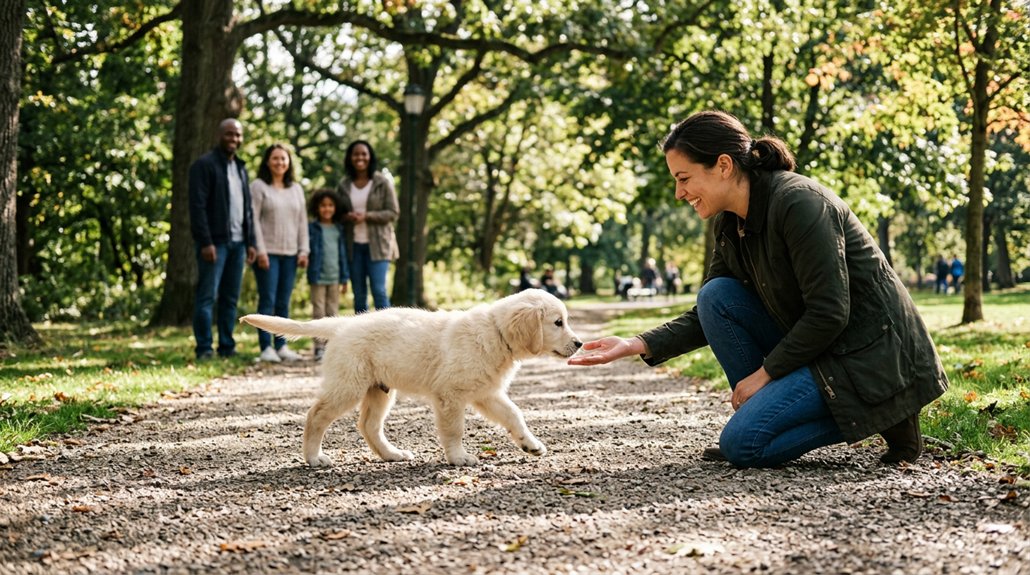
Kicking off the socialization process can be challenging, especially when your puppy is wary of new faces. Start by using gradual exposure techniques. Allow your puppy to observe strangers from a distance, rewarding them with treats for calm behavior. Introduce socialization games that incorporate the “three-second rule” for petting—keeping interactions brief and calm. Teach new people to avoid direct eye contact and sudden movements. If your puppy shows discomfort, such as hiding or barking, pause and give them space. Set up controlled practice sessions with friends or family, making sure each encounter is positive and rewarding, reinforcing confidence. Consistent positive experiences and gradual exposure will ease socialization issues, helping your puppy comfortably meet new people over time.
Frequently Asked Questions
What Is the 3-3-3 Rule With Puppies?
The 3-3-3 rule outlines your puppy’s initial adjustment: stress and anxiety in the first three days, acclimatization in the next three weeks, and confidence-building over three months. Use socialization techniques to support your puppy’s behavior during this critical period.
What Is the 7 7 7 Rule for Puppies?
Picture a lively, curious puppy engaging with new faces, places, and activities. The 7 7 7 Rule enhances puppy behavior by using socialization techniques to guarantee they’re confident and well-adjusted. It’s essential for balanced development.
Is 20 Weeks Too Late to Socialize a Puppy?
No, 20 weeks isn’t too late. Early exposure is ideal, but you can still achieve socialization benefits. Focus on guiding their behavior through structured routines and positive interactions. Be patient, ensuring a calm, gradual introduction to new experiences.
What Is the 10 10 10 Rule for Puppies?
The 10-10-10 rule involves introducing your puppy to 10 new people in 10 different environments over 10 days. It’s an essential socialization tip to guarantee well-rounded puppy interactions and adaptability for their adult life.
Conclusion
Picture your puppy exploring a serene garden, tail wagging gently. As you guide them through introductions, the warmth of your touch and a soothing voice become their compass. Reward moments of calm with treats as golden as sunlight, building their trust. If they shy away, imagine a gentle breeze reassuring them. Recognize slight signals of anxiety or ease, and adjust like a savvy captain steering a ship. Your expertise crafts a world where your puppy feels safe and welcomed.