
You might be tempted to delay socialization to keep your puppy safe, but early experiences are essential. Neglecting diverse experiences, misjudging your influence on their mood, or forcing overwhelming interactions can lead to anxiety. Balance socialization with vaccination protocols in safe environments. Avoid focusing solely on dog interactions; include varied stimuli. Recognize stress signs and maintain calmness to build trust. Consistent, positive exposure guarantees a well-adjusted pup. There’s so much more to explore on this journey.
Key Takeaways
- Delaying socialization past 14 weeks can lead to anxiety and behavioral issues in puppies.
- Overwhelming a puppy with too many new experiences at once may cause stress and fear.
- Ignoring early signs of anxiety, such as panting or tail tucking, can exacerbate stress in puppies.
- Failing to ensure all interacting animals are vaccinated puts your puppy at health risk.
- Neglecting to maintain a calm demeanor can transfer anxiety and fear to the puppy.
Start Socialization Early for Success
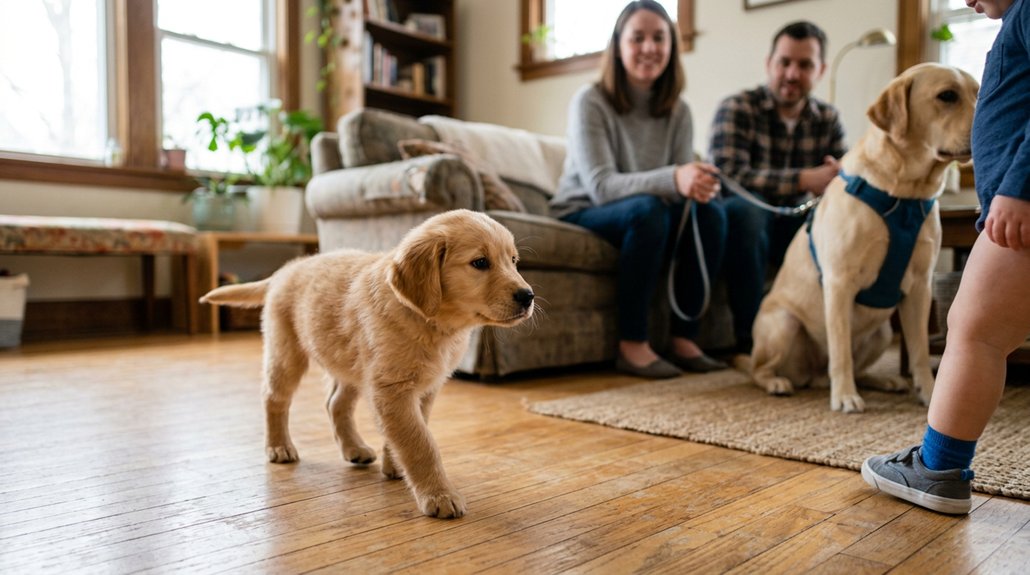
When it comes to raising a well-adjusted dog, early socialization is key. Picture your puppy as a social sponge during those essential 3 to 14 weeks. Engage in early bonding by introducing them to a broad range of people, sounds, and surfaces. I remember when my pup first met the postman—his wagging tail was a clear sign that positive reinforcement was working wonders. Each new experience is an opportunity to reward your puppy with treats and praise, helping them build confidence and adaptability. But don’t wait too long; delaying socialization can lead to anxiety and behavioral issues. Starting early guarantees a well-rounded adult dog who knows how to navigate the world confidently and happily.
Balance Socialization With Vaccination Protocols
Balancing socialization with vaccination protocols requires a bit of planning, but it’s well worth the effort for your puppy’s development. You can guarantee safe environments by sticking to familiar places like your backyard or a friend’s home who has healthy pets, and remember to gradually expose your pup to new sights and sounds. One dog owner shared how they maintained health precautions by organizing playdates with other vaccinated puppies, allowing for rich social experiences without compromising safety.
Ensure Safe Environments
One essential aspect of raising a well-adjusted puppy is safeguarding safe socialization without compromising their health. It’s important to plan puppy playdates in environments where your puppy is shielded yet stimulated. Remember when Max the Labrador met friends at a clean, quiet park? His owners guaranteed all puppies were vaccinated.
Consider these tips to balance socialization:
| Consideration | Action |
|---|---|
| Vaccinations | Complete before engaging in group play. |
| Safe Environments | Opt for spacious, controlled settings like yards. |
| Monitor Interactions | Watch for stress signs. |
| Structured Opportunities | Enroll in puppy classes with verified vaccination status. |
| Positive Reinforcement | Use treats and praise to create enjoyable experiences. |
Plan Gradual Exposure
Just like Max the Labrador enjoyed his playdates in safe parks, you can guarantee your puppy gets the right balance of social interaction and vaccination safety. Begin your pup’s journey with environmental enrichment by introducing them to new sights and sounds as early as 8 weeks old. Use short, positive interactions of 5 to 15 minutes to guarantee gradual desensitization to different stimuli. You don’t need to wait until full vaccinations to start; low-risk settings like your home or quiet streets can offer varied experiences. Consistently mix it up with different people, sounds, and settings to help your puppy build confidence and adaptability. This method respects vaccination protocols while providing vital early social experiences without overwhelming your new furry friend.
Maintain Health Precautions
Although socializing your puppy is essential, you’ll need to carefully navigate the balance between social interaction and maintaining vaccination protocols. Start introducing your puppy to new environments between 3 and 12 weeks old, but be mindful of vaccination timing to mitigate health risks. You might recall your friend’s careless approach resulted in their puppy getting sick—this reinforces the importance of controlled interactions. Consider puppy socialization classes or playdates with vaccinated dogs to create safe learning opportunities. Avoid letting your puppy near unknown dogs or contaminated areas to prevent exposure to potential illnesses. Keep a close eye on your puppy’s comfort and stress levels, ready to withdraw if anything seems overwhelming. This proactive approach guarantees a positive, safe socialization experience.
Understand How Your Mood Impacts Your Puppy
The emotional climate surrounding your puppy’s socialization journey plays a significant role in shaping their future disposition and behavior. A strong emotional connection forms through your calm and confident approach, as owner influence is key. Puppies are like little emotional sponges, absorbing and mirroring your moods. If you’re stressed or anxious, your puppy might be too. Imagine this: you’re at the dog park, anxious and frazzled. Your puppy picks up on that tension and might become fearful of engaging. Instead, maintain an upbeat and relaxed demeanor. This not only reassures your puppy but builds their confidence in new situations. Consistently projecting positivity solidifies your bond, creating a trusting relationship that encourages safe exploration and joy in socializing.
Reinforce Positive Behavior Consistently
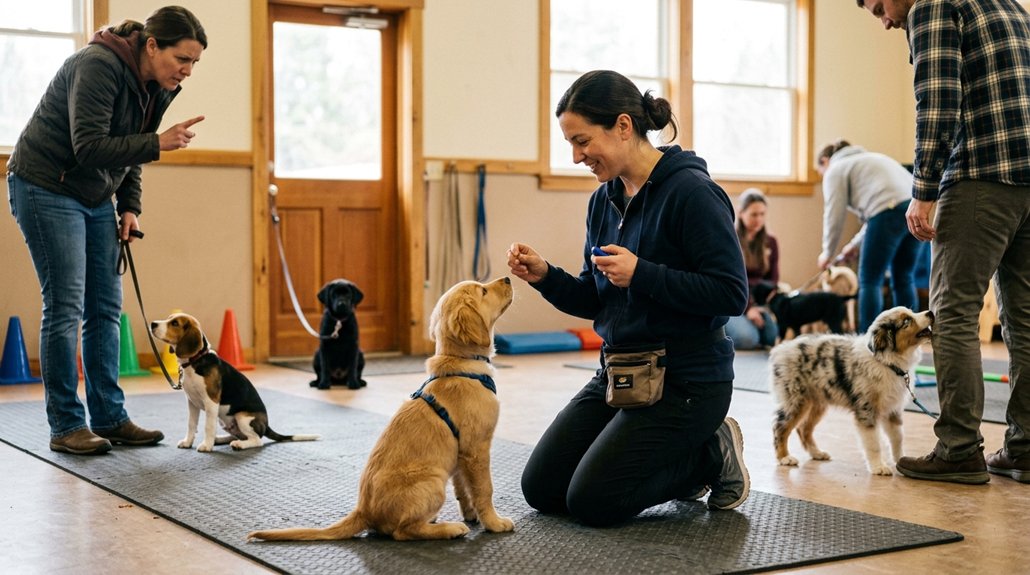
To foster a well-behaved puppy, it’s essential you consistently reinforce positive behavior with immediate rewards. The right reward timing is vital; hand out treats or praise instantly so your pup links good deeds with rewards. It’s like letting a kid know right away they’ve aced a game—keeps their spirits high! Use motivation variety to maintain your puppy’s interest; a mix of treats, affection, and verbal praise keeps them excited and engaged. Reinforce calm behavior during socialization to prevent overexcitement.
“`markdown
| Behavior | Reward Type |
|---|---|
| Sitting Calmly | Verbal Praise |
| Walking Nicely | Treat |
| No Barking | Affection (petting) |
| Ignoring Distraction | Verbal & Treat |
| Calm at Vet | Treat Variety |
“`
Foster Safe, Natural Exploration at Home
Creating an enriching environment at home is essential for your puppy’s development. Encourage texture exploration and sound exposure to boost their confidence and adaptability. Here’s how:
Foster your puppy’s growth by introducing varied textures and sounds to enhance their confidence and adaptability.
- Texture Exploration: Offer a mix of safe surfaces like carpet, wood, and tiles for your puppy to navigate.
- Sound Exposure: Gradually introduce household noises, like vacuum cleaners or ringing phones, ensuring positive associations with treats and praise.
- Designated Exploration Zone: Set up a safe area with toys and household items that your puppy can explore freely.
- Supervised Adventures: Always supervise your puppy’s exploration to prevent accidents and to reinforce positive behavior as they encounter new stimuli.
Spot Stress, Offer Calmness
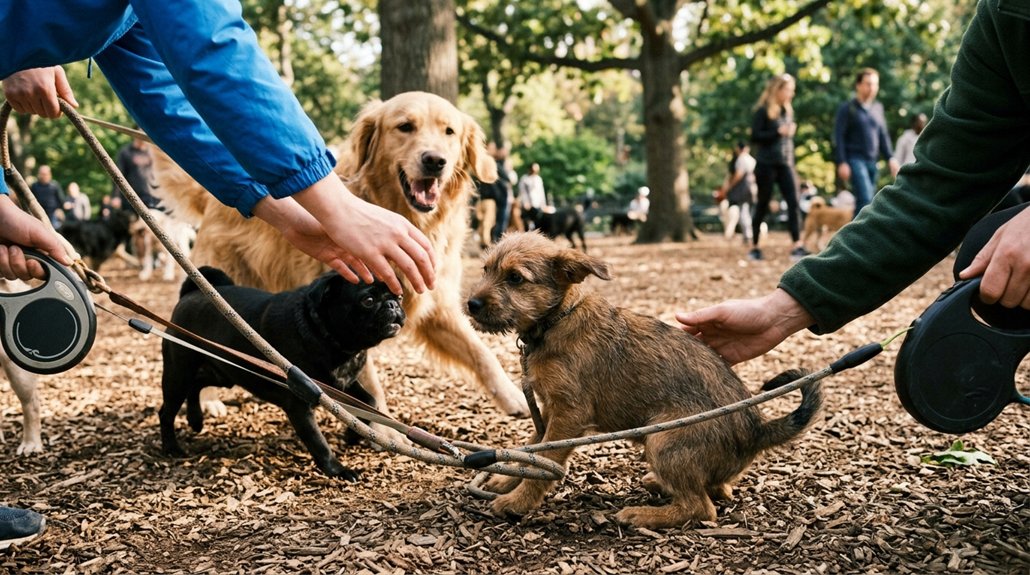
As you guide your puppy through socialization, keep an eye out for anxiety signals like tail tucking or excessive yawning—it’s a sign they might be feeling overwhelmed. You can help them feel more secure by staying calm yourself; use soothing tones and a relaxed posture to show everything’s okay. Remember when you felt nervous in a new situation and someone offered calm reassurance? That’s exactly the kind of presence you should provide for your pup.
Recognize Anxiety Signals
When socializing a puppy, it’s crucial to understand the subtle cues that indicate anxiety, as these little signs can reveal a lot about how your dog is feeling in new situations. A change in your puppy’s body language can signal anxiety triggers you might miss if you’re not observant. Keep an eye out for:
- Tucked Tail: Suggests fear or discomfort.
- Excessive Panting: Often accompanies stress.
- Dilated Pupils: Indicates heightened alertness or anxiety.
- Withdrawal or Growling: Shows overwhelm.
I remember a time my pup growled at a new neighbor. Recognizing these signs allowed me to swiftly intervene, offering reassurance and gradually reintroducing the situation. This approach fosters a positive and confident puppy, teaching them to navigate their world comfortably.
Maintain a Calm Presence
A serene demeanor not only benefits you but also greatly impacts your puppy’s development during socialization. Puppies are adept at picking up on your emotions, and your calm energy plays a key role in making them feel secure in unfamiliar situations. I remember taking my dog to the park for the first time; my initial nervousness had him whining. Once I focused on projecting a relaxed vibe, he began exploring with more confidence. Spotting stress signs like panting or cowering allows you to intervene by taking a break or creating distance from stressors. Emphasizing emotional connection and stability encourages your puppy to approach new experiences without fear. By maintaining a calm presence, you’re building a trusting relationship essential for effective socialization.
Expand Beyond Dog Meets: Include Diverse Stimuli
While meeting other dogs is important, don’t overlook the vast array of stimuli your puppy should experience to truly thrive. A well-rounded socialization strategy focuses on sensory experiences that build environmental adaptability and resilience. Here’s what you can do:
- Surface Exploration: Let your puppy walk on different surfaces like grass, gravel, and hardwood to develop comfort with varying textures.
- Sound Acclimatization: Introduce sounds like traffic, sirens, and construction gradually, ensuring they’re associated with positive reinforcement.
- Object Familiarization: Use items such as bicycles, vacuum cleaners, and umbrellas around them. Reward calm behavior with treats.
- New Environments: Visit parks, pet-friendly stores, and busy streets. Each location offers unique challenges, helping your puppy learn to adapt seamlessly.
These steps help in preventing future anxieties and build confidence.
Why Puppy Classes Matter for Social Skills
Though it might seem natural for puppies to develop social skills on their own, enrolling them in puppy classes is an invaluable step to guarantee they’re well-adjusted and confident in varied environments. Imagine your pup maneuvering group dynamics with fellow furry classmates, each unique in their puppy training journey. These classes offer professional support to harness different learning styles, ensuring that lessons like behavior observation don’t go unnoticed. Through interactive play and a solid rewards system, your pup learns to thrive amidst others, gaining confidence while safely engaging. Furthermore, early exposure within the critical 3 to 14-week window of puppy development eliminates unwelcome fears or aggression, setting the foundation for a stable, balanced adult dog. Trust the process!
Keep Consistent: Regularly Introduce New Experiences
As you begin the journey of raising a well-mannered pup, remember the importance of consistency by regularly introducing new experiences. The critical socialization window from 3 to 14 weeks calls for daily exploration to prevent fears and anxiety. Here’s how to incorporate this into your routine:
Consistency in early socialization is key to preventing fear and anxiety, nurturing a well-mannered puppy.
- Outdoor Adventures: Take your puppy on walks to novel environments, such as parks or pet-friendly stores, allowing varied interactions in different social settings.
- Sound Exposure: Gradually introduce diverse noises—doorbells, car horns, and vacuum cleaners—to build confidence.
- Texture Experiences: Let them explore different surfaces, like grass, asphalt, and carpet, to enhance their adaptability.
- Playtime Variations: Encourage friendly encounters with other dogs and vary toys to stimulate their curiosity.
These consistent efforts guarantee your puppy grows into a confident adult.
Frequently Asked Questions
What Is the 7 7 7 Rule for Puppies?
You’ll find the 7 7 7 rule helpful for tackling puppy anxiety. Use it as a socialization technique by introducing your pup to seven people, environments, and sounds, ensuring they grow into well-adjusted, confident adult dogs.
When Socializing a Puppy, What Should You Not Do?
Don’t rush them into varied socialization environments. Avoid creating fear responses through negative experiences or inappropriate handling. Instead, gradually expose them to unfamiliar situations. Prevent overly aggressive play and always use positive reinforcement for a confident pup.
What Is the 10 10 10 Rule for Puppies?
The 10 10 10 rule guides you to expose your puppy to 10 different people, environments, and stimuli. These socialization techniques guarantee your puppy’s confidence by introducing them to diverse experiences necessary for well-rounded development.
What Is the 3-3-3 Rule for Puppies?
The 3-3-3 rule for puppies is like watching a flower bloom; at three days, they’ll adjust to new environments, by three weeks express personalities, and after three months show confidence and stability due to positive early experiences.
Conclusion
Think of your puppy as a young adventurer exploring a vast, new world. Just like a seasoned guide leads travelers safely through thrilling terrains, you’re there to show your puppy the ropes. By starting early, sharing varied experiences, and keeping emotions in check, you’re crafting stories of confidence and curiosity. Embrace puppy classes for essential social cues, and remember, consistent gentle guidance is your compass. Let your puppy’s journey be as enriching as a hero’s tale.