
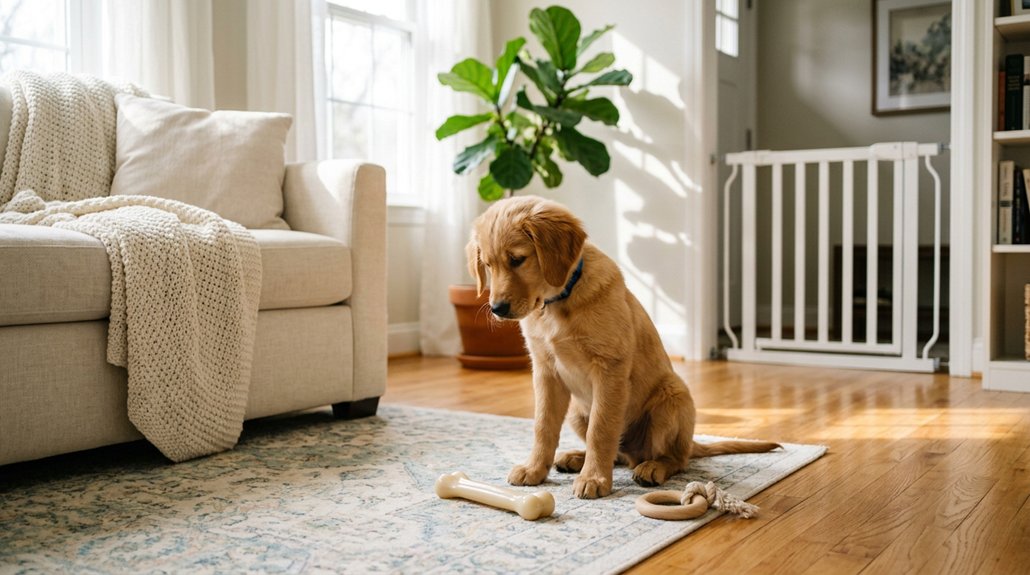
To train your puppy not to chew everything, recognize their natural teething and exploratory behaviors. Address anxiety by identifying and reducing stress triggers, offering engaging toys, and providing plenty of exercise. Make certain your home is safe by removing hazards and using chew-resistant sprays. Redirect inappropriate chewing with suitable toys, praise good choices, and maintain a consistent routine. Implement active play and mental challenges to keep them occupied. With patience, you’ll uncover even more effective strategies.
Key Takeaways
- Identify and remove potential chewing hazards like electrical cords and valuables to create a safe environment.
- Provide a variety of durable, age-appropriate chew toys to redirect chewing behavior naturally.
- Use positive reinforcement to praise and reward puppies for using designated chew toys instead of inappropriate items.
- Engage puppies in active play and mental stimulation daily to reduce boredom and channel energy positively.
- Gradually desensitize puppies to being alone to manage anxiety-driven chewing behaviors effectively.
Recognizing When Puppy Chewing Becomes Destructive

Some might not realize just when a puppy’s chewing habit shifts from normal behavior to something more problematic. Understanding puppy behavior is vital when identifying destructive chewing. Start by observing what items your pup targets. If you notice shoes, furniture, or electrical cords bear the brunt of your pup’s attention, it might be a sign to intervene. Recognizing chewing triggers, like being left alone or boredom, can reveal the root of the issue. Destructive chewing isn’t just inconvenient; it can be hazardous if your puppy ingests harmful materials. Look for additional signs like excessive barking or urination, which may indicate deeper emotional stress. Your attentive approach can help in offering the right balance of mental stimulation and training.
Understanding Why Puppies Chew
Understanding why puppies chew is key to addressing their behavior effectively. You’ll find that this natural behavior serves to explore their world and soothe the discomfort of teething, especially between 3 to 6 months of age. By recognizing these underlying reasons, you can guide your puppy towards appropriate outlets like chew toys, ensuring they can safely and healthily satisfy their needs.
Exploring World Through Mouths
When you observe your puppy chewing on various objects around the house, it’s essential to recognize this behavior as a natural and instinctive way for them to explore the world. Puppies use their mouths for texture exploration, engaging in this instinctual behavior to understand their environment better. Chewing is their primary method for investigating new and interesting surroundings, driven by curiosity and a desire to learn. It’s like how we use our hands to touch and examine; puppies use their mouths similarly.
Teething and Discomfort Relief
After witnessing your puppy exploring the world with their mouth, it’s important to understand that chewing isn’t only about curiosity—it’s also heavily influenced by teething. Between 3 to 6 months, your puppy’s gums can feel sore, leading them to chew more as a form of teething pain relief. To help, offer ice cubes or frozen chew toys which soothe while being satisfying. Introduce appropriate chewing alternatives like rubber toys to guide their natural instincts without damaging your belongings.
Recognizing teething discomfort early is vital. It helps you steer your puppy away from potentially destructive habits later on. By consistently providing suitable chewing options, you’re not only alleviating their pain but also promoting healthy developmental behavior during this vital stage.
Tackling Anxiety-Driven Chewing
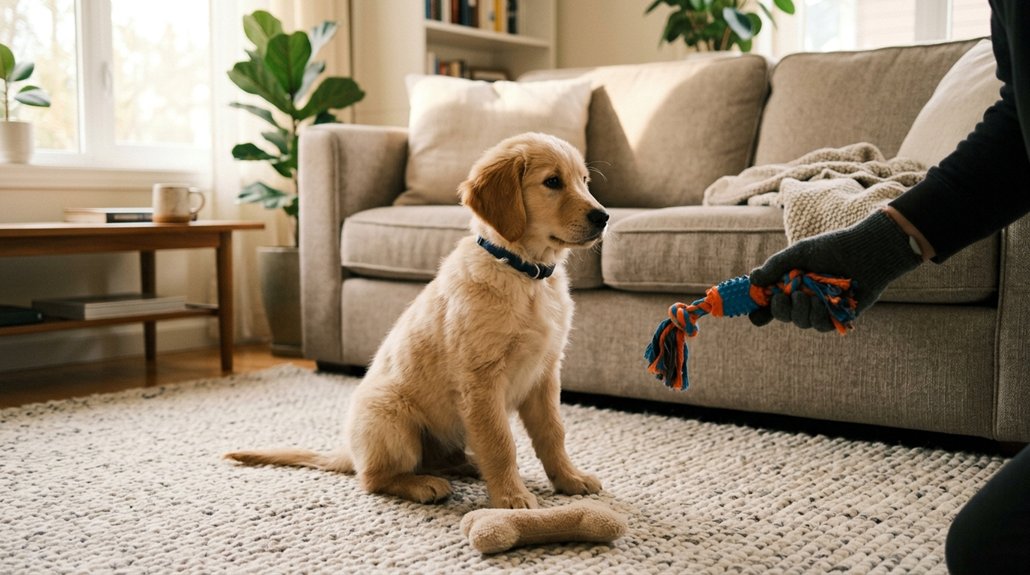
Dealing with a puppy that’s prone to anxiety-driven chewing can be challenging, but with patience and the right strategies, you can help your furry friend feel more comfortable when alone. Identifying anxiety triggers like separation distress is the first step. Implement calming techniques to ease these behaviors. Here’s how:
- Gradual Separation: Slowly increase your puppy’s time alone, rewarding calm behavior to desensitize them.
- Engaging Toys: Utilize puzzle toys and chew items to keep your puppy occupied and reduce anxiety.
- Exercise & Stimulation: Regular physical activity and mental challenges help channel energy and lower frustration levels.
- Professional Help: Consult a behaviorist if chewing persists for tailored strategies.
These steps create a calm, manageable environment for your pup.
Creating a Safe Environment for Your Puppy
Ensuring your puppy’s environment is both safe and stimulating is essential for its well-being and development. Create safe spaces by removing hazards like electrical cords, medications, and small toys, which can lead to accidental injuries. Use puppy gates or crates to confine your puppy to a secure area, fostering an environment where it can explore safely with appropriate toys. Store valuables, such as shoes and clothing, out of reach to minimize temptation and encourage positive habits. Consider using chew-resistant furniture covers or sprays to deter unwanted chewing. Regularly inspect your home for any potential choking hazards, adding an extra layer of protection. By doing so, you’re not just keeping your puppy safe but also promoting environmental enrichment.
Redirect Chewing With Ideal Toys
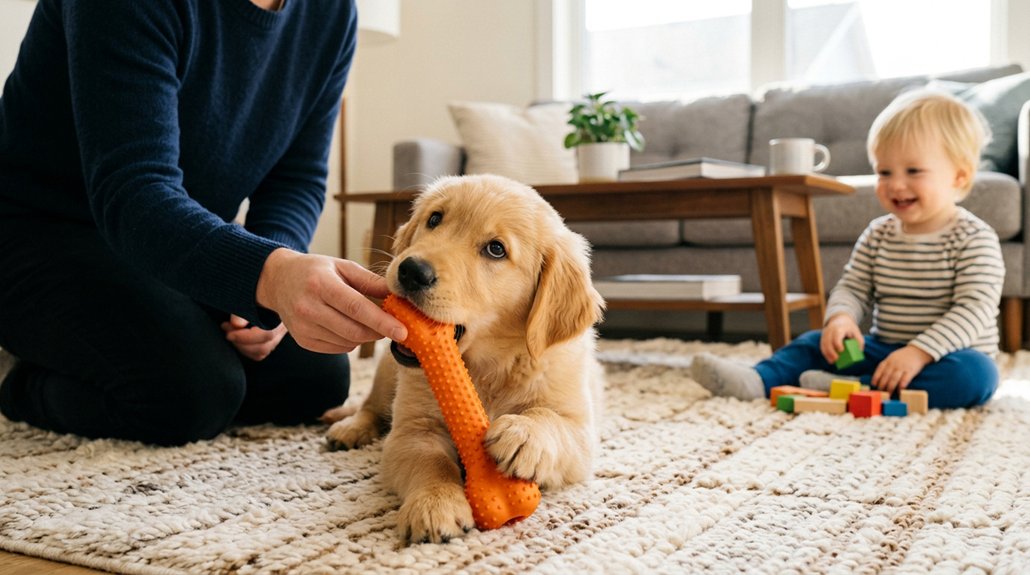
When redirecting your puppy’s chewing habits, it’s important to select a variety of chew toys that cater to their age and chewing strength, ensuring they’re safe yet durable. Pay close attention to your puppy’s preferences by offering different textures and rotating them regularly to keep their interest piqued. With suitable options consistently available, you’ll foster a positive chewing routine and prevent them from targeting inappropriate items.
Select Suitable Chew Toys
Although it might be tempting to offer your puppy any household item as a chew toy, selecting suitable chew toys is essential for preventing dental injuries and promoting safe chewing habits. Prioritize toys specifically designed for puppies. These should be made of safe chew toy materials and soft enough to indent with your fingernail. Choose puppy toy sizes that are larger than your puppy’s throat to avoid choking risks. Keep your puppy engaged by offering a variety of textures.
To guarantee you’re selecting the best options, remember:
- Opt for toys that are durable and designed for chewing.
- Confirm toys are large enough to prevent choking.
- Rotate toys to maintain novelty.
- Use high-quality toys to encourage healthy chewing habits.
These selections cater to both safety and delight.
Monitor Toy Preferences
Every puppy has its own unique preferences, making it important to closely monitor which textures and shapes they gravitate towards in chew toys. By understanding their texture preferences and engaging in shape exploration, you can offer a selection that keeps their interest piqued. Introduce toys made from various materials such as rubber, fabric, and softer options to see what your puppy prefers. Rotate these toys regularly; this prevents boredom and encourages them to use designated chew items instead of your belongings. Praise and reward them with treats when they choose appropriate toys over other items. You can gradually entice them to explore new toys by incorporating them into play sessions, which makes these new additions more appealing and enjoyable for your puppy.
Use Consistent Training to Build Good Habits
Building good habits in your puppy is essential, and consistent training serves as the foundation for this process. Habit reinforcement is key, helping your puppy distinguish what’s appropriate to chew. You need to establish command consistency with firm, simple commands like “No!” or “Leave it!” This clarity guarantees your puppy recognizes and responds to your guidance. Rewarding positive behavior supports habit reinforcement, making use of treats and praise when your puppy chooses suitable chew toys.
Consistent training and firm commands help your puppy learn to chew appropriate items, reinforced by rewarding positive behavior.
- Use consistent commands such as “drop it” to interrupt inappropriate chewing.
- Praise and treat your puppy when it chews on acceptable items.
- Rotate chew toys to keep your puppy interested.
- Maintain regular training sessions to embed necessary commands.
Staying patient and consistent will foster a well-behaved, happy puppy.
Engage Your Puppy With Mental and Physical Activities
While nurturing a puppy’s development, it’s crucial to engage them with both mental and physical activities to foster a well-rounded, content pet. Active playtime, including fetch or tug of war, helps manage your puppy’s energy and deters unwanted chewing. Incorporating brain games and enrichment activities, like puzzle toys, guarantees mental stimulation and serves as effective distraction techniques. Establish a daily routine with consistent exercise, such as walks, to prevent boredom and curb destructive behavior. Introduce appropriate chewables to redirect their chewing instincts. Implement positive reinforcement by rewarding them for appropriate behaviors. Employ supervision strategies like using puppy gates or crates to limit access to inappropriate items when you can’t supervise closely, reinforcing safe and healthy habits.
Frequently Asked Questions
What Age Does a Puppy Stop Chewing Everything?
Puppies typically stop excessive chewing around 12 months. It’s due to teething and high energy. To ease this phase, provide effective chew toys. Your understanding and patience help manage puppy chewing causes and encourage appropriate chewing habits.
What Is the 7 7 7 Rule for Puppies?
Think of the 7 7 7 Rule as a compass guiding a puppy’s journey from chaos to calm. It outlines structured training techniques for keeping puppy chewing in check, ensuring a happy, well-adjusted companion for life.
What Month Is Hardest With a Puppy?
The hardest month with a puppy is typically around four to five months due to teething challenges. You’ll need distraction techniques like proper chew toys and consistent training to manage their chewing as they explore their new world.
What Is a Red Flag Puppy’s Behavior?
Keep an eye out for furniture destruction due to destructive chewing—it’s a red flag. If your puppy’s constantly barking or exhibiting attention-seeking behaviors, it might be stressed from boredom, anxiety, teething pains, or lack of training.
Conclusion
Guiding your puppy away from destructive chewing is like steering a ship through stormy seas. You’ve got the map—understanding their needs and anxieties, creating a safe environment, and providing engaging toys. By being consistent and patient, you’re building a foundation of trust and good habits. Remember, every chew redirected is a step closer to calmer waters. With a mix of mental and physical activities, you’re setting the course for a happier, well-behaved puppy.