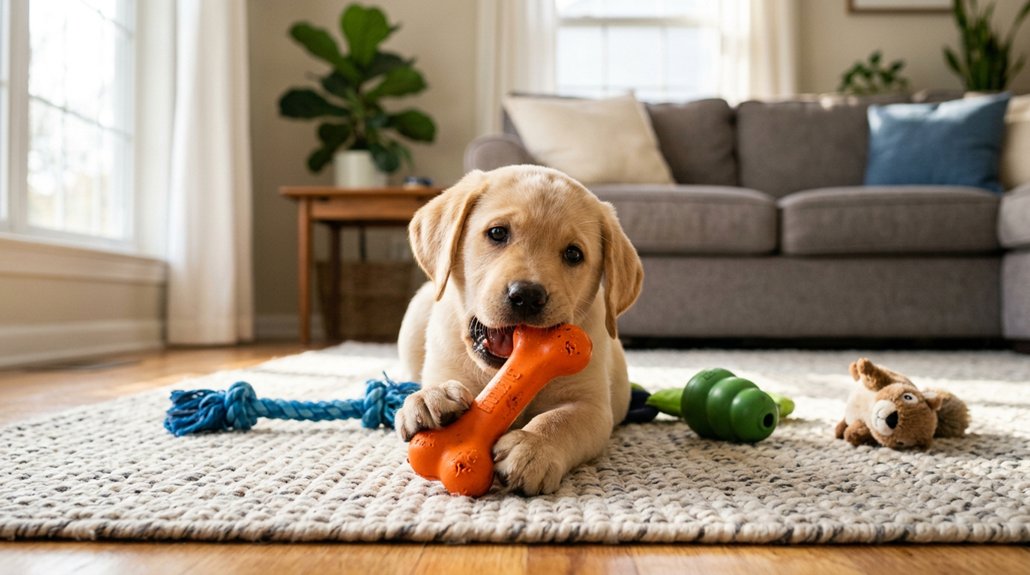
To curb puppy biting, invest in durable chew toys made from non-toxic materials like the KONG Puppy Chew Toy or Nylabone Freezer Dog Bone, which satisfy natural chewing instincts and provide teething relief. Rotate toys frequently to prevent boredom, ensuring consistent engagement. Choose interactive puzzle toys to stimulate mental growth and redirect biting behaviors. Regularly inspect toys for safety and avoid harmful substances like BPA. Additionally, discovering diverse toy options can enhance both safety and enjoyment.
Key Takeaways
- KONG Puppy Chew Toy offers durable, safe chewing satisfaction, essential for redirecting biting behavior.
- Nylabone Puppy Chew Freezer Dog Bone provides cooling relief, aiding in reducing teething discomfort and biting.
- Petstages Cool Teething Stick is ideal for strong chewers, providing both durability and biting redirection.
- Interactive puzzle toys engage puppies mentally, effectively reducing their urge to bite out of boredom.
- Regular toy rotation keeps puppies interested, offering fresh excitement and promoting positive chewing habits.
Why Do Puppies Bite?
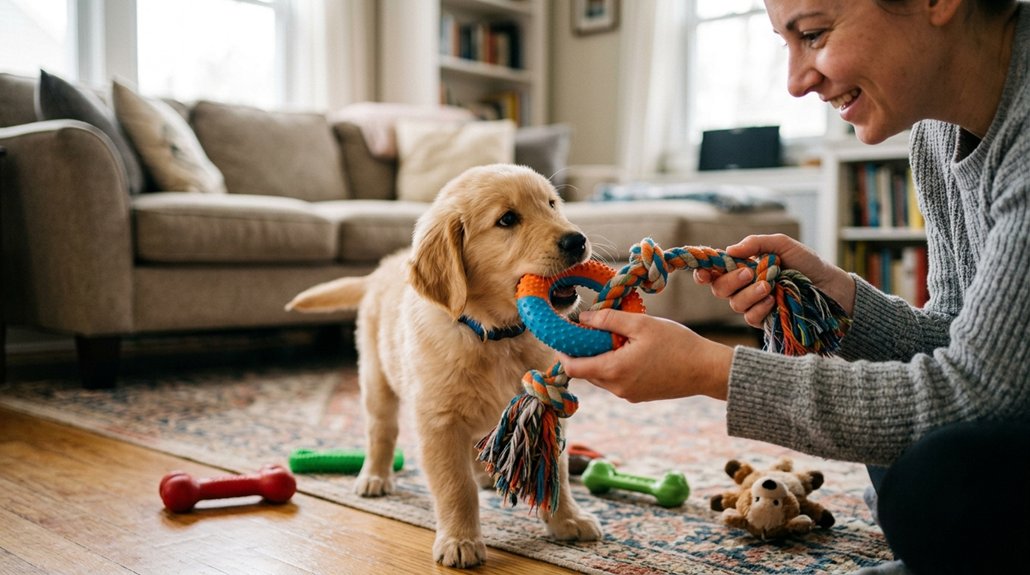
When welcoming a new puppy into your home, it’s crucial to understand why they have a penchant for biting. Puppies, during their early stages, rely heavily on puppy exploration to make sense of their surroundings. Biting instincts are a natural part of this process. These behaviors are heightened as they interact with their environment, alleviating boredom or stress through mouthing.
Teething, a significant factor, usually persists until around 7 months, amplifying their need to chew due to sore gums. Social interactions with their litter teach them bite inhibition, signaled by a sharp yelp when bitten too hard. They’re more receptive to non-verbal cues, such as turning away. Consistently offering chew toys during mouthing incidents helps reinforce acceptable biting habits.
Training Techniques to Redirect Biting
Redirecting a puppy’s biting behavior requires a handful of effective training techniques that not only guarantee safety but also foster healthy habits. Immediately substitute your hand with a chew toy to direct the puppy’s chewing instincts toward appropriate objects. Combine this with positive reinforcement by rewarding calm or gentle play using verbal praise or treats, effectively enhancing bite inhibition. Additionally, implement time-out techniques by placing your puppy in a crate or a designated area to emphasize that biting results in the end of fun.
Key steps include:
- Substitute your hand with a chew toy for redirection.
- Use positive reinforcement with praise or treats to reward gentle behavior.
- Apply time-out techniques to highlight the consequence of biting during play.
Consistent implementation encourages better behavior while maintaining safety.
Top Durable Chew Toy Picks for Puppies
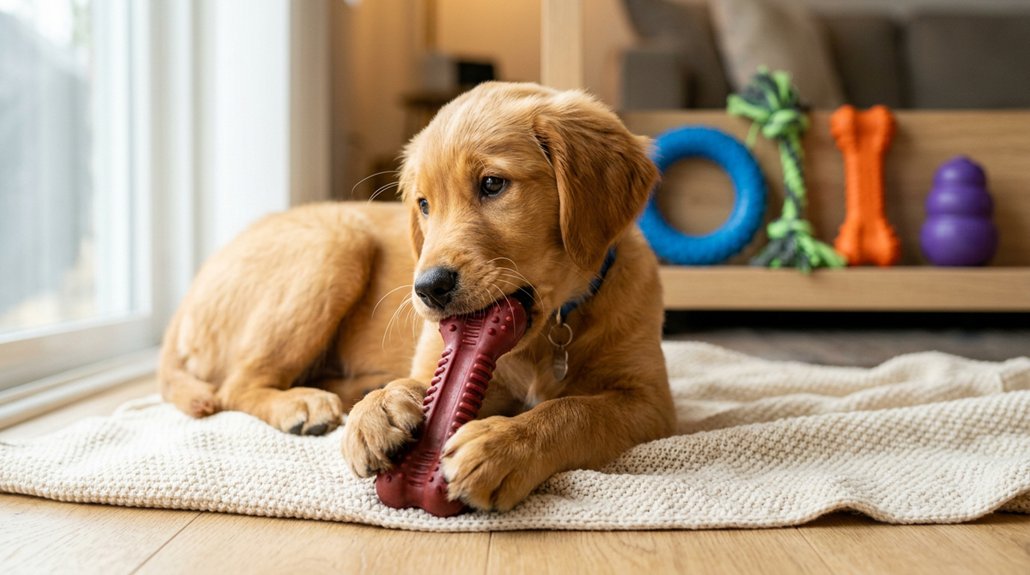
As you commence on the journey to curb your puppy’s biting behavior, selecting the right durable chew toy becomes essential. Evidence suggests that durable chew toys cater to various puppy preferences, while their carefully chosen materials contribute greatly to their effectiveness. The KONG Puppy Chew Toy is a popular choice, as its robust design satisfies natural chewing instincts and promotes dental health. For teething pups, the Nylabone Puppy Chew Freezer Dog Bone offers cooling relief with safe chewing. If your puppy is a strong chewer, the Petstages Cool Teething Stick provides a soothing outlet. Earth Animal No-Hide Chews deliver a safer, rawhide-free option, fostering healthy chewing behavior. For aggressive chewers, Goughnuts offers nearly indestructible toys, prioritizing durability and safety.
Choosing Safe and Non-Toxic Puppy Toys
When selecting toys for your puppy’s biting behavior, it’s essential to prioritize non-toxic materials to guarantee safe chewing. Opt for durable options like high-quality rubber or nylon, as they can handle aggressive chewers and reduce the risk of breaking into small, hazardous pieces. Additionally, regularly inspect the toys for wear and tear to make sure they remain safe for your pup.
Prioritize Non-Toxic Materials
Ensuring your puppy’s toys are made from non-toxic materials is essential for their safety and well-being. Choosing eco-friendly options and focusing on material safety can considerably reduce your pet’s exposure to harmful chemicals. Always look for certifications like ASTM or ISO, which confirm toys meet strict safety standards. To protect your puppy, select products free from dangerous substances such as BPA and phthalates.
- Certifications: Search for ASTM or ISO approved toys for guaranteed safety.
- Non-Toxic Claims: Buy from brands highlighting their BPA and phthalate-free items.
- Material Choices: Prefer durable materials like nylon and hard rubber.
Regularly inspect toys for damage, as even non-toxic ones can become a hazard if they start to break apart.
Focus on Durability
Alongside prioritizing non-toxic materials, durability stands as a key factor in selecting the right toys for your puppy’s biting behavior. Not all toys are created equal, especially when considering your puppy’s unique chewing patterns. High-quality materials like nylon or hard rubber are recommended, as they’re resilient against aggressive biting and help prevent your pup from ingesting broken pieces. Opt for toys with varied textures and shapes that cater to different chewing styles, increasing toy longevity and keeping your puppy engaged. Always inspect toys regularly for signs of wear and tear, as damaged toys can pose choking hazards. Brands such as Goughnuts and Nylabone are reputable for producing nearly indestructible toys, designed specifically to withstand heavy chewers.
Interactive Puzzle Toys to Keep Puppies Engaged
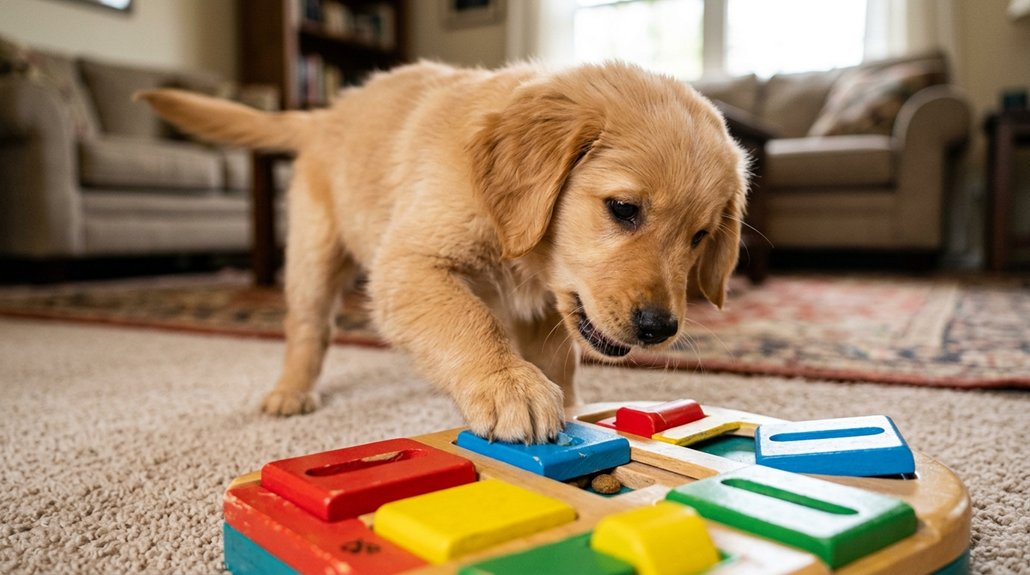
While managing puppy biting behavior can be challenging, interactive puzzle toys offer an effective solution by engaging your pup’s mind and reducing boredom-related biting. The puzzle benefits are vast: these toys promote exploration and problem-solving to keep your puppy mentally engaged. Featuring designs like pull-out drawers and sliders, they present engaging challenges that sustain interest.
Interactive puzzle toys effectively engage your puppy’s mind, reducing boredom-related biting through exploration and problem-solving.
Puzzle toys often incorporate sound, enhancing engagement and making them more enticing. With adjustable difficulty levels, these toys offer ongoing stimulation, helping your puppy to adapt and learn without becoming frustrated. Regular use can teach your puppy patience and perseverance, key in discouraging impulsive biting.
- Discover various designs like sliders and pull-out drawers.
- Enjoy noise features for enriched interaction.
- Adjust difficulty for sustained engagement.
Comfort Toys for Teething Relief
Comfort toys provide invaluable support during the teething phase, helping to alleviate stress and soothe your puppy’s sore gums. Heartbeat plushies are particularly effective in reducing anxiety, as their rhythmic pulsing mimics the maternal comfort of a heartbeat, making your puppy feel secure in unfamiliar settings. Meanwhile, heating plush toys with soothing textures can deliver warmth and comfort, effectively easing gum discomfort. Remember, supervised use of these toys is key, as you want to guarantee your puppy enjoys the benefits without any safety risks. Introducing these comfort toys can also simplify crate training by establishing positive associations with their new home environment. By selecting these toys thoughtfully, you’ll help your puppy shift more smoothly during this challenging teething stage.
How Chew Toys Aid in Dental Health
As your puppy navigates the teething stage with comfort toys, chew toys designed for dental health become equally important. These toys do more than satisfy the chewing urge—they actively promote dental hygiene. Textured surfaces on chew toys gently scrape away food particles and plaque from their teeth, holding dental health issues at bay. For instance:
- Flavored dental toys: Encourage longer chewing sessions, enhancing the cleaning effect while soothing teething discomfort.
- Durable construction: Guarantees the toys are made from safe materials, avoiding harmful fragment ingestion.
- Long-term benefits: Maintain dental health, reducing the risk of future dental diseases as your puppy grows.
Keeping Puppy Toys Safe and Exciting Over Time
To guarantee your puppy’s toys remain safe and exciting, regularly inspect them for signs of wear and tear to prevent any choking hazards. Rotating toys frequently is key; this not only keeps their interest piqued but also encourages exploration and engagement. By consistently introducing a fresh mix of textures and challenges, you’ll support your puppy’s development and maintain their enthusiasm.
Regular Toy Inspections
When maintaining a safe and engaging environment for your puppy, regular toy inspections are essential to prevent potential hazards. Ensuring toy safety involves checking for wear and tear that could pose choking hazards or ingestion risks. Set a frequent inspection schedule to look for signs such as frayed edges or exposed stuffing. This helps guarantee the toys remain both safe and fun.
To maximize safety and enjoyment:
- Inspect toys regularly for damage or wear.
- Replace damaged toys promptly to prevent accidents.
- Clean toys often to avoid bacterial buildup and maintain hygiene.
Rotate Toys Frequently
Keeping your puppy’s toys engaging is essential for stimulating their mind and discouraging unwanted chewing behaviors. Implementing a toy rotation system prevents boredom by introducing variety, which is vital for engaging your puppy’s natural chewing instincts. Rotate toys frequently to cater to your puppy preferences; different textures, shapes, and sizes keep them intrigued and less likely to chew inappropriate items. Regularly swap out old toys and include new ones every few weeks to refresh interest, making old toys seem exciting again. Always inspect toys for wear and replace any damaged ones immediately to maintain safety. Additionally, using rotating toys during training reinforces positive behaviors and shifts their focus away from inappropriate chewing, like on your hands or furniture.
Frequently Asked Questions
What Toys Help With Puppy Biting?
You’ll find chew toys like KONGs redirect biting effectively, while interactive puzzles keep your pup mentally stimulated. They divert energy, offer teething relief, and promote proper chewing habits, curbing unwanted biting behaviors with education-supported approaches.
How Do You Discipline a Puppy Who Is Biting?
To discipline a biting puppy, use positive reinforcement for gentle play, rewarding calmness with treats. Briefly stop play after a hard bite to teach bite inhibition. Consistently encourage appropriate behavior with praise and structured interactions.
What Is a Red Flag Puppy’s Behavior?
Imagine your puppy always biting and growling when approached; it’s a red flag. This shows potential puppy communication issues and biting triggers, indicating stress or inadequate socialization. Such behaviors often require professional guidance.
What Age Are Puppies Most Bitey?
You’ll find puppies are most bitey around 3 to 6 months old. This period involves teething and learning bite inhibition. Knowing this can guide you in teaching them appropriate behaviors, ensuring healthy, playful interactions.
Conclusion
Incorporating the right toys can work like magic in curbing your puppy’s biting behavior. By selecting durable, non-toxic chew toys, you redirect energy and offer relief, transforming even the feistiest pup into a well-mannered companion. Interactive puzzles keep their minds sharp, while comfort toys ease teething woes. Remember, safe and exciting toy rotation stimulates their curiosity and supports dental health. Armed with the right tools, you’re not just training a puppy—you’re raising a well-rounded, happy dog.