
Understanding puppy chewing involves recognizing its role in development and soothing teething discomfort. Redirect this behavior by offering varied, safe chew toys and using commands like “drop it” or “leave it,” coupled with positive reinforcement. Confirm your home is puppy-proofed, create designated chew zones, and maintain consistent training to establish boundaries. If chewing persists or is linked to anxiety, professional guidance may be needed. Stay tuned for more strategies in managing puppy chewing effectively.
Key Takeaways
- Offer diverse, safe chew toys tailored to your puppy’s age and strength to redirect chewing effectively.
- Use clear commands like “drop it” and “leave it,” coupled with positive reinforcement upon compliance.
- Employ interactive toys, such as food puzzles, to mentally engage puppies and prevent boredom-induced chewing.
- Puppy-proof your home by removing tempting items and create designated chew zones with engaging toys.
- Consult professionals if chewing is excessive or linked to anxiety, adjusting strategies based on observations.
Why Puppies Love to Chew
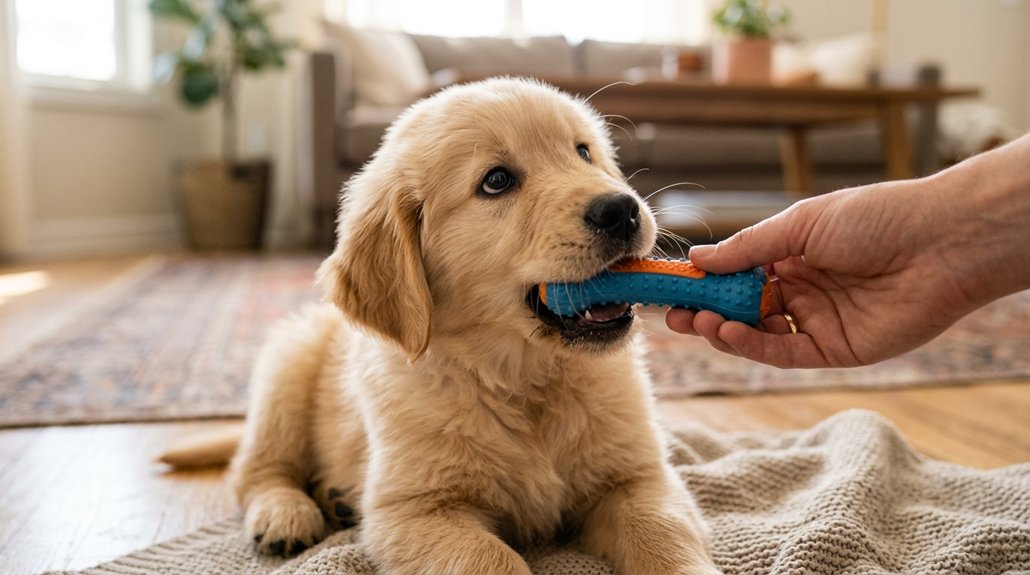
While it might seem like a nuisance when your puppy chews on everything, it’s a natural and essential part of their development. Puppies explore their surroundings primarily through their mouths, so chewing is integral to their exploratory behavior. At around 12 weeks, they begin to face teething challenges, as baby teeth make way for adult ones. This can cause discomfort, which chewing alleviates, providing relief while also offering mental stimulation. Without appropriate outlets, puppies may become bored, using less desirable objects to satisfy their chewing instincts. Chewing also assists in developing bite inhibition, as your puppy learns to control the pressure exerted on toys. By addressing both exploration and teething needs, you can guarantee your puppy grows into a well-adjusted adult dog.
Essential Strategies for Redirecting Chewing
Understanding why puppies chew can guide you in implementing strategies to direct this natural behavior effectively. Offering a variety of safe chew toys with diverse textures and sizes can capture your puppy’s interest. The chew toy benefits are twofold: they satisfy natural chewing urges and safeguard your belongings. Interactive toys, such as food-dispensing puzzles, engage your puppy’s mental capabilities and mitigate boredom-induced chewing.
When you catch your puppy chewing something inappropriate, calmly redirect their attentions to an approved chew toy, using commands like “drop it” or “leave it.” Once they comply, employ positive reinforcement by praising them. Maintaining a consistent routine of daily exercise and mental stimulation helps curb excessive chewing triggered by boredom or pent-up energy, promoting long-term proper behavior choices.
Design a Chew-Friendly Home

To effectively design a chew-friendly home, start by puppy-proofing your environment. Remove or secure tempting items like shoes, cords, and remote controls to minimize inappropriate chewing. Use baby gates to restrict your puppy’s access to rooms with valuable or unsafe items. Instead, focus on creating designated chew zones that are both secure and engaging. These safe spaces should offer a variety of chew toys with different textures and sizes, keeping your puppy occupied and content. Regularly rotating these toys can sustain your puppy’s interest, preventing boredom. Additionally, establish a chew-free zone using a crate or puppy pen, allowing your puppy to enjoy their chew toys without risking household damage. This structured approach promotes healthy chewing habits.
Top Chew Toys and Alternatives
Designing a chew-friendly home sets the stage for selecting the ideal chew toys and alternatives that cater to your puppy’s needs. Choosing the right toy materials, such as durable rubber or nylon, is essential. These materials provide safety by withstanding even the strongest chewers. For mental engagement, consider puzzle toys like Kongs or Buster Cubes, which can be filled with treats or peanut butter, offering a stimulating and rewarding experience. Don’t overlook frozen chew toys; they not only redirect your puppy’s chewing but also soothe teething discomfort between 12 weeks and 6 months. Size selection is fundamental—choose toys that match your puppy’s size to prevent choking hazards. Rotating toys regularly keeps their interest piqued and mitigates boredom.
Master Puppy Chewing Commands

Mastering puppy chewing commands demands a structured approach to guarantee your furry friend understands the boundaries of acceptable chewing. Command consistency is crucial. Use clear verbal cues like “leave it” or “drop it” consistently for inappropriate chewing, reinforcing behavior association. Immediately redirect your puppy to suitable chew toys and get them to associate commands with acceptable behavior.
Here’s a quick guide:
| Command | Preferred Behavior | Reinforcement Method |
|---|---|---|
| “Leave it” | Ignoring unwanted items | Offer chew toy |
| “Drop it” | Releasing current item | Praise with treats |
| “Take it” | Grasping chew toy instead | Affection |
| “Wait” | Pausing impulsive action | Consistent practice |
| “Focus” | Redirecting attention | Varied environments |
Practice in different settings and gradually add distractions to build resilience.
Rewarding Preferred Chewing Choices
Encourage your puppy’s good chewing behavior by providing a diverse array of suitable chew toys with varying textures and shapes. This not only satisfies natural chewing instincts but also offers significant chewing benefits by promoting dental health and mental stimulation. To reinforce this preferred behavior, guarantee prompt reward timing. Here’s what you can do:
- Immediate Praise: As soon as your puppy chooses an appropriate toy, offer verbal praise or a small treat to reinforce the correct choice.
- Interactive Toys: Use food-dispensing toys like Kongs to enhance mental engagement and satisfaction.
- Toy Rotation: Regularly switch up their toys to sustain interest and reduce inappropriate chewing temptations.
- Close Monitoring: Observe their habits closely to provide immediate reinforcement, solidifying the positive association.
Tackle Stubborn Chewing Habits
To effectively tackle stubborn chewing habits, it’s vital to deploy consistent training techniques that reinforce positive behaviors. Make certain you remove tempting items from your puppy’s environment and offer a variety of engaging chew toys with different textures and shapes. Regularly redirect your puppy to these appropriate alternatives and reward them with praise or treats to strengthen the desired habit.
Consistent Training Techniques
When addressing stubborn chewing habits in puppies, it’s essential to establish a consistent training routine that effectively redirects their behavior. Implementing a structured training schedule, where specific commands and actions are practiced regularly, can greatly aid in curbing unwanted chewing. Utilize positive reinforcement to promote desirable behavior by offering praise and treats when your puppy chews on approved items. Here’s a concise plan:
- Set a Training Schedule – Designate specific times daily for training sessions.
- Use Verbal Cues – Employ clear commands like “no” or “leave it” when inappropriate chewing occurs.
- Provide Redirection – Quickly offer suitable chew toys when correcting behavior.
- Reward Compliance – Consistently praise and reward when they adhere to commands.
These steps, executed persistently, can reshape stubborn habits.
Effective Toy Alternatives
Choosing the right chew toys is essential for addressing stubborn chewing habits in puppies. As natural chewers, puppies need durable options made from safe materials like rubber or nylon. These withstand strong bites and keep them engaged longer. Offer food-dispensing toys, such as Kongs filled with peanut butter, which satisfy chewing needs while stimulating problem-solving skills.
Rotate your puppy’s chew toys regularly to maintain novelty and interest. This toy rotation prevents boredom and discourages them from resorting to inappropriate chewing. Present a variety of textures and shapes to cater to their preferences, keeping their interest piqued. Encourage positive chewing behavior by rewarding your puppy with praise or treats when they select appropriate toys over personal belongings, reinforcing desired habits effectively.
Knowing When to Consult an Expert
Spotting the signs when it’s time to consult an expert for your puppy’s chewing behavior can be critical to ensuring their well-being. It’s important to seek a professional’s help when:
- Chewing is excessive or persistent: Engage a dog trainer or behaviorist for a thorough behavioral assessment, especially if there’s associated anxiety or aggression.
- Health issues arise: Obtain veterinary advice if chewing is linked to teething pain, dietary deficiencies, or gastrointestinal distress.
- Resource guarding appears: Enlist a Certified Applied Animal Behaviorist for specialized interventions tailored to your puppy’s needs.
- Redirection fails: If normal methods aren’t effective after weeks, gain expert insights through tailored strategies, possibly with structured training from a Certified Professional Dog Trainer.
Frequently Asked Questions
How to Redirect a Puppy From Chewing?
Use puppy distraction methods by offering appropriate chew toys in various textures and sizes whenever they start chewing on non-approved items. Command them with “leave it,” and reinforce good choices with praise, enhancing positive behavior and focus.
What Is the 7 7 7 Rule for Puppies?
The 7-7-7 rule suggests giving puppies seven minutes of exercise per week of age, focusing on their developmental stages. Don’t forget to provide appropriate chewing toys alongside physical and mental stimulation for balanced behavior management.
What Is the 10-10-10 Rule for Puppies?
Did you know puppies can chew through 1,000 unwanted items annually? The 10-10-10 Rule improves puppy behavior by allocating 10 minutes each to play, training, and socialization daily, ultimately helping in chewing prevention and fostering positive development.
What Is the Hardest Command to Teach a Dog?
The hardest command to teach a dog is “Come.” It’s an advanced training stage requiring consistent commands and patience. Using positive reinforcement, effective rewards, and mental stimulation helps overcome common challenges, reducing frustration and ensuring reliability.
Conclusion
Redirecting your puppy’s chewing habits is like guiding a curious explorer with a map. By establishing a chew-friendly environment and using strategic commands, you’re paving the way for success. Equip yourself with high-quality chew toys and reward good behavior to reinforce positive habits. If persistent challenges arise, seeking expert advice guarantees you’re on the right track. With this expert guidance, you’ll transform chew-time chaos into harmonious moments of learning and growth.