Cat diarrhea can result from sudden dietary changes, food intolerances, infectious agents like bacteria, viruses, or parasites, and even stress-induced gastrointestinal disturbances. If your cat experiences diarrhea for over 24 hours, it’s essential to seek veterinary care due to dehydration risks. Treatment involves rehydration, medications like Metronidazole, probiotics, and dietary adjustments. Preventive measures include gradual food changes and a stress-free environment. Discover more about identifying symptoms and tailored treatment options for your feline companion.
Key Takeaways
- Sudden dietary changes and food intolerance are common causes of cat diarrhea.
- Infectious agents such as bacteria, viruses, and parasites can lead to diarrhea in cats.
- Rehydration therapies and prescribed medications effectively treat dehydration and inflammation.
- Probiotics and bland diets help restore gut balance and stabilize digestive health.
- Gradually adjusting diet and maintaining an allergen-free environment prevents diarrhea.
Why Is My Cat Experiencing Diarrhea? Common Causes Explained
Ever wondered why your cat is experiencing diarrhea? Sudden dietary changes often trigger gastrointestinal upsets in felines due to their sensitive digestive systems. Introducing new foods can lead to intolerance, resulting in loose stools. Equally concerning are infectious agents, where bacteria, viruses, or parasites such as Giardia, hookworms, and roundworms cause diarrhea episodes. By disrupting the intestinal environment, these pathogens lead to malabsorption and inflammation, manifesting as watery stool. You should also consider any inappropriate ingestion of non-food items that can physically irritate the gut, further exacerbating diarrhea. While stress and environmental shifts can provoke transient diarrhea, persistent dietary or infectious challenges necessitate a diagnostic approach to evaluate underlying causes, ensuring effective management and return to ideal feline health.
Spotting Critical Symptoms That Require Vet Attention
When observing your cat’s health, it’s crucial to recognize red flags that necessitate veterinary intervention. Diarrhea lasting beyond 24 hours demands attention due to risks of dehydration and complications. Coupled with dietary changes or heightened stress factors, persistent diarrhea can reveal underlying issues. Vomiting alongside diarrhea is classified as an emergency, and urgent care is needed to mitigate potential life-threatening conditions.
Additionally, symptoms such as dehydration—indicated by sunken eyes or dry gums—require immediate professional assessment to prevent severe health hazards. The appearance of blood in stool is another critical sign, suggesting possible gastrointestinal bleeding. Furthermore, young, elderly, or immunocompromised cats experiencing recurrent episodes need prompt evaluation to address any potential extensive health threats. Seek timely vet assistance to guarantee ideal care.
What to Expect During a Vet Visit for Cat Diarrhea
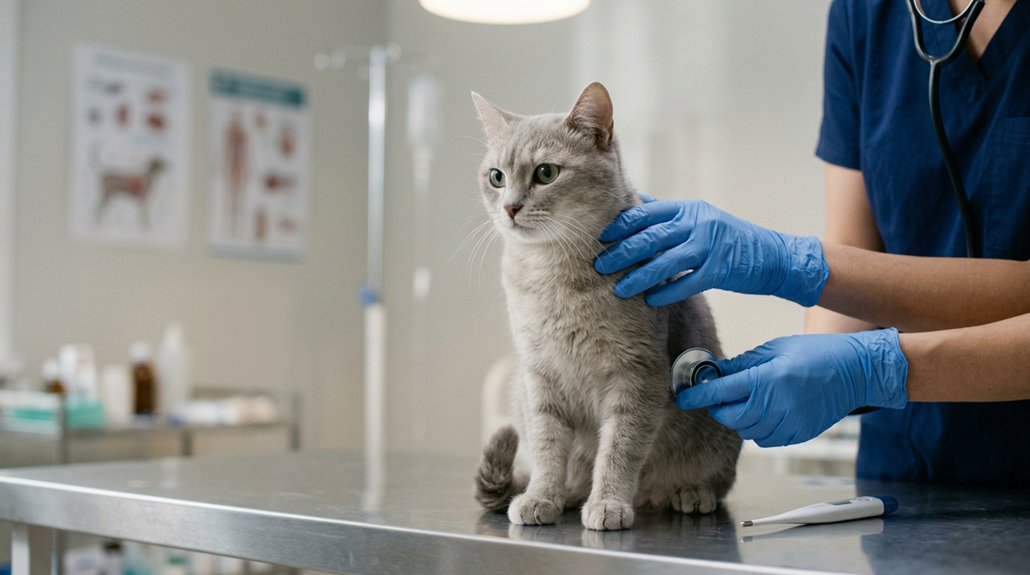
It’s important to approach your cat’s health with vigilance, especially if symptoms suggest a deeper issue as discussed previously. During a vet visit for cat diarrhea, expect thorough veterinary diagnostics to ascertain the underlying cause. Your vet will perform a thorough physical examination, key for effective diarrhea management, and assess dehydration. Gathering your cat’s medical history and dietary shifts is significant. Advanced diagnostics, such as fecal and blood tests, reveal infections or metabolic discrepancies. If the cause remains elusive, imaging techniques may be employed. Anticipate follow-up visits to monitor progress and adapt the treatment strategy.
- Physical examination: Assess dehydration and discomfort
- Medical history: Recent diet changes and toxin exposure
- Diagnostic tests: Fecal and blood analyses
- Advanced methods: Imaging or endoscopy possible
Effective Treatments for Cat Diarrhea
Although treating cat diarrhea effectively hinges on identifying its root cause, utilizing a multifaceted approach guarantees the best outcomes. To begin with, if dehydration ensues, rehydration therapies become imperative. Anti-inflammatory antibiotics like metronidazole target inflammation, while probiotics, such as Purina Pro Plan FortiFlora, support bacterial balance. Dietary adjustments, involving shifts to bland or hypoallergenic formulas, assist in stabilizing the gastrointestinal system. Importantly, home remedies should focus on gentle dietary changes rather than experimental treatments.
| Treatment Option | Purpose | Considerations |
|---|---|---|
| Rehydration Therapies | Combat dehydration | Monitor for symptoms like lethargy or dry gums |
| Metronidazole | Reduce inflammation | Veterinary prescription required |
| Probiotics | Restore gut balance | Use as directed for best results |
| Dietary Adjustments | Stabilize gut environment | Gradual change recommended |
Persistent diarrhea or severe symptoms necessitate veterinary intervention.
Tips for Preventing Diarrhea in Cats
Preventing diarrhea in cats starts with a few critical strategies that focus on dietary management and environmental stability. Gradual dietary adjustments are essential to avoid gastrointestinal disturbances. Implement these changes over a week to acclimate the feline’s digestive system effectively. Regular veterinary check-ups, inclusive of stool examinations, are imperative for monitoring and thwarting parasitic invasions.
Stress management plays a pivotal role; provide a serene environment to mitigate stress-induced gastrointestinal responses. Consistency is key—maintain a stable diet, free from allergens, optimized for feline nutritional needs. In addition, be vigilant about potential hazards, preventing the ingestion of non-cat-friendly substances such as human food and trash.
Implement the following to protect your feline companion:
- Gradual dietary adjustments
- Regular veterinary check-ups
- Stable, allergen-free diet
- Stress management and low-stress environment
Frequently Asked Questions
What Can I Give My Cat to Stop Diarrhea?
To manage your cat’s diarrhea, start with diet changes like offering a bland meal of boiled chicken or rice. Guarantee proper hydration by maintaining access to fresh water and considering electrolyte solutions for cats. Consult a veterinarian if symptoms persist.
How Long Is Too Long for a Cat to Have Diarrhea?
If diarrhea duration in your cat exceeds 24 hours, 20% of cases in cats can lead to chronic conditions impacting overall cat health. Immediate veterinary evaluation for diagnosis and treatment is essential to prevent potential complications.
How Do You Fix a Cat With Diarrhea but Seems Fine?
To address diarrhea in a seemingly fine cat, evaluate dietary changes and stress factors. Gradually shift to a bland diet like boiled chicken and rice, monitor hydration, and introduce feline probiotics. Consult a vet if symptoms persist.
Why Would a Cat Suddenly Get Diarrhea?
Why does a cat suddenly get diarrhea? It’s often a confluence of factors: sudden diet changes, stress, food allergies, viral infections, gastrointestinal parasites, medication side effects, or environmental shifts, making accurate diagnosis paramount for treatment.
Conclusion
So, you’ve ventured into the glamorous world of cat diarrhea—congratulations! You’ve unraveled the delightful mysteries of feline digestion, diagnosing the grand gastroenteritis with the finesse of a pet detective. Now that you’ve mastered the skill of identifying when Fluffy’s bathroom habits require immediate veterinary intervention, you’re ready to plunge into the equally thrilling domain of prevention strategies. Remember, nothing screams pet expertise like a cat with a pristine litter box. Go forth, oh wise caretaker, and may your feline’s gut reign supreme!