
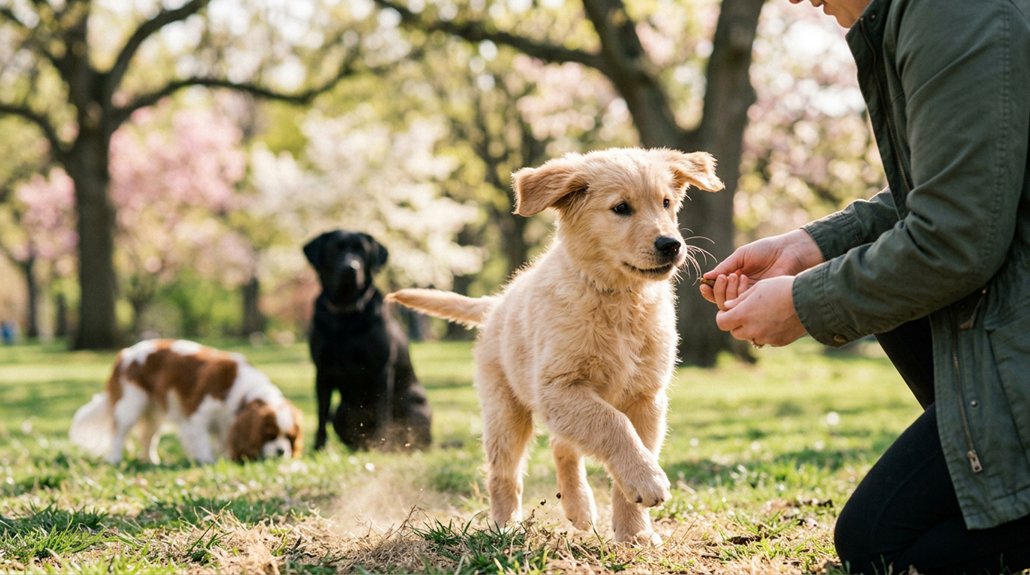
Start socializing your puppy between 3 to 16 weeks to guarantee confident and well-adjusted behavior. Begin with gentle exposure to new sights, sounds, and smells, always using positive reinforcement. Gradually introduce them to varied environments and people, monitoring their comfort closely. Guarantee all encounters are brief and pleasant. Introducing vaccinated dogs promotes safe socialization and healthy play. As they grow, continue to build their confidence through diverse experiences. There’s more guidance to help your puppy thrive ahead.
Key Takeaways
- Begin puppy socialization between 3 to 16 weeks, crucial for shaping future behavior and reducing the risk of behavioral issues.
- Gradually introduce various environments and stimuli, using positive reinforcement to ensure comforting experiences and build trust.
- Initiate contact with people of diverse appearances, utilizing positive experiences to prevent fear-based reactions.
- Conduct safe introductions to vaccinated dogs at eight weeks, supervising interactions to ensure proper play and socialization techniques.
- Enroll in structured socialization programs and maintain consistent training to enhance confidence and adaptability.
Why Early Puppy Socialization Matters
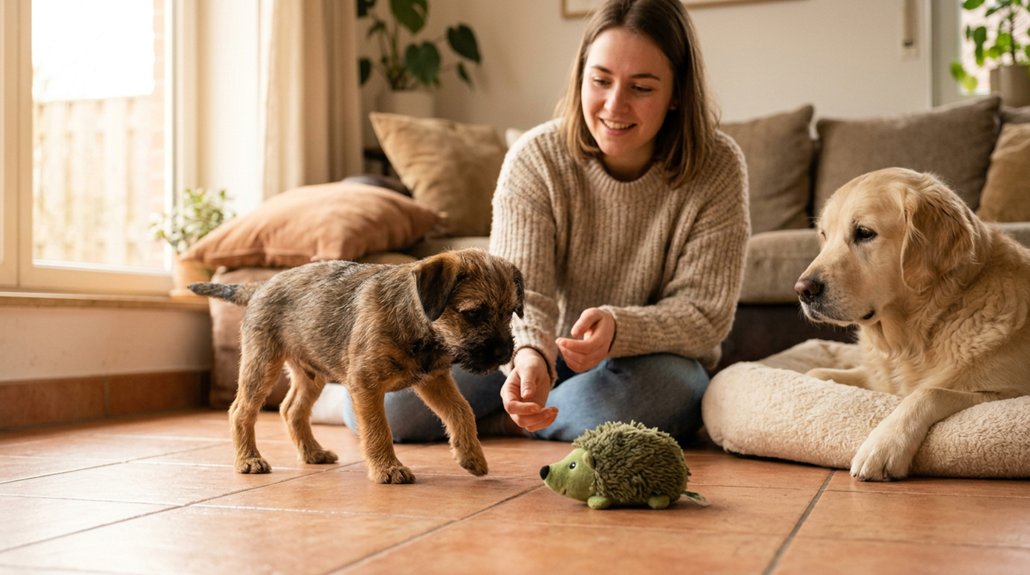
Understanding why early puppy socialization matters is crucial to raising a well-adjusted dog. During the critical period from 3 to 16 weeks, a puppy’s ability to adapt to various stimuli shapes their future behavioral outcomes. It’s important to engage your puppy with new people, sounds, and environments during this time to prevent fear-based reactions and anxiety, promoting confidence and trust. With proper socialization, you greatly reduce the risk of behavioral issues, which are a leading cause of death for dogs under three. A well-socialized puppy will mature into an adult capable of handling new experiences positively, ensuring they thrive emotionally. Your attentiveness during this brief yet critical window fosters a lifelong bond and supports your puppy’s overall health and happiness.
Creating Positive First Experiences
Starting on the journey of creating positive first experiences for your puppy is essential for developing their confidence and ease in the world. By beginning socialization at around 3 weeks, you tap into a critical phase for building lifelong assurance. Engage your puppy in sensory exploration by introducing them to new sights, sounds, and smells. Use positive reinforcement, such as treats and praise, to guarantee these novel experiences are enjoyable. Gradually expose your puppy to a variety of people, even those who wear hats or sunglasses, to foster comfort with diverse appearances. Keep early encounters brief and let your puppy set the pace, ensuring they feel safe. Remember, positive initial experiences lay the groundwork for a well-adjusted companion.
Safely Introducing Your Puppy to Varied Environments

As your puppy begins to thrive with positive initial experiences, it’s time to guarantee they’re ready to explore varied environments safely. Start around 8 weeks old, once they’re fully vaccinated, to confirm puppy safety from diseases. Introduce them gradually to new settings like pet stores or friends’ homes, where sights and sounds are less intimidating. Keep experiences short and positive, rewarding calmness and curiosity with treats and praise.
Monitor your puppy’s body language closely; let them set the pace. This approach reduces stress, building your pup’s confidence. Always associate new environments with positive reinforcement, creating familiarity and trust. By confirming introductions are gradual and reassuring, you’ll nurture your puppy into a confident adventurer, equipped to face the world with ease.
Helping Your Puppy Meet People and Pets
When you begin helping your puppy meet people and pets, it’s important to guarantee these initial encounters are positive and carefully managed. To minimize puppy fear, expose them to a variety of individuals—those with hats, sunglasses, or mobility aids. These diverse experiences reduce anxiety and build confidence. Gradually introduce your puppy to other vaccinated dogs starting at eight weeks, promoting safe socialization techniques and enjoyable play.
| People Exposure | Dog Introduction | Confidence Building |
|---|---|---|
| Hats and Sunglasses | After 8 weeks (vaccinated) | Include children |
| Mobility Aids | Supervise interactions | Positive reinforcement |
| Diverse Appearances | Monitor for stress/fear | Treats and praise |
Incorporate children in activities and always use positive reinforcement to enhance their comfort and excitement.
Continuing Advanced Socialization for Growth

Building on initial experiences with people and pets, the journey of socializing a puppy extends far beyond early interactions. To foster growth, advanced socialization focuses on building confidence and enhancing adaptability. Gradual exposure to stimulating environments, like dog parks, refines their resilience against new sights and sounds, while consistent training commands from family members guarantee your puppy receives integrated learning.
- Venture into varied settings: Encourage adaptability with trips to pet stores, exposing them to diverse stimuli.
- Participate in structured programs: The AKC Canine Good Citizen test offers a chance to boost fundamental social skills while gaining a sense of achievement.
- Celebrate small victories: Use treats and praise to reinforce positive responses to unfamiliar people and dogs, nurturing a strong bond and evoking joy in shared experiences.
Frequently Asked Questions
What Is the 7 7 7 Rule for Puppies?
The 7 7 7 Rule means exposing your puppy to seven people, places, and experiences before 16 weeks. Use puppy playdates and positive reinforcement to help them develop confidence and prevent anxiety or aggression later on.
Is 20 Weeks Too Late to Socialize a Puppy?
No, it’s not too late at 20 weeks. With patience and gradual exposure, your puppy can still reap socialization benefits, learning to overcome fear, build confidence, and prevent future behavioral issues in new situations.
What Is the 3-3-3 Rule for Puppies?
Think of the 3-3-3 rule as a roadmap: three days for initial settling, three weeks to start feeling at home, three months for full adaptation. This gradual process guarantees puppy exposure yields socialization benefits, enhancing confidence and trust.
What Is a Red Flag Behavior in Puppies?
When evaluating red flags in puppies, watch for fear signs like submissive posture, excessive barking, or withdrawal behavior. Play aggression and social anxiety can also indicate issues requiring attention for healthier socialization experiences.
Conclusion
In the grand scheme of raising a well-adjusted pup, early and ongoing socialization is truly a stitch in time that saves nine. By providing your puppy with positive first experiences, introducing them to diverse environments, and helping them meet various people and pets, you’re laying a solid foundation. Remember, the journey doesn’t end here. Continue to nurture their growth with advanced socialization techniques. Your careful efforts will foster a confident companion ready to face the world.