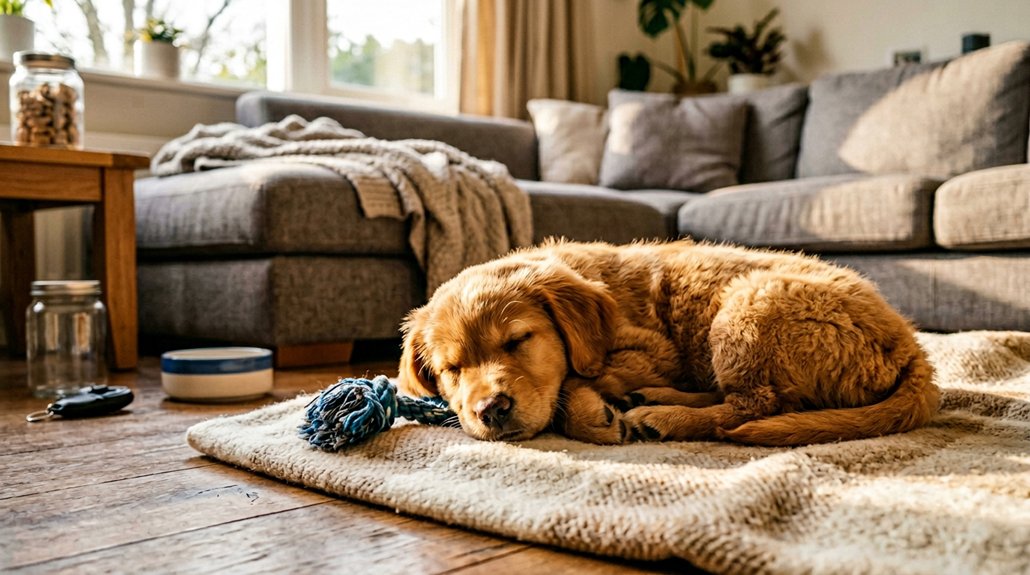
In your puppy’s first 30 days, expect to focus on creating a cozy environment with dedicated spaces and scents that provide comfort. Establish a feeding routine with high-quality food, and begin early training using positive reinforcement. Prioritize socialization with gentle exposure to new experiences. Schedule essential vet visits to guarantee their health, including vaccinations and deworming. Monitor and adjust to meet their needs. There’s more to discover that’ll help you provide the best care.
Key Takeaways
- Set up a cozy, dedicated space with familiar items to help the puppy transition smoothly.
- Follow a consistent feeding schedule with high-quality puppy food meeting AAFCO standards.
- Begin socialization and basic command training using positive reinforcement and short, engaging sessions.
- Schedule a vet visit for health checks, vaccinations, and discuss deworming protocols.
- Closely monitor and adjust health, nutrition, and behavior strategies for optimal growth and adaptation.
Creating a Cozy Home for Your New Puppy
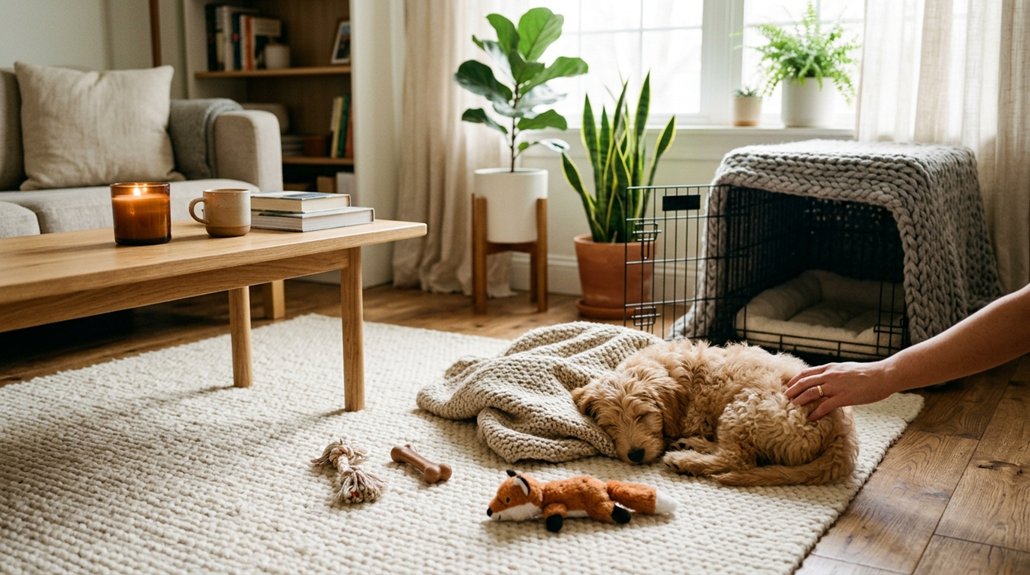
Creating a cozy home for your new puppy is vital in guaranteeing their smooth acclimatization to your household. Start by establishing a dedicated safe space for your puppy. A crate or playpen can keep them secure and foster a sense of puppy comfort. Add a soft bed and blankets carrying your scent to promote relaxation. Make sure the area is away from heavy foot traffic, offering tranquility important for their well-being. Install baby gates to prevent access to hazardous zones, allowing safe exploration. Incorporate items like toys or bedding from their previous environment to aid their shift. This strategic setup not only supports your puppy’s physical safety but also nurtures their emotional comfort, facilitating an overall smooth adjustment period.
Essential Feeding Tips for Puppy Growth
Once your puppy feels at home, the next step to ensuring their healthy development is a well-structured feeding plan. Begin by establishing a consistent feeding schedule; typically, puppies require three meals daily until about six months old. Choose high-quality puppy food complying with AAFCO standards to meet their nutritional needs. It’s essential to monitor portion sizes, modifying them according to your puppy’s activity level and weight. Overfeeding can lead to obesity and related health complications. Fresh water should be readily available, particularly after puppy meals and playtime, ensuring hydration and aiding digestion. When introducing new food, do so gradually. Mix increasing amounts of the new food with the old over several days to minimize digestive upset and allow for a seamless shift.
Guide to Puppy Socialization and Bonding
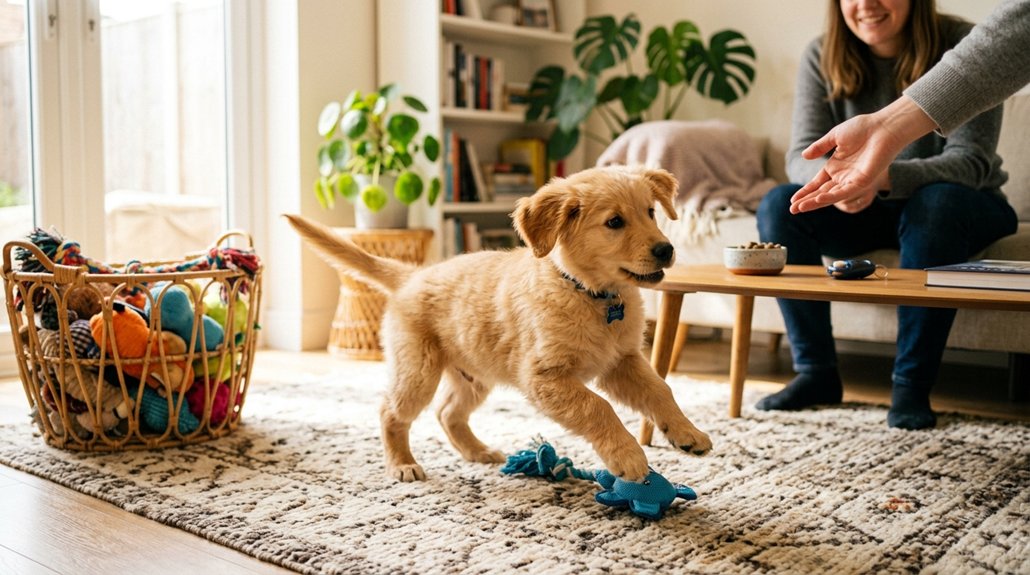
Although the first few weeks with your new puppy can be overwhelming, introducing them to socialization and bonding activities is essential for their development. The important socialization window opens as early as 3 weeks and extends to 14 weeks. During this period, engage in puppy playdates and socialization games, which are vital for encouraging adaptability and confidence. Gradually expose your puppy to new environments, sights, and sounds while monitoring their reactions closely to avoid fear or anxiety. Positive reinforcement, like treats and praise, enhances their comfort. Aim for 15-30 minutes of structured socialization activities daily to develop healthy social skills.
| Activity | Frequency | Purpose |
|---|---|---|
| Puppy Playdates | Regular | Learn social cues and behaviors |
| Socialization Games | Daily | Build confidence, adaptability |
| New Experiences | Gradual | Broaden comfort with environments |
Mastering Puppy Potty Training
To effectively master puppy potty training, you should prioritize establishing a consistent routine, which is critical for success. Puppies thrive on structure, so taking your puppy out regularly, particularly after meals and naps, will support their learning process. Additionally, employing effective reward techniques, such as offering immediate praise or treats when your puppy relieves themselves in the right spot, reinforces desired behaviors and fosters positive training outcomes.
Establish Routine Consistency
Creating a structured routine is essential for effective puppy potty training. Establish consistency by taking your puppy outside every 2-3 hours, which should include after meals, naps, and playtime. This outdoor routine is critical to reinforce bathroom habits. Monitor behaviors like sniffing, circling, or whining as indicators of needing to go. Promptly addressing these signs will help prevent indoor accidents. Designate a specific outdoor area for your puppy’s potty trips; having a consistent location aids in their recognition of appropriate places to relieve themselves. Use a specific cue, such as “go potty,” to build a strong association between the command and action. Employ immediate potty rewards—praise and treats—to positively reinforce your puppy when they successfully go outside, encouraging the desired behavior repetition.
Effective Reward Techniques
Mastering puppy potty training hinges on employing effective reward techniques that reinforce desired behaviors. Use positive reinforcement immediately after your puppy successfully potties outside; this vital reward timing helps them associate the action with a positive outcome. Praise or utilize high-value treat types, such as small, palatable dog treats, ensuring your puppy’s motivation remains high. Establishing a consistent potty cue phrase, like “go potty,” further aids understanding. Take them out frequently—especially after eating, drinking, or waking up—to prevent accidents. Avoid punishment for setbacks, as this fosters anxiety; instead, clean with enzyme-based solutions to deter revisits. Regular potty breaks every 2-3 hours will solidify their bathroom routine. Your patience and consistency are key in helping your puppy master potty training.
Starting Basic Puppy Commands
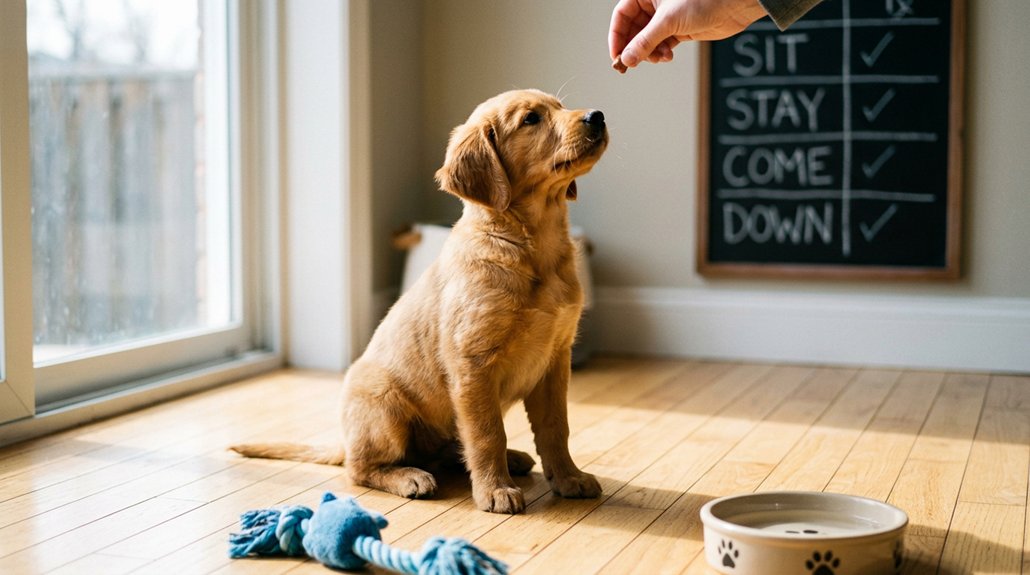
In the initial 30 days, it’s vital to introduce your puppy to essential commands like “sit,” “stay,” and “come” to establish robust communication and obedience. Consistency in verbal cues and hand signals is key, and you’ll need to be patient as your puppy learns. Employ positive reinforcement strategies by using high-value treats and incorporating play, ensuring training sessions remain engaging and effective without overwhelming your puppy.
Essential First Commands
While it might seem overwhelming at first, teaching your puppy basic commands like “sit,” “stay,” “come,” “down,” and “leave it” is essential for establishing clear communication and fostering obedience. Developing a robust puppy vocabulary is the foundation of successful training. Timing is vital: deliver commands promptly and reward instantaneously to reinforce correct behavior. Here’s a straightforward approach:
- Positive Reinforcement: Use treats and praise immediately after successful execution to strengthen your puppy’s learning.
- Short Sessions: Maintain 5 to 10-minute training intervals to keep your puppy engaged and focused.
- Consistency: Use identical words and tones with every command to prevent confusion, ensuring everyone’s on the same page.
- Increase Difficulty Gradually: As proficiency grows, introduce distractions and new environments for enhanced training solidity.
Consistency and Patience
Starting on the journey of teaching your puppy basic commands requires patience and consistency—key ingredients in building effective communication and fostering a trusting relationship. Establish training continuity by incorporating commands like “sit,” “stay,” and “come” within the first week. Keep sessions short—about 5-10 minutes—to maintain your puppy’s attention. Consistent command clarity guarantees your puppy understands expectations, so use the same cues and hand signals across all family members. This avoids confusion and reinforces learning. As your puppy masters these basics, gradually introduce more complexity in different environments to bolster their confidence. Remember, repetition is crucial. A methodical approach encourages your puppy’s willingness to learn, setting a solid foundation for future obedience training endeavors.
Positive Reinforcement Strategies
Introducing a new puppy to basic commands hinges crucially on the application of positive reinforcement strategies. Begin with commands such as “sit,” “stay,” and “come,” implementing clicker training to precisely mark desirable behaviors. Reward types, including high-value treats and sincere praise, create a positive association with command execution. Here’s how to structure effective training:
- Start Early: Initiate training within the first week to establish behavioral groundwork.
- Short Sessions: Limit training to 5-10 minutes to maintain the puppy’s engagement.
- Play Integration: Incorporate play to weave obedience into fun, strengthening your bond.
- Adaptive Challenges: Incrementally increase command difficulty, rewarding successful attempts to build confidence.
Employ these strategies to foster a well-rounded, enthusiastic-to-learn puppy.
Schedule Health Checks and Vet Visits
Although bringing a new puppy home is an exciting experience, it’s important to prioritize their health by scheduling timely vet visits. Within the first week, verify their vet vaccinations are current, beginning a series typically started at 6 to 8 weeks of age. Follow-up shots are critical every 3 to 4 weeks until 16 weeks, building necessary immunity. Discuss puppy deworming protocols, as many puppies have worms that require early intervention for ideal health. Consider microchip identification to confirm your puppy can be permanently identified if ever lost. These visits also allow regular checkups every 3 to 4 weeks, significant for health tracking and establishing a solid health care routine. Monitoring growth and confirming proper nutrition during these visits are essential in setting your puppy up for lifelong wellness.
Turn Behavior Challenges Into Good Habits
Transforming behavior challenges into good habits is essential during the initial phase of bringing your new puppy home. Scientific approaches can streamline this change effectively. Begin with consistent behavioral redirection to transform inappropriate actions. Here’s how:
- Chew Toy Alternatives: Offer safe chew toy alternatives regularly to redirect your puppy’s natural chewing instincts away from destructive habits.
- Routine Potty Training: Take your puppy outside after meals, play, and naps to quickly establish reliable potty habits.
- Positive Reinforcement: Use treats and praise to reward desired behaviors, ensuring your puppy associates them with positive outcomes.
- Consistent Cues: Implement commands like “no” or “leave it” to gently steer your puppy away from undesirable actions, providing clarity through consistency.
Monitor closely and adjust for best results.
Planning for Your Puppy’s Growth Beyond the First 30 Days
After successfully maneuvering behavior challenges, focusing on your puppy’s long-term growth is the next logical step. Changing to two meals a day after 18 weeks supports key growth milestones, promoting a healthy digestive system. Advance socialization beyond the first month by introducing your puppy to various environments and sounds, which can build confidence and alleviate future anxiety. Invest time in ongoing training, enrolling your pup in classes that target behavioral development and advanced obedience skills, significant as they mature. Regular veterinary visits are essential to monitor health, weight, and administer age-appropriate vaccinations. Mental stimulation through puzzle toys and interactive games aligns with your puppy’s cognitive development, reducing chances of behavioral issues as they progress into young adulthood.
Frequently Asked Questions
What Is the Hardest Month of a Puppy?
The hardest month with a puppy is the first one. You’ll face puppy training challenges like numerous accidents and difficulty with basic commands, and socialization difficulties as they adjust to new environments, requiring patience and consistency.
What Is the 7 7 7 Rule for Puppies?
The 7 7 7 Rule emphasizes structured phases: first, settle your puppy in; second, focus on socialization tips, exposing them to new environments; third, concentrate on puppy training with commands and routines to build confidence and security.
Where Should a Puppy Sleep When It First Comes Home?
Set up a puppy bed within a crate in a quiet sleeping area to ease anxiety. Incorporate familiar scents like a blanket from home and place the setup near your bedroom for reassurance during their initial nights.
What Is “I Love You” in Dog Language?
In dog language, 75% of affection is shown through body language. When your dog leans against you or wags its tail rapidly, it’s saying, “I love you,” using subtle vocal communication and trusting physical cues.
Conclusion
Steering through the first 30 days with your new puppy is akin to laying the foundation of a sturdy bridge: it’s essential for long-term stability. With cozy spaces, thoughtful feeding, socialization, and consistent training, you’re nurturing a strong and healthy bond. Don’t forget regular vet visits to guarantee optimal well-being. Transform challenges into opportunities, and plan for growth beyond the initial phase. Your commitment during this pivotal time will pave the way for a lifetime of companionship.