

To guarantee your puppy’s healthy growth, feed them a balanced diet rich in proteins, fats, vitamins, and minerals. Choose a high-quality, AAFCO-approved puppy food labeled “complete and balanced.” Adjust the feeding schedule as they grow, starting with four meals daily and reducing over time. Be mindful of the puppy’s portion sizes and use healthy treats sparingly. Fresh fruits, vegetables, and lean meats can be added occasionally. For further insights, there’s much more to explore.
Key Takeaways
- Choose high-quality puppy food labeled “complete and balanced” by AAFCO for proper nutrition.
- Small-breed puppies need nutrient-dense formulas; large-breed puppies require diets focused on joint health.
- Incorporate lean meats and a variety of fruits and vegetables in moderation for dietary diversity.
- Ensure that treats make up only 10% of daily calorie intake and adjust meal portions accordingly.
- Transition to adult food gradually when the puppy reaches maturity, ensuring the new diet meets AAFCO standards.
Understand Your Puppy’s Nutritional Needs

Although it can be tempting to assume puppies can eat the same diet as adult dogs, it’s essential to understand that their nutritional needs are unique and complex. Puppies experience rapid growth spurts requiring effective support through a balanced intake of nutrients. High-quality puppy food should deliver the right mix of protein, fats, vitamins, and minerals to sustain energetic play and development. Each breed differs, with small-breed puppies needing nutrient-dense formulas to fuel their considerable puppy energy, while large breeds demand diets aimed at joint health to thwart potential orthopedic issues. Feeding multiple small meals daily helps maintain stable energy levels and healthy growth. Regularly monitoring your puppy’s development guarantees you’re adapting portions as needed for peak health.
Choose the Best Puppy Food for Growth
Selecting the right puppy food is essential for supporting healthy growth. Confirm you choose high-quality puppy food types labeled “complete and balanced” by the AAFCO. This guarantees the food contains the necessary protein, fat, vitamins, and minerals. Consider the following tips:
- Breed-Specific Formulation: Select food designed for your puppy’s breed size. Large-breed puppies need different nutrient profiles than small breeds due to their slower growth rates.
- Feeding Frequency: Provide multiple small meals throughout the day. Shift gradually from four feedings at 6–12 weeks to two by 6–12 months.
- Diet Diversity: Incorporate a mix of lean meats, kibble, and fruits or vegetables in moderation to support extensive nutrition.
Monitor body condition, adjusting portions to prevent obesity.
Schedule Your Puppy’s Meals for Optimal Health
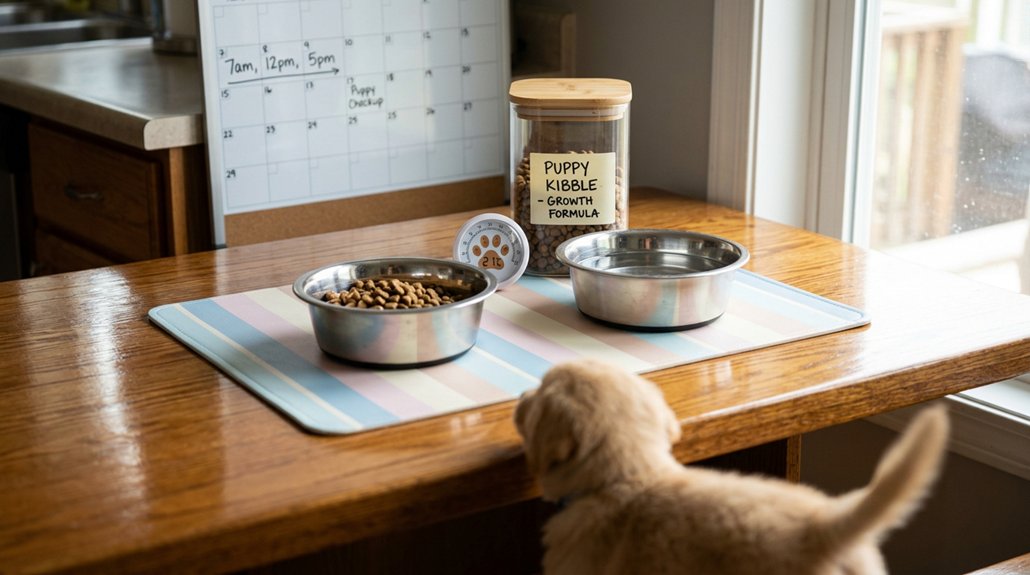
Creating a structured meal schedule is vital for your puppy’s best health, as it aligns with their developmental needs and prevents future eating issues. Start with four daily meals from 6 to 12 weeks to match their nutritional demands, reducing to three meals by 3 to 6 months. By 6 to 12 months, two meals suffice, though spayed or neutered puppies might need dietary adjustments. Meal timing is important—maintain consistent feeding habits to foster a routine and deter picky eating. Allow meal availability for just 15 minutes to promote focus. Regular mealtimes also minimize separation anxiety and cultivate a positive relationship with food. Closely monitor your puppy’s growth and appetite, adjusting meal frequency as needed for best health.
Calculate Perfect Portion Sizes for Puppies
With a consistent meal schedule in place, it’s equally important to focus on determining the right portion sizes for your puppy’s ideal growth. Start by considering the puppy food label’s recommended amounts but remain flexible. Regular weigh-ins are essential for monitoring growth and making any necessary portion adjustments. Here’s a general feeding frequency guideline:
- 6-12 weeks: Aim for about 4 meals a day to support rapid growth.
- 3-6 months: Reduce to 3 meals daily as your puppy develops further.
- 6-12 months: Shift to twice-daily feedings for a maturing pup.
Always evaluate your puppy’s body condition and energy levels; a well-fed puppy will maintain a healthy shape and steady growth. Adjust portions based on metabolism, not just the leftovers in their bowl.
Use Treats Wisely in Your Puppy’s Diet

Treats can be a valuable tool for rewarding your puppy’s good behavior, but they require a thoughtful approach to fit seamlessly into their dietary regimen. To maximize training benefits, opt for small, nutrient-dense treats like blueberries or carrots, which offer treat alternatives while keeping calorie intake in check. Remember, treats should only comprise 10% of your puppy’s daily calories. Adjust meal portions accordingly to maintain balanced nutrition and prevent overfeeding. Steer clear of high-calorie, processed treats that might lead to obesity and related health issues. Instead, focus on natural, minimally processed options that support your puppy’s growth. By integrating treats mindfully, you promote positive behavior without impacting the overall health of your puppy’s diet.
Add Fresh Foods to Boost Nutritional Value
To boost your puppy’s nutritional intake, consider incorporating a variety of fresh foods into their diet. Adding fruits like blueberries and apples, known for their antioxidants and vitamins, can support immune function when offered in moderation. Additionally, including lean proteins such as lean meats and fish can provide essential amino acids for muscle development and overall health.
Enhance Diet With Fruits
Incorporating fruits into your puppy’s diet enhances nutritional value and provides essential health benefits. Offering a variety of fruits can cater to puppy preferences while delivering substantial fruit benefits. Here are some top choices:
- Blueberries: Packed with antioxidants, they bolster your puppy’s immune system and make ideal low-calorie training treats.
- Apples: Rich in vitamins A and C and fiber, apples support digestive health. Always remove seeds before serving.
- Carrots: These crunchy snacks help reduce plaque and maintain dental health, while also providing Vitamin A, vital for growth.
Additionally, consider the potential of pumpkins to aid digestion or watermelon to hydrate effectively. By integrating these fruits thoughtfully, you’re enhancing your puppy’s diet for robust health and growth.
Incorporate Lean Proteins Carefully
As you’re enhancing your puppy’s diet with fruits, it’s also wise to contemplate how lean proteins can provide a robust foundation for their growth and health. Lean proteins, such as cooked chicken and turkey, are excellent puppy protein sources that offer essential amino acids vital for muscle development. Make sure these meats are served plain, avoiding seasonings to prevent digestive issues. Eggs, either scrambled or boiled without seasoning, are another nutritious choice, providing protein, vitamins, and minerals. Including fish high in omega-3 fatty acids, like salmon, benefits brain development and skin health. Remember to account for these treats in your puppy’s overall calorie intake to avoid obesity. Carefully incorporating diverse protein sources supports a healthy, balanced diet for your growing puppy.
Keep Your Puppy Hydrated With Easy Tips
To keep your puppy well-hydrated and healthy, guarantee fresh water is always accessible by placing bowls in multiple locations, particularly outside. This not only encourages regular drinking but also supports their bodily functions, especially after play or during hot weather. Regularly cleaning the bowls prevents bacterial buildup, promoting a safe, clean hydration station for your pet.
Fresh Water Accessibility
Making sure your puppy always has access to fresh water is important for their health and well-being, particularly during warmer months when their hydration needs surge. By guaranteeing constant availability, you’re supporting their growth and energy. Here are a few tips for ideal hydration:
- Choose the Right Bowl Material: Opt for stainless steel or ceramic bowls, which are durable and less prone to bacterial build-up compared to plastic.
- Monitor Water Temperature: Keep the water cool, especially during hot months. Adding ice cubes can make drinking more stimulating and ensure the water remains invigorating.
- Daily Maintenance: Wash the bowls daily to prevent bacteria and regularly refill with clean water. This routine encourages frequent hydration and helps monitor your puppy’s consumption patterns.
Adequate hydration is essential for a happy, healthy pup.
Outdoor Hydration Stations
Imagine setting up outdoor hydration stations that your puppy can easily access, guaranteeing they stay refreshed and healthy during their energetic outdoor adventures. Puppy hydration is vital for their growth and well-being. Keep multiple outdoor bowls filled with fresh water, especially during hot summer months. Position these bowls in shaded areas to maintain a cooler temperature, making the water more inviting for your playful pup. Remember to clean the outdoor bowls daily to prevent bacterial buildup and encourage regular drinking. Monitor your puppy’s water intake during warm days and after exercise to prevent dehydration.
Here’s an emotional guide:
| Emotion | Reason | Solution |
|---|---|---|
| Concern | Puppy needs water in the heat | Shaded outdoor bowls |
| Assurance | Fresh, clean water guarantees health | Daily bowl cleaning |
| Contentment | Sufficient hydration during play | Multiple hydration stations |
Plan the Switch From Puppy to Adult Food
When planning the shift from puppy to adult food, it’s crucial to take into account the unique needs of your pup. The transition phases should begin when your puppy reaches maturity—usually between one to two years, differing by breed size. Make gradual changes to avoid gastrointestinal issues:
- Mixing Period: Start by blending the new adult food with the existing puppy diet over 7 to 10 days. This allows your dog’s digestive system to adapt without discomfort.
- Development Monitoring: Regularly check on your puppy’s weight and growth stabilization as indicators for readiness to switch, consulting your veterinarian for personalized advice.
- Nutritional Standards: Verify any new adult food meets AAFCO standards. This assures the diet supports your dog’s health.
Be observant and responsive to these needs.
Consider Breed-Specific Nutritional Needs
While planning the switch from puppy to adult food, it’s also important to address breed-specific nutritional requirements. Small breed puppies, reaching adulthood at around 9-10 months, need nutrient-dense, high-energy formulas to sustain their rapid growth. Conversely, large breed puppies mature more slowly over 15-24 months and benefit from formulas designed specifically to support skeletal development and prevent joint issues. These specialized foods guarantee the right balance of protein, fat, vitamins, and minerals tailored to each breed’s unique needs. Regularly monitoring your puppy’s growth and body condition is essential, allowing you to adjust portions to avoid underfeeding or overfeeding. Always consult with a veterinarian to determine the best nutritional plan tailored to your puppy’s specific breed size and requirements.
Avoid These Common Puppy Feeding Errors
To guarantee your puppy’s ideal health, it’s essential to avoid common feeding errors such as overfeeding, which can lead to obesity and related health issues. Stick to a consistent feeding schedule and choose high-quality, “complete and balanced” puppy foods to meet their nutritional needs. Low-quality foods might miss essential nutrients, and inconsistent meal times can mislead you about their dietary requirements.
Overfeeding Risks and Consequences
Although it might be tempting to indulge your puppy with extra food, overfeeding can set the stage for serious health issues. Rapid weight gain isn’t just about puppy obesity; it can put undue stress on developing joints, especially affecting the growth plate. This can lead to developmental orthopedic diseases, a significant concern for large-breed puppies.
Consider these risks:
- Developmental Problems: Overfeeding can accelerate growth, disturbing healthy bone development and leading to joint issues.
- Long-term Health Complications: Excess calorie intake may result in obesity, hypertension, and heart disease, making these conditions challenging to manage later on.
- Feeding Practices: Avoid free-choice feeding. Opt for portion-controlled meals to guarantee a balanced diet and regular weight monitoring to adjust portions as necessary.
Be proactive in maintaining your puppy’s healthy growth trajectory.
Inconsistent Feeding Schedules
Establishing a consistent feeding schedule is essential for your puppy’s well-being and development. Puppies thrive on feeding routines, which help mitigate puppy anxiety and foster a sense of security. Aim to feed your puppy four times a day until they reach 3-6 months of age, gradually shifting to three meals daily. This consistency discourages erratic eating habits and promotes healthy growth.
Always monitor your puppy’s intake, as skipped meals can indicate overfeeding or a readiness for fewer feedings. Avoid free-choice feeding methods, as they increase obesity risk, and instead, provide portions based on your puppy’s growth and body condition. Limit mealtimes to 15 minutes to prevent pickiness and encourage timely eating, ensuring your puppy gets the nutrition they require.
Low-Quality Food Issues
When it comes to nurturing your young furry companion, the choice of food can be as essential as any puppy chow you’ll find on the market. Unfortunately, common food misconceptions and puppy food myths can lead you down the path of low-quality food. Here’s why you should steer clear:
- Nutrient Deficiencies: Many low-quality brands don’t meet AAFCO standards, which means they might lack essential nutrients for your puppy’s growth.
- Health Risks: These foods often include by-products and fillers, leading to poor digestion and potential health issues.
- Weight Concerns: The excessive carbohydrates in low-quality foods may predispose puppies to obesity and related ailments.
For your puppy’s well-being, prioritize premium options that promote consistent and healthy development.
Frequently Asked Questions
What Is the 7 7 7 Rule for Puppies?
The 7 7 7 rule is a puppy nutrition guideline suggesting three meals daily until they’re seven months old, with portions at 7% of their body weight. This feeding schedule supports consistent growth and prevents future obesity issues.
What Is the Hardest Month of a Puppy?
The hardest month for a puppy is typically around 4 months due to accelerated growth stages. You’ll notice increased nipping as teething begins, and their behavior can fluctuate. Consistent training is essential to manage these challenges effectively.
What Is the 10 10 10 Rule for Puppies?
The 10 10 10 rule guarantees 90% of your puppy’s diet is quality food, with only 10% treats. Given that only 1 in 20 pet owners sticks to this, improve puppy nutrition through balanced calories, supporting growth stages.
What Food Is Good for Diabetic Dogs?
You’re ensuring your diabetic dog stays healthy by choosing low-carb options, high fiber foods, or prescription diets. Stick to consistent feeding schedules and portion control. Check nutrition labels and provide diabetic treats. Regular glucose monitoring is essential.
Conclusion
Feeding your puppy for healthy growth is a journey that requires attention and love. You’ve covered the essentials, from choosing the right food to scheduling meals and using treats wisely. Remember, “An ounce of prevention is worth a pound of cure.” By understanding their unique nutritional needs, ensuring hydration, and planning for their shift to adult food, you’re setting the foundation for a healthy, happy life. Make informed choices, and your furry friend will thrive.