
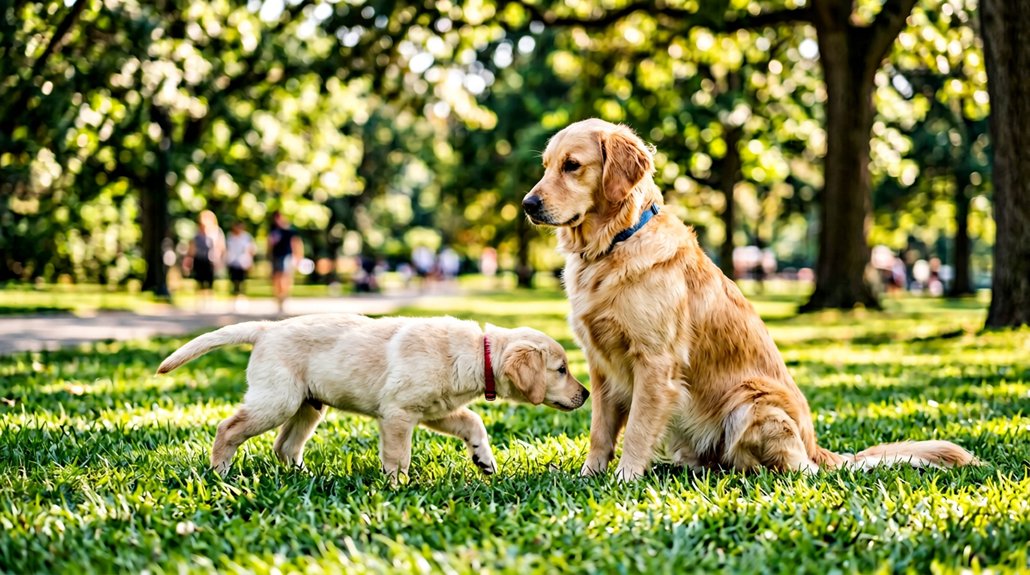
To safely introduce your puppy to other dogs, choose a neutral location like a park to minimize territorial instincts. Keep both dogs on-leash and start with a calm walk together. Pay close attention to body language; a wagging tail and relaxed posture are positive signs, but raised hackles or yawning indicate stress. Intervene calmly if necessary and always reward positive interactions with praise or treats. By mastering these techniques, you’ll guarantee a positive introduction experience for your puppy.
Key Takeaways
- Choose neutral locations like parks to minimize territorial instincts during dog introductions.
- Keep both dogs on-leash to ensure control and safety during meetings.
- Monitor body language closely to identify any signs of stress or discomfort.
- Start with brief introductions to prevent overwhelming the dogs.
- Reward positive behavior with treats and praise to reinforce good interactions.
Why Safe Puppy Introductions Matter
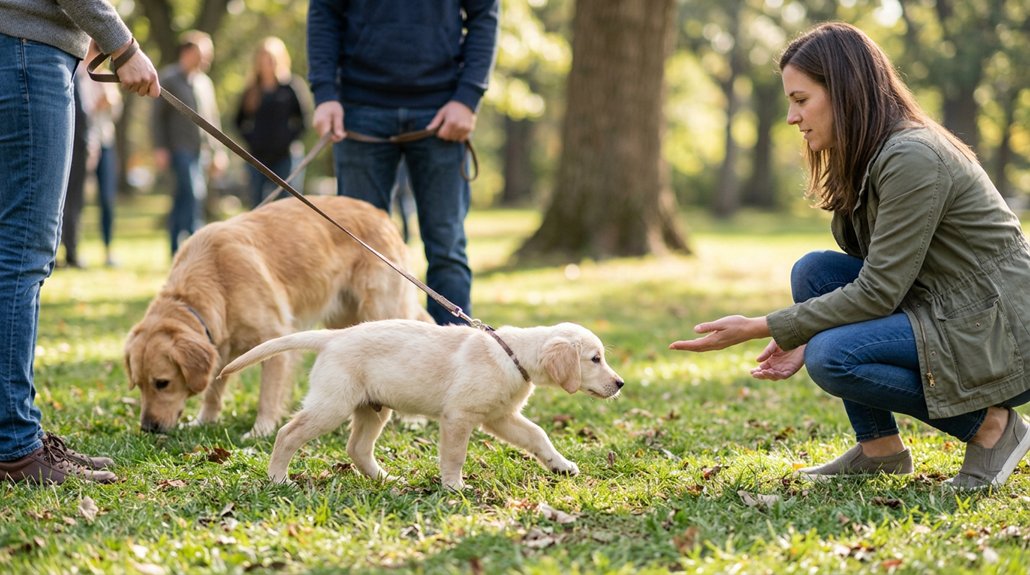
Safe puppy introductions are essential for cultivating harmonious interactions and social well-being among dogs. By prioritizing these introductions, you effectively prevent territorial disputes and foster a positive environment for social bonding. The process helps your puppy develop confidence, important for establishing lasting friendships. Monitoring body language during these early encounters is key; it allows you to promptly identify signs of stress or discomfort, ensuring immediate intervention if necessary. Gradual introductions further facilitate a smooth acclimation, reducing the odds of fear-based responses or aggressive behavior. Positive reinforcement during these initial meetings is crucial for reinforcing appropriate behaviors. By doing so, you instill good habits and bolster puppy confidence, laying the foundation for a mutually respectful and enriching relationship between the dogs involved.
Establish a Neutral Territory for Meeting Dogs
When introducing your puppy to other dogs, creating a neutral territory is essential to reducing the likelihood of territorial instincts that could trigger aggression or anxiety. Opt for neutral meeting spots like parks where neither dog feels possessive. This unfamiliar environment encourages calm interaction and reduces stress. Engaging the dogs in shared experiences by walking them together fosters bonding and diminishes excitement. A successful neutral ground introduction involves:
- Choosing a location that neither dog frequents
- Walking side-by-side on neutral territory
- Allowing sniffing only after they appear relaxed
- Gradually adapting to a semi-familiar area
- Ensuring both dogs remain on-leash for control
Recognize and Interpret Dog Body Language
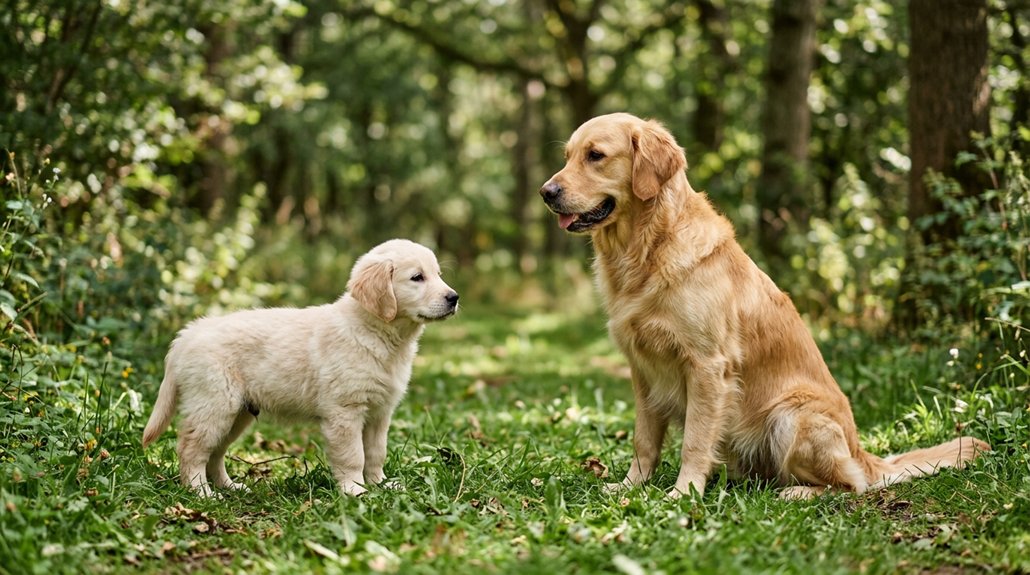
Understanding the nuances of dog body language plays a significant role after establishing a neutral meeting ground for your puppy and other dogs. Dogs communicate a spectrum of emotions through body language, with communication signals offering insights into their feelings. Observing body cues such as relaxed tail positions and wagging tails can indicate positive dog emotions. In contrast, raised hackles or tight-lipped mouths may point to stress or aggression. Dogs also naturally sniff each other to gather emotional and identity information. Recognizing discomfort signs like yawning, head-turning, or tense jaws helps prevent conflicts.
| Communication Signals | Emotion Indicated | Actions to Take |
|---|---|---|
| Wagging Tail | Positive Feelings | Encourage interaction |
| Raised Hackles | Stress/Aggression | Monitor closely |
| Yawning | Discomfort | Approach cautiously |
Apply Effective Techniques During First Meetings
During initial dog meetings, start in a neutral location like a park to establish a calm environment that minimizes territorial behavior. Use leashes to manage interactions, allowing the dogs to observe each other from a distance and gradually increase engagement. Always encourage positive behavior with treats and praise, while closely observing their body language to guarantee a smooth and safe introduction.
Establish Calm Environment
Creating the right environment for your puppy’s introduction to other dogs is essential to guarantee a positive experience for all involved. A calm setting starts with selecting a neutral location to minimize territorial behaviors. Using leash control allows you to observe and manage interactions effectively, promoting safety. Follow these guidelines for a successful first meeting:
- Choose a neutral, stress-free location to ease initial tension.
- Keep both dogs leashed to regulate movement and interactions.
- Encourage nose-to-nose greetings, fostering positive connection.
- Carefully monitor body language for signs of stress or comfort.
- Limit the duration to prevent overwhelming both animals.
Observe Dog Interactions
After establishing a calm environment, observing the interactions between your puppy and the other dog is essential to guarantee a peaceful initial meeting. Carefully monitor puppy dynamics and adult behavior, paying close attention to body language. Signs like tail positions and growling indicate comfort or distress. Initially, introduce them in a neutral location to keep territorial instincts at bay and minimize stress. Gradually increase interaction levels, starting with brief encounters.
| Puppy Dynamics | Adult Behavior | Observation Tips |
|---|---|---|
| Tail wagging | Relaxed posture | Indicates comfort |
| Playful stance | Gentle interactions | Encourage continued positive contact |
| Signs of pushiness | Growling or avoidance | Intervene gently to maintain peace |
Your role involves ensuring both dogs feel secure while fostering a positive experience.
Encourage Positive Behavior
Positive reinforcement plays an essential role in encouraging harmonious interactions between your puppy and other dogs during their first meetings. Employ reward strategies to acknowledge calm and friendly behaviors, reinforcing desirable conduct. Closely monitor body language for any stress indicators, like growling, and intervene if necessary. Utilize interaction games, such as supervised play and shared activities, to promote playful behavior, fostering bonding and enhanced communication.
Consider these practical tips:
- Reward positive interactions: Use treats or praise for reinforcing good behavior.
- Observe body language: Stay vigilant for any signs of discomfort between the dogs.
- Keep sessions short: Begin with brief encounters, extending as comfort increases.
- Facilitate interaction games: Encourage shared play to strengthen bonds.
- Maintain calmness: Your relaxed demeanor can reduce the dogs’ anxiety.
Monitor Interaction Dynamics Closely
When introducing your puppy to other dogs, monitor their interaction dynamics closely by observing body language for signs of tension or discomfort. If you notice frustration or excessive agitation, it’s critical to intervene and temporarily separate the dogs, using clear verbal cues to guide the puppy. Consistently praise both animals for calm and positive interactions, reinforcing a sense of safety and promoting respectful communication.
Observe Body Language
While starting the journey of introducing your puppy to other dogs, understanding and observing body language is critical. Paying attention to body language cues and emotional signals guarantees a safe and positive interaction. Recognize:
- Relaxed posture: This indicates comfort and willingness to engage, essential for harmonious play.
- Wagging tails: Often a sign of excitement and friendliness, though the context is key.
- Play bows: A classic invitation to play, signaling trust and happiness.
- Submission signs: Rolling onto their back shows your puppy is responsive to the adult dog’s cues.
- Sniffing behaviors: A normal greeting ritual fostering positive initial interactions.
Intervene When Necessary
Understanding a puppy’s body language lays the groundwork for knowing when to step in during interactions with other dogs. Through vigilant monitoring, you guarantee the engagement remains positive and safe. Look out for signs from adult dogs such as frustration, discomfort, or avoidance. These cues can signal the need for timely intervention. It’s vital to step in calmly to prevent escalation or stress. Implementing positive reinforcement is beneficial when the puppy displays appropriate social behaviors. Praise or treat them to encourage such behavior, fostering a constructive learning environment. This approach not only aids in reinforcing good conduct but also minimizes potential stress during interactions, facilitating a harmonious exchange. By monitoring closely, you promote beneficial social engagement and a healthy introduction process.
Note Canine Cues
Recognizing canine cues is imperative in guaranteeing a stress-free introduction between your puppy and other dogs. Monitor the body signals closely for signs of comfort such as relaxed posture and gentle tail sways. It’s essential to distinguish these from stress indicators like growling or stiff movements, both of which play significant roles in canine communication. Adult dog’s reactions can provide crucial insights; pay heed if they exhibit frustration or avoidance. Promptly intervene with verbal cues like “that’s enough” to moderate the puppy’s persistence. Acknowledging respectful behavior guarantees positive reinforcement.
- Observe for relaxed body posture.
- Look for gentle, soft tail movements.
- Watch for growling or stiff posture.
- Use “that’s enough” to control interactions.
- Reward respectful backing off from discomfort.
Foster Positive Dog Interactions
When fostering positive dog interactions, it’s essential to create an environment conducive to calm and respectful exchanges. Start by implementing effective playtime strategies and socialization tips. Allow your puppy and the other dog to engage in supervised play sessions, rewarding them with high-value treats for maintaining calm behavior. Gradually introduce the dogs, letting them sniff and observe each other from a safe distance before moving closer. Monitor their body language; relaxed postures and wagging tails are excellent indicators of comfort. On the other hand, notice any growling or tense stances, which suggest discomfort. Establishing a calm environment where both dogs feel secure minimizes anxiety-driven behaviors. Reinforce respectful exchanges with verbal praise, encouraging a foundation of positive interactions between them.
Adapt Strategies Based on Your Dog’s Reactions
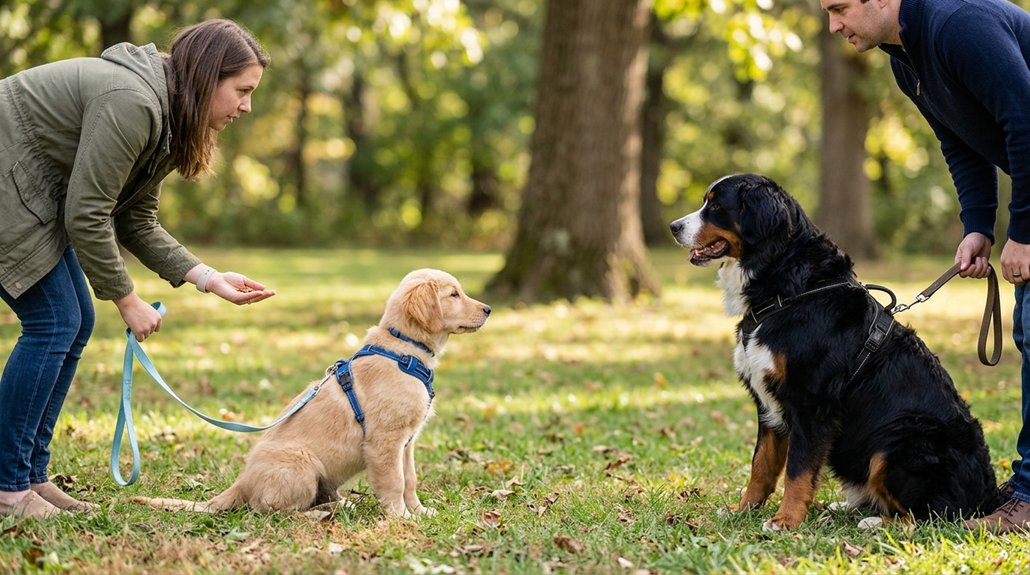
As you introduce your puppy to the resident dog, it’s important to adapt your strategies based on the dogs’ reactions to guarantee a harmonious interaction. Timing introductions and ensuring gradual exposure is vital when dealing with different temperaments. Tailor your approach by observing the resident dog’s body language; fear or aggression suggests the need for more cautious methods. Consider the following:
- Use exercise pens for protected contact, enhancing safety during initial meetings.
- If avoidance or frustration is noted, pause and then try reintroducing later.
- Employ verbal cues to guide puppies who disregard the adult dog’s signals.
- Reinforce positive interactions with praise to encourage good behavior.
- Be vigilant for resource guarding behaviors and adjust strategies to maintain security.
This structured and observant approach will foster better interactions.
Frequently Asked Questions
What Is the 3-3-3 Rule With Puppies?
The 3-3-3 rule for puppies describes three adjustment phases: initial stress during the first three days, acclimation over three weeks, and stronger bonding after three months. Use puppy socialization tips and positive reinforcement to support this change.
How Long Does It Take to Introduce a Puppy to Other Dogs?
Think of introducing a puppy to other dogs as a ‘slow dance of discovery.’ It can take days to weeks, requiring gradual exposure within the socialization timeline. Monitor interactions closely to guarantee comfort and positive experiences.
What Is the 7 7 7 Rule for Puppies?
You’ll follow the 7 7 7 rule for puppies by systematically focusing on routine establishment initially, then prioritizing socialization techniques, recognizing dog body language, and ongoing training to enhance adaptability across developmental stages.
What Is a Red Flag Behavior in Puppies?
If you notice volcanic-level overexcited barking or momentous fearful growling, it’s a red flag in puppies. Keep an eye on any aggressive lunging or overly submissive postures, as they signal that your puppy’s feeling threatened or anxious.
Conclusion
Ensuring your puppy’s early interactions with other dogs are safe is essential for their social development. By understanding body language and applying effective techniques, you can create positive experiences that are foundational for lifelong canine friendships. Monitor their dynamics like a scientist fine-tuning an experiment, and be prepared to adapt based on your puppy’s unique reactions. With patience and mindfulness, you’re setting the stage for your puppy to thrive in a world full of wagging tails and warm greetings.