

Adopting a dog for the first time involves a thorough process to guarantee compatibility, including interviews and home visits. You’ll need to prepare your home with dog-friendly spaces and necessary supplies, like beds and toys. Expect an adjustment period with patience, establishing routines, and addressing behavior issues through training. Positive reinforcement and regular exercise will help build trust and reduce anxiety. There’s a lot to discover as you commence this rewarding journey.
Key Takeaways
- Engage in an adoption process with interviews or home visits to evaluate compatibility.
- Prepare your home with dog-friendly spaces by removing hazardous items.
- Expect an adjustment period requiring patience and emotional support for the dog.
- Establish consistent routines and designated safe spaces to reduce stress and ease acclimatization.
- Utilize positive reinforcement and engage in regular training to build trust and good behavior.
Understanding the Dog Adoption Process
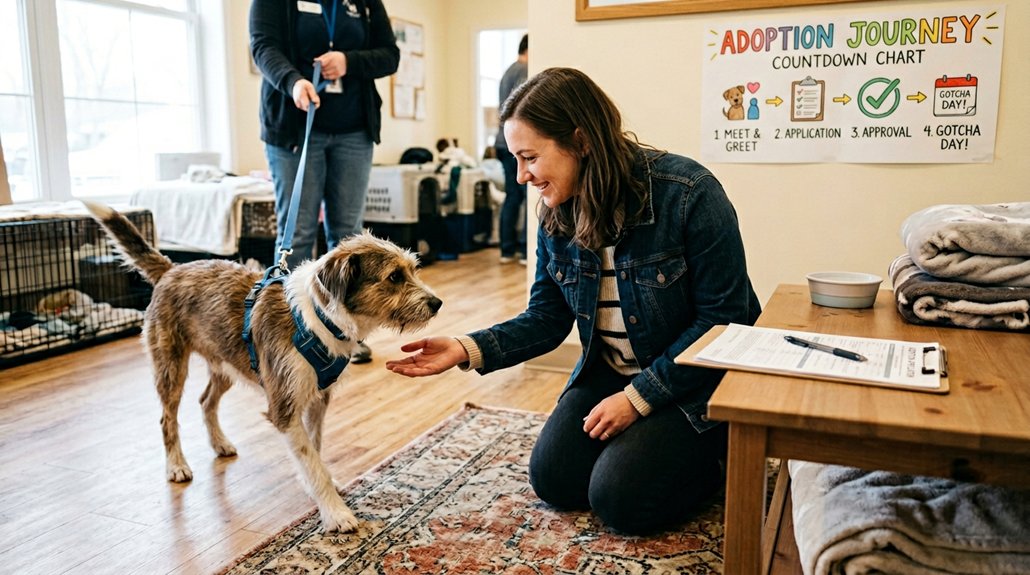
When you’re considering adopting a dog for the first time, it’s important to understand the intricacies of the adoption process to secure a successful match. Start by engaging in the application process, which evaluates compatibility between you and your potential pet. Be ready for an adoption interview or a home visit, as these steps guarantee a suitable environment. Expect to pay adoption fees, which often include vaccinations and spaying/neutering, addressing essential health considerations.
Visiting shelters is fundamental for evaluating personality and needs. Anticipate emotional challenges; both you and the dog will face an adjustment period. To ease this shift, utilize training resources and reach out to support networks for guidance. These steps can smooth your journey toward a fulfilling companionship.
Choosing the Right Dog for Your Lifestyle
Understanding the dog adoption process sets the stage to focus on finding the right match for your daily life and environment. Start with a lifestyle evaluation, examining your habits, activity levels, and living space. This helps tailor your choice to a breed whose characteristics align with your needs, considering size and energy requirements. Remember, breed characteristics offer insight, but they’re not definitive; in-person interaction remains essential for determining compatibility. Adult dogs can often complement a calmer lifestyle and require less training than puppies. Engage with shelter staff to gain insights into a dog’s background and temperament—they’re invaluable in matching you with a pet suited to your lifestyle. Remember, adopting a dog is a long-term commitment requiring thoughtful consideration of future plans.
Preparing Your Home for Dog Adoption

Before welcoming your new furry friend home, it’s essential to guarantee a safe and accommodating environment for them. Start by designating dog-friendly spaces. Utilize dog-proofing tips such as removing hazardous items and making sure outdoor areas are secure. Organize the space by keeping chewable objects out of reach, safeguarding your pet and belongings. Consider creating a quiet area with a cozy dog bed or crate, providing a sanctuary for your dog to decompress as they adjust. If housetraining is a concern, remove rugs and potential obstacles to minimize accidents and simplify cleanup. Investing time in space organization not only secures safety but also promotes a smoother change, setting the stage for a nurturing, harmonious relationship with your new companion.
Crucial Supplies for Your Dog’s First Day Home
As you prepare to bring your new companion home, it’s important to have essential supplies such as a cozy dog bed, food and water bowls, and their preferred food ready for a smoother changeover. Don’t forget safety essentials like a collar with an ID tag and a leash to keep them secure during their exploration of unfamiliar surroundings. Adding comfort items like treats and toys can greatly ease their stress and make them feel secure, while creating dog-friendly spaces and removing hazards guarantees a safe environment for their arrival.
Essential Items Checklist
Starting out with a new dog is an exciting adventure, and guaranteeing you’ve got all the essential supplies will make their first day home comfortable and joyful. Begin by choosing a cozy dog bed and setting up food and water bowls with an initial supply of balanced food—an initial step in understanding your dog’s diet considerations. Collars, leashes, and perhaps a harness are pivotal for safe outdoor training and mastering dog behavior.
| Essential Item | Purpose |
|---|---|
| Dog Bed | Provides comfort and a sense of security |
| Food & Water Bowls | Facilitate healthy diet practices |
| Collar with ID Tag | Assures identification for safety |
| Toys & Treats | Aid in socialization and fun activities |
| Crate | Useful for training and safe space |
Incorporate grooming essentials, designate safe zones, and don’t forget about veterinary care and insurance options!
Safety and Comfort Needs
Bringing a new dog into your home is an exciting milestone, and ensuring their safety and comfort on their first day sets the foundation for a happy life together. To ease canine anxiety and enhance pet comfort, start with essentials like a cozy dog bed and familiar food and water bowls. An ID-tagged collar and a sturdy leash or harness are crucial for safe walks and training. Comfort items such as toys and treats can greatly alleviate anxiety and help them settle in. Importantly, designate a safe, dog-friendly area free from hazards like toxic substances or sharp objects, allowing them to explore without risk. Schedule quiet time for them to acclimate peacefully, reducing overstimulation and fostering a sense of security.
Safely Bringing Your Adopted Dog Home
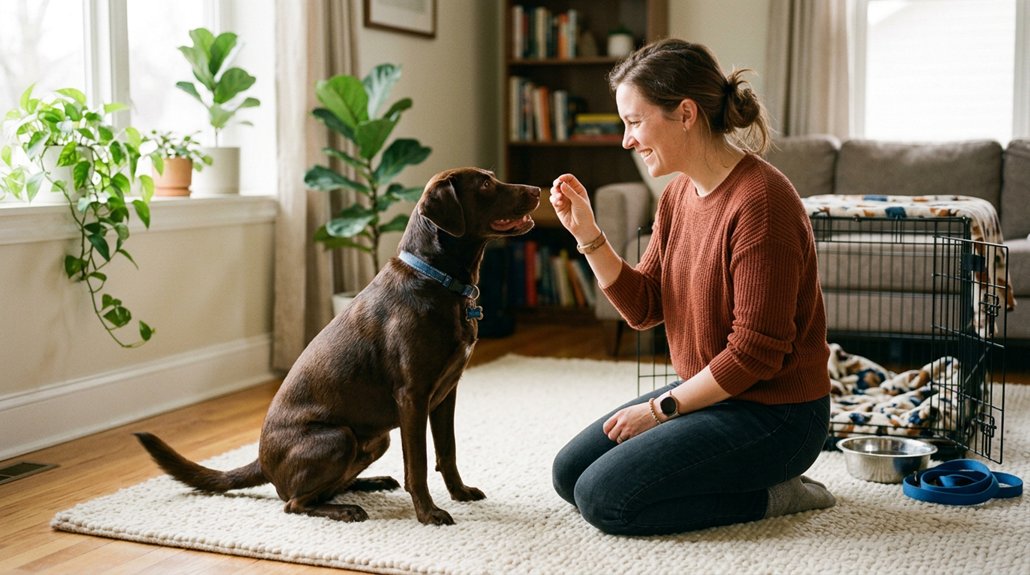
When you bring your adopted dog home for the first time, it’s important to set up a space that helps them feel secure and at ease. Allow them to quietly explore each room while on a leash, ensuring they don’t accidentally slip out an open door or get onto furniture they’re not allowed on. Introduce family members gradually, using treats to help your new companion form positive connections in their unfamiliar environment, and always keep a close eye on their behavior to gently support them through their adjustment.
Preparing the Living Space
Setting up the perfect environment for your newly adopted dog is essential to guarantee a smooth adjustment into their new home. Start by dog proofing spaces, ensuring outdoor areas are secure and removing harmful items. Indoors, clear rugs or obstacles that could hinder potty training. It’s equally important to create retreats, designating a quiet corner where your dog can unwind without distractions.
Prepare with essential supplies like a dog bed, collar, ID tag, and bowls. By having everything ready, you not only ease your dog’s adaptation but also foster comfort and familiarity.
| Home Setup | Details |
|---|---|
| Dog Proof Areas | Remove toxins, secure outdoors |
| Retreat Space | Safe, distraction-free zone |
| Essentials | Bed, collar, leash, ID tag, bowls |
| Safety Checks | Clear hazards, potty-training areas |
| Calm Environment | Encourage exploration, offer praise |
Initial Home Exploration
Introducing your newly adopted dog to its home requires both care and a gentle approach. Allow your dog to engage in safe exploration at its own pace, easing it into the new environment. Start by leading it on a leash through smaller areas, ensuring gradual acclimatization and preventing the dog from darting through doors. Watch for any signs of stress—tension, cowering, or avoidance—and offer reassurance through comforting words or gentle pets.
As your new pet becomes more familiar, consider removing the leash to foster a sense of ownership and security. A calm environment paired with gradual exposure to the various sounds and sights of your home can prevent overwhelming experiences, helping your dog eventually feel comfortable and settled in this new chapter.
Gradual Introductions to Family and Pets
Although adopting a dog for the first time is a thrilling experience, it requires a thoughtful approach to guarantee smooth introductions to family members and other pets. Start with family introductions by meeting each person one at a time, allowing your dog to acclimate to their scent and presence without feeling overwhelmed. Encourage calm interactions to foster trust and comfort. Pay close attention to signs of stress, offering your dog space as needed to help them adjust.
When it’s time for pet interactions, choose a neutral ground for initial meetings to minimize territorial behavior. A calm environment is vital for these interactions, ensuring reduced anxiety for your new pet. Remember, patience is essential—each dog adjusts at their own pace, forming positive bonds with time.
Setting New Routines and Creating Safe Spaces
As you welcome your new dog into your home, setting consistent daily routines is essential to ease their adjustment and reduce anxiety. Providing a designated secure area, complete with a cozy bed or crate, offers them a refuge where they can relax and feel safe. Remember, understanding your dog’s adjustment needs and ensuring they have consistent access to their safe space fosters a sense of ownership and helps alleviate stress.
Establishing Consistent Daily Habits
Creating a warm and secure environment for your newly adopted dog starts with establishing consistent daily habits that offer structure and comfort. Introduce a daily routine that strategically blends exercise habits and mental enrichment, both essential for stress reduction. The regularity and predictability of a set schedule not only ease anxiety but also enhance routine benefits. Positive reinforcement is crucial here; it builds trust and encourages desirable behaviors. Designate a safe environment, like a quiet corner or crate, for meals, fostering sanctuary-like associations. Your dog will appreciate predictable interactions, strengthening the bond through shared activities. Integrating socialization opportunities into daily life paves the way for a well-adjusted pet. Teaching essential cues and boundaries enhances communication, helping your dog feel truly at home.
Designing a Secure Area
Designing a secure area for your new dog is an essential step in helping them adjust to their new environment. Start with a dog crate or a quiet corner to create a relaxing environment. This space will serve as their comfort zone, vital for anxiety reduction. Remove hazardous items by applying safety precautions—eliminate toxic substances, sharp objects, or anything chewable. Feeding your dog consistently in this area can provide positive reinforcement, shaping it as a secure environment. Keep an eye on your dog’s body language; it reflects their comfort levels. Adjust the environment if needed to boost their security. Use calm change techniques to gradually introduce them to other parts of your home, ensuring they’re not overwhelmed by the shift.
Understanding Canine Adjustment Needs
Helping a new dog feel secure involves more than just a physically safe area; it requires understanding their adjustment needs. To ease your dog’s change, set up a calming space where they can decompress, such as a crate or quiet corner. Recognize canine behavior that indicates stress signals—hiding, trembling, or excessive barking—and respond with patience practices. Establishing a consistent routine with feeding and walks helps address adjustment challenges, providing environmental enrichment. Introduce socialization techniques gradually to cater to their emotional needs, building confidence at their own pace. By placing food and water in their safe area, you reinforce security. Remember, it can take several weeks for your dog to settle in comfortably, revealing their true personality over time.
Spotting Behavior Concerns and How to Solve Them
When you first bring a dog into your home, understanding and addressing behavior concerns is essential for a smooth adjustment. Start by behavior monitoring—observe signs of anxiety like pacing or excessive barking. Address issues like destructive activities and separation anxiety through leash training and consistent positive reinforcement. Socialization exposure can mitigate resource guarding, encouraging your dog’s comfort around new experiences.
Use the table below for guidance:
| Concern | Sign | Solution |
|---|---|---|
| Anxiety | Pacing, drooling | Behavior monitoring, routine |
| Aggression | Growling, lunging | Consult a professional |
| Destructive behavior | Chewing, digging | Leash training |
| Resource guarding | Growling, snapping | Socialization exposure |
| Separation anxiety | Whining, panting | Positive reinforcement |
Creating a predictable routine will further ease your dog’s adjustment, providing comfort and security.
Forming Strong Bonds With Training and Exercise
Building a strong bond with your new dog starts with two essential components: training and exercise. Consistent training sessions enhance communication and trust, laying the foundation of your relationship. Here are four key bonding techniques to reflect on:
- Training Methods: Use positive reinforcements during trick training. This helps your dog associate commands with rewards, building a secure and cooperative atmosphere.
- Exercise Routines: Regular physical activity, such as daily walks or play activities, not only boosts your dog’s health but also reduces boredom-related behavioral issues.
- Mental Stimulation: Engage your pup’s mind with interactive toys and puzzles, easing anxiety and preventing destructive behaviors.
- Trust Building: Games like tug strengthen your connection, fostering companionship essential for a happy, well-rounded pet experience.
Getting Support and Advice From Professionals
As you establish a strong bond with your new dog through training and exercise, seeking professional support becomes invaluable in truly understanding and meeting their unique needs. Leveraging trainer recommendations is essential for tackling behavioral challenges, enhancing your training efficacy. Expert consultations, including behavioral assessments, can provide insights into your dog’s specific requirements. Community engagement with fellow dog owners fosters shared knowledge, enriching your integration into pet ownership with local resources and insights. Consider participating in training workshops to boost skills and confidence. Consult your veterinarian for health assessments and referrals to specialists. Utilize communication tools like the Dog Decoder app to better decode dog body language.
| Professional Support | Benefits |
|---|---|
| Local Trainers | Tailored guidance |
| Veterinarians | Health and behavioral advice |
| Rescue Organizations | History and behavioral needs |
Frequently Asked Questions
Where Should an Adopted Dog Sleep First Night?
Your adopted dog should sleep in a designated area, like a dog bed or crate, in your bedroom. This promotes first night adjustments, encourages bonding, and provides secure sleeping arrangements, easing new home anxiety with comfort items.
What Is the 3-3-3 Rule for Adopting Dogs?
The 3-3-3 rule guides you through your dog’s adjustment stages. For socialization tips, start gradually introducing new environments. Crate training helps provide security. Be patient during these phases to foster trust and strengthen your bond.
What Is the 7 7 7 Rule for Dogs?
The 7 7 7 Rule guides you through understanding dog behavior changes: initial adjustment, real personality surfacing, and strong bonding. Effective training tips include patience and consistency, helping your dog feel at ease and loved.
What Do I Wish I Knew Before Adopting a Dog?
Were you ready for the initial expenses of supplies and vet visits? Training considerations are essential too; without them, dogs can struggle. Understanding these needs makes embracing challenges smoother, fostering a nurturing and balanced relationship with your new friend.
Conclusion
Adopting a dog can be an enriching journey, but are you ready for this fulfilling commitment? By understanding the adoption process, preparing your home, and setting routines, you’re laying the foundation for a loving relationship. Remember to provide essential supplies and dedicate time to training and exercise, which strengthens your bond. If challenges arise, don’t hesitate to seek professional advice. Your empathy and dedication will transform your new furry friend into a cherished family member.