

You begin the dog adoption process by evaluating your lifestyle, space, and commitment level. Complete a detailed application, including any necessary landlord verification and veterinary references. Attend a meet and greet to assess compatibility with prospective dogs. Finalize the adoption with a contract and payment, ensuring you understand the dog’s medical history. Prepare your home with designated areas and routines. Exploring further will provide an extensive understanding of each phase in detail.
Key Takeaways
- Evaluate your lifestyle, living space, and long-term commitment before considering dog adoption.
- Complete a formal application including personal information and landlord verification if renting.
- Attend a meet and greet to assess dog temperament with all household members present.
- Sign a legally binding adoption contract and pay the necessary adoption fees.
- Prepare your home with designated areas for the dog and essential supplies for their comfort.
Quick First Steps: Beginning Your Adoption Journey
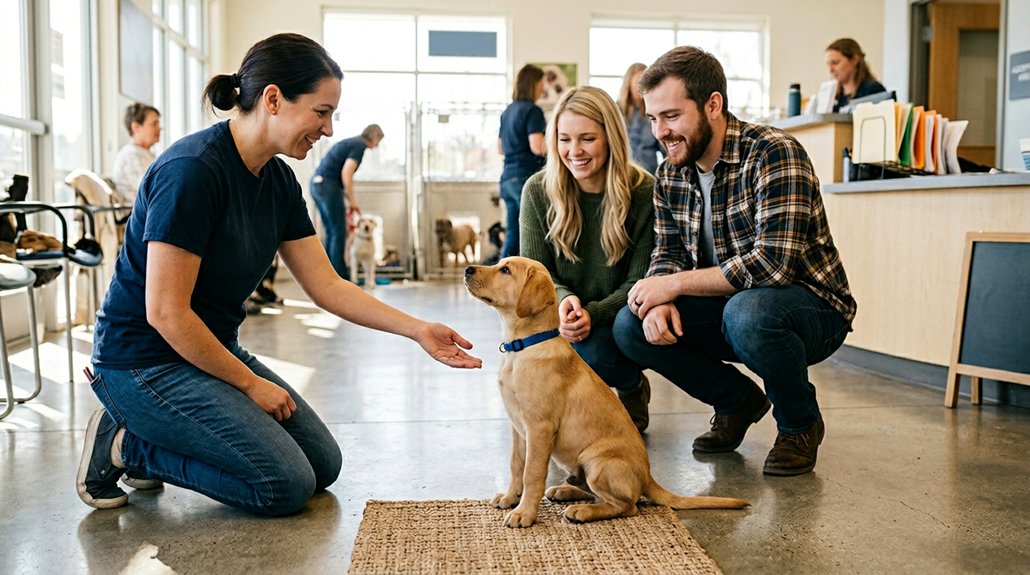
Before commencing your dog adoption journey, it’s vital to evaluate your lifestyle, living space, and preparedness for long-term commitment, as these factors significantly influence your ability to provide appropriate care and meet the financial obligations associated with pet ownership. Conducting a thorough lifestyle assessment will help determine if your daily schedule and home environment are conducive to a new pet. It’s important to contemplate the space in your home and whether it’s suitable for a dog. Anticipate financial responsibilities, including regular veterinary care, food, and other necessities that could impact your budget. Prior to proceeding, verify you possess the time, resources, and willingness to fulfill these commitments. These initial considerations will lay a solid foundation for a successful adoption process.
Navigating Screening: Steps to Getting Approved
After addressing initial considerations, you’re ready to begin the formal adoption process. The key to approval lies in meeting specific application requirements. You’ll need to provide thorough personal information detailing your lifestyle, training beliefs, and animal background. This guarantees a well-suited match between you and the dog. If you rent, landlord verification is vital to check breed or size restrictions; securing landlord consent prior to applying is imperative. Veterinary references are required to verify vaccination records and spay/neuter status of any current pets. Home visits are conducted to evaluate environmental safety and compatibility for the future dog. Make certain all household members are present, as major concerns identified can lead to application denial. Such diligence is necessary for a successful adoption.
Meet and Greet: Making Meeting Count

The “meet and greet” phase is essential to guaranteeing a successful adoption. During this stage, you’ll interact with available dogs, typically at the dog’s foster home, allowing you to assess dog temperament in a relaxed setting. Foster caregivers provide critical insights into a dog’s history and suitability for your lifestyle. Remember, each household member must attend to accurately gauge family dynamics with the potential new pet. Approved applicants must spend ample time beyond mere appearance to truly understand compatibility.
Here’s a quick look at the process steps:
| Step | Purpose |
|---|---|
| Interaction | Assess dog temperament |
| Foster Caregiver Input | Gain insights on dog’s compatibility |
| Household Presence | Evaluate family dynamics |
| Priority for First Applicant | Guarantee initial match is prioritized |
Make the meeting count by considering all elements carefully.
Sealing the Deal: Bringing Home Your New Dog
Although you’ve navigated various stages to adopt your new dog, finalizing the adoption is a critical step demanding accuracy and attention to detail. You’ll need to complete a legally binding contract and pay the requisite adoption fee and any deposits. Initial supplies like a kennel, food bowls, and dog food are typically provided to facilitate the shift. A detailed medical history, including vaccination records, accompanies the adoption documents. A two-week refund period policy is usually in place, offering confidence if the dog doesn’t integrate well into your household. Post adoption support is readily available via hotline and email, addressing any concerns you might encounter. This structured approach guarantees both you and your new companion are set for a successful start.
Setting Up for Success: Preparing Your Home and Family
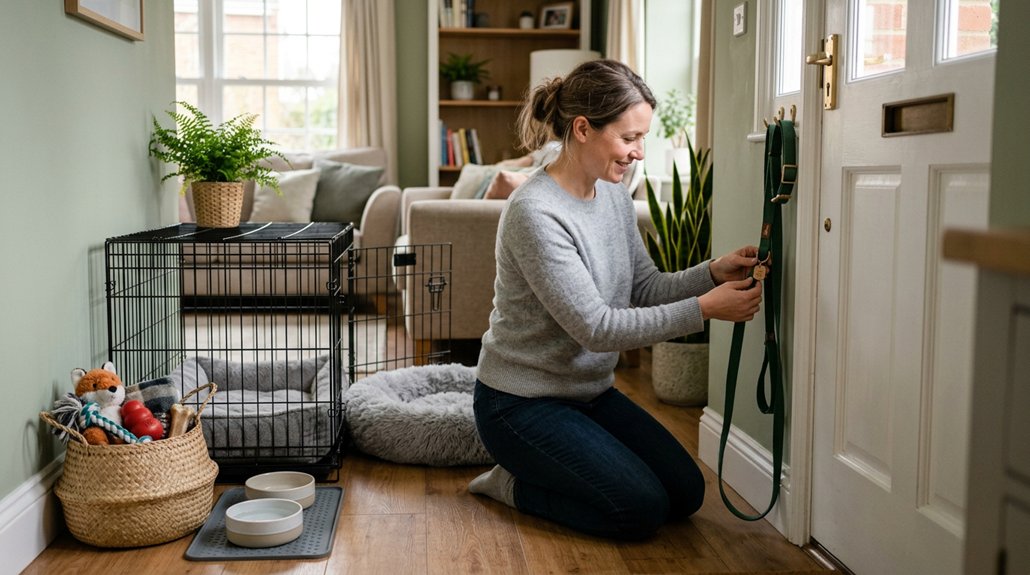
Setting up for success with your new dog begins with creating a structured environment. Designate areas for bedding, toys, food, and water to form a comforting space. Gradually let them explore, introducing your home room by room, reducing anxiety. Consistent routines for feeding, potty breaks, and exercise provide structure and security. Implement safety measures by removing hazards such as loose cables, toxic plants, and chewable items.
| Task | Action | Purpose |
|---|---|---|
| Area Designation | Bedding, toys, food zones | Creates familiarity |
| Gradual Exploration | Room-by-room introduction | Eases anxiety |
| Consistent Routines | Feeding and exercise times | Security and structure |
| Hazard Removal | Secure cables, remove plants | Guarantees safety |
Gather essential supplies, including bowls, a crate, bedding, and cleaning gear.
Frequently Asked Questions
How Long Does the Entire Dog Adoption Process Typically Take?
Typically, the adoption process spans a few days to several weeks. Your adoption timeline expectations hinge on application approval duration, influenced by background checks, home visits, and volunteer availability, reflecting each organization’s specific procedures and resources.
Are There Specific Breeds That Are Easier to Adopt?
Yes, certain breeds like Labradors, due to their popularity and friendly temperament, are often easier to adopt. You might find waiting lists shorter for breeds perceived as family-friendly, making the process swifter and less complicated.
What Costs Are Involved Beyond the Initial Adoption Fee?
Beyond the initial adoption fee, you’ll face vet expenses, training costs, dog supplies, and insurance options. Vet expenses often include vaccinations and check-ups; training can vary widely; supplies cover essentials; insurance offers peace of mind.
Can I Adopt a Dog if I Have Allergies?
Yes, you can adopt a dog if you have allergies. Consider hypoallergenic breeds that produce fewer allergens. It’s advisable to undergo allergy tests to determine your sensitivity levels before adoption, ensuring a suitable match for your home.
What Should I Do if My Adopted Dog Has Difficulty Adjusting?
Just as Frodo needed guidance on his journey, your dog might need adjustment strategies and behavioral support. Consider professional training or consultation with a behaviorist to ease their change and guarantee a smoother adjustment period.
Conclusion
You’ve navigated each step of the dog adoption process with patience and determination. While some may worry about the financial and time commitment, the unconditional love and companionship a dog offers outweighs these concerns. By preparing intelligently, from screening to setup, you’re ensuring a smooth adjustment for both your new pet and family. Embrace this enriching journey, knowing you’re not just adopting a dog, but welcoming a loyal friend into your life.