
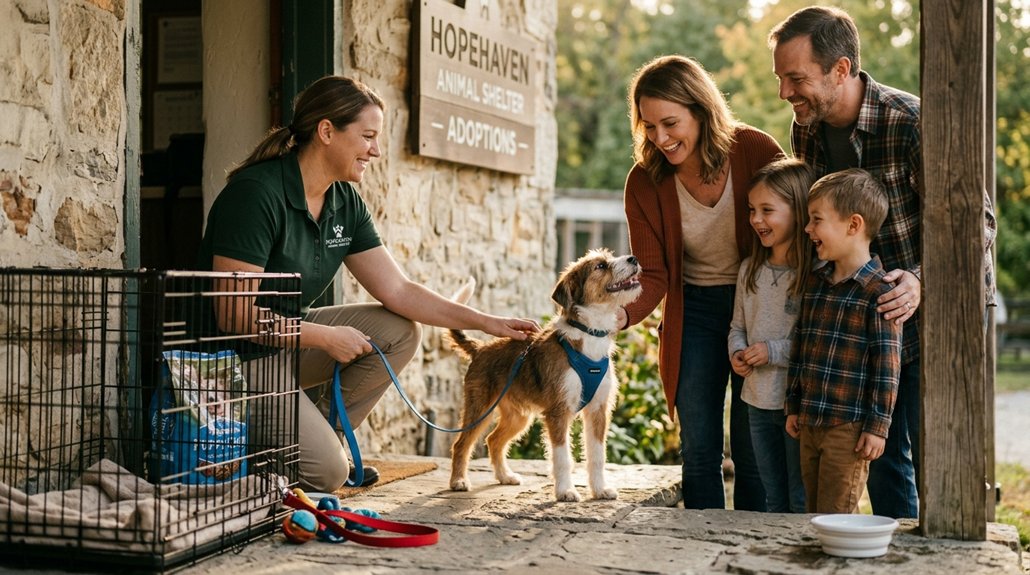
You’re considering adopting a dog; assess your readiness by evaluating your lifestyle and commitment to meet a dog’s needs. Research local shelters and choose a breed that aligns with your living space and activity level. Prepare your home and complete any necessary adoption applications. Guarantee a smooth changeover by establishing a comfortable space and routine. Initiate training and socialization using positive reinforcement methods. Further insights await that can enhance your adoption journey.
Key Takeaways
- Assess your lifestyle and environment to ensure compatibility with a dog’s needs for exercise, space, and companionship.
- Research and visit local animal shelters to find the right dog that aligns with your family’s dynamics and energy levels.
- Complete the adoption process, including surveys and fees, while understanding pet medical and behavioral histories.
- Prepare your home by securing hazardous items and setting up a designated comfortable space for the new dog.
- Initiate training and socialization using positive reinforcement and seek professional support for any behavioral challenges.
Evaluate Your Readiness for Dog Ownership
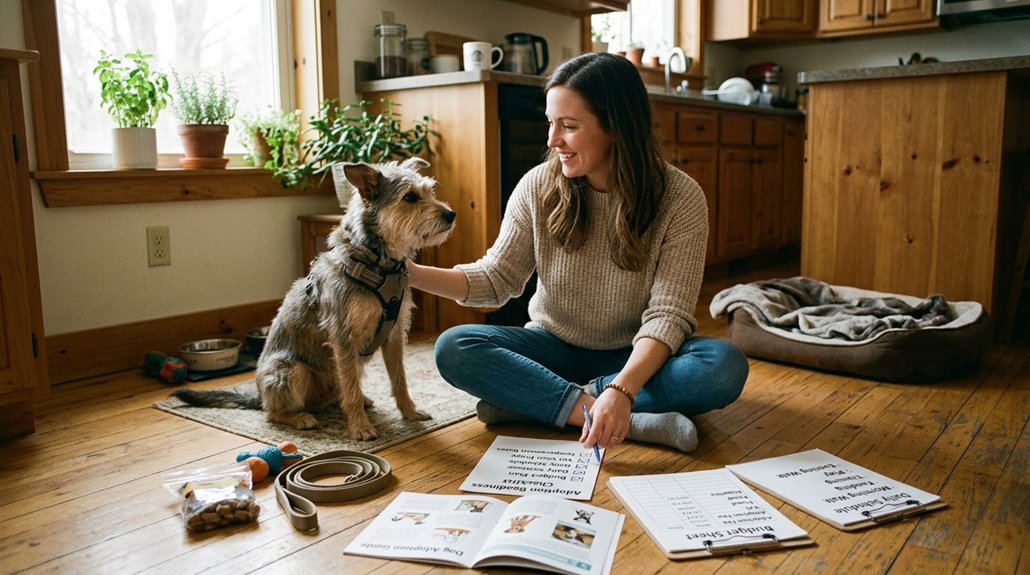
When contemplating dog ownership, how thoroughly have you assessed your preparedness for this commitment? It’s essential to dispel any dog ownership myths that might lead you astray. Have you scrutinized your schedule and lifestyle to guarantee they align with a dog’s needs, including exercise, training, and socialization? Analyzing your living environment is important; verify it suits the size and energy level of the dog you’re considering. Each household member must be on board with shared responsibilities, and discussions are key. Don’t forget potential allergies or health constraints within your family. Financial stability is non-negotiable, given the ongoing expenses of pet care. A valuable experience is volunteering at a shelter, where firsthand exposure to dogs’ needs may refine your readiness assessment.
Research Local Shelters and Opportunities
How can you optimize your search for a new canine companion? Begin by exploring local animal shelters and rescue groups. This helps you understand available options. Use technology to extend your reach; online resources such as the ASPCA’s database or Petfinder list shelters and adoption success stories. Here’s a structured approach:
- Visit multiple shelters: Observe diverse dogs and evaluate how they fit into your home.
- Leverage online tools: Regularly check updated adoption listings.
- Engage in shelter volunteer opportunities: Learn firsthand about each dog’s temperament and behavior.
- Inquire about specific programs: Some initiatives like “Your New Best Friend” may align with your adoption goals.
These strategies enhance your decision-making, ensuring a seamless change for your future pet.
Identify the Best Dog Breed and Age for Your Life
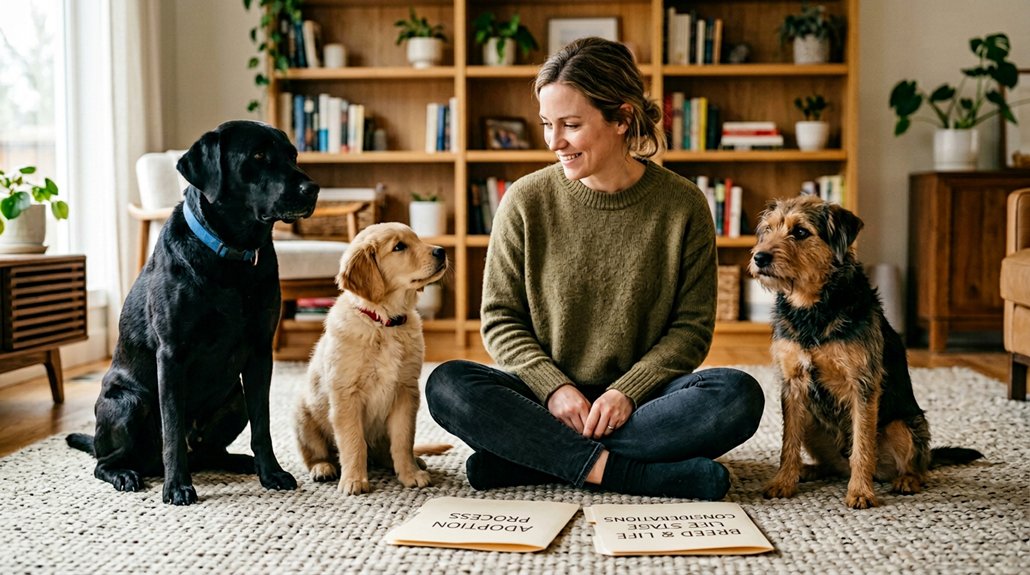
To guarantee a successful adoption, it’s crucial to align a dog’s breed and age with your lifestyle and household dynamics. Carefully assess your routine, energy levels, and living environment to select a breed that complements your activity and interaction patterns. Additionally, consider the benefits of adopting an adult dog for reduced training demands and verify breed compatibility with any children or pets in your home.
Assess Lifestyle Compatibility
Are you ready to discover the perfect canine companion that meshes seamlessly with your lifestyle? To determine the best fit, start by evaluating your daily schedule, activity level, and availability for dog exercise. Consider these vital factors:
- Breed Temperament: Research breeds to identify their typical behaviors and energy levels. High-energy breeds demand ample exercise, while others may be more laid-back.
- Living Space: Assess if your home accommodates the size and energy needs of the breed you’re considering. Some dogs need more room to roam.
- Duration at Home: Align your work hours and personal commitments with the companionship needs of potential breeds.
- Health Considerations: Any household allergies can influence which breeds produce fewer allergens, impacting your choice.
Consult shelter staff for insights to guarantee lifestyle compatibility.
Consider Age Needs
Why does the age of a dog matter when considering adoption? The age of a canine companion greatly impacts both training demands and lifestyle alignment. Puppies, though offering the promise of a long-term bond, require intensive puppy training and considerable time investment to cultivate desirable behaviors. If your schedule is constrained, a senior pet, typically more sedate and already socialized, might better fit your life. They can provide immediate companionship with minimal training intervention.
Assess your energy capacity: high-energy breeds necessitate rigorous exercise, unsuitable if you prefer a sedate environment. Resources from shelters or breed-specific rescue groups can offer invaluable insights into age-appropriate matches for your household dynamics. By selecting the right age, you enhance compatibility and promote rewarding mutual companionship.
Evaluate Breed Characteristics
When selecting a dog breed that aligns with your lifestyle, understanding breed-specific characteristics is essential. To identify the best match, consider these factors:
- Breed Temperament: Research different breeds’ temperaments to guarantee they fit well within your family dynamics and energy levels.
- Grooming Requirements: Evaluate the grooming needs of each breed. Some necessitate regular grooming sessions, while others are low-maintenance.
- Space and Environment: Assess your home environment. Breeds with higher energy levels may thrive in more spacious settings, while others adapt well to smaller spaces.
- Age Considerations: Decide whether a puppy or an adult dog suits your lifestyle. Puppies need more training and time, whereas adult dogs can often integrate more smoothly.
Reflect on these factors to make a scientifically informed decision.
Arrange Home Preparations for Adopting a Dog
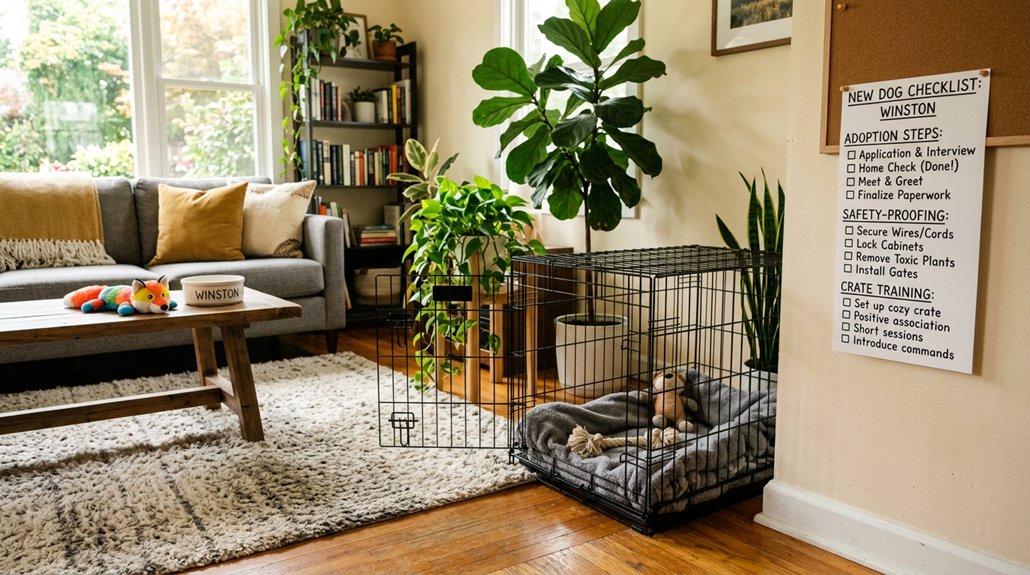
Before bringing a dog into your home, it’s vital to create a safe and welcoming environment by dog-proofing the space to eliminate hazards, such as securing toxic plants and removing dangerous items. You should prepare essential supplies including high-quality food, identification tags, and enrichment toys. It’s also advisable to coordinate with family members and existing pets on proper introduction strategies to facilitate harmonious interactions and a smooth change for the new addition.
Dog-Proof Your Home
As you prepare to welcome a new dog into your home, it’s imperative to create a safe environment that anticipates their curious nature. Prioritizing dog safety guarantees that your furry friend can explore without risk. Environment enrichment involves:
- Removing hazardous items: Get rid of toxic plants, chemicals, and sharp objects to prevent injuries or poisoning.
- Securing valuables: Eliminate tempting chewing targets by storing away items like shoes or electronics.
- Guarding trash cans: Make sure bins are covered and inaccessible, preventing the ingestion of harmful substances.
- Installing barriers: Use baby gates to restrict access to off-limits areas, thereby reducing potential hazards.
Essential Adoption Supplies
Creating a secure environment for your dog sets the stage for gathering the necessary supplies that will guarantee a smooth changeover into their new home. Begin with high-quality dog food advised by veterinarians to secure ideal nutrition. Acquire training toys for cognitive engagement and essential behavior training. Establish a routine for dog hygiene with waste bags and grooming tools to maintain a clean environment. Pet insurance should be considered for unexpected veterinary expenses. Make sure your dog undergoes regular health check-ups, which are vital for early detection of potential ailments. Equip your home with emergency contacts, including your veterinarian’s details. Prepare a dedicated dog area, complete with a comfortable bed, food and water bowls to foster feelings of safety and assurance.
Family and Pet Introductions
When you’re preparing to welcome a new dog into your home, ensuring a seamless integration requires strategic planning and family involvement. Emphasize harmonious family dynamics and pet interactions by following these expert recommendations:
- Designate a space: Establish a dog-friendly environment with a cozy bed, food, water bowls, and a secure retreat to address safety and comfort.
- Pet-proof your home: Eliminate hazards, secure toxic plants, and minimize risks to foster confident exploration for your new companion.
- Establish guidelines: Clearly discuss roles and responsibilities with family members to prepare for cohesive pet interactions and care.
- Facilitate introductions: For existing pets, gradual meetings in neutral areas reduce anxiety, encouraging positive interspecies relationships.
With these steps, you’ll create a welcoming atmosphere, fostering healthy relationships within your home’s ecosystem.
Visit Dogs and Assess Compatibility
Initiating the journey to adopt a dog involves more than simply browsing online listings; it requires an evaluation of compatibility through direct interaction. Spending time with potential dogs at adoption centers is essential for dog behavior and temperament assessment. Engaging with different dogs allows you to gauge their energy levels, size, and personality traits, making sure alignment with your lifestyle and household environment.
| Considerations | Details |
|---|---|
| Energy Level | Evaluate if it matches your daily routine. |
| Size | Consider your living space and preferences. |
| Personality Traits | Assess for compatibility with family dynamic. |
Leveraging insights from staff and volunteers, who possess a wealth of behavioral knowledge, can greatly assist you in making an informed decision. This process guarantees you find the best match, optimizing the adoption experience.
Understand Adoption Paperwork and Budgeting
Why is understanding adoption paperwork and budgeting vital for prospective dog owners? It guarantees you’re well-prepared for the responsibilities that come with dog ownership. Completing the adoption paperwork involves an adoption survey where you’ll detail your lifestyle and pet experience. This step aids shelters in matching dogs with suitable homes.
Financial planning is essential. Remember:
- Adoption Fee: Typically includes vaccinations, spaying/neutering, and possibly microchipping, supporting shelters and safeguarding your pet’s health.
- Ongoing Expenses: Budget for food, veterinary care, grooming, and training supplies.
- Pet Insurance: Consider potential costs for managing unexpected health issues.
- Lifetime Costs: Plan for the dog’s entire lifespan for financial stability.
Being informed prepares you for providing a stable, loving home.
Complete and Submit Your Adoption Application
Submitting your dog adoption application is a significant step in finding the right canine companion. It’s crucial to approach this with application honesty, providing thorough personal details and prior pet experience. The application evaluates your lifestyle and home environment, vital for guaranteeing compatibility with a future pet.
| Checklist | Details |
|---|---|
| Personal Details | Name, contact info, living situation |
| Pet Experience | Previous pets, current pets |
| Home Environment | Yard space, household members |
An adoption counselor carefully reviews applications to match adopters with suitable dogs. During counselor interaction, be ready to discuss any medical or behavioral issues of the pet. Upon approval, expect an adoption fee that often covers necessary procedures like spaying/neutering or vaccinations. Filling out your application sincerely guarantees the best match for your family and your new pet.
Ensure a Smooth Homecoming for Your New Dog
To guarantee a smooth homecoming for your new dog, it’s vital to create a secure, dog-friendly space that includes comfortable bedding and safe access to food and water. Establishing a consistent daily routine from the onset will help your new pet adapt to their environment, reducing anxiety and promoting well-being. Additionally, a gradual socialization process with family members and other pets is imperative to foster positive interactions and harmonious relationships.
Prepare a Safe Space
Welcoming a new dog into your home requires preparing a safe space that prioritizes their comfort and safety, thereby ensuring a smoother adjustment. To facilitate dog safety and offer a comfortable retreat, establish a designated area equipped with essential resources. Here’s a structured approach:
- Designate a space: Set up a dog-friendly zone with a cozy bed, food, water bowls, and an area for retreat, providing security and familiarity.
- Dog-proof: Remove hazardous objects, secure toxic plants, and address any potential safety risks to maintain a secure environment.
- Prepare essentials: Assemble items such as high-quality dog food, collar, leash, ID tags, grooming tools, and toys.
- Plan introductions: Discuss with family members and pets about guidelines for interactions ensuring a harmonious coexistence.
Utilize expert resources to aid adjustment.
Establish Routine Early
Implementing a consistent routine early on is essential for aiding your new dog’s adjustment to their new home environment, promoting both security and behavioral development. A well-structured daily schedule encompassing feeding, potty breaks, and playtime fosters a secure attachment, vital for acclimation. Consistency assists in mitigating anxiety, expediting both house-training and behavioral modification. Employ positive reinforcement, using treats and praise, to strengthen desired behaviors during these routine interactions.
| Activity | Frequency | Method |
|---|---|---|
| Feeding | Twice daily | Specific times, consistent place |
| Potty Breaks | Every few hours | Same location, regular intervals |
| Play/Exercise | Daily | Interactive play, mental games |
Incorporating physical activities into the routine encourages mental and physical well-being, solidifying your dog’s comfort in their new home.
Gradual Socialization Process
Establishing an organized routine is just one facet of integrating a new dog into your life. A gradual socialization process guarantees smooth homecoming. Begin by creating a calm environment within your dog’s comfort zone, minimizing overwhelming stimuli. Introduce family members and other pets carefully to interpret crucial social cues, facilitating natural interactions.
- Limit initial interactions to brief sessions in neutral settings to prevent your dog’s anxiety.
- Utilize positive reinforcement, rewarding calm behavior to foster constructive associations.
- Monitor body language vigilantly for signs of stress, adapting your approach as needed.
- Increment interactions’ complexity progressively, expanding experiences with varied people and environments.
Adhering to this structured approach enhances your dog’s adaptation, successfully blending them into your familial ecosystem.
Begin Training and Socializing Your Dog
When you bring a new dog into your home, initiating a robust training and socialization regimen is essential to their development. Begin with basic commands like “sit,” “stay,” and “come,” employing positive reinforcement to cultivate desired behaviors. Keep training sessions in controlled environments, allowing your dog to focus without outside distractions. Socialization should occur progressively, involving diverse interactions with people and other animals to reduce anxiety in unfamiliar situations. Once your dog is comfortable, arrange playdates or visits to dog parks where they can learn social cues. Enroll in professional training classes to enhance obedience and effectively communicate with your dog. Consistently rewarding positive behavior strengthens their understanding and fosters an enduring bond between you and your pet.
Monitor Your Dog’s Adjustment and Access Support
Monitoring your dog’s acclimation is essential during the initial adjustment phase, typically spanning the first few weeks. Behavior monitoring helps identify signs of anxiety or confusion during their change. Employ these strategies to ease the process:
- Gradual Exposure: Introduce your dog to new situations slowly to prevent overwhelming experiences, such as avoiding busy parks or large gatherings initially.
- House-Training Patience: Anticipate and prepare for house-training accidents, a frequent occurrence in new environments.
- Resource Utilization: Leverage resources from adoption centers like AHS for guidance on medical care and behavioral challenges.
- Professional Consultation: Don’t hesitate to seek expert advice for training or behavioral issues, crucial for effective anxiety management.
Frequently Asked Questions
What Is the 3-3-3 Rule When You Adopt a Dog?
The 3-3-3 rule outlines a rescue dog’s adjustment period and adjustment phases. You’ll see them initially overwhelmed in three days, start settling in three weeks, and feel fully integrated by three months with supportive care.
What Is the Most Important Consideration When Adopting a Dog?
Adopting a dog is like planting seeds for a lasting bond; prioritize breed compatibility through lifestyle assessment, commit to training, assess space requirements, consider family dynamics, and evaluate financial implications to nurture this new relationship sustainably.
What Are the 7 Stages of Adoption?
In adoption, you navigate seven stages including: pre-adoption checklist, research, application, behavioral assessment, meeting potential pets, home evaluation, and finalizing adoption. Each step’s essential for a scientifically grounded, responsible commitment to pet ownership.
What Is the First Thing to Do When Adopting a Dog?
Start with initial preparation by thoroughly researching different dog breeds to match their characteristics with your lifestyle. This includes understanding size, temperament, and exercise needs. Your informed decision guarantees a harmonious changeover into your household environment.
Conclusion
Adopting a dog is an enriching experience when approached mindfully. You might worry about the challenges of commitment, but rest assured, the structured steps outlined guarantee preparedness and seamless integration into your life. Adopting from local shelters not only provides a loving home to a dog in need but also enriches your life with companionship. The journey requires patience and dedication, yet the reciprocal love and joy you’ll receive make the adoption process undeniably rewarding.