
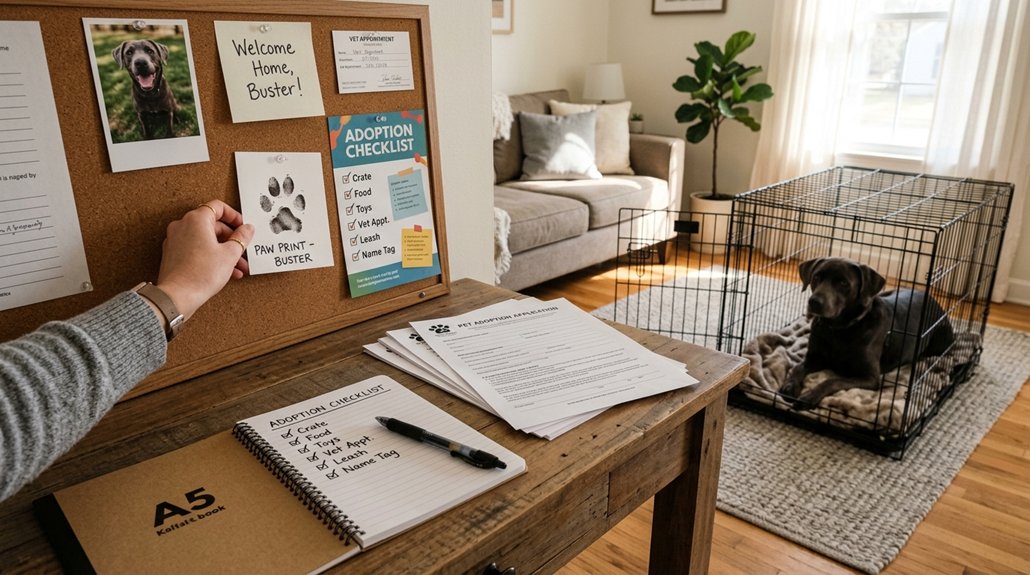
Before adopting a dog, evaluate your lifestyle to guarantee you can meet daily care needs and handle future changes. Engage family in the decision, considering allergies and shared responsibilities. Research breed-specific needs like grooming, health, and energy levels. Budget for adoption fees, annual care costs, pet insurance, and emergencies. Pet-proof your home and gather necessary supplies. Plan a neutral territory introduction, establish routines, and support your new dog’s adjustment. Discover more to guarantee a perfect adoption experience.
Key Takeaways
- Assess your daily routine and family commitment to ensure you can meet a dog’s needs.
- Research breeds for compatibility with your lifestyle and understand their specific needs.
- Budget for adoption fees, annual care costs, and potential emergencies.
- Pet-proof your home and prepare essential supplies for your new dog.
- Plan introductory and integration strategies to ease the dog’s transition into your family.
Evaluate Your Readiness to Adopt a Dog

Are you truly ready to welcome a dog into your home? Conducting a thorough lifestyle assessment is essential. Take a close look at your daily routine. Do you have the time for walks, training, and offering the companionship a dog requires? Reflect on potential changes like new job demands or family additions that could impact your ability to care for a pet.
Family involvement is also key. Bring everyone into the decision-making process. Discuss the responsibilities and joys that come with caring for a dog. This guarantees everyone’s committed, preventing future conflicts. Financial readiness is just as important; consider expenses beyond adoption fees, like food and vet care. With careful evaluation, you’ll secure a harmonious addition to your household.
Meeting Breed-Specific Needs and Characteristics
When you’re considering adopting a dog, taking the time to understand a breed’s specific requirements and energy levels is essential for a happy match. Each breed has its own unique traits; for instance, while a Border Collie might thrive with daily mental challenges and exercise, a Bulldog may be content with a more leisurely pace. By matching a dog’s needs with your lifestyle, you’re setting the foundation for a successful and fulfilling companionship.
Understanding Breed Requirements
Understanding a dog’s breed-specific requirements is essential to guaranteeing a harmonious and healthy relationship with your new furry friend. Each breed comes with unique characteristics that affect their grooming requirements, health considerations, temperament traits, exercise needs, and socialization importance. Knowing these can help you make an informed decision about which breed suits your lifestyle.
- Grooming Requirements: Poodles need regular grooming, while Beagles might just need the occasional brush.
- Health Considerations: Dachshunds can face back issues due to their long bodies, so it’s critical to be aware of potential health challenges.
- Temperament Traits: Labrador Retrievers are generally friendly, while Chihuahuas might be more protective.
Consider each aspect carefully to guarantee you’re ready for your new companion’s unique needs.
Meeting Energy Levels
How do you guarantee your new dog is both happy and well-adjusted? It’s essential to align their breed energy with your lifestyle. High-energy breeds, like Border Collies, thrive on regular, vigorous exercise, keeping them mentally and physically engaged. Understanding these traits helps you gauge your ability to meet a dog’s specific needs. For instance, Labrador Retrievers often need at least 1-2 hours of daily physical activity. Breeds developed for tasks like herding or hunting typically require structured activities to remain content. Consider your work hours and daily routine—are they in sync with a dog’s energy needs? Researching individual dog personalities at shelters can help find a great fit, ensuring harmony in your home.
Secure Approval From Your Landlord and Family

Before you bring a furry friend home, confirming that everyone in your household and your landlord are onboard is vital. Effective landlord communication is important; confirm your lease allows dogs and inquire about any pet deposits or fees that could influence your pet budget. Check for restrictions concerning pet breed, size, or number to avoid surprises.
Involve your family in making a family agreement on adopting a dog. Make sure everyone meets and approves of the new pet, addressing concerns like allergies or fears. Set clear roles regarding pet care to guarantee shared commitment. Here are three tasks to prioritize:
- Discuss pet policies and deposits with your landlord.
- Consider any family allergies or reservations.
- Define pet care responsibilities with family members.
Budgeting for Adoption and Long-Term Care Costs
Bringing a new dog into your home is an exciting adventure, but it’s essential to budget carefully to guarantee you’re prepared for both the initial adoption expenses and ongoing care costs. Start with a cost comparison of adoption fees, which usually range from $50 to $200. These fees often cover essential veterinary care. For long-term financial planning, anticipate over $1,000 annually for food, grooming, and vet checkups. Basic training classes, priced between $100 and $300, are also important for proper socialization. Don’t forget pet insurance, which varies from $20 to $60 monthly. Establishing a financial buffer for unexpected vet emergencies—costing $500 to over $2,000—ensures you’re equipped to provide the best care for your new furry friend.
Prepare Your Home and Gather Essential Supplies
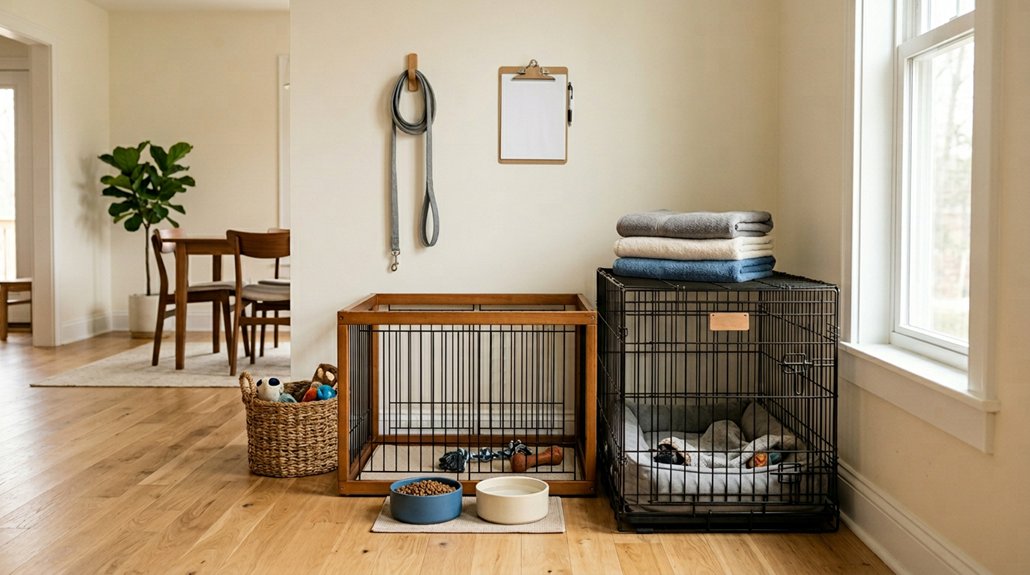
Once you’ve got your financial plan in place for adoption and ongoing care, it’s time to focus on preparing your home for your new canine companion. Home safety is vital. Start by pet-proofing your home—secure hazardous items like toxic substances and small chewable items out of reach.
Next, gather the essential items needed for your dog’s arrival:
- Pet essentials: Acquire food and water bowls, a cozy bed, collars with ID tags, and a sturdy leash.
- Designated spaces: Create dog-friendly zones where your pet can relax, such as a quiet room or a toy-filled corner.
- Outdoor safety: Make certain your yard is escape-proof and free from harmful plants or objects.
Taking these steps helps provide a welcoming and secure environment for your new dog.
Establish a Routine Before Pet Introductions
When preparing to introduce a new dog to your household, establishing a routine for your existing pets can be essential. Routine benefits include minimizing stress and creating a sense of familiarity, ensuring everyone adjusts more smoothly. Start by implementing consistent feeding, exercise, and quiet times for your current pets. This stability offers comfort and reduces stress as they anticipate changes. Designate playtimes and spaces to reinforce these routines, making sure your existing pets feel secure and valued. Gradually align the new dog’s schedule with theirs, avoiding potential conflicts. Clearly define boundaries and rules to prepare your household, fostering a harmonious environment. By doing so, both current pets and the new dog understand their roles, easing their adjustment and reducing stress.
Plan the Introduction With Your Existing Pets
When you’re ready to introduce your new dog to your existing pets, start with gradual meetings to guarantee everyone feels comfortable and safe. It’s best to conduct these introductions in a neutral area, which can help minimize any territorial instincts and allow both the new and existing pets to interact more calmly. Pay attention to their body language during these encounters, and be prepared to separate them if either shows signs of aggression or fear.
Gradual Pet Acclimation
Introducing a new dog to your home when you already have pets can be a delicate process, but with careful planning, it can go smoothly. Begin by understanding the pet personality of both your existing pets and the newcomer. It’s important to establish an introduction timeline that allows for gradual pet acclimation. Start by keeping the new dog isolated for a few days to a week, enabling everyone to adjust to each other’s scent and sounds without direct contact.
Consider these steps:
- Verify all pets are up-to-date on vaccinations and health care.
- Use positive management techniques like rewarding calm interactions to promote a peaceful environment.
- Be prepared for varied adjustment periods by offering separate spaces and monitoring interactions closely.
Your empathy and planning will help create a harmonious pet family.
Neutral Territory Meetings
While maneuvering the early stages of integrating a new dog into your family, choosing a neutral territory for the initial introduction with your existing pets can considerably ease the process. Opt for spaces like a park, where neither pet feels territorial pressure. This setting helps minimize fearful behaviors, reducing stress for everyone involved. Keep both pets on a leash to maintain control, carefully observing their body language for any signs of aggression or anxiety. Encourage them to approach each other at their own pace, allowing for natural interactions without overwhelming rushes. Employ positive reinforcement by rewarding calm behavior with treats or praise, cultivating a favorable association between the pets. This thoughtful approach optimizes the chances of a successful, harmonious introduction.
Support Your Dog’s Behavioral Adjustment and Growth
Supporting your dog’s behavioral adjustment and growth begins with establishing a consistent daily routine that can help reduce anxiety and provide a sense of security. Implementing behavioral techniques and anxiety management strategies is vital. Positive reinforcement encourages desired behaviors and fosters trust and calmness in your dog. Patience is essential as your new furry friend navigates this change. Create a safe, retreat-like space in your home to give them comfort during stressful moments.
Establish a routine to reduce anxiety and build trust with positive reinforcement and patience.
Regular mental and physical engagement is key:
- Interactive toys keep them entertained and intellectually stimulated.
- Daily walks not only exercise them but also help relieve stress and anxiety.
- Basic training exercises build confidence and alleviate fear-related behavioral issues.
Your understanding and dedication can greatly ease their adjustment journey.
Frequently Asked Questions
What Is the 3-3-3 Rule When Adopting a Dog?
The 3-3-3 rule outlines a dog’s adjustment period post-adoption. In the first week, follow tips to help them settle in, then gradually build trust over weeks and months, allowing their true personality to emerge. Patience is essential.
What Is the 7 7 7 Rule for Dogs?
Imagine adopting a nervous rescue; the 7-7-7 rule helps you understand their journey to comfort. It underscores dog behavior, guiding adoption tips: 7 days to decompress, 7 weeks for routine, 7 months for true personality.
Is It Hard to Get Approved to Adopt a Dog?
Getting approved to adopt a dog can be challenging. You’ll navigate various adoption requirements and an approval process. Your living situation, routine, and references are scrutinized to guarantee the best match. It’s about matching needs and lifestyles compassionately.
What’s the 90/10 Rule for Dogs?
The 90/10 Rule for dogs highlights that a dog’s behavior is 90% shaped by you, their environment, and only 10% by innate traits. Prioritize training and socialization for adoption readiness, ensuring a happy, well-adjusted pet.
Conclusion
Adopting a dog is like loading a floppy disk with love, patience, and commitment. You’re starting on a journey that needs thoughtful preparation. By evaluating your readiness, addressing specific needs, obtaining approvals, budgeting wisely, and preparing your home, you lay a solid foundation. Establishing routines and planning introductions guarantee a smooth changeover for everyone involved. Embrace this adventure with an open heart, knowing you’re investing in a loyal companion’s future happiness and well-being.